
Lemon balm and mint compared for container growing
| Question | Lemon balm | Mint |
|---|---|---|
| How it spreads | By seed (Illinois Extension) | By underground stems (Illinois Extension) |
| Pot size | At least 10 in wide and deep (RHS) | Its own pot; see the mint pot size guide |
| Main containment job | Cut flower stalks before seed forms | Keep it in its own pot and trim escaping runners |
| Light | Full sun to partial shade (Illinois Extension) | Full sun to partial shade (UGA) |
Lemon balm grows easily in a pot of at least 10 inches (25 cm) wide and deep, in sun or part shade, with evenly moist compost. Cut the flower stalks off before they set seed and it stays where you put it. Mint gets the reputation for taking over, but lemon balm is the one that quietly fills a bed with seedlings. A container is the fix that the RHS and Utah State Extension both recommend.
If you came here for mint, what size pot mint needs covers it. Lemon balm is a different species with a different problem. For the wider picture of herbs in small spaces, start with the small-space herb gardening hub.
It spreads by seed, not by runners
Illinois Extension notes that lemon balm is often confused with mint. Mint spreads rapidly by underground stems; lemon balm spreads by setting lots of seed, and can start to overtake a garden if left unchecked. The RHS agrees that it self-seeds unless you remove faded flower stems promptly.
That changes what you do in a pot. You do not need to worry about runners squeezing out of the drainage holes, as you do with mint. You need to stop seed from dropping into the neighbouring pots and cracks on your balcony. Remove the flowering stalks before they set seed (Illinois Extension).
The RHS adds one more reason to do it: if a named variety self-seeds, the seedlings may not match the parent plant. If you want a plant that cannot seed, Illinois Extension lists ‘Compacta’ as a more compact, sterile form whose flowers do not set viable seed.
A 10-inch pot of soil-based compost
The RHS says lemon balm can go in large pots at least 25 cm (10 in) wide and deep, filled with peat-free, soil-based compost, and describes this as a good option if you want to curtail its tendency to spread. Soil-based compost holds moisture longer than a peat-free multipurpose mix, which suits a plant that likes evenly moist roots. Make sure the pot has drainage holes.
Illinois Extension grows it in full sun to partial shade, in soil that is moist but well drained, and gives a mature height of about 10 to 24 inches. Utah State Extension notes that plants grown with some shade tend to produce larger, more succulent leaves, so a spot with a little shade in the hottest part of the afternoon is fine. Penn State Extension lists lemon balm among the herbs that tolerate low light and need only 2 to 6 hours of direct sun, which is why it is a candidate for an east-facing windowsill (see the herb sunlight chart).
Lemon balm is easy from seed, according to the RHS, but sow only a few: one or two plants are probably enough for most uses. Cover the seed with only a thin layer of fine compost, since some light aids germination. Most people start from a small nursery plant instead.
Moist, not wet, and light on feed
Utah State Extension says to keep the soil moist but not wet, or the plants will get root rot, and that powdery mildew and root rots can follow overwatering. The RHS says container plants need watering to keep the compost evenly moist. Check with a finger in the top inch rather than watering by calendar; how often to water potted herbs gives the test.
Go lightly on feed. Utah State Extension feeds in spring and again after harvest, and warns that over-fertilization causes excessive growth and poor flavour development.
Cutting it back
Three cuts, each with a different job:
- Pick for the kitchen. The RHS says to pick the youngest leaves and use them as fresh as possible. Utah State Extension says frequent harvest encourages branching, and harvests about one-third of the foliage at monthly intervals. Illinois Extension prefers cutting stems before flowering.
- Renew a tired plant. Illinois Extension says to thin stems in midsummer to open up the plant to better air circulation, and that lemon balm can be cut back to about one-half its height for fresh, vigorous growth, with watering afterwards to help recovery.
- Cut down after flowering. The RHS says lemon balm can look straggly after flowering. Cut the whole plant down to just above the base to encourage a fresh flush of leaves, and do it before seeds form.
For the general method on other herbs, see harvesting herbs so they keep growing and the pruning guide for basil, mint, parsley and chives.
Winter and dividing
Lemon balm is a herbaceous perennial, and the RHS says it naturally dies down over winter. Cut the faded stems back by early spring, before new growth appears. In the ground Penn State Extension gives hardiness to Zone 5. A pot has less soil insulating the roots, and the RHS warns that lemon balm suffers in cold, soggy conditions that can cause root rot, so it advises moving containers to a sheltered spot out of excessive rain.
The RHS divides clumps every few years in spring or autumn so they do not become too large. In a pot, that means lifting the plant, splitting it, and repotting one healthy piece in fresh mix. Divisions are also the surest way to copy a named variety. The RHS adds that stems root readily in a jar of water, and can then be potted up. Repotting herbs without shock covers the handling.
Using the leaves
Fresh leaves are the point. The RHS says dried leaves make tea over winter but the flavour is much milder than fresh. Penn State Extension flavours a simple syrup by steeping six 4-inch sprigs in boiling equal parts sugar and water for 30 minutes, and keeps it in the refrigerator for a few weeks.
Sources
Growing herbs in pots
Pot size, pruning and light for the herbs on a balcony or windowsill.
Common questions
How do you grow lemon balm in a pot?
Use a pot at least 10 inches (25 cm) wide and deep with drainage, filled with a loam-based potting mix (RHS). Give it full sun to partial shade (Illinois Extension), keep the soil moist but not wet (Utah State Extension), and cut off the flower stalks before they set seed.
Does lemon balm spread like mint?
Not in the same way. Illinois Extension says mint spreads rapidly by underground stems, while lemon balm spreads by setting lots of seed. Utah State Extension still says lemon balm can take over an herb bed and recommends growing it in a container.
How do I stop lemon balm self-seeding?
Remove the flowering stalks before they set seed (Illinois Extension). The RHS cuts the whole plant down to just above the base straight after flowering, before seeds form. The sterile cultivar Compacta does not set viable seed (Illinois Extension).
How much can I cut lemon balm at once?
Utah State Extension harvests about one-third of the foliage at monthly intervals. Illinois Extension describes a harder cut back to about one-half the plant's height to renew it, followed by watering.
Will lemon balm survive winter in a pot?
It is hardy and dies back naturally (RHS). Penn State Extension gives hardiness to Zone 5 for plants in the ground. In a pot the roots are more exposed, and the RHS advises moving containers to a sheltered spot out of excessive rain, because cold, soggy conditions cause root rot.
Related guides
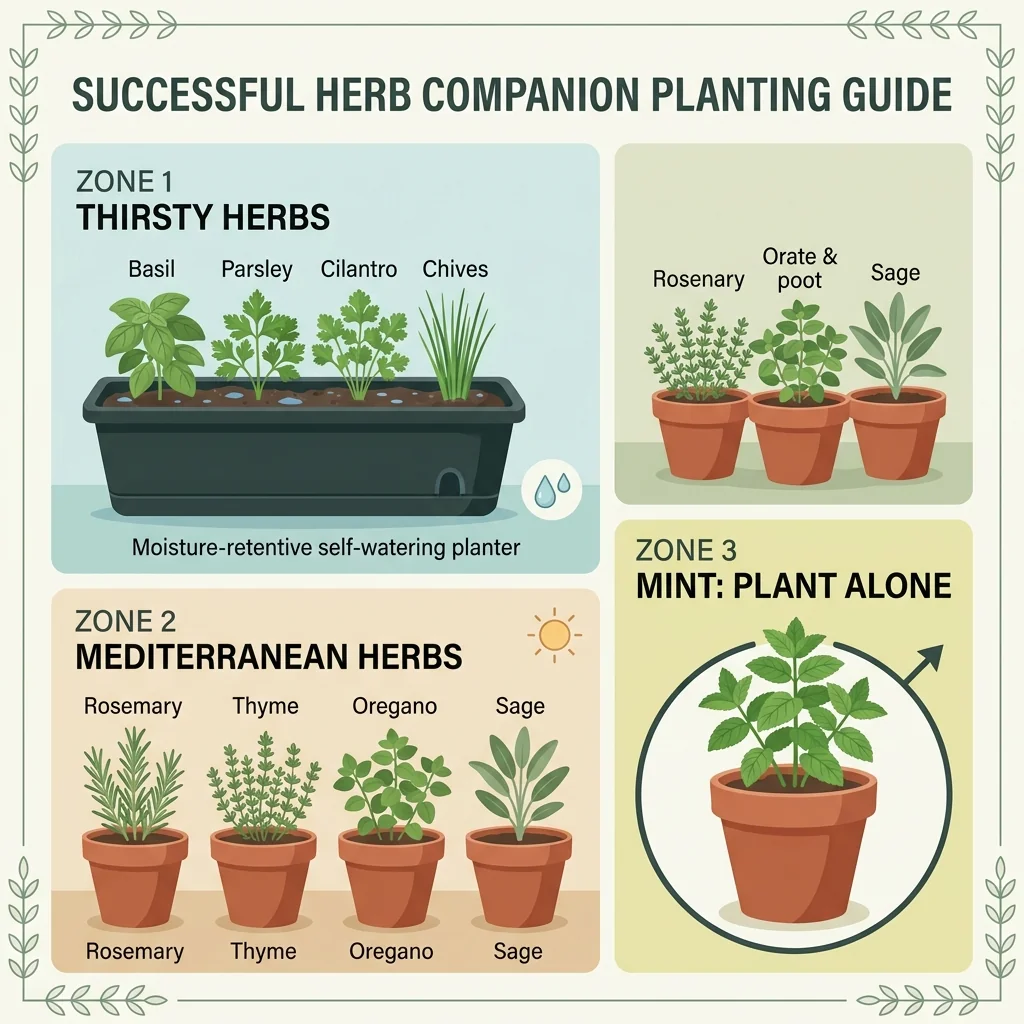
Which herbs can you plant together in one pot?
The simple rule for planting herbs together is to match their water and light needs. This chart shows which herbs share a pot happily and which ones to keep apart.
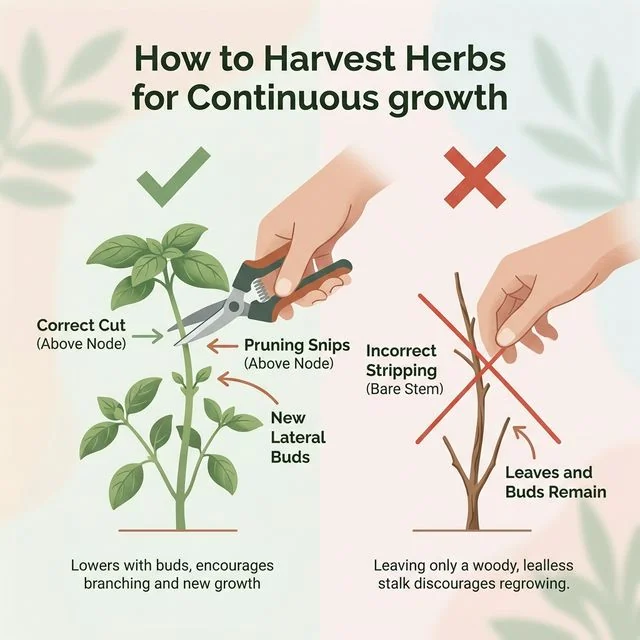
How to harvest basil, mint, parsley, and chives so they keep growing
The fastest way to destroy an indoor herb plant is to harvest it incorrectly. If you just pull random leaves off the stem, the plant will eventually go bald and die. Here is the exact botanical method to harvest your herbs so they yield endlessly.
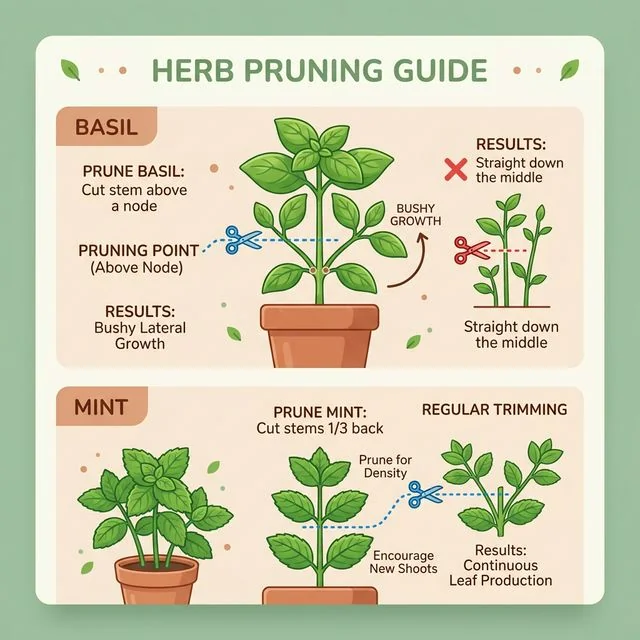
How to prune basil, mint, parsley, and chives without stunting growth
Basil and mint should be cut above a node, parsley should be harvested from the outer stems, and chives should be cut like a small patch of grass.