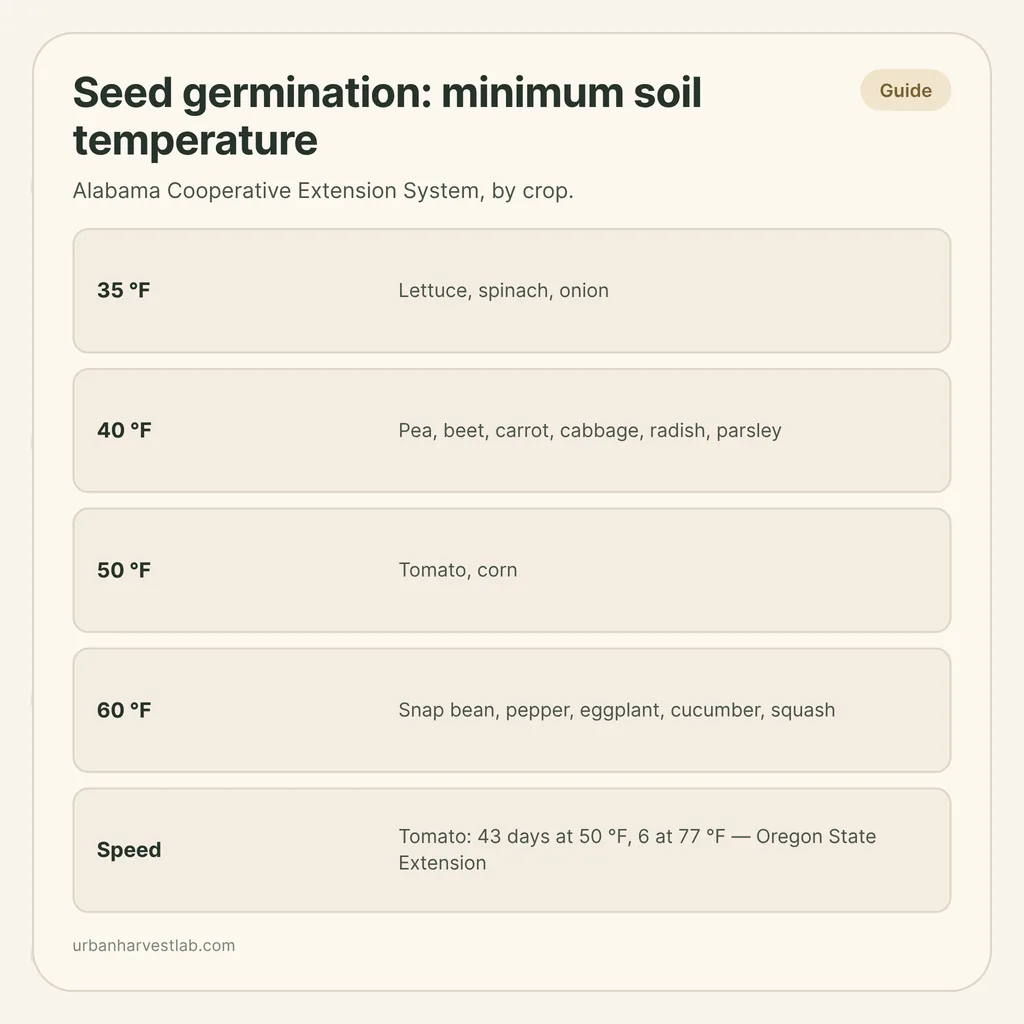
Most vegetable seeds germinate when the soil is between 68 and 86 °F (20 to 30 °C), according to Iowa State Extension, but each crop has its own floor, sweet spot and ceiling. Lettuce will sprout in soil as cool as 35 °F, while pepper, cucumber and squash want at least 60 °F. The two charts below give those numbers for 20 crops, then show how many days seedlings take to appear as the soil warms. If your tray is cooler than you want, the heat mat page covers how to warm it.
Minimum, best and maximum soil temperature by crop
Alabama Cooperative Extension System publishes four figures per crop: the minimum soil temperature, an optimal range, the single best temperature and the maximum. Celsius values in brackets are rounded conversions.
| Crop | Minimum | Optimal range | Best | Maximum |
|---|---|---|---|---|
| Lettuce | 35 °F (2 °C) | 40-80 °F | 75 °F (24 °C) | 85 °F (29 °C) |
| Spinach | 35 °F (2 °C) | 45-75 °F | 70 °F (21 °C) | 85 °F (29 °C) |
| Onion | 35 °F (2 °C) | 50-95 °F | 75 °F (24 °C) | 95 °F (35 °C) |
| Pea | 40 °F (4 °C) | 40-75 °F | 75 °F (24 °C) | 85 °F (29 °C) |
| Beet | 40 °F (4 °C) | 50-85 °F | 85 °F (29 °C) | 85 °F (29 °C) |
| Carrot | 40 °F (4 °C) | 45-85 °F | 80 °F (27 °C) | 95 °F (35 °C) |
| Cabbage | 40 °F (4 °C) | 45-95 °F | 85 °F (29 °C) | 100 °F (38 °C) |
| Radish | 40 °F (4 °C) | 45-90 °F | 85 °F (29 °C) | 95 °F (35 °C) |
| Parsley | 40 °F (4 °C) | 50-95 °F | 75 °F (24 °C) | 95 °F (35 °C) |
| Tomato | 50 °F (10 °C) | 70-95 °F | 85 °F (29 °C) | 95 °F (35 °C) |
| Corn | 50 °F (10 °C) | 60-95 °F | 95 °F (35 °C) | 105 °F (41 °C) |
| Snap bean | 60 °F (16 °C) | 65-85 °F | 80 °F (27 °C) | 95 °F (35 °C) |
| Pepper | 60 °F (16 °C) | 65-95 °F | 85 °F (29 °C) | 95 °F (35 °C) |
| Eggplant | 60 °F (16 °C) | 75-90 °F | 85 °F (29 °C) | 95 °F (35 °C) |
| Cucumber | 60 °F (16 °C) | 60-95 °F | 95 °F (35 °C) | 105 °F (41 °C) |
| Squash | 60 °F (16 °C) | 70-95 °F | 95 °F (35 °C) | 100 °F (38 °C) |
| Muskmelon | 60 °F (16 °C) | 75-95 °F | 90 °F (32 °C) | 100 °F (38 °C) |
| Okra | 60 °F (16 °C) | 70-95 °F | 95 °F (35 °C) | 105 °F (41 °C) |
| Pumpkin | 60 °F (16 °C) | 70-90 °F | 90 °F (32 °C) | 100 °F (38 °C) |
| Watermelon | 60 °F (16 °C) | 70-95 °F | 95 °F (35 °C) | 105 °F (41 °C) |
Basil is not in that table. Penn State Extension says to sow it after the soil has warmed to at least 60 °F and that basil germinates around 70 °F.
In the Alabama Cooperative Extension System table, three groups fall out of the columns. Lettuce, spinach, onion, pea, beet, carrot, cabbage, radish and parsley start at 35 to 40 °F, so a cool room or an early-spring balcony is workable. Tomato and corn need 50 °F. Pepper, eggplant, the cucurbits, okra and snap bean need 60 °F, and their best figures sit in the 80s and 90s, which most homes do not reach without help.
How many days seedlings take at each temperature
The days-to-appearance table that goes with J. F. Harrington’s soil-temperature data, published by Oregon State University Extension, counts days to seedlings from seed planted half an inch deep. Dashes mean the table reports little or no germination at that temperature or did not test it.
| Crop | 50 °F | 59 °F | 68 °F | 77 °F | 86 °F |
|---|---|---|---|---|---|
| Lettuce | 7 | 4 | 3 | 2 | 2 |
| Radish | 11 | 6 | 4 | 3 | 3 |
| Onion | 13 | 7 | 5 | 4 | 4 |
| Beet | 17 | 10 | 6 | 5 | 4 |
| Cabbage | 15 | 9 | 6 | 4 | 3 |
| Spinach | 12 | 7 | 6 | 5 | 6 |
| Carrot | 17 | 10 | 7 | 6 | 6 |
| Pea | 13 | 9 | 7 | 6 | 6 |
| Corn | 22 | 12 | 7 | 4 | 4 |
| Tomato | 43 | 14 | 8 | 6 | 6 |
| Eggplant | - | 13 | 8 | 5 | - |
| Bean | - | 16 | 11 | 8 | 6 |
| Pepper | - | 25 | 12 | 8 | 8 |
| Parsley | 29 | 17 | 14 | 13 | 12 |
| Cucumber | - | 13 | 6 | 4 | 3 |
| Muskmelon | - | - | 8 | 4 | 3 |
Read across a row of the Oregon State table and the pattern is clear. Lettuce goes from 7 days at 50 °F to 2 days at 77 °F. Tomato goes from 43 days at 50 °F to 14 at 59 °F and 6 at 77 °F. Pepper takes 25 days at 59 °F and 8 at 77 °F. Parsley is slow everywhere: 13 days at 77 °F, which fits Clemson Cooperative Extension calling its seed slow to germinate.
Oregon State’s table also shows what happens at the hot end. Tomato takes 6 days at 86 °F and 9 days at 95 °F. Carrot takes 6 days at 86 °F and 8 at 95 °F. Onion takes 4 days at 86 °F and 12 at 95 °F. Lettuce and spinach show little or no germination at 95 °F. Past the best temperature, warmer means slower, not faster.
Use the chart to pick the crop and the spot
Match the crop to the warmth you have. A windowsill mix that sits near 60 °F is fine for lettuce, radish, pea and spinach, which appear in about 4 to 9 days at 59 °F in the Oregon State table above. The same tray is at the 60 °F minimum Alabama gives for pepper and eggplant, which take 13 to 25 days. Start the warm crops where it is warmer, or wait. The seed starting calculator tells you when to sow from your frost date, and the sowing date and the soil temperature have to agree.
Measure the mix. The tables are about soil temperature. UC Master Gardener Program says a probe-type thermometer is an accurate way to test it. Push it in at seed depth in the pot you will sow, in the morning and again in the afternoon. A south-facing balcony and a cold tile floor can differ by far more than the air in the room suggests.
Treat the range as a band, not a target. The sources do not agree to the degree. Alabama gives tomato an optimal range of 70-95 °F, Oregon State prints 60-85 °F, and UC Master Gardener Program gives 65 to 85 °F. Alabama and Oregon State both put tomato’s best temperature at 85 °F. For potting mix as a whole, University of Maryland Extension says 65 to 75 °F is good for most vegetable seed, a narrower and cooler window than Iowa State’s 68 to 86 °F. If you are between figures, aim for the middle of the band and the crop’s best temperature rather than its edge.
Cooler after it sprouts. Iowa State Extension says the optimum growing temperature for the seedling is about 10 °F cooler than the optimum germination temperature. Take the tray off the heat and give it light once it is up.
When the tray is warm enough and nothing comes up
Temperature is one cause among several. If the mix is in range and the packet’s days have passed, check moisture, planting depth and seed age. Why seeds are not sprouting in pots goes through them in order, how deep to plant seeds covers depth, and how long seeds last covers old seed.
A cold tray is often slow rather than dead. Compare your mix temperature to the days column before you resow: tomato at 59 °F is a 14-day wait in Oregon State’s table, so day 10 is not a failure.
Sources
- Alabama Cooperative Extension System, “Soil Temperature Conditions for Vegetable Seed Germination” (ANR-1061)
- Oregon State University Extension, J. F. Harrington, “Soil temperature conditions for vegetable seed germination”
- UC Master Gardener Program, “Seed Germination Temperature and Timing”
- Iowa State University Extension, “How to Successfully Start Seed Indoors”
- University of Maryland Extension, “Starting Seeds Indoors”
- Penn State Extension, “Basil, a Summer Favorite”
- Clemson Cooperative Extension, “Herbs”
From the chart to a sown tray
Once you know the temperature your crop wants, these cover warming the mix, timing the sowing and rescuing a tray that has not come up.
Common questions
What is the best temperature for seed germination?
It depends on the crop, and the extension tables give a figure for each. Alabama Cooperative Extension System puts the best soil temperature at 75 °F for lettuce, 85 °F for tomato and pepper and 95 °F for cucumber and squash. Iowa State Extension says most seeds germinate when the soil is between 68 and 86 °F, and University of Maryland Extension gives 65 to 75 °F for most vegetable seed in potting mix.
What is the lowest soil temperature seeds will germinate at?
Alabama Cooperative Extension System gives 35 °F for lettuce, spinach and onion, 40 °F for pea, beet, carrot, cabbage and radish, 50 °F for tomato and corn, and 60 °F for pepper, eggplant, cucumber, squash and snap bean. Germination at the bottom of the range is very slow. Oregon State's table shows tomato taking 43 days at 50 °F.
How many days do seeds take to germinate?
It shrinks as the soil warms toward the crop's best temperature. In the Oregon State table, at 68 °F lettuce appears in 3 days, radish in 4, onion in 5, beet and cabbage in 6, carrot, corn and pea in 7, tomato and eggplant in 8, bean in 11, pepper in 12 and parsley in 14.
Can soil be too hot for seeds to germinate?
Yes. Alabama Cooperative Extension System lists a maximum for every crop, 85 °F for lettuce, spinach, pea and beet. In the Oregon State table lettuce and spinach show little or no germination at 95 °F, and tomato slows from 6 days at 86 °F to 9 days at 95 °F.
Related guides
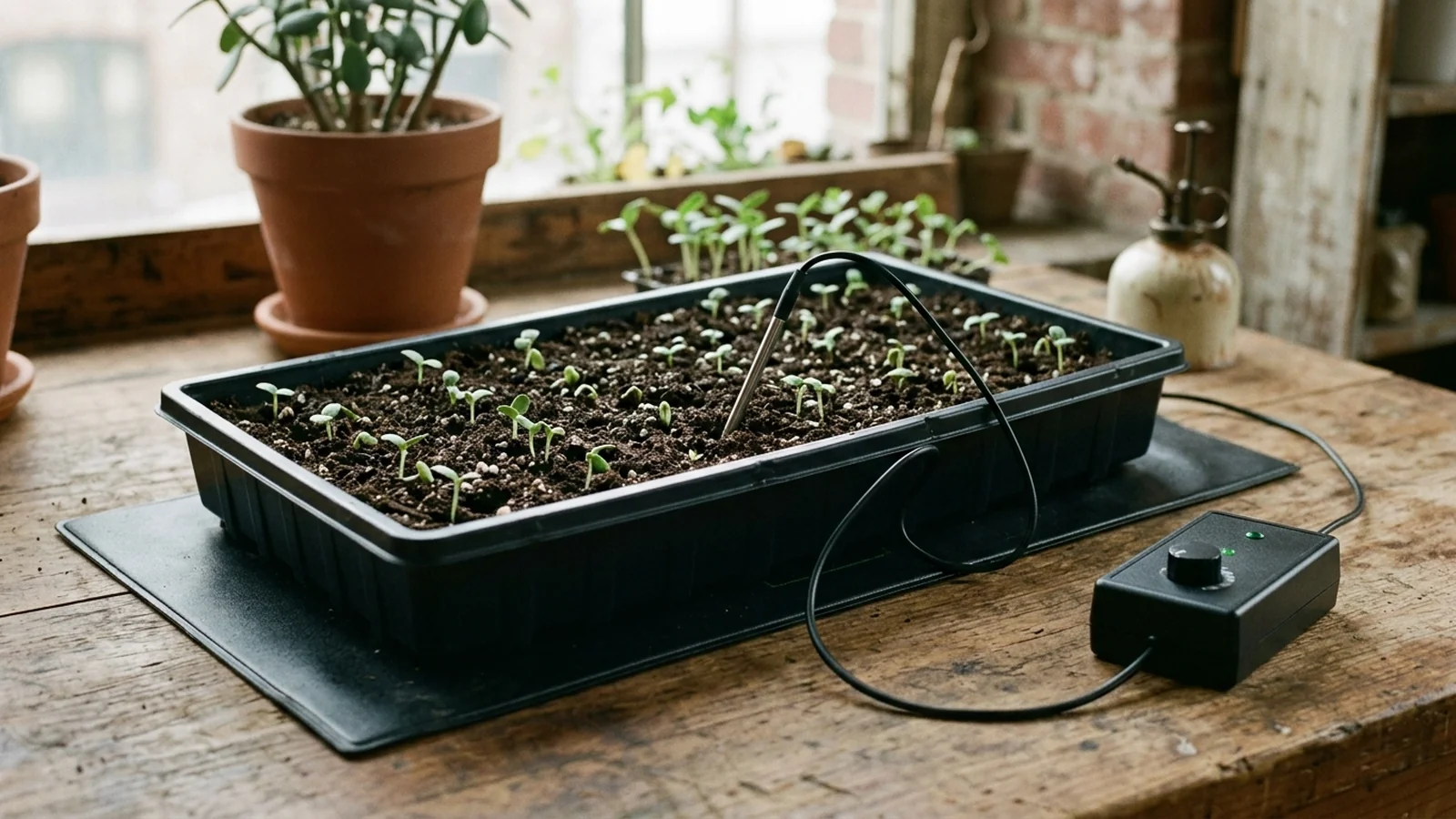
Seedling heat mats: what the thermostat is actually for, and when to skip one
A heat mat's whole case rests on one fact: germination responds to the temperature of the mix, not the air around it. Without a thermostat that fact works against you as easily as for you.

How long do seeds last? Shelf life by crop and a paper-towel test
Leftover seed is usually still good, but how long depends on the crop and where it sat. Here are the sourced ranges, how to store packets, and a test that runs for the germination time on the packet.
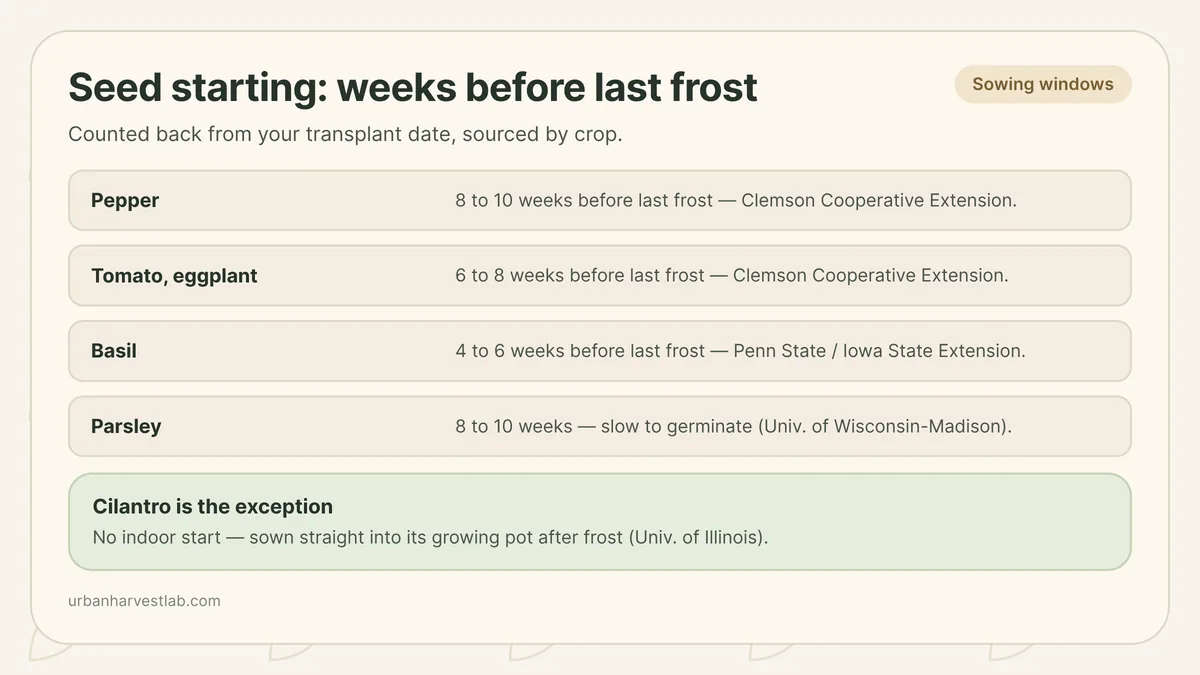
Seed starting calculator: sowing dates from your last frost date
A last frost date is only useful once you count backward from it. This works out that count crop by crop, instead of applying one week figure to everything in the seed drawer.