
Sorrel grows well in a pot: the RHS recommends a container at least 30 cm (12 in) wide and 20 cm (8 in) deep. Keep the mix evenly moist and pick the leaves young. It is a perennial, so the same pot can feed you from spring to autumn for years. The catch is oxalic acid, which gives the leaves their lemon bite and is the reason to treat sorrel as an accent, not a bowl of greens.
Pick the sorrel that suits a pot
Three species are sold as sorrel. The RHS describes them this way:
| Type | Habit (RHS) | Leaf and flavour |
|---|---|---|
| French sorrel (Rumex scutatus) | Low, mat-forming, 15-45 cm (6-18 in) tall | Grey-green, juicy, citrus-flavoured |
| Common sorrel (R. acetosa) | Upright, about 50 cm (20 in) tall and wide | Sour, slightly astringent, lemony |
| Red-veined sorrel | 40-60 cm (16-24 in) tall, about 30 cm (12 in) wide | Sharp flavour, dark red veins |
French sorrel suits most pots: it stays low, and NC State Extension says many food experts prefer it because it is less acidic than other sorrels. Common sorrel sends up flower spikes that the RHS says can pass 1 m (3½ ft), so it needs a deeper pot and more attention to snipping. Red-veined sorrel is the one to grow if you want it to look good on a shelf.
Illinois Extension lists ‘Profusion’, a variety that does not go to seed, so it keeps producing leaves all season. If bolting has frustrated you with other greens, it is worth looking for.
Pot, mix and position
The RHS gives a minimum: a container at least 30 cm (12 in) wide and 20 cm (8 in) deep, filled with a 50:50 mix of peat-free soil-based compost and peat-free multi-purpose compost. Go larger if you can, since a bigger volume dries out more slowly. A plain pot with drainage holes is fine, and if you are repurposing a bucket or crate, check the food-safe containers guide first.
You will not need many plants. The RHS says two or three are usually sufficient because the leaves are used sparingly, so one pot goes a long way. It also points out that a container is useful if you do not want sorrel to spread in borders, which is the case for French sorrel in the ground.
For light, the RHS says sorrel is happy in sun or partial shade. Illinois Extension prefers full sun in rich, moist soil. On a balcony, that gives you a choice between a bright spot and a lightly shaded one. In hot spells, the RHS suggests moving containers into shade to cut down on watering.
Sow or buy
Sorrel is easy from seed. The RHS has you sow indoors in spring, seed about 1 cm (½ in) deep, with germination taking one to two weeks at around 15 °C (59 °F). Or sow outdoors in containers from mid-spring to early summer at the same depth. Sow sparingly. In a pot you want a couple of plants, not a carpet, so thin extras early.
Nursery plants are sold mostly in spring and summer, according to the RHS, and they save you a season of waiting. Harden off any indoor-raised plants before they go outside, and set them at the level they were growing at.
Water and winter
Container sorrel needs more attention than sorrel in the ground. The RHS says the mix can dry out quickly in warm weather, so check it regularly and aim to keep it evenly moist. The herb watering chart covers the finger test and pot-weight test that replace a fixed schedule.
Winter is the opposite risk. The RHS describes sorrel as dying back over winter and re-sprouting from the ground in spring, and warns that plants in containers should not become waterlogged over winter, as the roots may rot. It suggests moving pots to a sheltered spot, such as near a building in a rain shadow.
Roots in a pot are exposed to more cold than roots in the ground. University of Illinois Extension gives a general rule for potted perennials: select plants that will survive two zones cooler than where they will be growing. Check how hardy your sorrel type is against that rule before leaving a pot outside in a hard climate. The RHS says all three species are hardy throughout the UK, so a colder climate than the UK is where the two-zone rule matters.
Harvest young, and keep it leafy
Young leaves are the point. The RHS says sorrel can be grown as cut-and-come-again baby leaves in a container, that regular picking encourages young tender leaves, and that older leaves can become tough and bitter. If they do, remove them to encourage new growth.
Illinois Extension adds a seasonal twist: leaves harvested very early in the season tend to be without much flavour, and gradually gain their characteristic acidic flavour as the season progresses. A first pick in early spring will taste mild.
Flowering is what interrupts the supply:
- Snip flower stems as soon as they show. The RHS says this keeps plants producing fresh leaves and stops self-seeding.
- Cut large stalks to the ground in July if they get away from you. Washington State University Extension says the roots then re-leaf with new tender growth.
- Divide every few years. Illinois Extension says every 3-4 years; the RHS says every four or five, in spring or autumn. In a pot, a congested clump is the sign to lift it, split it and repot a section.
For the general technique of picking so a plant keeps growing, see how to harvest herbs so they keep growing.
Oxalic acid: how much sorrel to eat
The sour taste comes from oxalic acid, and sorrel carries a lot of it. Illinois Extension says the leaves contain oxalic acid that can be a problem for people with certain health conditions, and to use sorrel sparingly if oxalic acid in the diet is an issue.
A 2013 study from Lincoln University in New Zealand measured oxalates in sorrel (Rumex acetosa) by leaf size. It found that the larger, more mature leaves of both cultivars contained higher levels of total, soluble and insoluble oxalates, and that the stems also contained appreciable levels. This is a second reason to pick young, on top of flavour. The authors recommended eating the leaves occasionally as a delicacy rather than as a significant part of the diet. They also found that sorrel pesto and soup retained their sour taste despite containing much lower levels of oxalates than the raw leaves.
In practice that means a few leaves in a mixed salad, or a handful in a soup or sauce, not a bowl of raw sorrel. The RHS says just a few leaves in a mixed salad provide a sour but crisp flavour.
The NIDDK, the US kidney institute, lists nuts, peanuts, rhubarb, spinach and wheat bran as foods people who have had calcium oxalate stones may want to avoid, and tells them to talk with a health care professional about other food sources of oxalate. Its list does not name sorrel, but if you have a stone history, that is the person to ask before you plant a dedicated sorrel pot. If you are growing rhubarb nearby, the same caution applies; the rhubarb container guide covers the plant itself.
Using and keeping the leaves
Sorrel is best fresh, according to Illinois Extension, but the leaves freeze well. Washington State University Extension says they keep in the refrigerator for up to two weeks. For freezing technique, the general herb-freezing guide applies.
One kitchen note: Illinois Extension says that the high acidity of sorrel means cooking with it may discolour some metallic pots. A few baby leaves also work well tossed into a mixed bowl; the fall salad greens guide shows what to pair them with when the weather cools.
Sources
- Royal Horticultural Society: How to grow sorrel
- University of Illinois Extension: Sorrel, French
- NC State Extension Gardener Plant Toolbox: Rumex scutatus
- Washington State University Extension (Skagit County Master Gardeners): Garden sorrel
- Tuazon-Nartea and Savage, Lincoln University (2013): Investigation of oxalate levels in sorrel plant parts and sorrel-based products
- NIDDK: Eating, diet and nutrition for kidney stones
- University of Illinois Extension: Overwintering potted plants
Perennials and greens for pots
Care, harvest and pot choices for the other greens and herbs that share a balcony with sorrel.
Common questions
How do you grow sorrel in a pot?
Use a container at least 30 cm (12 in) wide and 20 cm (8 in) deep, as the RHS advises, filled with a 50:50 mix of soil-based and multi-purpose compost. Sow seed about 1 cm (1/2 in) deep from mid-spring to early summer, or plant a nursery plant. Keep the mix evenly moist, give it sun or partial shade, and pick young leaves regularly.
Does sorrel come back every year?
Yes. The RHS describes sorrel as a perennial that dies back over winter and re-sprouts from the ground in spring, and says plants should live for many years. In a pot, keep the mix from waterlogging over winter, because the RHS warns the roots may rot.
Is sorrel safe to eat?
In ordinary kitchen amounts, as a lemony accent, it is widely eaten. The leaves contain oxalic acid. Illinois Extension says to use sorrel sparingly if oxalic acid in the diet is an issue, and the Lincoln University researchers recommend eating the leaves occasionally rather than as a large part of the diet. If you have had calcium oxalate kidney stones, ask a health care professional, as the NIDDK advises for oxalate-rich foods.
How do you stop sorrel from flowering?
Snip out flower stems as they appear. The RHS says this keeps plants producing fresh leaves and stops self-seeding, and Illinois Extension notes that seed stalks reduce the amount of usable leaves. Washington State University Extension says to cut large stalks back to the ground in July, after which the roots re-leaf.
Related guides
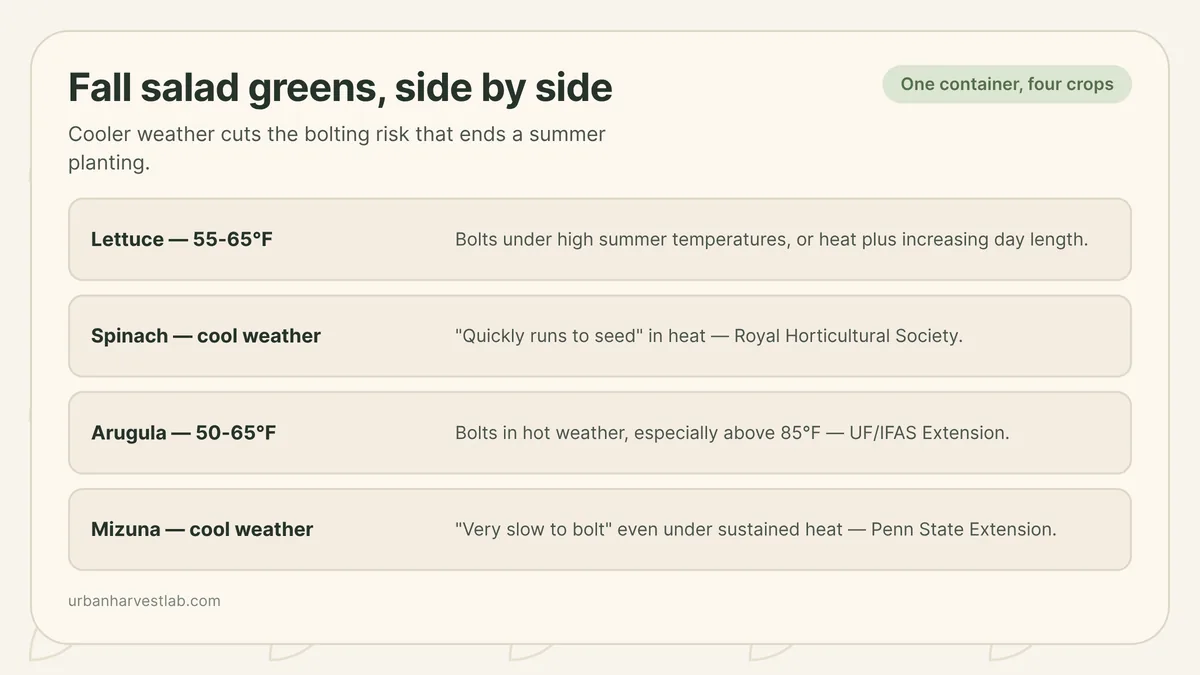
Growing salad greens in containers this fall
Lettuce, spinach, arugula, and mizuna all share the same summer problem and the same fall fix. Here is how to grow them together once the heat breaks.

How to grow rhubarb in a pot: size, cold and the leaf warning
A rhubarb planting stays productive for 8 to 15 years, according to Michigan State Extension, so the pot, the winter and the patience matter more than any feeding trick. Here is what a container changes, and what it does not.
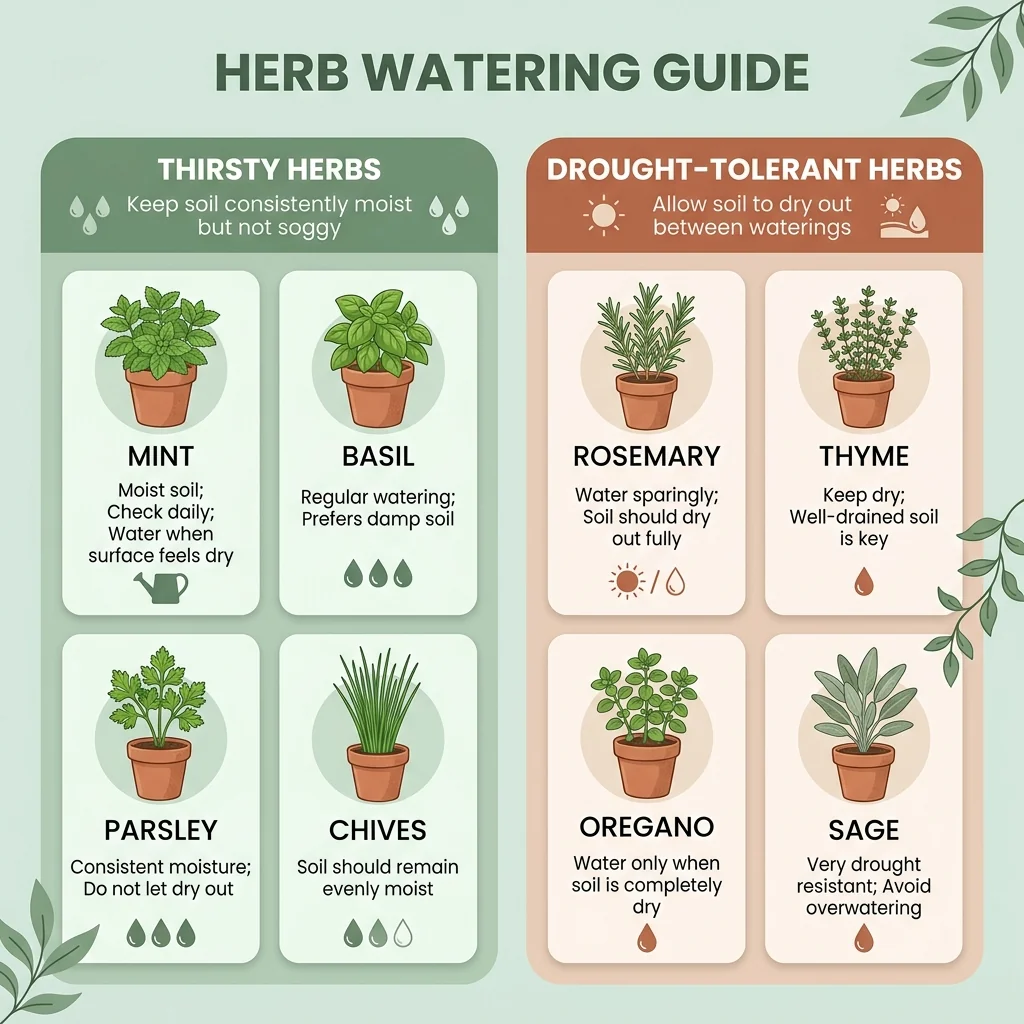
Watering a mixed herb collection: which pot to check first
How to water several potted herbs at once: which camp each herb belongs to, which pot to check first, and how to tell a dry wilt from a wet one.