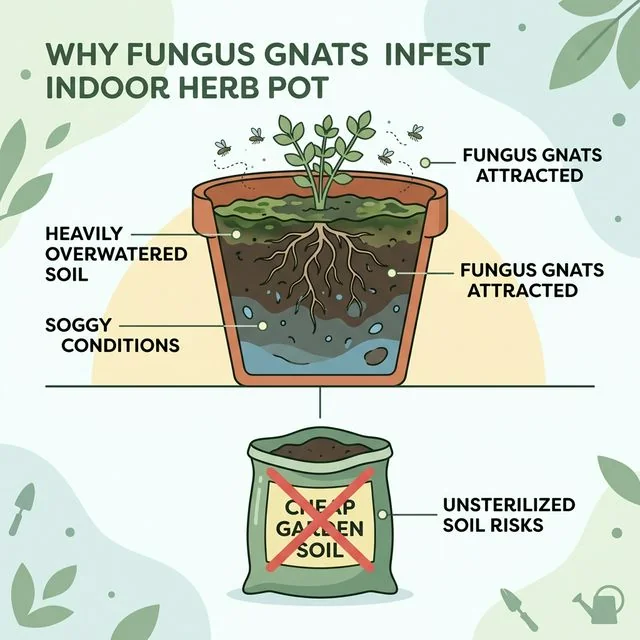
The 3-Step Fungus Gnat Eradication Plan
| Step | Action Required | Target |
|---|---|---|
| Step 1: The Adults | Deploy yellow sticky traps directly above the soil surface. | Catches flying adults before they can lay more eggs in the wet dirt. |
| Step 2: The Larvae | Water the soil with BTI (Mosquito Dunks) or a diluted hydrogen peroxide drench. | Kills the microscopic larvae feasting on fungus in the top two inches of soil. |
| Step 3: Prevention | Switch to strictly bottom-watering and let the topsoil dry into dust. | Removes the damp environment required for future eggs to survive. |
It starts with just one. You are sitting on your couch reading a book, and a tiny, black speck slowly flies past your face. You swat it away.
Three days later, you walk over to water your potted basil, and a massive cloud of tiny black flies erupts from the dirt. You have a Fungus Gnat infestation.
Beginners almost always attack the problem wrong. They buy harsh chemical bug sprays and coat the leaves of the plant. A day later, the gnats are back. To permanently eradicate fungus gnats, you have to understand that the gnats are not actually a pest problem—they are a watering problem.
The Life Cycle of the Fungus Gnat
To defeat the enemy, you must understand the enemy. Fungus gnats do not care about your basil leaves. They do not eat green plant tissue.
As their name implies, they eat fungus.
When you use a heavy potting soil (refer back to Potting Mix vs. Raised Bed Soil for Herb Containers), and you water it too frequently without letting the top layer dry out, you create a dark, warm, constantly wet environment. Microscopic fungus and algae begin to grow on the rotting organic matter (peat moss, compost) in the soil.
- The Adults: The flying adults you see hovering around the pot are essentially harmless to the plant. Their only job is to exist for a few days, mate, and lay hundreds of eggs on the wet surface of the soil.
- The Larvae: The eggs hatch into microscopic, translucent worms. These larvae live in the top two inches of the soil and aggressively eat the fungus.
(Note: While the larvae prefer fungus, a large enough population can also feed on the delicate root hairs of your herb plant, which can slow growth or cause yellowing that mimics the symptoms found in our Common Problems With Potted Herbs guide).
The 3-Step Eradication Plan
You cannot win the war just by killing the adults. You must attack the entire life cycle simultaneously.
Step 1: Kill the Breeding Adults
You must stop the currently flying adults from laying more eggs.
- The Fix: Buy a pack of yellow sticky traps. Fungus gnats are highly attracted to the color yellow. Cut the traps into small squares and stick them into the soil of every single potted plant in your house. The adult traps will turn black with bodies within 48 hours.
Step 2: Destroy the Larvae
The sticky traps will not catch the larvae crawling in the dirt.
- The Fix: You need BTI (Bacillus thuringiensis israelensis). This is an organic, naturally occurring bacteria that the EPA considers to pose no meaningful toxicity risk to humans, pets, or plants, while remaining highly effective against the larvae of gnats, mosquitoes, and black flies specifically. It is most commonly sold as “Mosquito Dunks” or “Mosquito Bits.” Soak a Mosquito Dunk in your watering can overnight, then water your plants with that bacteria-infused water. The larvae stop feeding almost immediately after ingesting it and typically die within a day or two.
Step 3: Fix the Environment (The Permanent Solution)
Even if you kill all the larvae and adults, if you keep the soil constantly wet, new gnats will eventually find their way back into your home and start the cycle over. You must eliminate their breeding ground.
- The Fix: Let the surface of the soil dry out between waterings, rather than keeping it constantly damp. Gnats need consistently moist soil to lay eggs and for larvae to survive, so a drier surface layer makes the top of the pot far less hospitable to them, according to UC IPM.
To achieve this while keeping thirsty plants happy, switch your watering method. Instead of pouring water over the top, place the pot in a bowl of water and let the roots drink from the bottom up (Bottom-Watering). This keeps the deep root zone moist while the top layer of soil remains bone dry.
Alternatively, if you use a Self-Watering Pot, a thick layer of dry sand spread over the top of the potting mix will act as a physical barrier, preventing the adults from ever reaching the damp soil below.
Stop spraying the leaves. Dry out your dirt, kill the larvae, and claim your apartment back from the swarm.
Sources
Diagnosing other mysterious deaths?
A massive gnat infestation will eventually eat root hairs. Check these guides if your plant is yellowing or wilting.
Common questions
Are fungus gnats dangerous to humans or pets?
No. They are incredibly annoying, and they might fly into your nose or your coffee cup, but they do not bite, sting, or carry human diseases.
Will neem oil kill fungus gnats?
Spraying neem oil on the leaves does absolutely nothing, because gnats don't eat leaves. You can drench the soil with a diluted neem mixture, but there are far more effective biological controls (like BTI).
Did the gnats come from the store inside the bag of potting soil?
Often, yes, but not the only way in. High-organic potting mixes with peat moss or compost can carry eggs or larvae, and gnats also commonly hitchhike in on a new plant. Once that mix stays warm and moist indoors, any gnats present multiply quickly, which is why the moisture problem matters more than pinning down the exact entry point.
Related guides
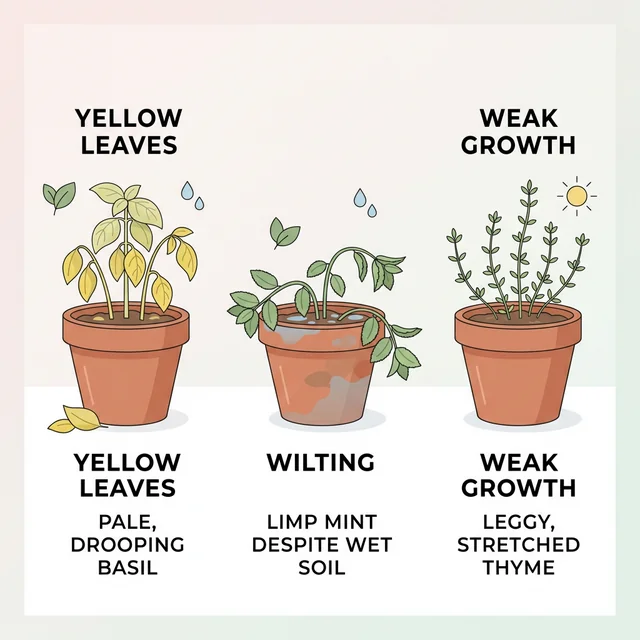
Common potted herb problems: yellow leaves, wilting, and weak growth
Common potted herb problems usually show up as yellow leaves, wilting, or weak growth, but the useful diagnosis starts with light, drainage, and root stress.
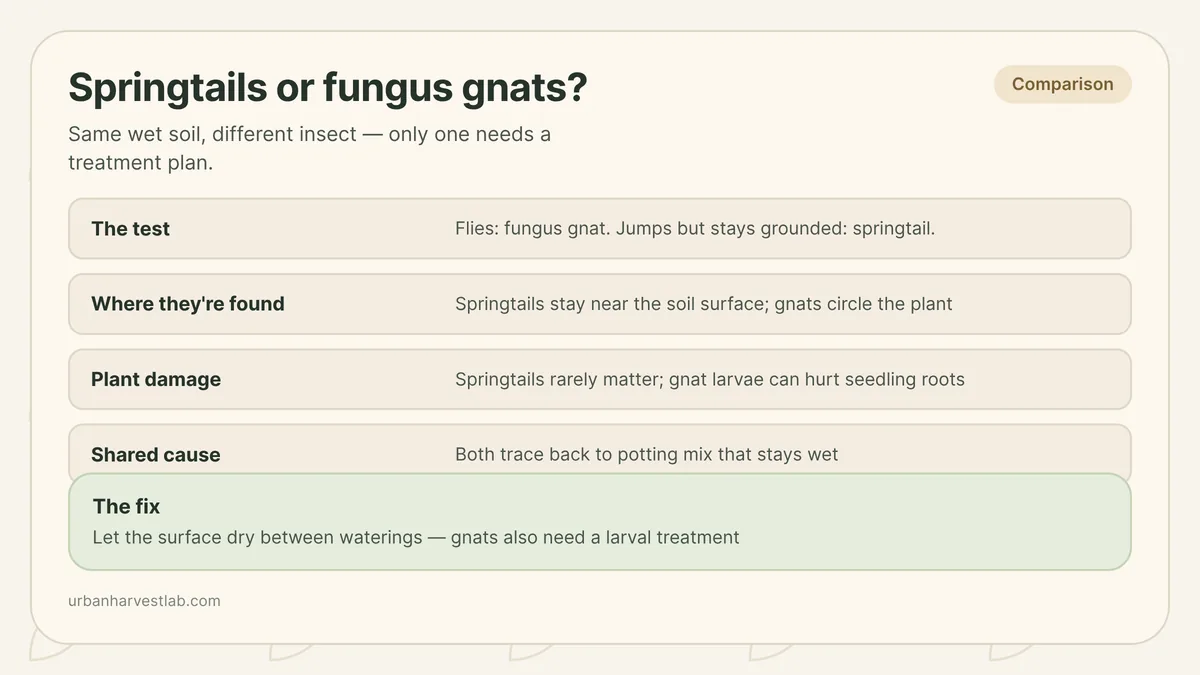
Tiny bugs in plant soil: springtails or fungus gnats?
If the bugs in your potting soil jump but stay grounded, they are springtails. If they lift off and buzz around the plant, they are fungus gnats. Both are pointing at the same watering habit.
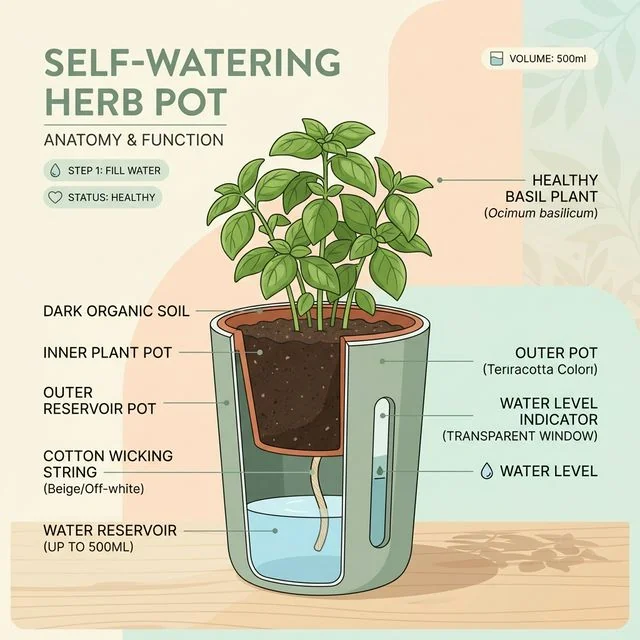
Self-watering pots for herbs: worth it or more trouble?
Self-watering pots sound like the holy grail for busy gardeners. While they are fantastic for moisture-loving herbs like mint, they can quickly turn into a swamp of rotting roots for drought-tolerant plants like rosemary.