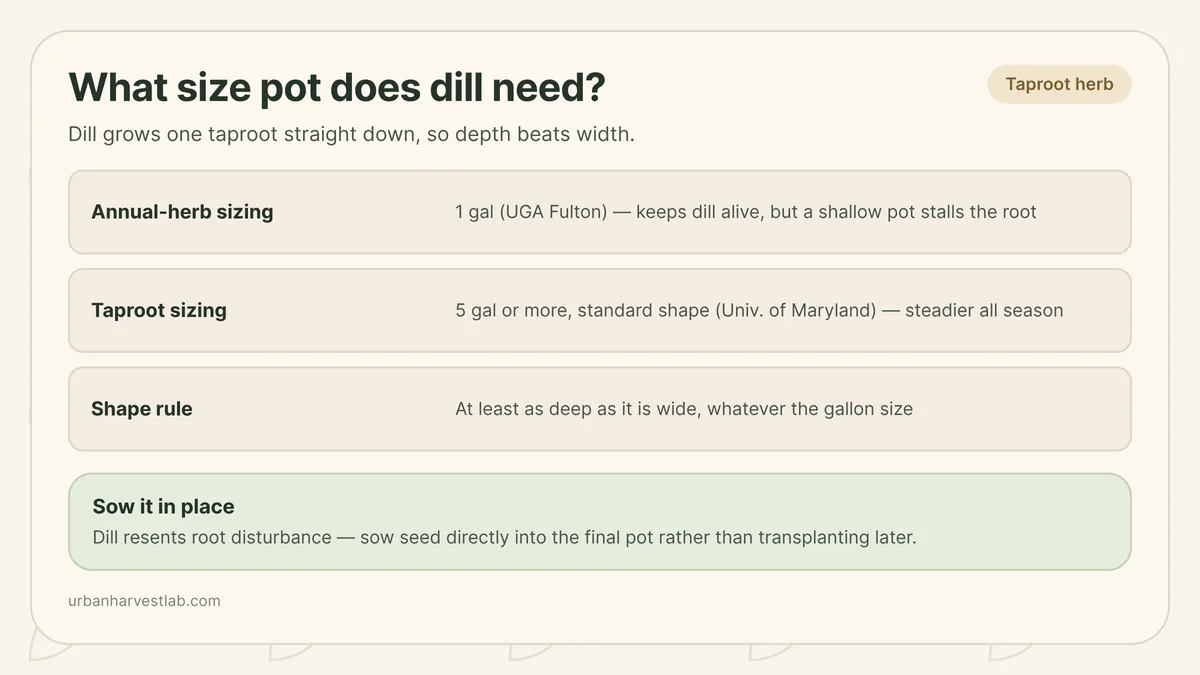
Dill pot size at a glance
| Container | Size | Best for |
|---|---|---|
| Annual-herb sizing (UGA Fulton) | 1 gal | Keeps dill alive briefly; a shallow pot lets the taproot stall early |
| Taproot sizing (Univ. of Maryland) | 5 gal or more, standard shape | A small stand, steadier through the season |
Dill sends down one taproot rather than spreading a wide root mat, so shape is what to shop by: aim for a standard-shaped pot holding roughly 5 gallons — the figure University of Maryland Extension gives dill — in a pot whose depth is at least as great as its width, rather than a shallow bowl of the same volume or UGA Fulton County’s smaller 1-gallon annual-herb figure. Get the depth right and dill in a container behaves like dill in open ground; get it wrong and the plant stalls no matter how wide the pot looks. The herb pot size chart lists dill alongside every other kitchen herb, but its row deserves the same asterisk cilantro and parsley get: this is a depth herb, not a width herb.
Two extension sources, two different pots
Dill’s own sizing is genuinely contested between the two university sources in this research. University of Maryland Extension sorts dill into its “larger herbs” bucket — alongside rosemary, sage, parsley, lavender and fennel — recommending a 5-gallon container or more. UGA Fulton County Extension puts it in the opposite group, its “annual herbs” bucket with basil and cilantro, sized at just 1 gallon.
Neither figure is a typo. They describe different things. UGA’s grouping is by life cycle: dill is an annual, so it goes in the small-pot bucket with other annuals regardless of what its roots do underground. Maryland’s grouping is closer to what a taprooted plant actually needs to keep producing past a few weeks. A 1-gallon pot keeps dill alive; it does not give the taproot anywhere to go once it reaches the bottom, which for this plant happens fast.
Why the taproot changes the answer
Dill drives a single root down from the seedling stage, the same architecture as cilantro and parsley. When that root meets the bottom of a shallow pot, the plant reads it as a growth ceiling and shifts effort toward flowering and seed rather than fresh foliage — the same taproot-hits-bottom response covered in cilantro pot size and parsley pot size. A wide, shallow bowl with the same soil volume as a narrow, deep pot does not solve this; the taproot cannot use width the way lateral roots would. Depth is the dimension doing the work.
Container depth for tomatoes, peppers and herbs already groups dill with parsley as a herb that “values depth” ahead of the more common annual-herb pattern. Dill is the odd one out among the fast, shallow-rooted annuals it gets filed next to on a life-cycle chart.
What 5 gallons looks like on a shelf label
University of Maryland Extension’s 5-gallon figure is the one to shop by, but neither Maryland nor UGA Fulton County gives dill a depth number to go with it. Illinois Extension’s own diameter-to-volume table, built for straight-sided round pots, puts a 5-gallon container at roughly 12 inches across; in a standard-proportioned pot rather than a shallow bowl, that same cylinder runs close to 10 inches deep by the same table’s arithmetic. A 1-gallon pot, UGA Fulton County’s figure, sits at the small end of Illinois’s table and is shallow as well as small — the combination that lets a taproot hit bottom fast.
So the practical target is not “buy the 5-gallon pot” as a rule of thumb, it is “buy a pot that is at least as deep as it is wide, in whatever gallon size that turns out to be for the shape you like.” A tall, narrower container of the same volume works as well as a wide 5-gallon tub, and takes up less railing or windowsill space.
Pick a standard pot shape, not an azalea pot
Illinois Extension’s own terminology splits nursery pots into two shapes: shorter “azalea” pots, which it says suit plants with minimal roots — herbs among them — and taller “standard” pots, which it treats as the safer default for vegetables. Illinois files herbs, dill included, on the azalea side of that split; the case for the standard shape here follows from dill’s taproot, not from Illinois’s own recommendation for herbs. A single straight-down root uses depth the way Illinois’s vegetable crops do, so the standard shape fits dill’s architecture even though it sits outside the category Illinois built it for. A wide azalea pot sold as “12 inches” may still be shallower than a standard pot of the same diameter, so check the container’s actual depth rather than trusting the width measurement printed on the label.
Material matters too, once the depth is settled. Unglazed terracotta breathes and dries faster than plastic or glazed ceramic, which is an advantage for herbs that hate wet feet but a liability for a tall pot baking on a hot patio: a deep container that dries from the sides as well as the top can stress a taproot on the same schedule as a shallow one would, just for a different reason. The trade-offs between materials are laid out in plastic vs. terracotta pots for herbs, and the wider shortlist of container types is in best containers for herbs.
Sow it in place, the way you would cilantro
Dill shares more than root shape with cilantro: both resent being dug up and moved once the taproot is established, and both can respond to the disturbance by bolting early. The safer route is to sow seed directly into the final container rather than starting dill in a tray and transplanting seedlings later. Thin to the strongest seedlings once they have a couple of true leaves, rather than trying to relocate the extras. A loose, free-draining mix helps the root run without deflecting sideways; see the best potting mix for potted herbs for what that mix should contain.
Spacing once the pot is right
Dill is usually grown as a small stand rather than one plant per container, closer to how cilantro is handled than how a single basil or rosemary plant is. Maryland and UGA Fulton’s herb tables give container size, not per-plant spacing inside the pot, so thin by eye rather than by a fixed inch count: pull the weakest seedlings once the stronger ones have a couple of true leaves, and keep enough gap between what remains that no two crowns are touching. A standard-shaped, roughly 5-gallon pot comfortably holds a small cluster once thinned; a long, deep trough scales the same idea across a row, useful if dill is going in alongside other herbs that share its watering needs.
What an undersized pot looks like in practice
The failure mode is predictable rather than dramatic. Texas A&M AgriLife Extension gives a general 6-to-10-inch pot for green onion, parsley and herbs, which lands closer to UGA Fulton’s shallow end of the range than to Maryland’s. A dill seedling in a pot that size germinates and grows normally for its first few weeks, then stalls: growth slows, the centre starts pushing up a flower stalk earlier than expected, and the foliage that was supposed to keep coming turns thin and bitter as the plant redirects energy into seed. None of that looks like a watering or light problem, because it is not one — it is the taproot running out of room. Moving up to a deeper, standard-shaped pot before that point, rather than after, is the difference between a few pinches of dill and a full season of it.
If dill still bolts in the right-sized pot
Depth removes one trigger for early bolting, not all of them. Heat is the other major one — dill is a cool-season herb underneath its reputation as an easy annual, so a pot baking in full summer sun on a dark patio will still push toward flowering regardless of its depth. Keep the watering rhythm steady rather than letting the pot swing from soaked to bone-dry; how often to water potted herbs covers the routine that keeps a deep pot from working against itself.
Sources
Sizing a pot for dill? These guides go with it
These guides connect dill's depth needs to the same taproot logic in cilantro and parsley, plus the soil and watering that keep it from bolting.
Common questions
What size pot does dill need?
Aim for a standard-shaped pot holding roughly 5 gallons, University of Maryland Extension's figure for dill, in a container that is at least as deep as it is wide. Dill grows one taproot straight down rather than a spreading root ball, so shape matters more than the gallon number printed on the pot alone.
Can dill grow in a 1-gallon pot?
It will germinate and survive for a while, which is why one extension source lists dill among 1-gallon annual herbs. But a 1-gallon pot is shallow as well as small, and a taproot that hits the bottom early stalls the plant sooner than a deeper container of similar or even smaller diameter would.
Does dill need a wide pot or a deep one?
Deep, first. Dill does not spread out much below ground, so a narrow, deep container such as a tall nursery pot suits it better than a wide, shallow bowl of the same volume.
Can I transplant dill seedlings into a bigger pot later?
It is risky once the taproot has formed. Dill, like cilantro and parsley, resents root disturbance and can bolt to seed early after being moved. Sowing directly into the final container avoids the problem entirely.
How many dill plants fit in one pot?
Dill is usually grown as a small stand rather than one specimen per pot. Thin by eye rather than to an exact spacing, leaving enough gap that crowns are not touching, and a standard-shaped, 5-gallon pot comfortably holds a small cluster once thinned.
Related guides
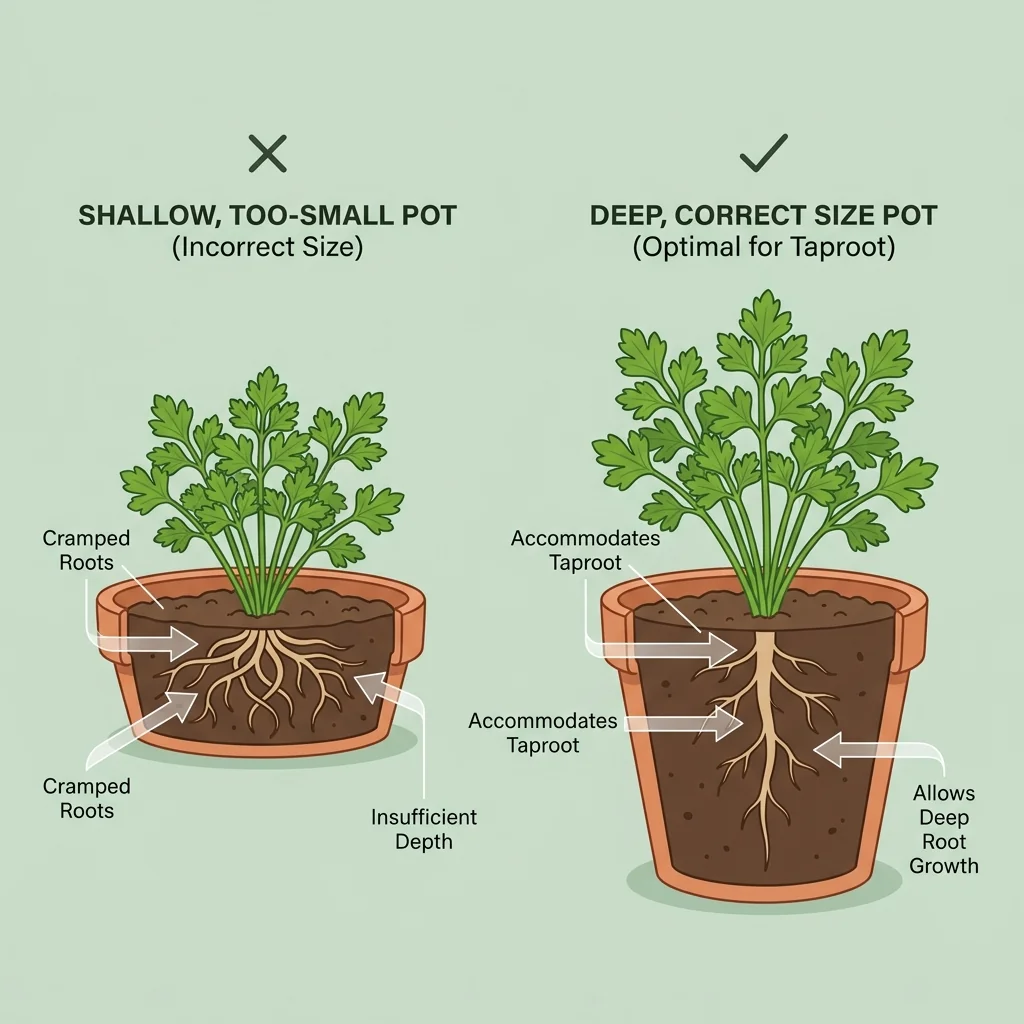
What size pot does parsley need? Depth and diameter guide
Parsley has a deeper taproot than most kitchen herbs, so pot depth matters more than width. This guide gives the exact size range, spacing, and drainage to get it right.
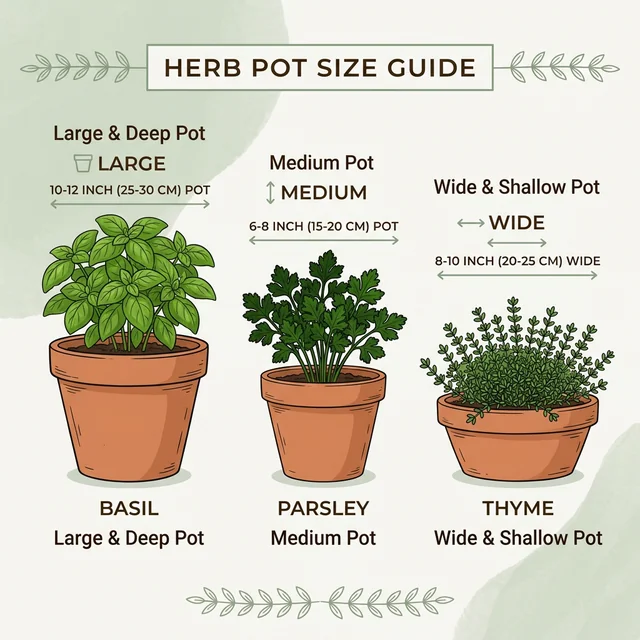
Herb pot size chart: basil, mint, parsley, thyme & chives
A practical herb pot size guide for the most common kitchen herbs, with simple size ranges that make container growing easier to read and maintain.
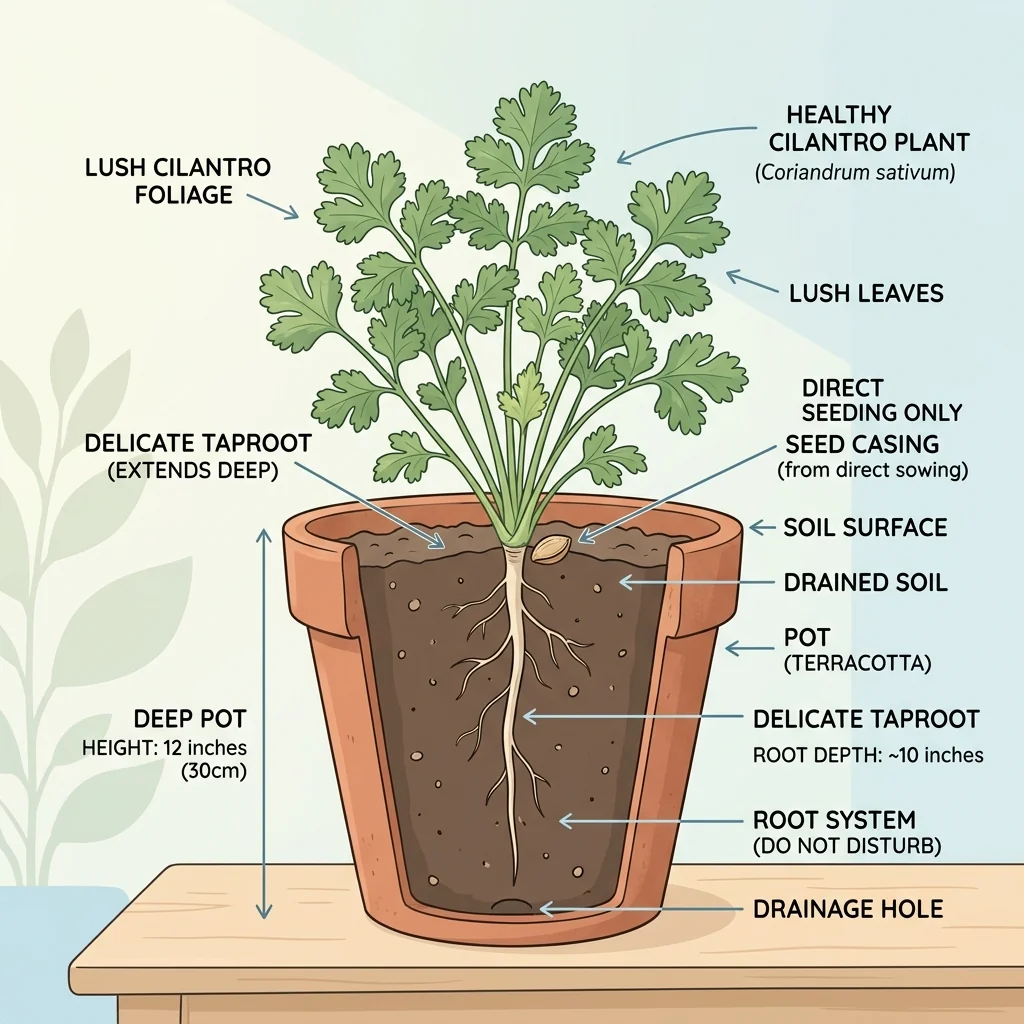
Cilantro pot size: how deep it needs to be for the taproot
Cilantro grows a taproot and resents being moved, so depth and direct sowing matter more than width. Get the pot right and you can succession-sow for steady leaves.