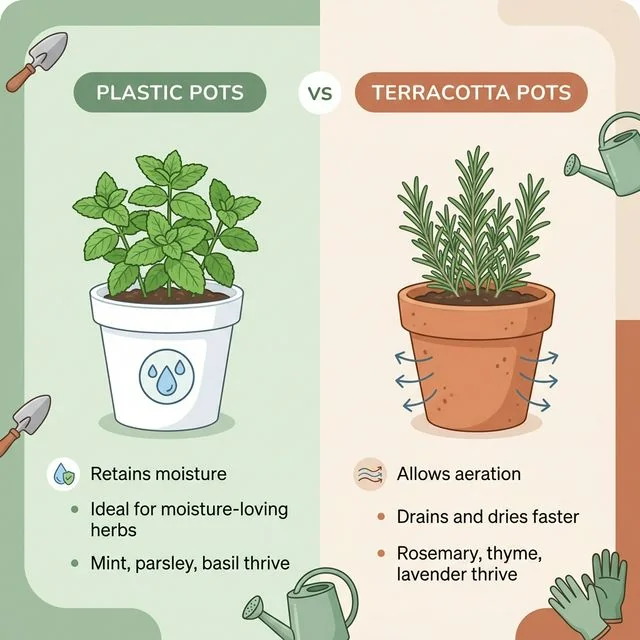
Plastic vs. Terracotta Herb Guide
| Material Characteristic | Unglazed Terracotta | Plastic (or Glazed Ceramic) |
|---|---|---|
| Water Retention | Very Low (Dries out fast) | Very High (Retains moisture for days) |
| Weight | Heavy (Hard to knock over) | Lightweight (Easy to move) |
| Root Aeration | Excellent (Pores allow oxygen to flow through walls) | Poor (Oxygen only enters from the surface) |
| Temperature | Cooler (Evaporative cooling protects roots from heat) | Warmer (Traps heat, especially dark plastic in the sun) |
| Best Herbs | Rosemary, Thyme, Oregano, Sage, Lavender | Basil, Mint, Parsley, Cilantro, Chives |
When browsing a garden center, beginners almost exclusively choose their pots based on aesthetics. A sleek white plastic pot might match a modern kitchen, while a weathered terracotta pot looks beautiful on a rustic patio.
However, as outlined in our primary Best Containers for Herbs Hub, the material of a pot is not just a decorative choice—it is a critical mechanical decision. The walls of your container actively intervene in your watering schedule.
If you put the wrong herb in the wrong material, you will spend your entire summer fighting wilting leaves, yellowing stems, and root rot. Here is exactly how plastic and terracotta dictate your garden’s success.
The Physics of Plastic Pots
Whether you buy a heavy-duty resin planter or a cheap nursery cup, all plastic and fiberglass pots share one mechanical feature: They are completely impermeable.
When you water a plastic pot, the water has only three ways out:
- It is consumed by the plant’s roots.
- It drains out the bottom holes.
- It slowly evaporates upward out of the tiny surface area of soil exposed to the air.
Because the sides of the pot do not breathe, the soil in the middle and bottom of the container stays moist for an incredibly long time.
Why Use Plastic?
Plastic is lightweight, cheap, and easy to clean. Mechanically, it is the absolute best choice for high-moisture, fast-growing herbs.
Herbs like Basil, Mint, Parsley, and Cilantro have massive root systems that rapidly suck up water to support their large, leafy canopies. If these plants dry out completely, they wilt dramatically (see Why Is My Basil Wilting Indoors?).
A plastic pot protects these plants from drought. Because it traps moisture, you might only need to water a large basil plant in a plastic pot once every 5 to 7 days, even in a sunny window, drastically reducing your gardening chores. Just ensure you are using a well-aerated soil (like those discussed in Best Potting Mix for Potted Herbs) so the trapped moisture doesn’t turn into anaerobic mud.
(Note: Glazed ceramic pots function exactly the same as plastic pots, as the glass glaze seals the clay completely).
The Mechanics of Unglazed Terracotta
Unglazed terracotta (fired clay) is one of the oldest planting materials in human history. Mechanically, it is diametrically opposed to plastic.
Terracotta is highly porous. When you pour water into the soil, the clay walls act like a giant, rigid sponge. The pot itself absorbs moisture from the soil, wicks it to the outside edge, and evaporates it into the air. Furthermore, because air can pass through the microscopic pores, oxygen is constantly being pulled directly into the sides of the root ball.
Why Use Terracotta?
Terracotta is heavy, fragile, and aesthetically classic. Mechanically, it is an absolute lifesaver for drought-tolerant Mediterranean herbs.
Herbs like Rosemary, Thyme, Oregano, and Sage originate from dry, rocky, hot environments. Their roots have evolved to hate standing water. If their roots sit in soggy, wet soil for more than three days, they will succumb to fungal root rot and die.
By planting a rosemary bush in an unglazed terracotta pot, you are buying an insurance policy against overwatering. Even if a heavy rainstorm soaks the pot, or you get too generous with the watering can, the terracotta walls will immediately begin wicking the excess moisture away, drying the soil profile rapidly and allowing the roots to breathe.
Additionally, the evaporation of water through the clay creates an evaporative cooling effect, which keeps the root zone significantly cooler than a black plastic pot baking in the afternoon sun.
The Tragic Mismatches
Understanding these mechanics makes it incredibly easy to diagnose why certain plants fail for beginners.
The Wilting Mint Tragedy: If you plant a thirsty, fast-growing mint plant in a small terracotta pot during the summer, the clay will steal the water from the soil faster than the roots can drink it. You will be forced to water the plant twice a day just to keep it alive. Mint belongs in plastic (or better yet, a Self-Watering Pot).
The Rotted Rosemary Disaster: Conversely, if you plant a tiny rosemary sprig in a massive, deep plastic pot, the soil at the bottom will hold stagnant water for weeks. The rosemary roots, unable to handle the constant, suffocating moisture, will rot and rot away. Rosemary belongs in terracotta.
Do not fight the nature of your herbs. Learn how often they want to drink, and buy a house built of the right material to support them.
Considering other container types?
Explore our specialized guides on sub-irrigated planters and how pot depth affects different plant root systems.
Common questions
Why is there a white, crusty buildup on the outside of my terracotta pot?
That is called efflorescence. As the porous clay wicks moisture out of the soil and evaporates it, it leaves behind the heavy mineral salts contained in your fertilizer and tap water. It is harmless, but you can scrub it off with a stiff brush and vinegar if you dislike the look.
Can I paint my terracotta pots?
If you paint the outside of a terracotta pot, you are essentially turning it into a plastic pot. The paint seals the pores, preventing the clay from "breathing." Keep this in mind when deciding what to plant inside it.
Are glazed ceramic pots the same as terracotta?
No. While ceramic is clay, the shiny glass "glaze" melted onto the surface during firing completely seals the pores. Functionally, a glazed ceramic pot performs exactly like a plastic pot, holding moisture in.
Related guides
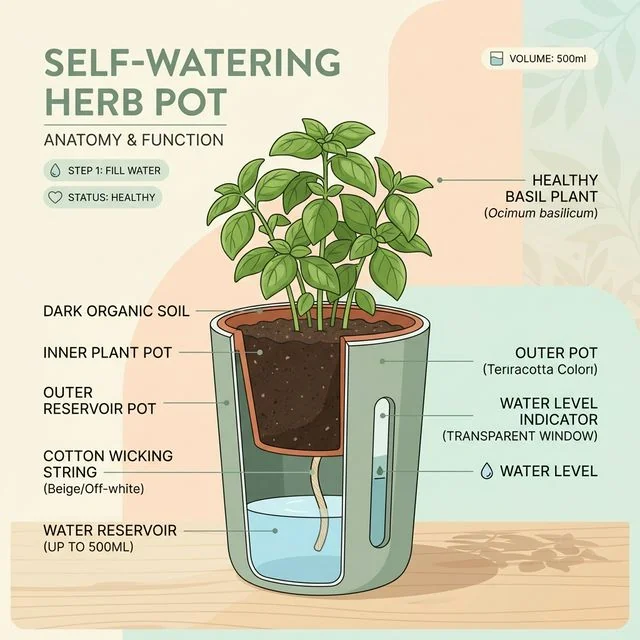
Self-Watering Pots for Herbs: Worth It or More Trouble?
Self-watering pots sound like the holy grail for busy gardeners. While they are fantastic for moisture-loving herbs like mint, they can quickly turn into a swamp of rotting roots for drought-tolerant plants like rosemary.
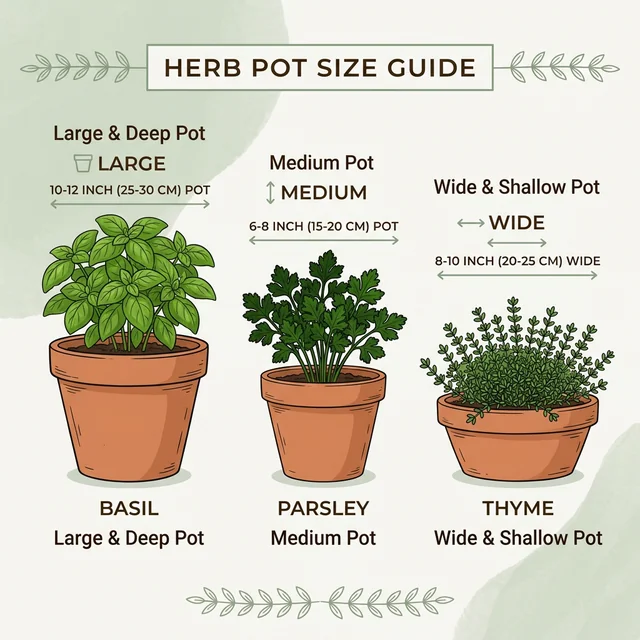
Herb Pot Size Guide: Best Pot Sizes for Basil, Mint, Parsley, Thyme, and Chives
Stop suffocating your herbs in tiny decorative cups. This guide breaks down the exact container sizes needed for the most common indoor and balcony herbs.
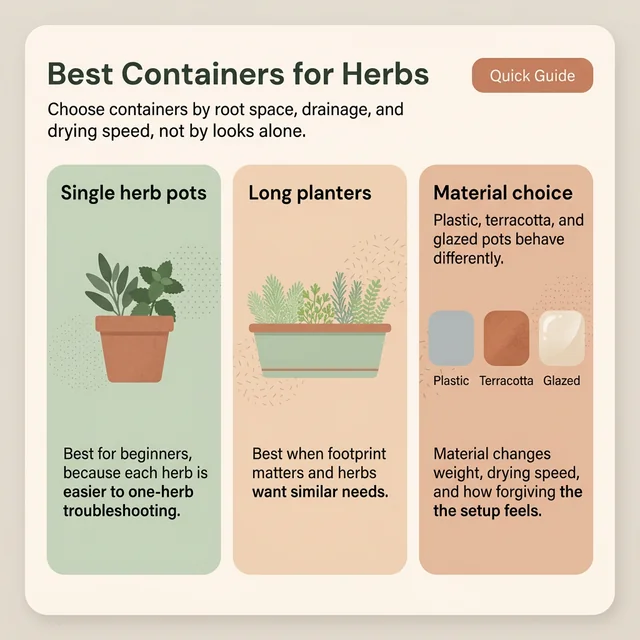
Best Containers for Herbs: Pot Size, Drainage, and Material Guide
A practical guide to selecting herb containers that make watering easier, reduce root problems, and actually suit apartments, balconies, and windowsills.