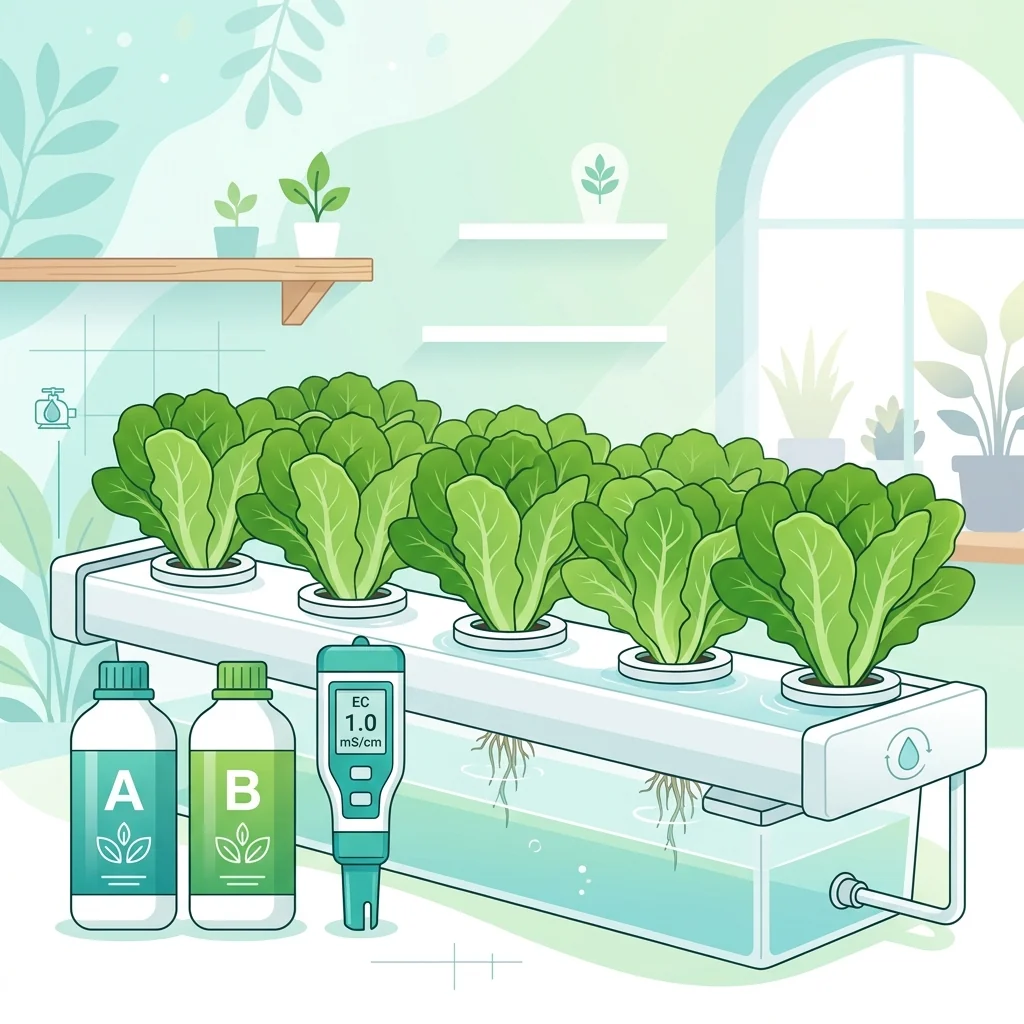
Hydroponic lettuce nutrient targets
| Setting | Target | Note |
|---|---|---|
| EC | 0.8 - 1.2 | Lower end for seedlings and warm water |
| pH | 5.5 - 6.0 | Stay in range; do not chase exact |
| Formula type | One-part or two-part (A+B) | Complete, with micronutrients |
| Nutrient bias | Nitrogen-forward | Leafy growth, not flowering |
Editorial note: Retailer links are untracked shopping references; Urban Harvest Lab does not currently receive a commission from them. Recommendations are based on stated features and suitability criteria, not on undocumented hands-on testing.
Lettuce can use a complete soluble nutrient labelled for hydroponic leafy crops; it does not require a bottle carrying the word “lettuce.” The correct concentration depends on cultivar, stage, source water, climate, and the manufacturer’s formulation. Use the lettuce EC and pH chart as a monitored starting range, not a universal recipe.
What lettuce actually needs
Lettuce needs all essential elements in soluble form. A product should list calcium, magnesium, sulfur, and micronutrients as well as N-P-K, or provide clear instructions for the complementary components that complete the recipe. Tip burn is a calcium-distribution disorder influenced by rapid growth, humidity, airflow, temperature, and root-zone conditions; EC alone does not diagnose it.
There is no named-product winner without side-by-side testing. Compare formulations using the label-first process below, then buy the smallest quantity that can be stored safely through its useful life.
Browse hydroponic lettuce nutrients on Amazon
Get the numbers right, not the brand
For lettuce, the exact brand matters far less than mixing to target:
- Mix to an EC of 0.8 to 1.2 — the full targets by crop are in the hydroponic lettuce EC and pH chart.
- Set pH to 5.5 to 6.0 after adding nutrients.
- Add parts separately and mix correctly, per how to mix hydroponic nutrients.
One-part vs two-part for lettuce
A one-part formula is operationally simple only when it is complete at the source-water conditions in use. Two- and three-part systems keep incompatible concentrated salts separate and may offer more control, but they add measurement steps. Count required supplements: a cheap base that needs separate calcium-magnesium may not be the simplest or least expensive system.
Use a label-first selection checklist
Before purchase, verify:
- explicitly intended for hydroponic or soilless edible crops;
- a guaranteed analysis with micronutrients, or a documented complete recipe;
- instructions for reservoir volume rather than vague capfuls;
- compatibility with hard or soft source water if the manufacturer distinguishes them;
- batch or lot identification, storage directions, and an accessible safety data sheet;
- no need to combine concentrates directly.
For powder, compare cost per correctly mixed litre, not package price. For liquids, account for every required part and shipping weight. Avoid buying a season’s supply before confirming that the product dissolves cleanly and your source water is workable.
Commission a new nutrient without sacrificing the crop
- Measure source-water EC before adding anything.
- Mix a small reservoir exactly in the manufacturer’s order.
- Record each mass or volume rather than relying on memory.
- Measure final EC and pH after mixing and circulation.
- Test on a small group before changing every plant.
- Track solution volume, EC, pH, root appearance, and new growth for seven days.
EC reports total ionic conductivity, not which nutrient is present. A target reading cannot prove that calcium, iron, or another element is balanced. When the same EC produces poor growth after a formula change, review the complete recipe and environment rather than adding concentrate blindly.
Compare value without invented product winners
The most useful buyer metric is cost per stable crop cycle. Include nutrient, required supplements, pH adjustment, measuring equipment, discarded solution, and failed batches. Convenience also has value: a formulation whose instructions you can execute repeatably may outperform a cheaper but error-prone multi-part recipe at home.
Underfeed rather than overfeed
When growth is slow, check light, spacing, water temperature, oxygen, roots, and cultivar before increasing concentration. Change in small documented steps and judge new growth. Dilute or replace solution that exceeds the chosen range rather than counter-dosing it with unrelated additives.
Ready to buy? Browse lettuce-friendly hydroponic nutrients on Amazon, then mix to the 0.8-1.2 EC target with the lettuce EC and pH chart beside you.
Sources and further reading
Use your lettuce nutrients with these guides
These guides cover the general nutrient options, the exact EC and pH targets, and how to mix to your number.
Common questions
What are the best hydroponic nutrients for lettuce?
A complete, water-culture nutrient with full micronutrients, run at a low EC of about 0.8 to 1.2. Well-regarded options include the General Hydroponics Flora series, Masterblend Tomato formula (widely used for lettuce), and FoxFarm liquid lines. Lettuce is a light feeder, so any complete formula mixed weak works well.
What EC and pH does hydroponic lettuce need?
Aim for an EC of 0.8 to 1.2 and a pH of 5.5 to 6.0. Lettuce grown too strong turns bitter and can suffer tip burn, so mix to the lower end, especially for seedlings and in warm water.
Can I use general-purpose hydroponic nutrients for lettuce?
Yes. A general complete formula like the ones in our best hydroponic nutrients guide grows excellent lettuce; just mix it to lettuce's low EC rather than full label strength, which is aimed at hungrier fruiting crops.
Do I need special "lettuce" nutrients?
No. There is rarely a need for a lettuce-specific bottle. A complete leafy-green or all-purpose hydroponic nutrient, mixed weak and kept in the right pH range, is all lettuce needs.
Related guides
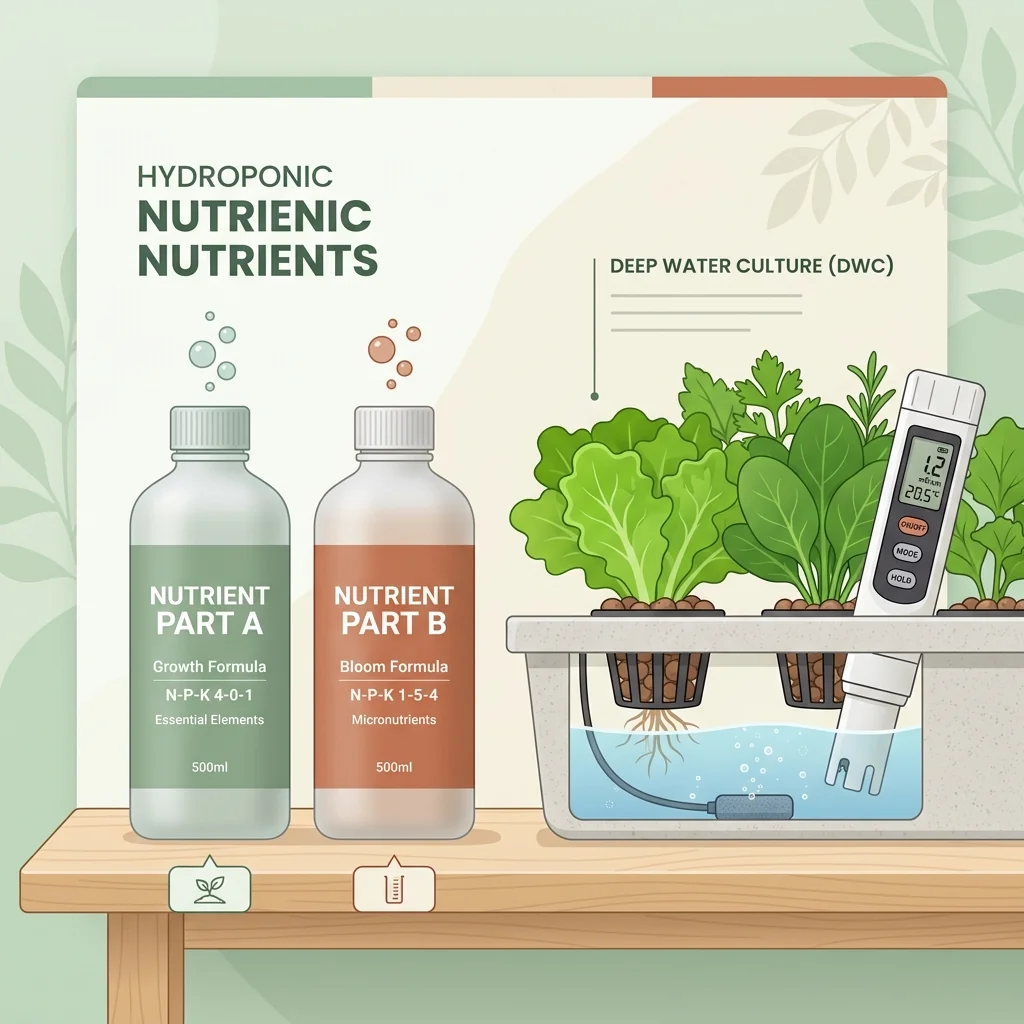
Best hydroponic nutrients for herbs and greens
Leafy greens and herbs do not need exotic nutrients, just a complete, balanced formula with the right micronutrients. Here is what to look for and which type to pick.
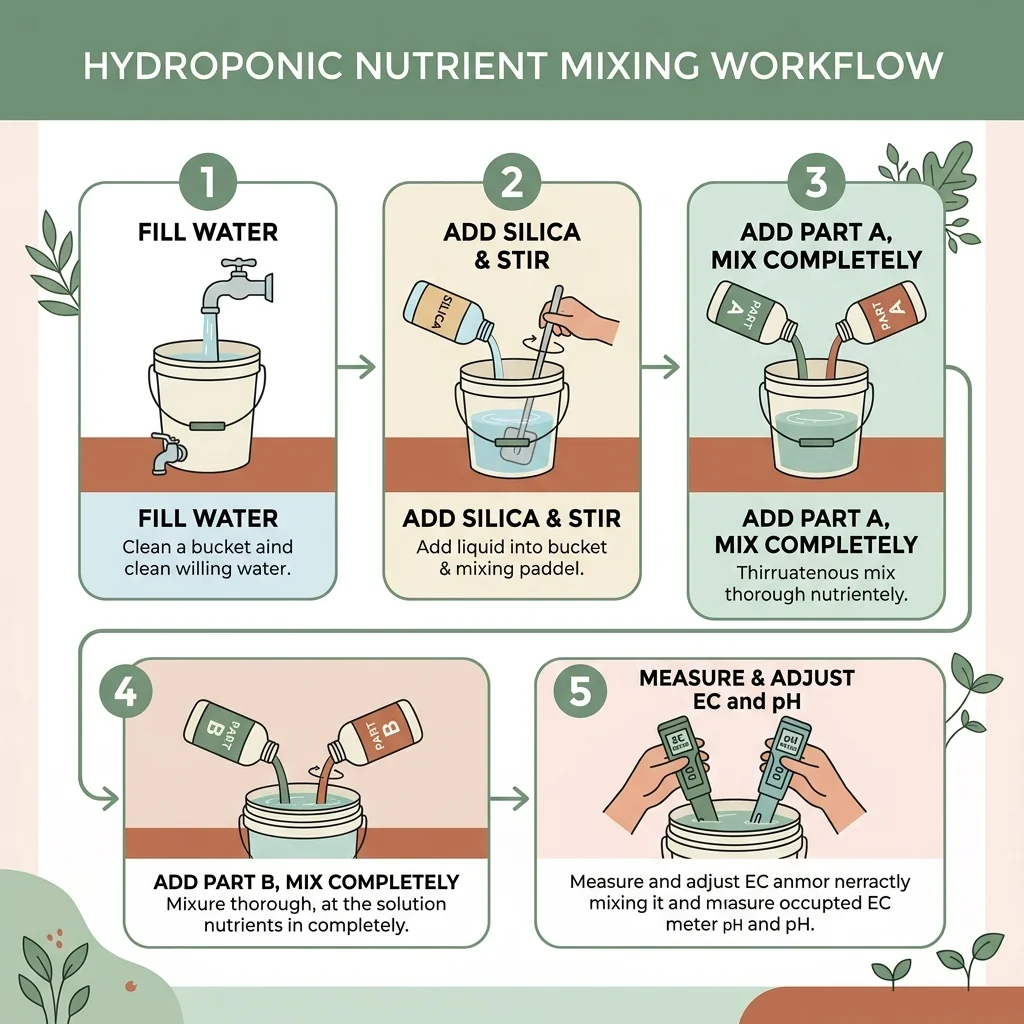
How to mix hydroponic nutrients: a beginner guide
Mixing hydroponic nutrients is simple once you know the order: water first, nutrients separately, measure EC, then adjust pH last. Here is the step-by-step.
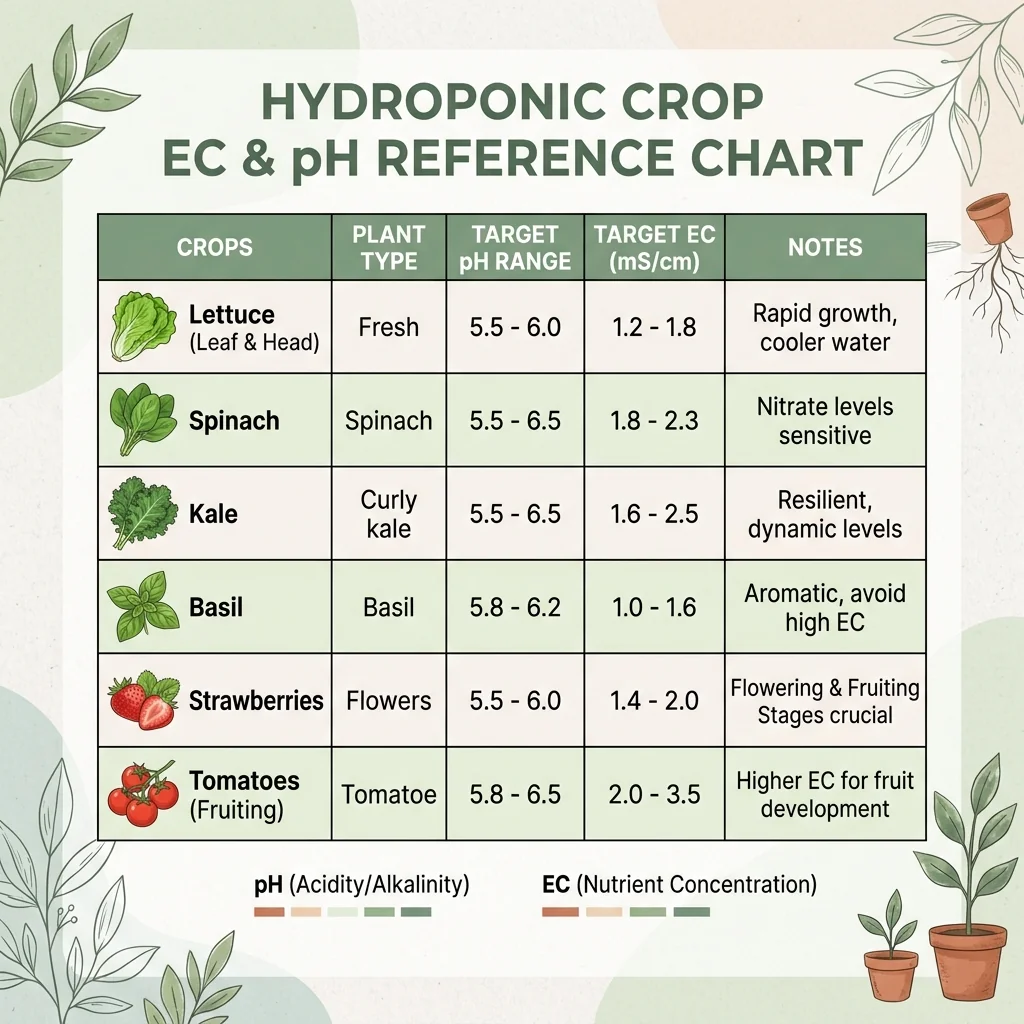
Hydroponic EC chart by crop (not just lettuce)
One reference chart for the EC and pH targets of common hydroponic crops, from leafy greens and herbs to fruiting plants, plus how to use the numbers safely.