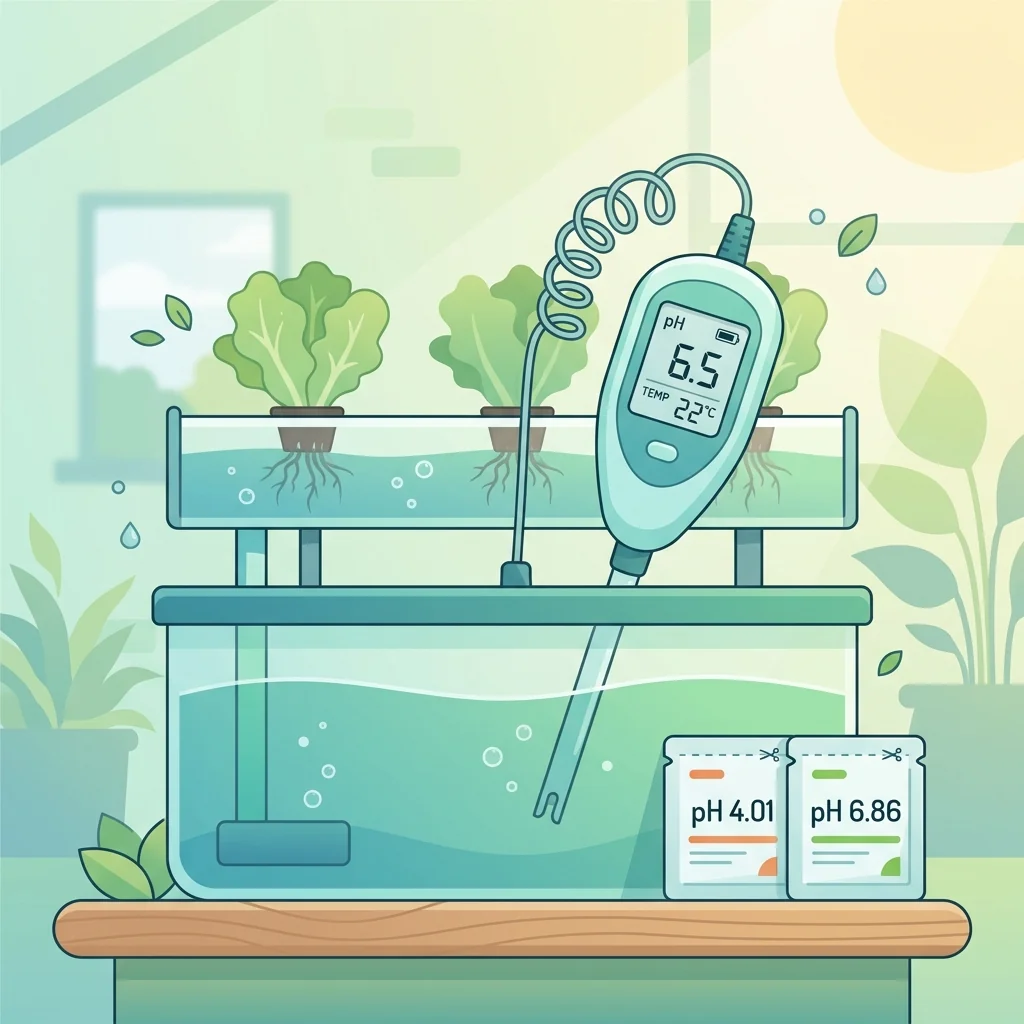
pH testing options for hydroponics
| Option | Accuracy | Best for | Catch |
|---|---|---|---|
| Digital pH pen | High (0.01) with ATC | Daily hydroponic use | Needs calibration and wet storage |
| Combo pH + EC meter | High | One-device simplicity | Costs more; one failure loses both |
| Liquid drop kit | Medium (0.5 steps) | Backup checks | Subjective colour reading |
| Paper strips | Low | Emergencies only | Too coarse for 5.5-6.5 window |
Disclaimer: As an Amazon Associate, Urban Harvest Lab earns from qualifying purchases made through the links on this page. We only recommend products we would use in our own setups.
pH is the reading a hydroponic grower acts on most, so the meter is the one tool worth choosing deliberately. As a quick answer: buy a digital pH pen with 0.01 resolution, automatic temperature compensation (ATC), and easy two-point calibration. Strips and drop kits are too coarse for the 5.5 to 6.5 window hydroponic crops live in. If you want a single guide to both meters, see best EC and pH meters for home hydroponics — this page goes deeper on the pH side specifically.
What actually matters in a pH pen
- 0.01 resolution. Hydroponic targets are tight (lettuce wants 5.5 to 6.0); a pen reading in 0.1 steps is workable, 0.01 is comfortable.
- Automatic temperature compensation. Reservoir temperature shifts readings; ATC corrects for it automatically.
- Two-point calibration. The pen should calibrate against pH 7 and pH 4 buffers with a button press, not a screwdriver.
- A replaceable or affordable electrode. Electrodes age no matter the brand; plan for it.
Hobby-level pens from Apera and Bluelab are the usual reliable picks; generic budget pens also work if you calibrate them often.
Browse hydroponic pH meters on Amazon
Why not strips or drop kits?
Paper strips read in half-point steps at best, and both strips and drops rely on judging a colour — hard when your solution is already tinted by nutrients. Against a target window only one point wide, that is guesswork. Keep a drop kit as a backup for sanity-checking a suspicious pen reading, nothing more.
Accuracy is a habit, not a price tag
Most “broken” pH pens are just uncalibrated or badly stored. Whatever you buy:
- Calibrate weekly with fresh pH 7 and pH 4 buffer solution.
- Store the electrode wet — in storage solution or pH 4 buffer, never dry and never in distilled water.
- Rinse between uses and replace the pen (or electrode) when calibration will not hold.
A calibrated budget pen beats a neglected premium one every time.
Using the readings
A meter only pays off if you act on it: the correction routine is in how to raise and lower pH in hydroponics, the drift diagnosis in why hydroponic pH keeps rising, and the crop targets in the lettuce EC and pH chart.
Use your pH meter with these guides
These guides cover the combined EC and pH gear picks, what your readings mean, and how to correct them.
Common questions
What is the best pH meter for hydroponics?
A digital pH pen with 0.01 resolution, automatic temperature compensation (ATC), and simple two-point calibration. Well-regarded options include Apera and Bluelab pens at the hobby level; budget pens work too if you calibrate them often and store them wet.
Are cheap pH meters accurate enough for hydroponics?
Often yes, if you look after them. A budget pen calibrated regularly against buffer solution beats an expensive pen that never gets calibrated. The failure mode of cheap pens is drift, so calibrate weekly and replace the pen when it will not hold calibration.
Are pH strips good enough for hydroponics?
Not really. Strips and liquid drop kits read in steps too coarse for the 5.5 to 6.5 hydroponic window, and colour reading is subjective in nutrient-tinted water. They are fine as an emergency backup, not as your main tool.
How often should I calibrate a hydroponic pH meter?
Weekly for most home systems, or before any reading you are about to act on. Use fresh pH 7 and pH 4 buffer solutions, rinse the electrode, and store it with the cap wet (storage solution or pH 4 buffer, never distilled water).
Related guides
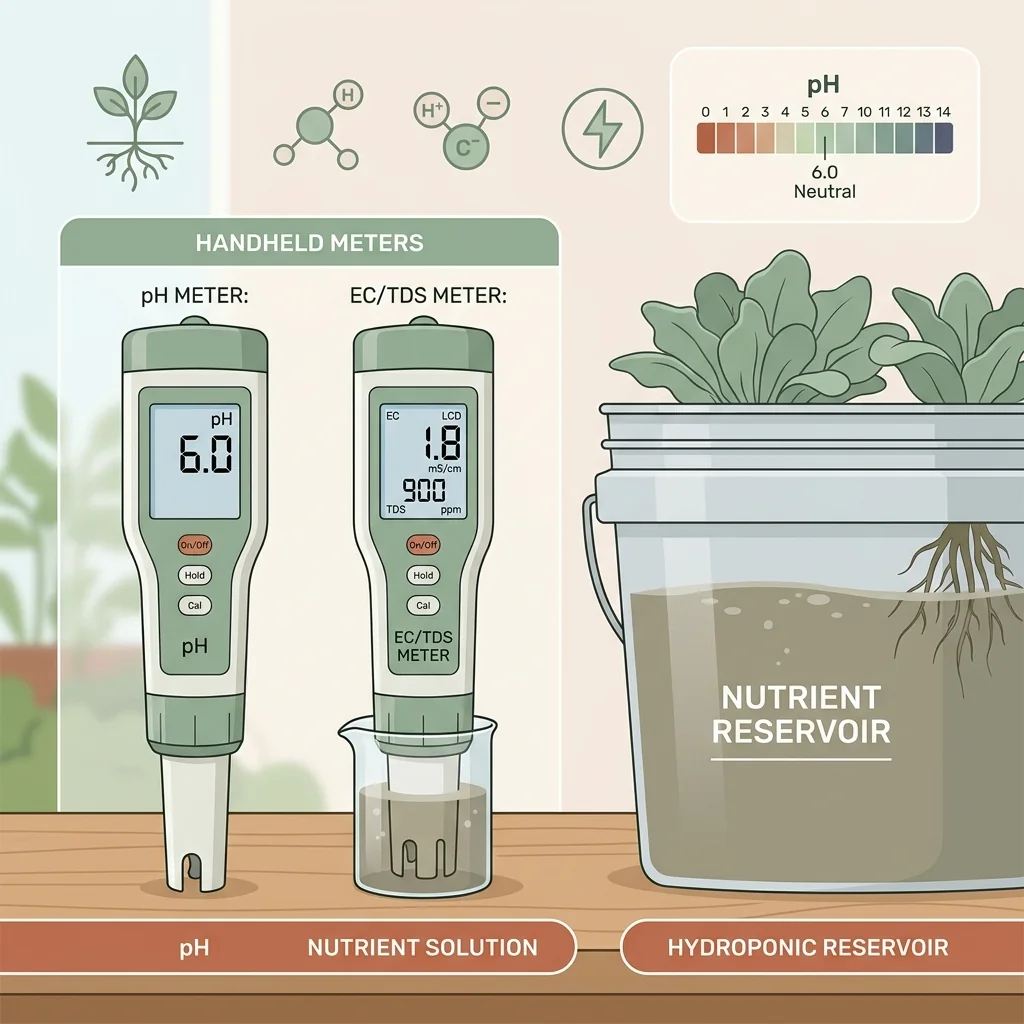
Best EC and pH meters for home hydroponics
An EC meter and a pH meter are the two tools that make hydroponics predictable. Here is what matters when choosing them and which to prioritise.
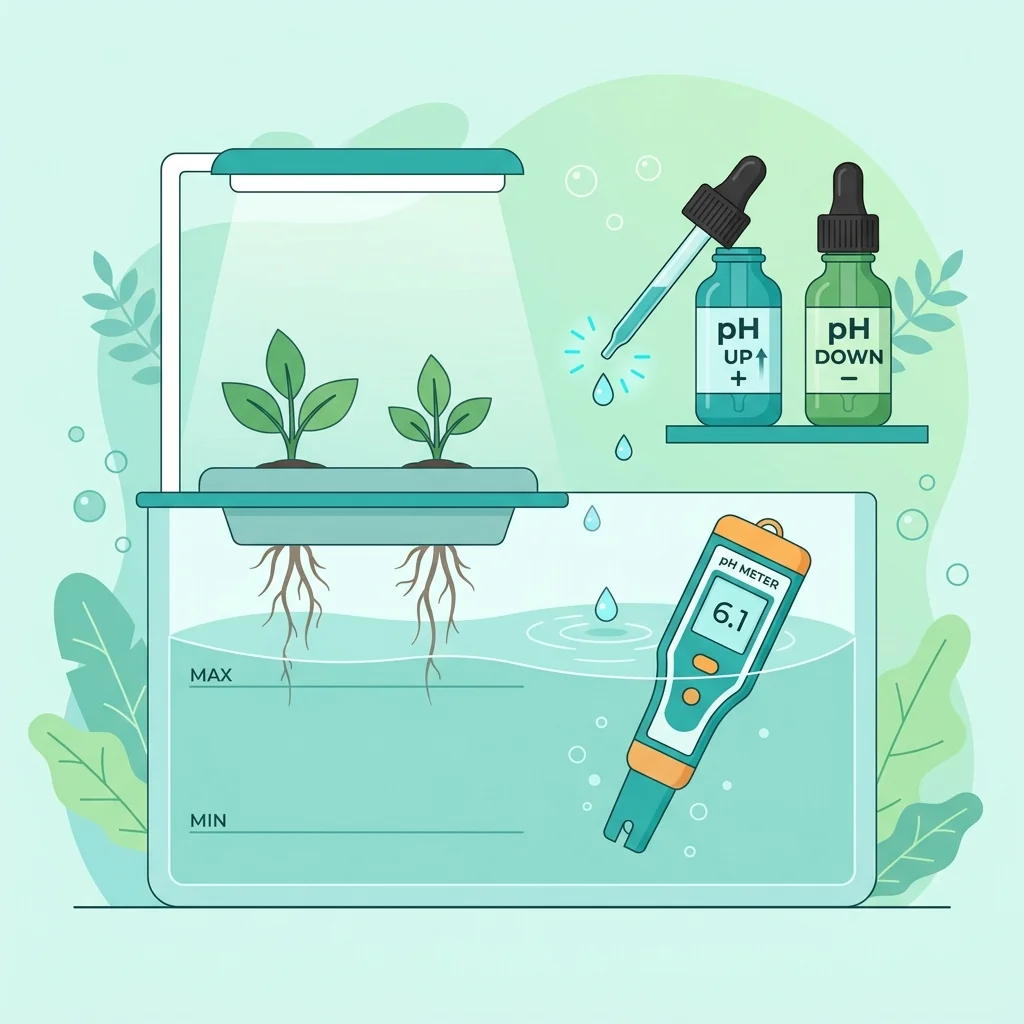
How to raise and lower pH in hydroponics (safely)
Adjusting hydroponic pH is simple once you know which product does what. Here is how to raise and lower pH safely, in small steps, without chasing the meter.
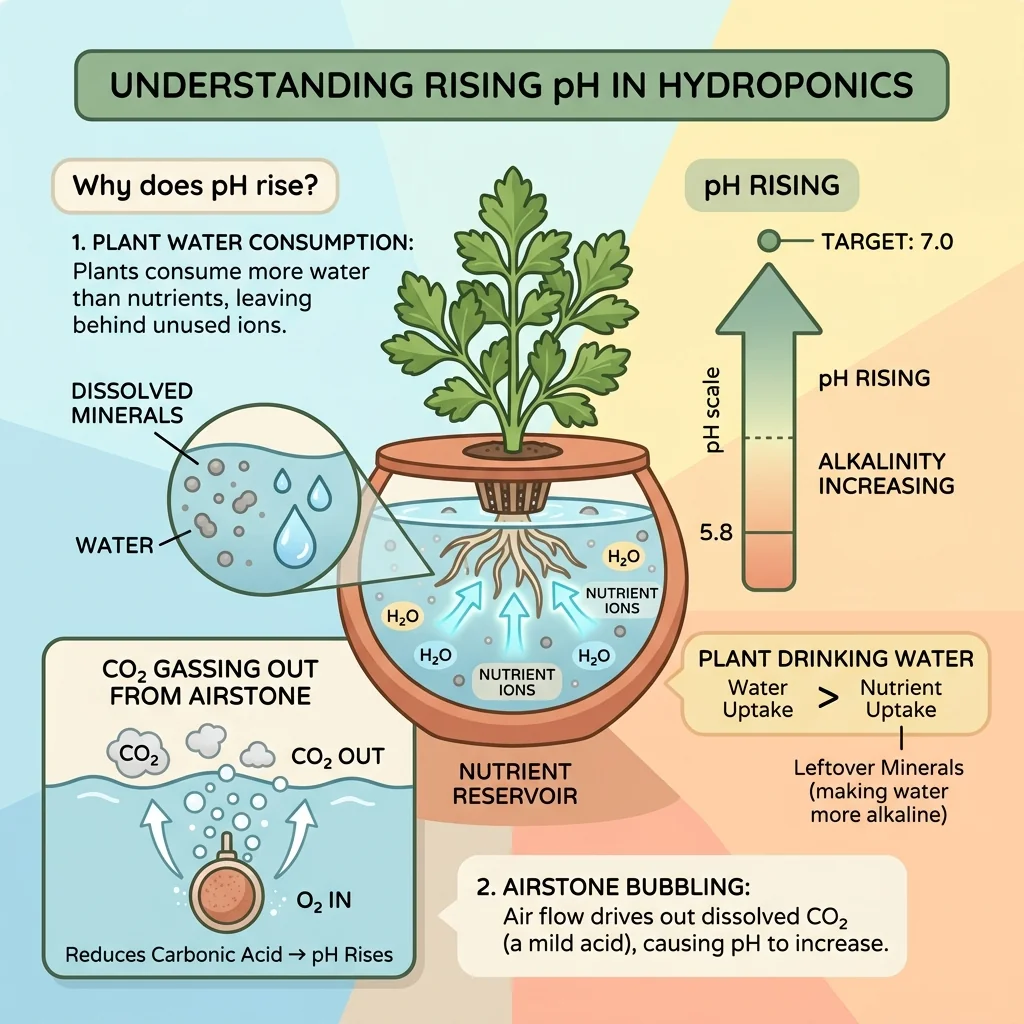
Why pH keeps rising in hydroponics (and how to stop it)
You balanced your hydroponic reservoir to a perfect 5.8 pH. Two days later, it has drifted back up to 6.8. This constant upward drift is the bane of hydroponic growers. Here is the chemistry behind why it happens and how to fix it.