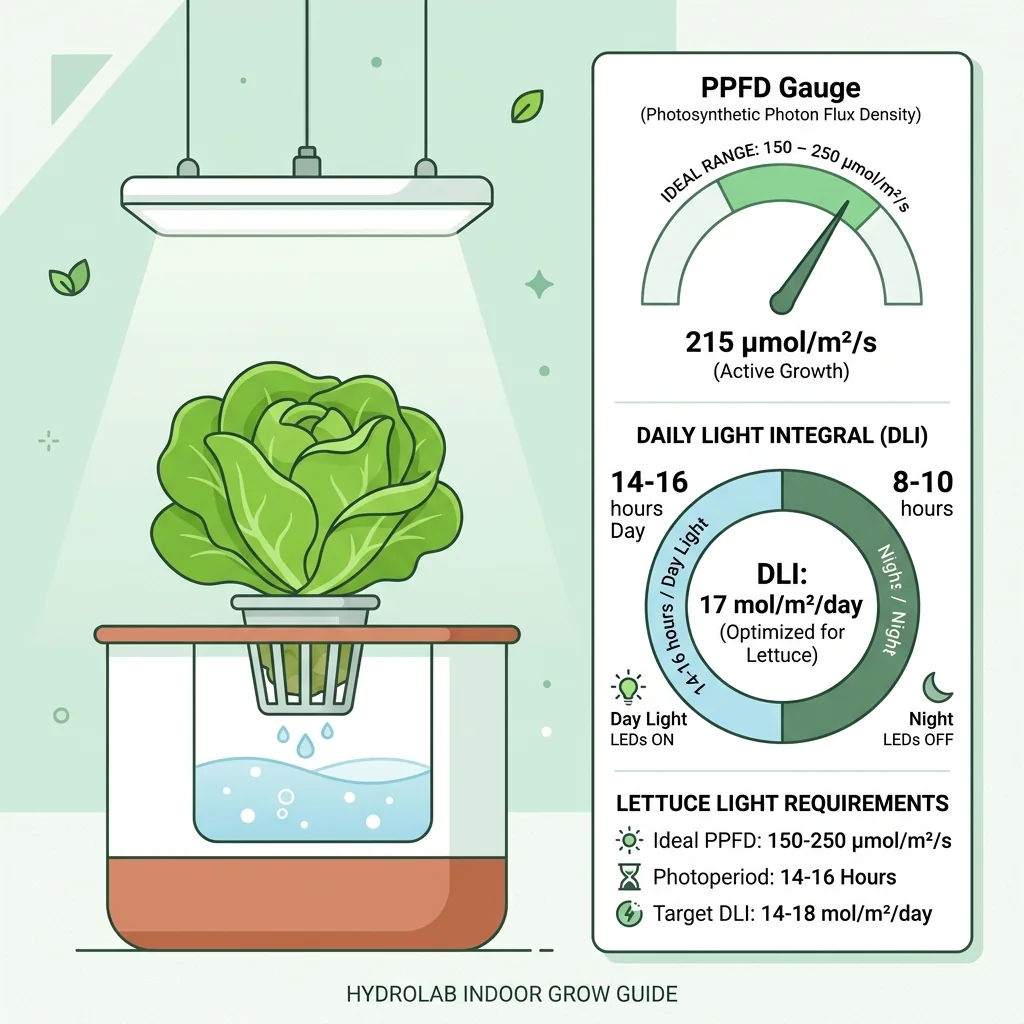
Indoor Lettuce Lighting Zones
| PPFD Range (µmol/m²/s) | Plant Reaction | Growth Speed | Risk Level |
|---|---|---|---|
| Below 100 | Etiolated, leggy stems. Pale green, thin leaves. | Severely Slow | High (Weak stems collapse) |
| 150 to 250 (Ideal) | Compact, thick leaves. Dense rosettes, deep green color. | Explosive / Balanced | Zero |
| Above 300 | Leaf margins curl and bleach. Rapid development of Tip Burn. | Fast but Stressed | High (Bitter taste, early bolting) |
In the world of indoor agriculture, there is a common misconception that “more is always better.” Beginner growers often buy the most powerful, high-wattage LED panels they can find, hang them right above their hydroponic trays, and run them 24 hours a day.
If you do this with fruiting crops like tomatoes or cannabis, they will reward you. If you do this with lettuce, you will kill it.
Lettuce is physically designed as a cool-weather, understory crop. It does not want to bake under a miniature sun. Instead, it thrives under a highly specific range of soft, consistent light. Understanding the exact metrics of light intensity and duration is the difference between pulling a lush, sweet, heavy head of butterhead from your DWC system, or harvesting a bitter, leggy bunch of yellowing weeds.
The Direct Quick Answer
Indoor hydroponic lettuce needs medium-intensity, full-spectrum light for 14 to 16 hours per day, followed by a strict 8 to 10 hours of complete darkness.
Mathematically, this translates to:
- Light Intensity (PPFD): 150 to 250 µmol/m²/s at the canopy level.
- Daily Light Integral (DLI): 14 to 18 mol/m²/day.
If your light intensity drops below 100 PPFD, your lettuce will grow long, pale, and spindly (leggy) as it stretches searching for light. If it rises above 300 PPFD, the leaves will dry out, curl, develop severe Tip Burn, and trigger early, bitter Bolting.
The Three Golden Metrics of Indoor Lighting
To master indoor lettuce growing, you must speak the language of professional horticultural physics. Forget about “watts” (which only measure electricity consumption) and look at these three biological metrics:
1. PPFD (Photosynthetic Photon Flux Density)
PPFD measures the exact amount of usable light that actually reaches the surface of your plant’s leaves per second. Think of it as the “intensity” of the rain of light.
- Why it matters: Lettuce leaves have thin cell walls. High-intensity light (above 300 PPFD) overloads their photosynthetic machinery, leading to localized heating, water loss, and cell death.
- How to measure it: You don’t need a $500 PAR meter. You can download free smartphone apps (like Photone) that use your phone’s front camera to accurately measure PPFD. Keep your lights adjusted to deliver 200 PPFD to the top leaves of your lettuce.
2. The Photoperiod (Daily Light Hours)
This is the number of hours your grow lights are turned on per 24-hour cycle.
- Why it matters: Unlike some crops, lettuce must sleep. During the dark hours, the plant ceases photosynthesis and performs cellular respiration, translocating sugars and building strong cell walls. As detailed in How Many Hours of Grow Light Do Herbs Need?, running lights 24/0 will severely stress leafy greens, causing hormonal imbalances and chemical bitterness.
- The Ideal Cycle: Set a digital timer for 15 hours ON and 9 hours OFF. This matches a perfect mid-spring day, promoting maximum leaf growth without trigger warnings.
3. DLI (Daily Light Integral)
DLI is the cumulative amount of light your plant receives over an entire day. It combines intensity (PPFD) and duration (Photoperiod) into a single mathematical score:
$$\text{DLI} = \text{PPFD} \times \text{Hours of Light} \times 0.0036$$
- Why it matters: Lettuce has a biological maximum DLI. If you give it a PPFD of 200 for 24 hours, the DLI is 17.28. If you give it 300 PPFD for 16 hours, the DLI is also 17.28.
- The Target: For lettuce, aim for a DLI of 14 to 18 mol/m²/day. This range is the absolute sweet spot for commercial growers and home enthusiasts alike. It provides enough total energy for rapid growth without risking heat stress or tip burn.
Troubleshooting Light Issues
If your system is not balanced, your plants will tell you within days. Learn to read their signals:
Signs of Too Little Light (Legginess)
If your lettuce is not receiving enough light (under 100 PPFD), it will prioritize survival over leaf volume.
- Symptoms: Stems become long, weak, and tall. The plant will fall over in its net cup. Leaves will be pale lime-green or yellow, thin, and translucent.
- Correction: Lower your grow lights closer to the plants (following the guidelines in Grow Light Distance for Seedlings), or increase the power setting on your LED dimmer.
Signs of Too Much Light (Singe and Stress)
If you are blasting your lettuce with too much light (above 300 PPFD or 20+ hours daily), the plant will burn.
- Symptoms: Leaf margins turn brown, dry, and crispy (Tip Burn). The overall plant stays extremely low to the DWC lid, forming a tight, congested head that cannot breathe. The leaves turn thick and leathery, losing their sweet, tender texture.
- Correction: Raise your grow lights higher, dim the intensity, and ensure your timer is not running past 16 hours.
By matching the natural cool-weather requirements of lettuce with an energy-efficient LED or fluorescent fixture set to 200 PPFD and a 15-hour timer, you will unlock rapid, healthy harvests while keeping your energy bills low.
Diagnosing slow or burnt growth?
Light levels work in lockstep with nutrients and reservoir conditions. Check these guides to balance your system.
Common questions
Can I grow hydroponic lettuce on a sunny windowsill without lights?
Only if the windowsill gets at least 5 to 6 hours of direct, unobstructed sunlight. In most homes (especially in winter), windowsill light is too weak, leading to leggy, pale plants. Supplementing with a cheap LED light is highly recommended.
Why are the tips of my lettuce leaves burning under my grow lights?
This is likely Tip Burn, caused by a localized Calcium deficiency. While excessive light intensity can worsen it, it is usually caused by lack of airflow preventing transpiration. Place a small fan near your canopy to resolve it.
Should I use a purple 'blurple' light or a full-spectrum white light?
Full-spectrum white LEDs (around 4000K) are vastly superior. Not only do they provide a balanced spectrum for leaf growth, but they also make it much easier to inspect your plants for pests, disease, and nutrient color shifts.
Related guides
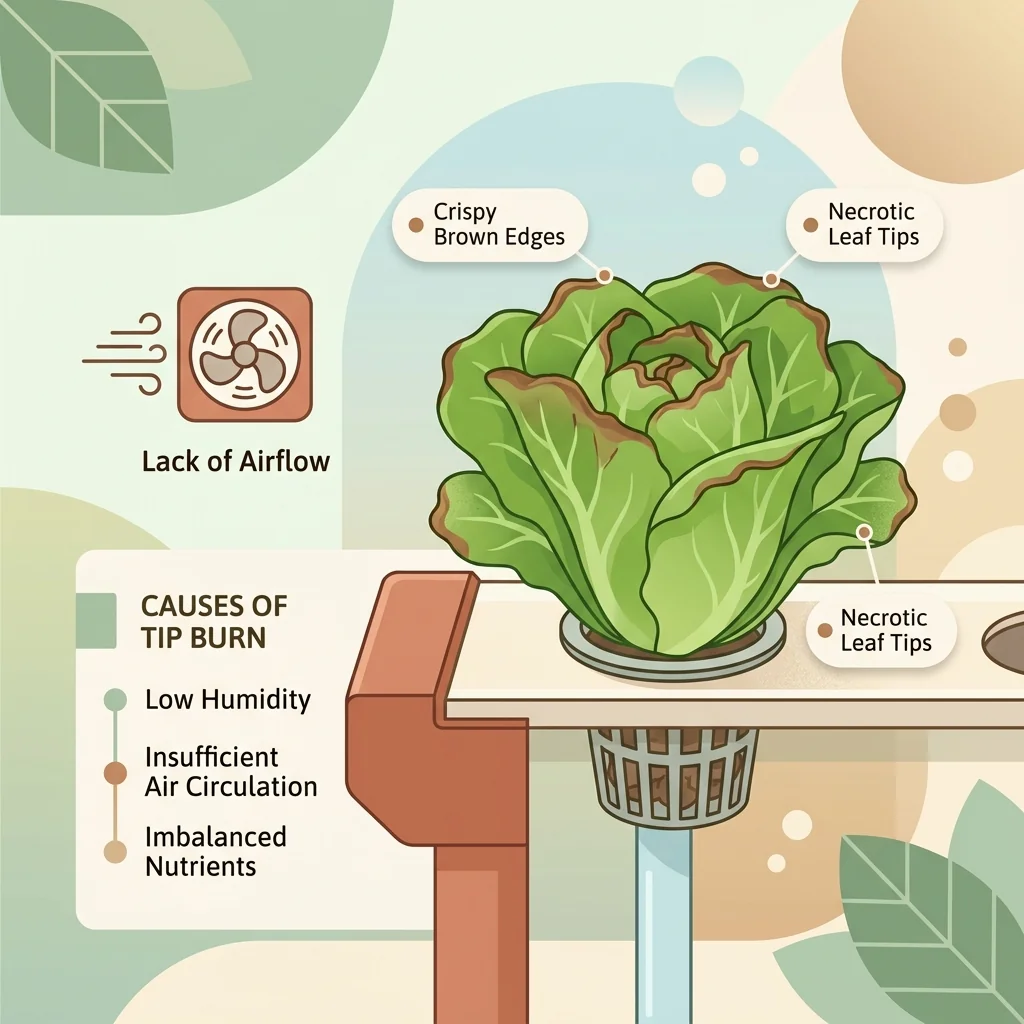
Hydroponic lettuce tip burn: causes, fixes, and what not to change
It is the most frustrating problem in indoor hydroponics: your lettuce looks perfect until the very edges of the youngest leaves turn brown and die. This is Tip Burn, and it is almost never caused by the nutrients in your reservoir.
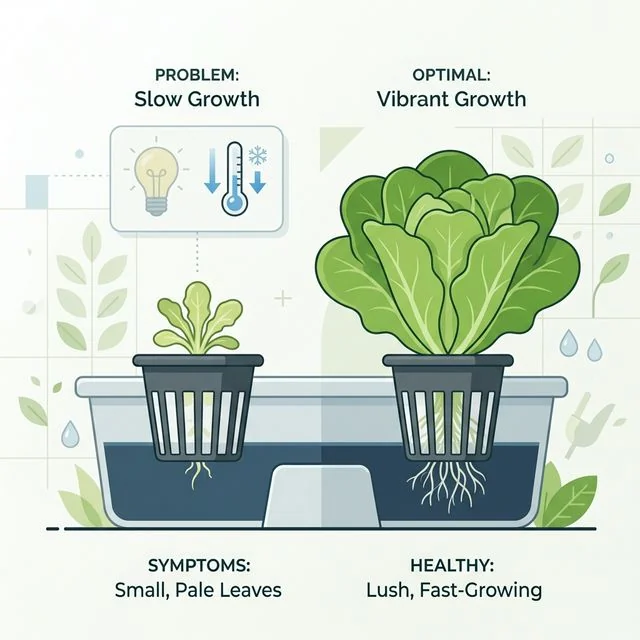
Hydroponic lettuce growing slowly? Check light, roots, and EC in order
Slow hydroponic lettuce is usually a systems problem, not a mystery deficiency. The goal is to find the bottleneck without overcorrecting five variables at once.
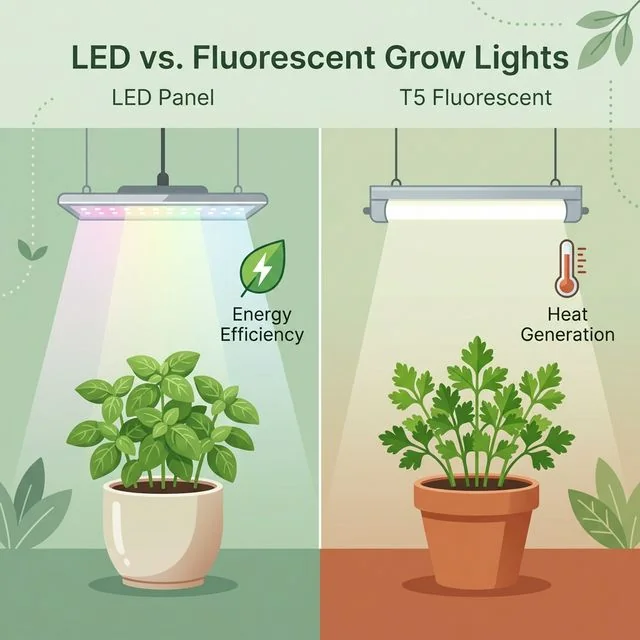
LED vs. fluorescent grow lights for herbs: which is better?
Fluorescent tubes used to be the gold standard for indoor gardeners, but modern LEDs have changed the game. Find out which technology is right for your space and budget.