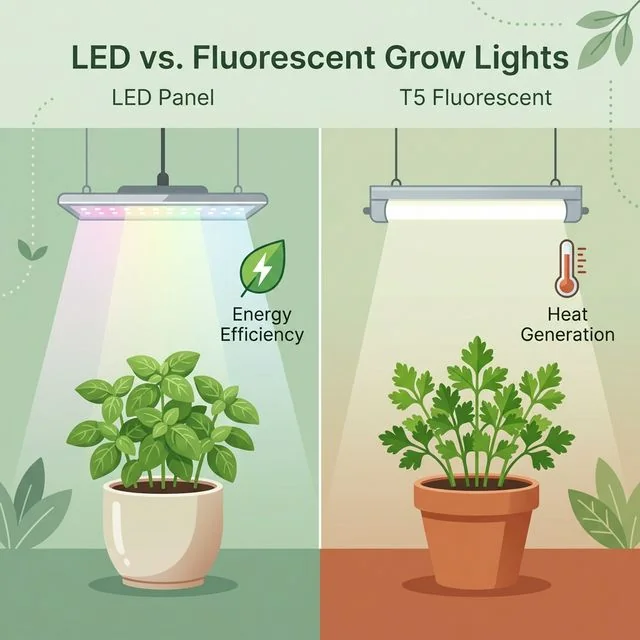
LED vs. Fluorescent Breakdown
| Feature | Modern LED Panels | T5 Fluorescent Tubes |
|---|---|---|
| Upfront Cost | Moderate to High | Low |
| Energy Efficiency (Monthly Cost) | Excellent (very cheap to run) | Poor (consumes more electricity) |
| Heat Output at the canopy | Low | Moderate to High |
| Lifespan | At least 25,000 hours to L70 (no bulbs to change) | 10,000 hours (bulbs degrade yearly) |
| Spectrum | Full-Spectrum White (highly tailored) | Cool White or Warm White |
If you have decided to move your herb garden indoors, you have already accepted that the sun cannot do all the work. As we outlined in How Much Light Do Indoor Herbs Actually Need?, culinary herbs require massive amounts of energy to produce the essential oils that give them flavor.
When you start shopping for artificial lights, you will immediately hit a fork in the road. Half the internet will recommend classic “T5 Fluorescent Tubes,” and the other half will swear by “Full-Spectrum LEDs.”
Ten years ago, this was a difficult debate. Today, the technology has shifted dramatically. Here is everything you need to know about the two dominant grow light technologies, how they operate, and which one belongs in your home.
Quick answer: are LED or fluorescent grow lights better for herbs?
For almost every home grower, LED wins. Modern full-spectrum LED panels use about half the electricity of T5 fluorescents for the same usable light, run cool enough to sit inches above basil, are built to a design goal of at least 25,000 hours to L70 with no bulbs to replace, and deliver a tailored spectrum. Fluorescent tubes are only better on one count: a lower upfront price. If budget is the deciding factor, a T5 still starts seedlings well; otherwise, buy an LED. The full breakdown is below.
The Old Reliable: Fluorescent Grow Lights (T5s)
Before LEDs became affordable, high-output fluorescent tubes (specifically the ‘T5’ designation, meaning they are 5/8ths of an inch in diameter) were the absolute gold standard for indoor seed starting and herb growth.
They work by passing an electrical current through a tube filled with argon gas and mercury vapor, causing a phosphor coating on the inside to glow.
The Pros of Fluorescents
- Cheap Upfront Cost: You can walk into any hardware store and buy a dual-tube fluorescent shop light for a fraction of the cost of a premium LED panel. For gardeners on a strict budget, this makes the barrier to entry very low.
- Soft, Diffused Light: Because the light emits from a long, frosted tube, it scatters widely. This prevents “hot spots” beneath the fixture.
- Great for Seedlings: The “cool white” spectrum (6500K) of a standard T5 is highly effective for sprouting seeds and keeping very young herbs from stretching.
The Cons of Fluorescents
- The Heat: Fluorescents throw off noticeably more heat than LEDs. In a small apartment closet or a closed grow tent, a large T5 fixture can push the ambient temperature well above what cool-weather herbs like cilantro are comfortable in.
- The “Hidden” Cost: While they are cheap today, they devour electricity relative to their output. Furthermore, the phosphor coating inside the tube degrades. Even if the bulb still turns on, a fluorescent tube loses about 20% of its photosynthetic power after 12 months. You must replace the bulbs annually.
- Bulky and Fragile: They contain toxic mercury, are wrapped in thin glass, and take up a significant amount of overhead space.
The Modern Solution: LED Grow Lights
Light Emitting Diodes (LEDs) produce light exactly as the name suggests—by passing a current through a microchip (the diode), which illuminates.
A decade ago, LEDs were expensive, emitted a harsh “blurple” (blue/purple) alien light, and were mostly used by commercial growers. Today, the invention of “Quantum Boards”—panels filled with thousands of tiny, highly efficient white diodes—has completely revolutionized indoor gardening.
The Pros of LEDs
- Massive Energy Efficiency: A 100-watt LED panel produces the same amount of usable plant light as a 200-watt fluorescent fixture. They pay for their higher upfront cost rapidly via a lower monthly electric bill.
- Less Heat at the Canopy: LEDs convert more of their electricity into light, so far less arrives at the leaf as radiant heat and you can place them much closer to delicate basil without scorching it. The energy that does not become light still becomes heat — it just leaves through the heatsink and driver rather than the canopy, which is why ventilation around the fixture still matters.
- Incredible Lifespans: There are no bulbs to change. A quality LED panel is built to ENERGY STAR’s design goal of at least 25,000 hours before its diodes fall to 70 percent of their original output (L70). On a 12 to 16 hour day that works out to somewhere between roughly four and six years of use.
- Customized Spectrums: Modern “full-spectrum” LEDs emit a brilliant, pleasing white light that mimics the actual sun. They look beautiful over a kitchen counter, seamlessly blending with your home decor.
The Cons of LEDs
- Initial Price: High-quality diodes run hot internally, meaning the panels require heavy aluminum heat sinks to cool themselves. This hardware adds to the upfront manufacturing cost.
- Overwhelming Intensity: LEDs are incredibly powerful. If you buy a strong commercial panel and hang it too close to a shade-loving herb like mint, you can actually bleach the leaves white.
The Verdict: Which Should You Buy?
If you are just starting and want specific brand recommendations, jump straight to Best Grow Lights for Herbs (Buyer’s Guide).
However, if you are simply choosing a technology: Buy LEDs.
While older gardeners affectionately defend their trusted T5 fluorescent racks, the sheer efficiency, longevity, and superior spectrum of modern Quantum Board LEDs have objectively won this war.
For an apartment dweller, how little heat lands on the leaves is the most critical factor. An LED lets you grow heat-sensitive lettuce and basil in small, enclosed spaces without an exhaust system to cool the room — though an enclosed cabinet still needs a path for the heat leaving the heatsink and driver.
Save up the extra $30, skip the fragile glass tubes, and invest in a modern white-light LED panel. Your herbs—and your electric bill—will thank you.
Related Guides
Still deciding on your setup?
Once you choose between LED and fluorescent, read these guides to figure out how many hours to run them and how high to hang them.
Common questions
Are LED or fluorescent grow lights better for herbs?
LED is better for most home herb growers. LEDs use roughly half the electricity of T5 fluorescents for the same light, run much cooler, are built to a design goal of at least 25,000 hours before output falls to 70 percent of new (L70), and offer a tailored full spectrum. Fluorescents only win on upfront cost, so they make sense mainly on a tight budget or for seed starting.
Can I just use a standard fluorescent office light?
You can, but it is highly inefficient. Standard office tubes push out light in the green/yellow spectrum for human eyes. Plants need heavily weighted blue and red spectrums to photosynthesize efficiently.
Why are "blurple" (blue/purple) LED lights so common?
Older LED models only used red and blue diodes (the core wavelengths for photosynthesis) because white diodes were expensive. Today, modern "Quantum Board" full-spectrum white LEDs are affordable, vastly superior, and look much better in a living room.
Do LED lights ever burn out?
The diodes in an LED light usually degrade slowly rather than "popping" like an incandescent bulb. Our guide to how long LED grow lights actually last covers the design-goal hours and how to tell when a fixture has faded.
Related guides
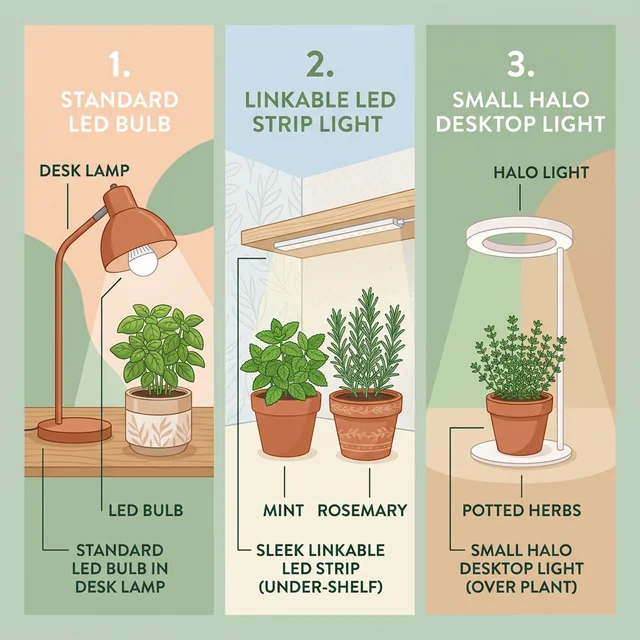
Best grow lights for herbs: what actually matters before you buy
Most indoor herbs don't need a massive, expensive grow tent light. Here is how to choose the right LED bulbs, strips, or halos for your real apartment setup.
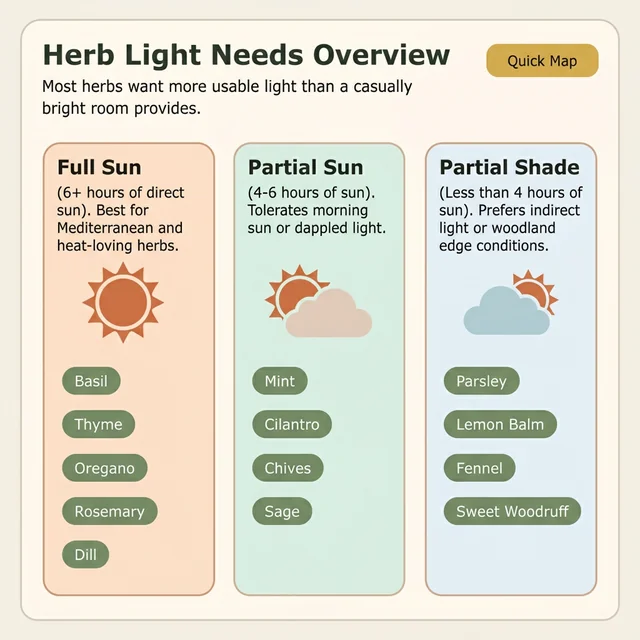
How much light do herbs need? 6+ hours of sun
A practical guide to how much light herbs need, including a quick answer for direct sun, indoor windows, and grow light setups that actually support growth.
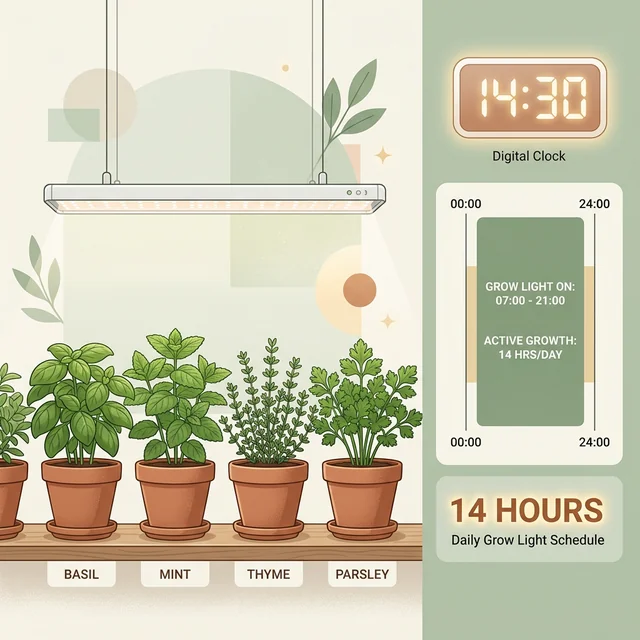
How many hours should grow lights run for herbs? 12-16
Most herb grow lights should run about 12 to 16 hours per day, but intensity, distance, and a stable dark period matter as much as the timer itself.