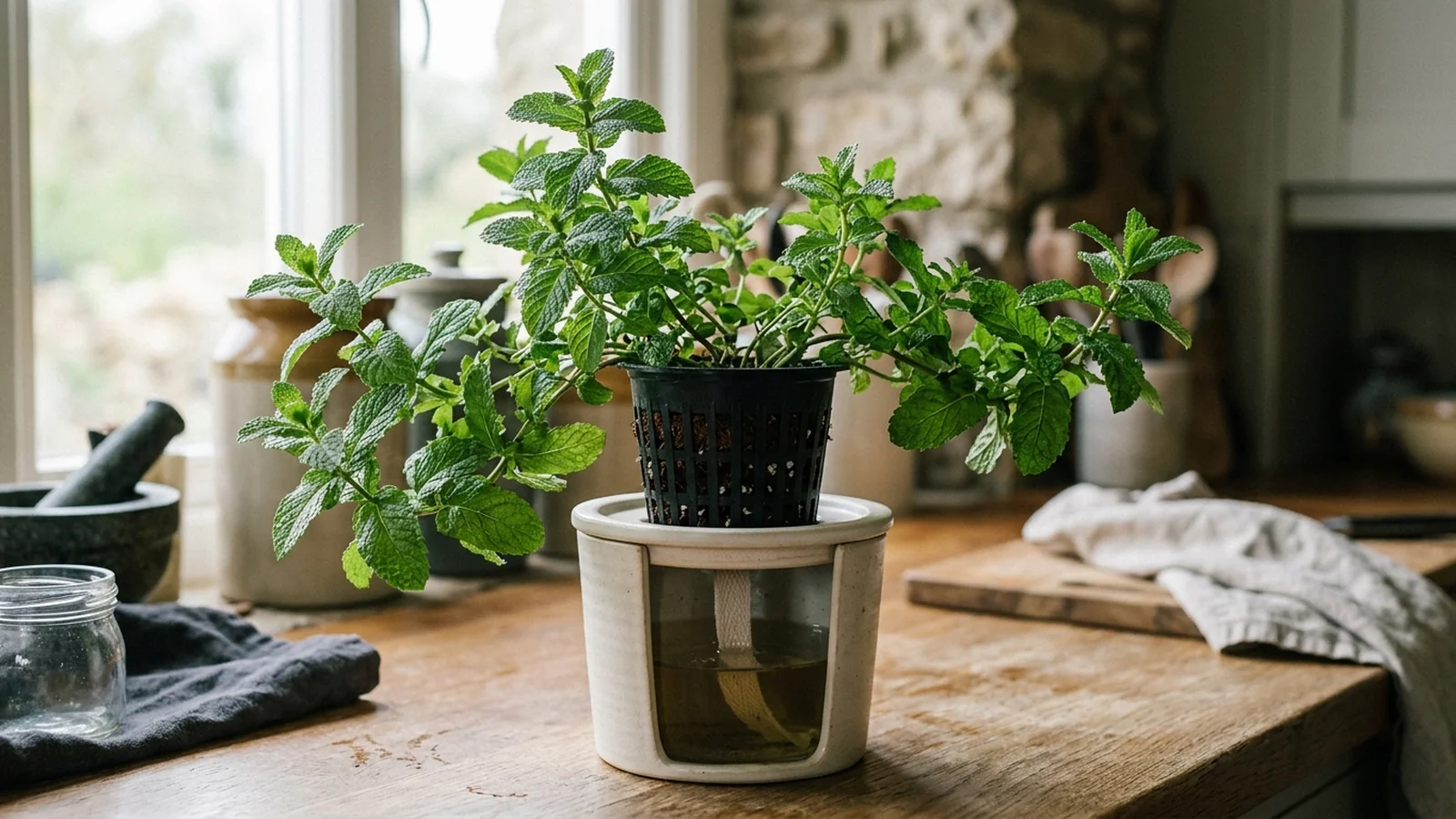
Where to grow hydroponic mint
| Setup | Root risk | Verdict |
|---|---|---|
| Shared NFT channel with other herbs | High - mint's stolons crowd slower-rooting neighbours | Avoid past the first few weeks |
| Dedicated DWC bucket | Low - mint has the reservoir to itself | Good fit for a single plant or two |
| Dedicated Kratky jar | Low, though the jar fills with roots over one cycle | Good for one harvest cycle, then restart |
Mint is one of the easiest hydroponic herbs to grow, and one of the few whose problem is too much growth rather than too little. Give it EC around 1.0 to 1.6 mS/cm and pH 5.5 to 6.5 — the general soft-herb range, since the university extension tables that publish per-crop hydroponic EC do not list mint — and grow it in a system of its own rather than a shared one. Mint spreads by stolons — creeping stems that run just below the surface and root again at every node — and a shared reservoir or NFT channel gives that habit exactly the open run it needs to crowd out whatever it’s sharing space with. For where mint sits against basil, chives, and parsley more broadly, see hydroponic herbs: which grow best and how.
The root habit that sets mint apart
Every gardener who has planted mint in open ground knows the outcome: a single root ball becomes a patch, then a bed, because mint does not grow from one crown outward so much as it walks. It spreads by stolons — creeping stems, not roots, that run just below the surface, rooting again at each node and sending up a new shoot from that point. Clemson Cooperative Extension’s herb guidance says mint “can become invasive if not confined,” an ordinary trait of the genus rather than a hydroponics-specific behaviour, and it is the reason mint escapes raised beds and border plantings that other herbs stay inside.
In soil, a stolon runs into compacted ground, a path edge, or a neighbouring plant’s crown and mostly slows down. In a hydroponic system there is no such resistance. An NFT channel is an open, wet, nutrient-rich corridor with nothing to stop a stolon from running its length; a shared reservoir is an open volume with the same lack of friction. Put mint in either one alongside basil or sage — both share mint’s 1.0 to 1.6 mS/cm range — and the two are not competing for EC or light so much as mint is physically occupying the root zone the other plant needs. Parsley is a different case: Oklahoma State’s 1.8 to 2.2 mS/cm figure for parsley sits well above mint’s range, so a shared reservoir with parsley has a nutrient conflict on top of the physical one. That is a different failure mode from the ones covered on most hydroponic herb pages, and it is the one worth planning around before mint goes into a tray at all.
Give mint its own reservoir
The straightforward fix is also the one the sources support without needing a mint-specific figure: keep mint out of a channel or reservoir it will have to share for more than a few weeks. A small deep water culture setup sized for one or two plants suits mint well, because the whole reservoir belongs to it and there is no neighbour for the roots to crowd. A Kratky jar works for a single harvest cycle, though expect the jar to fill with root mass by the time you would restart it — that is normal for a vigorous rooter in a fixed volume, not a sign anything is wrong.
If mint is already established in a shared NFT channel or community reservoir and has started crowding its neighbours, the practical move is to cut it back hard, lift what you can, and transplant the strongest section into its own container rather than trying to negotiate space within the shared system. Trying to prune mint’s roots in place, in a running channel, tends to disturb the plants around it more than it solves the crowding.
Water chemistry: the general herb range, not a mint-specific one
The reasonable range to grow mint at is the one its close relatives share: EC 1.0 to 1.6 mS/cm and pH 5.5 to 6.5. Oklahoma State University Extension’s per-crop table — the most complete crop-by-crop EC and pH reference available, covering 27 crops — lists basil at that same EC band and pH 5.5 to 6.0, and sage at the same EC band with pH 5.5 to 6.5; parsley sits noticeably higher, at 1.8 to 2.2 mS/cm. Mint does not appear in that table, and no extension source found gives mint its own figure.
If you are running mint in a mixed leafy-green or herb system rather than alone, Virginia Cooperative Extension’s broader deep-water-culture band for leafy greens generally — EC 1.2 to 2.0 mS/cm — is a reasonable ceiling to check a reading against, rather than a target to aim for on purpose. The full crop-by-crop breakdown for everything else growing alongside mint is in the hydroponic EC chart by crop, and the underlying reasoning for both numbers is in hydroponic nutrient basics.
Light, temperature, and feeding: general indoor-herb figures transfer
Penn State Extension’s indoor herb guidance is written for container culture, but its light and air-temperature figures carry over to a hydroponic setup because they describe the plant’s response to light and heat rather than anything specific to soil. Most herbs, mint included, want at least 6 hours of direct sunlight, or 6 to 12 inches from a pair of 40-watt cool white fluorescent bulbs for 14 to 16 hours a day; herbs tolerant of lower light get by on 2 to 6 hours of direct sun. Clemson Cooperative Extension puts mint in rich, moist soil in part shade, against full sun for basil, which is worth knowing if your setup has a dimmer spot to fill.
Penn State Extension’s air-temperature range is the same to carry over: at least 65 to 70°F during the day and 55 to 60°F at night. Most herbs tolerate the mid-to-low 40s°F without dying, though that is a survival floor, not a target. Penn State Extension’s fertilizing advice for indoor herbs is a low dose every two weeks; feeding more often than that is more likely to dull mint’s aroma and flavour than to speed its growth. Oklahoma State University Extension gives 72 to 75°F (22 to 24°C) as the optimal nutrient-solution temperature, and UF/IFAS gives a wider 65 to 80°F band; neither publishes a mint-specific root-zone figure, so the general range is what to aim the reservoir at.
Harvest hard and often
Cutting mint back hard and often is the lever you actually control against the crowding problem above. University of Minnesota Extension notes that most hydroponic herbs are harvested three to five times from the same planting before a grower reseeds, and mint holds up well to that pace: cut stems back to just above a lower node rather than snipping only the tips, and rotate which stems you take from so the whole plant regrows evenly instead of one side stretching toward the light.
A plant left untouched for a month builds up far more stem and root than one cut back every week or two, if only because there has been more time to grow. University of Minnesota Extension gives the three-to-five-harvest schedule above but not a measurement of how much a hard cut slows root growth specifically, so stick to the schedule as the habit that keeps a dedicated bucket or jar ahead of the plant for a full season rather than needing a mid-season restart.
If mint has already spread into a shared system
A root mass this dense changes what a wilting or yellowing plant next to it means. Before assuming a nutrient or pH problem, check whether the mint has physically choked the flow around a neighbouring plant’s roots or crowded it out of the wetted zone in an NFT channel — that is a mechanical problem, not a chemical one, and no amount of EC or pH correction fixes it. Preventing hydroponic root rot covers how to tell a genuine disease problem apart from simple root crowding once you have ruled the mechanical cause in or out.
Once mint is moved to its own system, treat the vacated channel or reservoir as due for a proper clean before anything else goes back into it — a dense root mass leaves behind organic debris that a quick rinse will not remove. Cleaning a small hydroponic system covers the scrub-and-rinse routine that step needs.
Sources
- Oklahoma State University Extension HLA-6722: Electrical Conductivity and pH Guide for Hydroponics
- Virginia Cooperative Extension SPES-464: Hydroponic Production of Edible Crops — Deep Water Culture (DWC) Systems
- Penn State Extension: Growing Herbs Indoors
- University of Minnesota Extension: Small-scale hydroponics
- Clemson Cooperative Extension HGIC: Herbs
- UF/IFAS Extension HS1422: Growing Lettuce in Small Hydroponic Systems
If you are growing hydroponic mint, also read
These guides cover herb selection more broadly, the small systems suited to a vigorous grower, and the nutrient basics mint's general range is drawn from.
Common questions
What EC and pH does hydroponic mint need?
Oklahoma State University Extension's 27-crop EC and pH table does not list mint, though it does cover basil and sage. Use the range those related soft herbs share, EC 1.0 to 1.6 mS/cm and pH 5.5 to 6.5, and treat the wider leafy-green band of 1.2 to 2.0 mS/cm from Virginia Cooperative Extension as the ceiling if a reading runs higher.
Can hydroponic mint share a reservoir with other herbs?
It can for a few weeks, but its roots usually make that a bad idea over a full season. Mint shares basil's and sage's 1.0 to 1.6 mS/cm range, so nutrients are not what stops it sharing space with those two - crowding is. Parsley is a different case: Oklahoma State puts parsley at 1.8 to 2.2 mS/cm, well above mint's range, so parsley is a poor tank-mate on chemistry before roots ever compete for space. University of Minnesota Extension's rule is that crops with different fertilizer requirements belong in separate containers, while crops with the same requirement, like lettuce and kale, can share one. A dedicated bucket or channel avoids both problems entirely.
Why does hydroponic mint take over an NFT channel?
The mechanism is the same one that makes mint spread through a garden bed. Its stolons - creeping stems, not roots - grow horizontally and root again at each node instead of staying in one clump, filling whatever space is available. A shared channel gives that habit exactly the open run it needs.
How often should I harvest hydroponic mint?
Cut it hard and often rather than letting it fill out. University of Minnesota Extension notes that most hydroponic herbs are harvested three to five times from the same planting before the grower reseeds, and mint holds up well to that pace. Frequent cutting is the practical way to keep its spread in proportion to whatever system is growing it.
Related guides
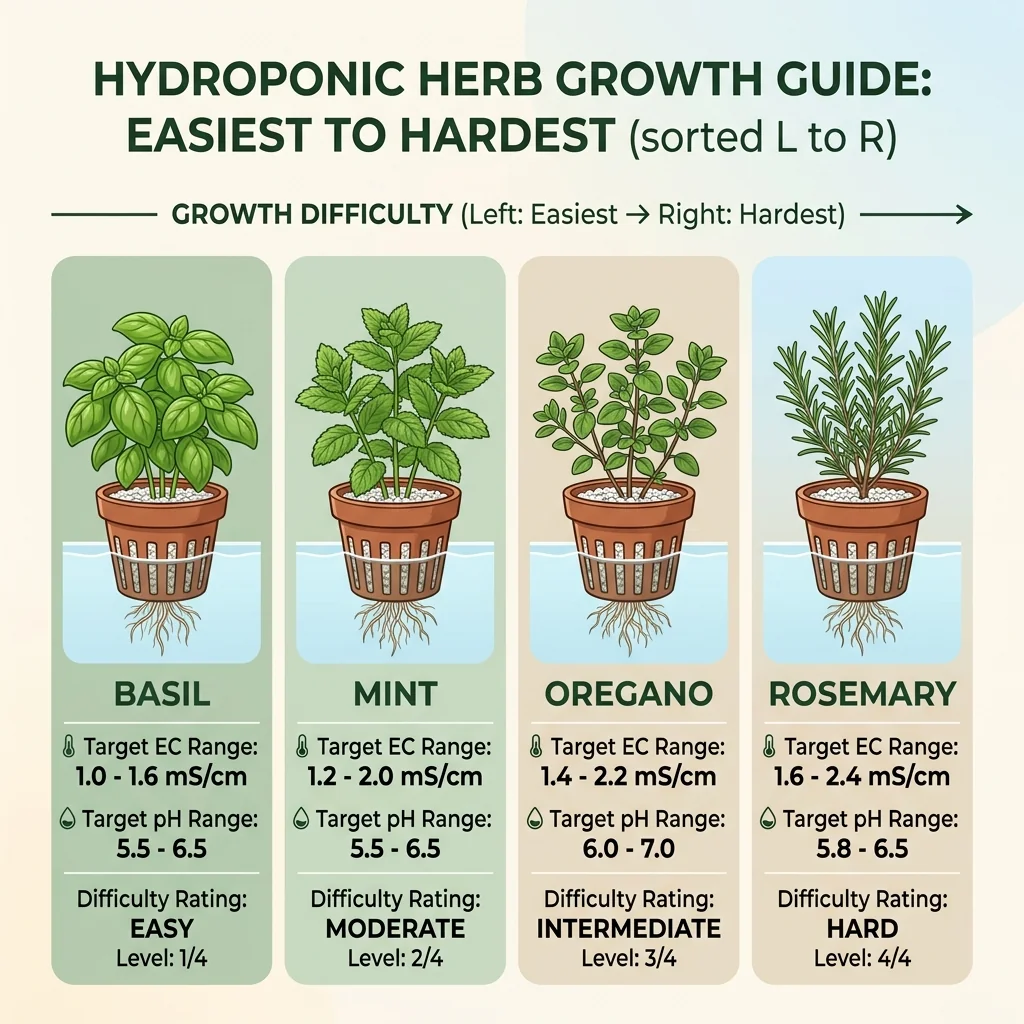
Hydroponic herbs: which grow best and how
Most soft, leafy herbs thrive in hydroponics, while woody Mediterranean herbs are trickier. Here is a ranked guide to which herbs grow best and how to set them up.
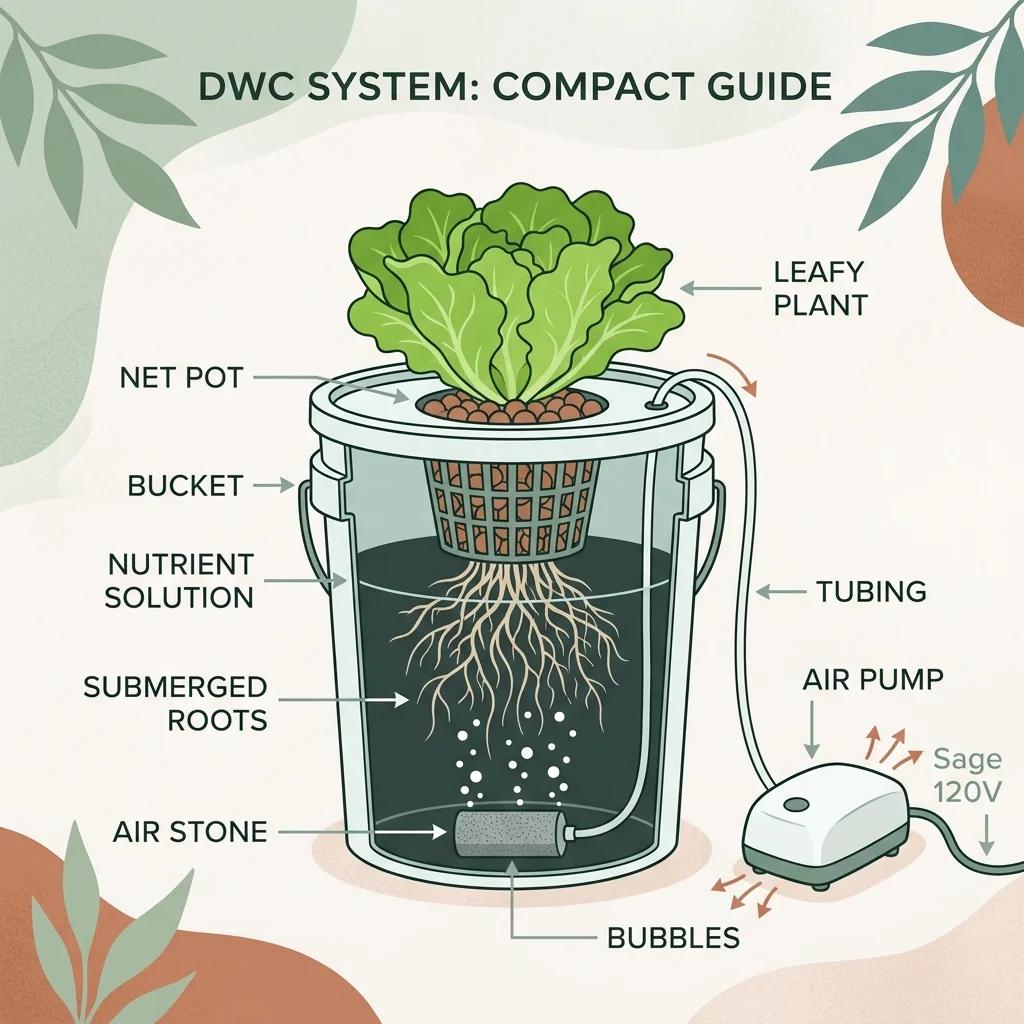
What is DWC? Deep water culture for small spaces
DWC suspends roots in aerated nutrient solution for fast growth. It is one of the best active systems for a small space, as long as you manage oxygen and heat.
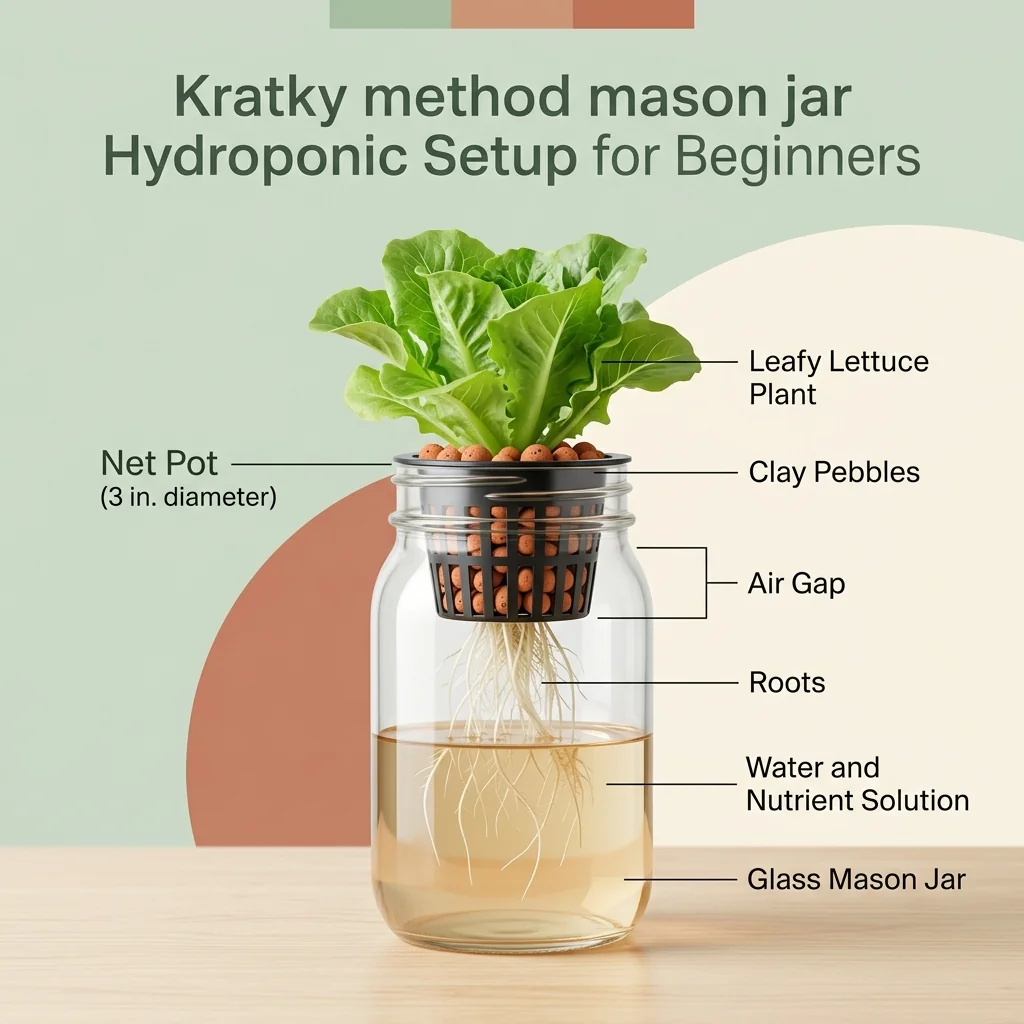
The Kratky method: passive hydroponics for beginners
The Kratky method is the simplest way into hydroponics: a container of nutrient solution, a net pot, and no pump or power. Here is how it works and its limits.