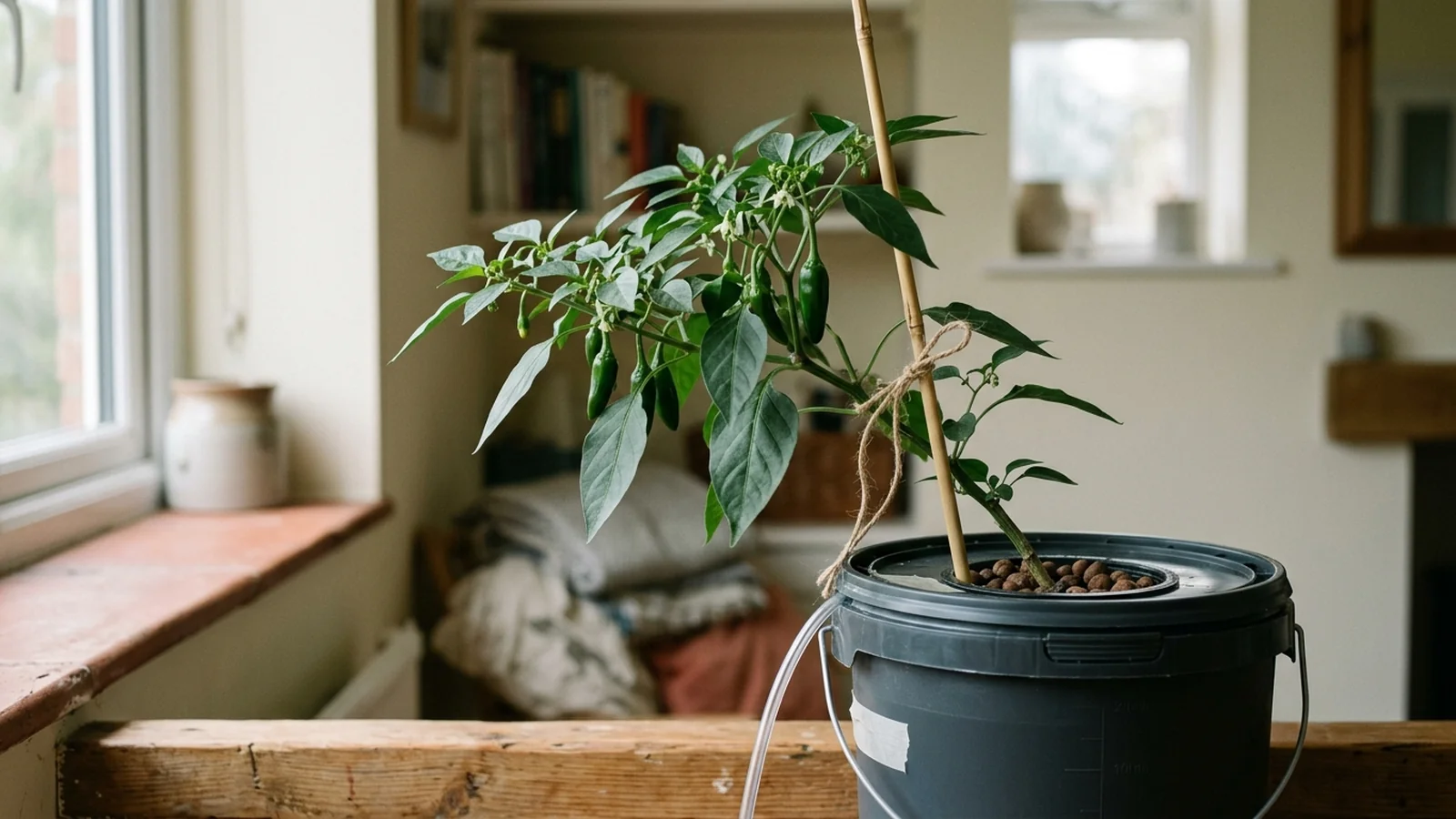
Hydroponic peppers vs. tomatoes
| Variable | Peppers | Tomatoes |
|---|---|---|
| EC | 0.8-1.8 mS/cm | 2.0-4.0 mS/cm |
| pH | 5.5-6.0 | 6.0-6.5 |
| Light indoors | Strong, supplemental lighting needed | Strong, supplemental lighting needed |
| Pollination indoors | By hand (shake or brush) | By hand (shake or brush) |
Peppers are a genuinely gentler fruiting crop than tomatoes, but only on the nutrient side. Run peppers at EC 0.8 to 1.8 mS/cm and pH 5.5 to 6.0 — a lower, narrower target than hydroponic tomatoes — and expect the same demands everywhere else: strong supplemental light and hand pollination, because indoors there is no wind or insects to do it for you. The full range across other crops is in the hydroponic EC chart by crop.
EC and pH: a genuinely gentler target than tomatoes
Oklahoma State University Extension’s HLA-6722 fact sheet carries the per-crop EC and pH table no other extension service publishes an equivalent of, and it puts peppers at EC 0.8 to 1.8 mS/cm and pH 5.5 to 6.0. Tomatoes, in the same table, sit at EC 2.0 to 4.0 mS/cm and pH 6.0 to 6.5 — a range that starts above where peppers end. A reservoir mixed to the top of the tomato band, 4.0 mS/cm, is running peppers at more than double their upper target of 1.8 mS/cm.
UF/IFAS Extension publishes the only per-stage nutrient program among the extension sources cited here, built for hydroponic tomatoes in Florida, and the same publication states it directly as “a suitable base when determining a nutrient solution plan for cucumbers and peppers”. Final delivered concentrations by growth stage, in ppm, run from 70 to 150 ppm nitrogen, 50 ppm phosphorus throughout, 120 to 200 ppm potassium, and 150 ppm calcium throughout, with the final solution held at pH 5.8 to 6.2. Notice that last number sits slightly above OSU’s pepper-specific pH ceiling of 6.0 — both figures are real, and the practical read is to run peppers toward the lower end of that pH band, 5.8 rather than 6.2, and toward the lower end of the ppm program rather than the full tomato-strength delivery. UF/IFAS attaches one adjustment to that base program, and it is a cucumber adjustment — more nitrogen early, because cucumbers grow faster than tomatoes. Nothing equivalent is published for peppers, so scale the tomato numbers down without adding nitrogen early. Whatever stage-by-stage numbers you scale down from, check the mixed result on the meter against the pepper target of 0.8 to 1.8 mS/cm rather than trusting the recipe’s math alone.
If you are new to mixing a reservoir to a target number at all, hydroponic nutrient basics and how to mix hydroponic nutrients cover the mechanics; peppers do not need a different mixing process, just a lower number on the meter.
What the lower target actually buys you
The forgiveness is arithmetic, not magic. Because peppers top out at 1.8 mS/cm rather than 4.0, the same percentage mixing error produces a smaller absolute overshoot. Add too much concentrate to a tomato reservoir already running near 4.0 mS/cm and you can push into a range that stresses roots and blocks water uptake; make the identical percentage mistake on a pepper reservoir sitting near 1.8 and the ceiling you hit is lower to begin with. That is why peppers tolerate a sloppier hand on the concentrate bottle than tomatoes do — it is not a reason to skip checking EC at all, and peppers still drift out of range from evaporation and uptake the same way every hydroponic crop does.
Where peppers get no slack is everything downstream of the reservoir.
Light: no shortcut here
Extension guidance groups peppers with tomatoes, eggplant, and cucumbers as high-light fruiting crops, not with the leafy greens and herbs that get by on far less light. The University of Minnesota Extension lists peppers, tomatoes, and cucumbers as summer crops, reserving winter indoor growing for short-season, non-fruiting plants. The University of New Hampshire Extension is blunter about the reason: a New Hampshire January window does not deliver enough light to grow even lettuce, “and certainly not enough for plants with higher light requirements like tomatoes or cucumbers” — and it names peppers alongside them as crops that need supplemental lighting to fruit indoors, not just to survive.
The University of New Hampshire Extension’s general figure for a home hydroponic system is a lighting run of 14 to 18 hours a day, but duration is not the same as intensity. A pepper plant lit for 16 hours from a weak fixture still under-lights the crop; peppers want a strong, close light source for most of that window, the same intensity conversation covered for tomatoes rather than a herb-tray setup. If you are still choosing between systems, NFT vs. DWC vs. Kratky for beginners covers which setups actually suit a taller, longer-lived plant like pepper rather than a fast lettuce crop.
Pollination: the same mechanic as tomatoes
Peppers, like tomatoes, carry perfect flowers that pollinate themselves outdoors with help from wind and visiting insects. Bring the plant indoors and both of those disappear, so the flower needs help: a gentle shake of the stem or a soft brush moved from flower to flower once blooms open, repeated as new flowers appear through the fruiting period. That mechanic is identical to tomatoes and to hydroponic strawberries, another hand-pollinated indoor fruiting crop, so the full technique — grip, timing, how often — lives on the pollinating balcony tomatoes and peppers page. Skip it and the plant still flowers; it just does not reliably set fruit.
Blossom-end rot: a tomato-documented mechanism a pepper reservoir shares
UF/IFAS documents blossom-end rot in hydroponic tomatoes as a calcium problem, not a nitrogen or potassium shortfall: excess potassium interferes with calcium uptake at the root, and the effect gets worse where well water supplies less than 50 ppm calcium. Calcium moves through the plant in the water stream, fruit and leaves compete for a limited supply, and a potassium-heavy solution tilts that competition against the fruit. The mechanism is calcium transport, not anything specific to the tomato plant, so a pepper drawing water and potassium from the same reservoir is exposed to the same conditions — the sources cited here document the disorder in tomatoes, not peppers, but the plumbing a pepper plant shares with a tomato is identical. If fruit develops a sunken, leathery patch at the blossom end, check source-water calcium and your potassium dose before assuming the whole recipe needs a rebuild.
Sizing a system for a bigger plant
A pepper plant is a season-long occupant, not a six-week lettuce crop, and it needs a bigger root volume and a sturdier structure than a leafy-green net pot. If you are working out how many litres a bigger, longer-lived plant actually needs, the hydroponic reservoir size calculator covers sizing by plant type rather than a one-size figure borrowed from lettuce.
Common problems
- Few or no fruit despite healthy flowers: incomplete pollination. Hand-pollinate daily while flowering rather than waiting for it to happen on its own.
- Sunken, leathery patch at the fruit’s blossom end: check source-water calcium and potassium dose before changing the whole recipe.
- Leggy, pale growth under a light that looks bright enough: peppers need close, strong light for most of the day; duration alone does not substitute for intensity.
- Slow growth with EC reading in range: confirm the reservoir is actually inside 0.8 to 1.8 mS/cm rather than drifting below it, and note that on Oklahoma State’s table peppers overlap the leafy-green range at the bottom — a reading near 1.0 is low for the crop but not out of band, so look at light and pollination before pushing EC up.
Sources
- Oklahoma State University Extension HLA-6722 — Electrical Conductivity and pH Guide for Hydroponics
- UF/IFAS Extension CV216 — Nutrient Solution Formulation for Hydroponic (Perlite, Rockwool, NFT) Tomatoes in Florida
- University of Minnesota Extension — Small-scale hydroponics
- University of New Hampshire Extension — Hydroponics at Home
Growing hydroponic peppers? Also read
These guides connect pepper's water chemistry to the wider crop chart, the tomato fruiting-crop reference, and sizing a system for a bigger plant.
Common questions
What EC and pH do hydroponic peppers need?
Oklahoma State University Extension's hydroponic crop table gives peppers an EC of 0.8 to 1.8 mS/cm and a pH of 5.5 to 6.0. That is noticeably gentler than tomatoes, which run 2.0 to 4.0 mS/cm at pH 6.0 to 6.5, so a tomato-strength reservoir will overfeed a pepper plant.
Are hydroponic peppers easier to grow than tomatoes?
In one concrete way, yes: peppers run at a lower nutrient concentration, so a mixing mistake that would push a tomato reservoir into a damaging range is a smaller absolute error for peppers. That does not carry over to light or pollination, both of which peppers need just as much as tomatoes do.
Do hydroponic peppers need hand pollination indoors?
Yes. Like tomatoes, peppers form perfect flowers that self-pollinate outdoors with help from wind and insects. Indoors neither is present, so flowers need a gentle shake or a soft brush once they open, the same mechanic used for hydroponic tomatoes.
Can I use a tomato nutrient program for hydroponic peppers?
UF/IFAS's per-stage tomato program is documented as a workable base for peppers, but it is built around tomato's higher EC band. Mix it toward the low end and check the result against peppers' own 0.8 to 1.8 mS/cm target rather than running it at full tomato strength.
Related guides
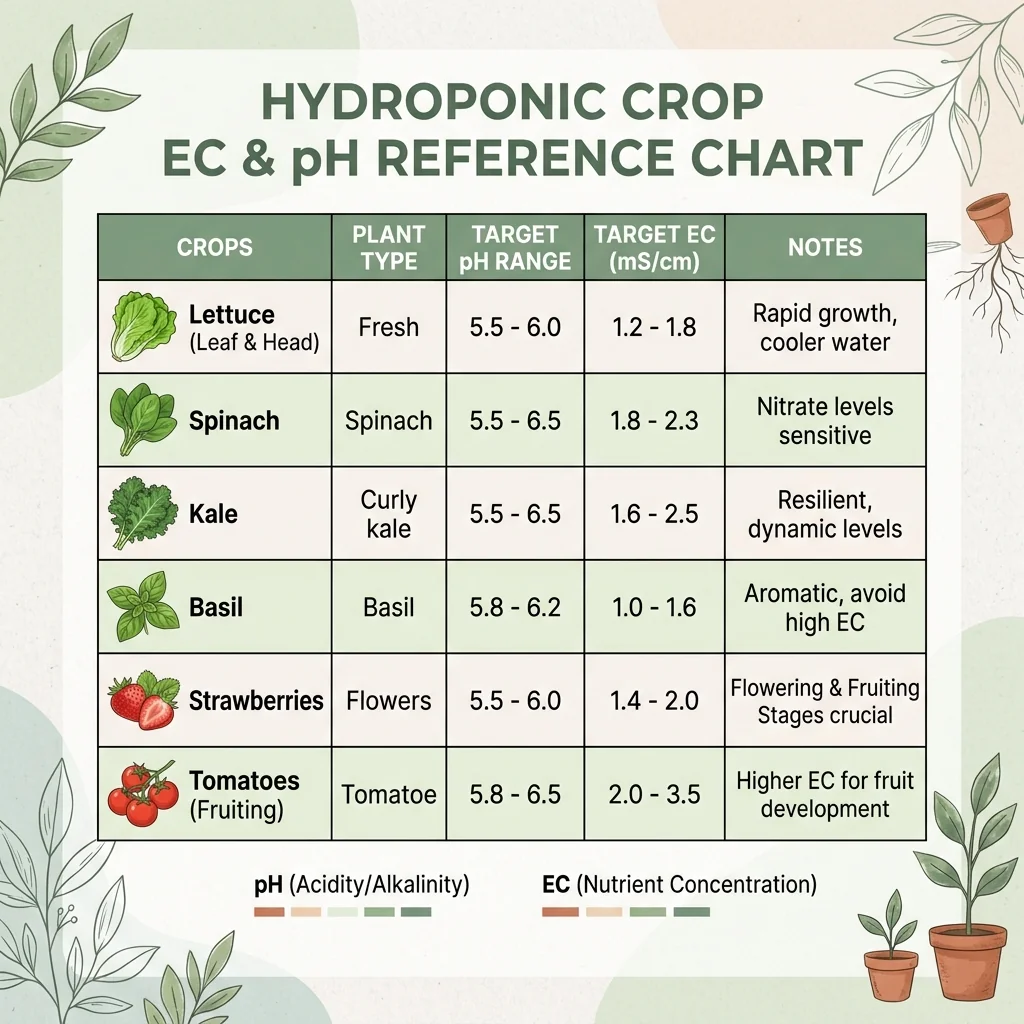
Hydroponic EC chart by crop (not just lettuce)
One reference chart for the EC and pH targets of common hydroponic crops, from leafy greens and herbs to fruiting plants, plus how to use the numbers safely.
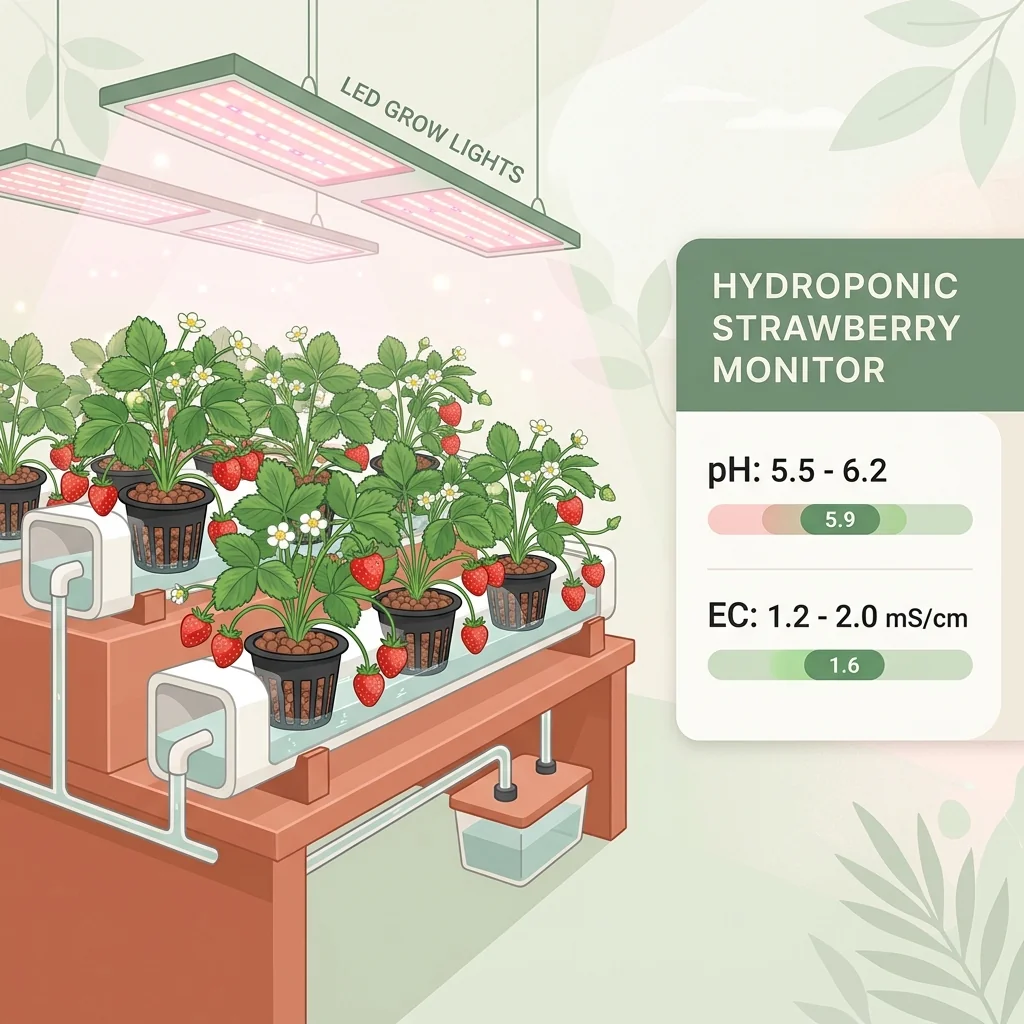
Hydroponic strawberries indoors: is it worth it?
Indoor hydroponic strawberries are rewarding but demanding: they need strong light, hand pollination, and patience. Here is an honest look at whether it is worth it.
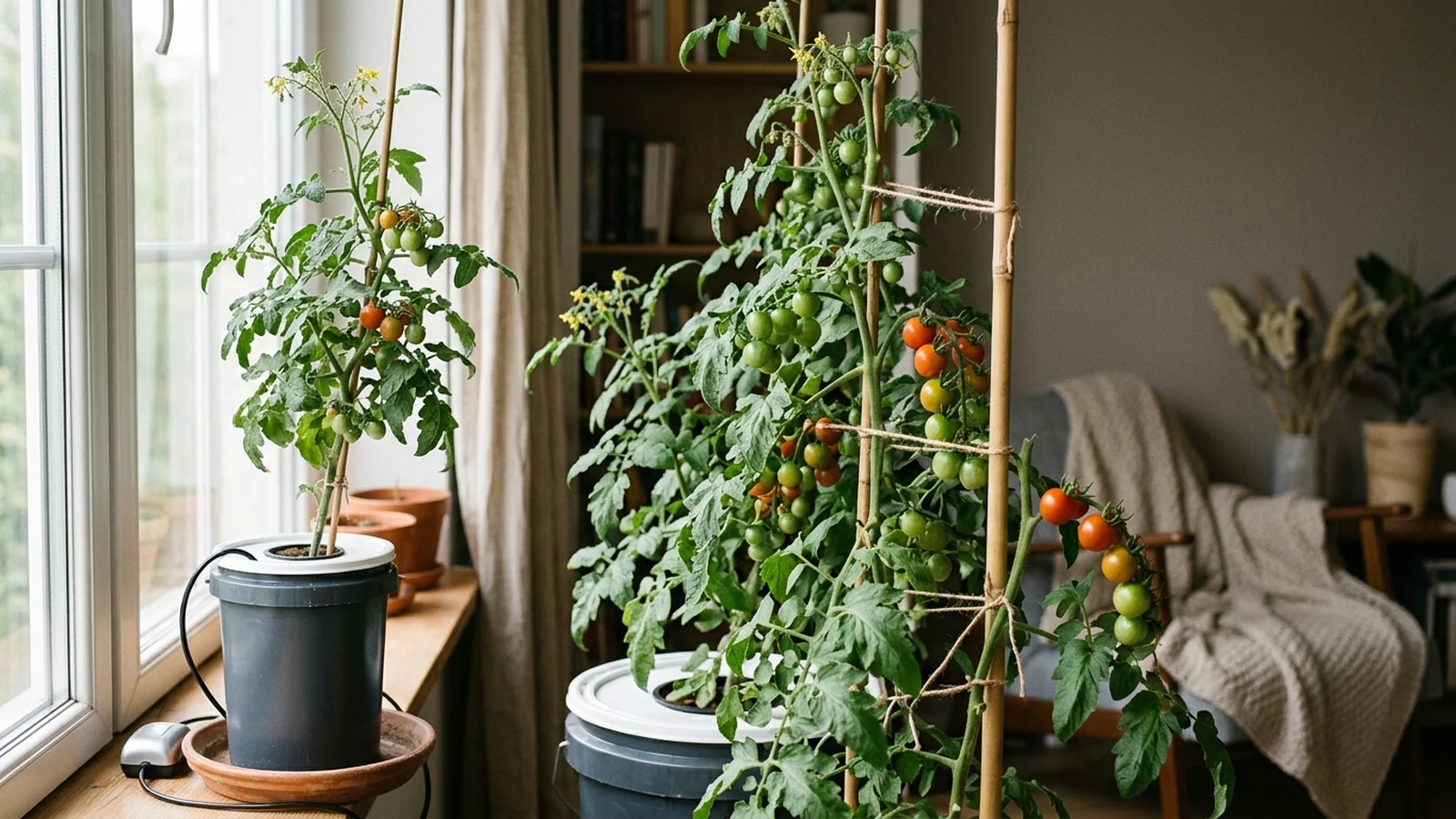
Growing hydroponic tomatoes indoors: system, EC, and light
Tomatoes are the first fruiting crop most hydroponic growers try indoors, and the jump from lettuce is bigger than it looks. Here is the system, the EC program, and what to expect.