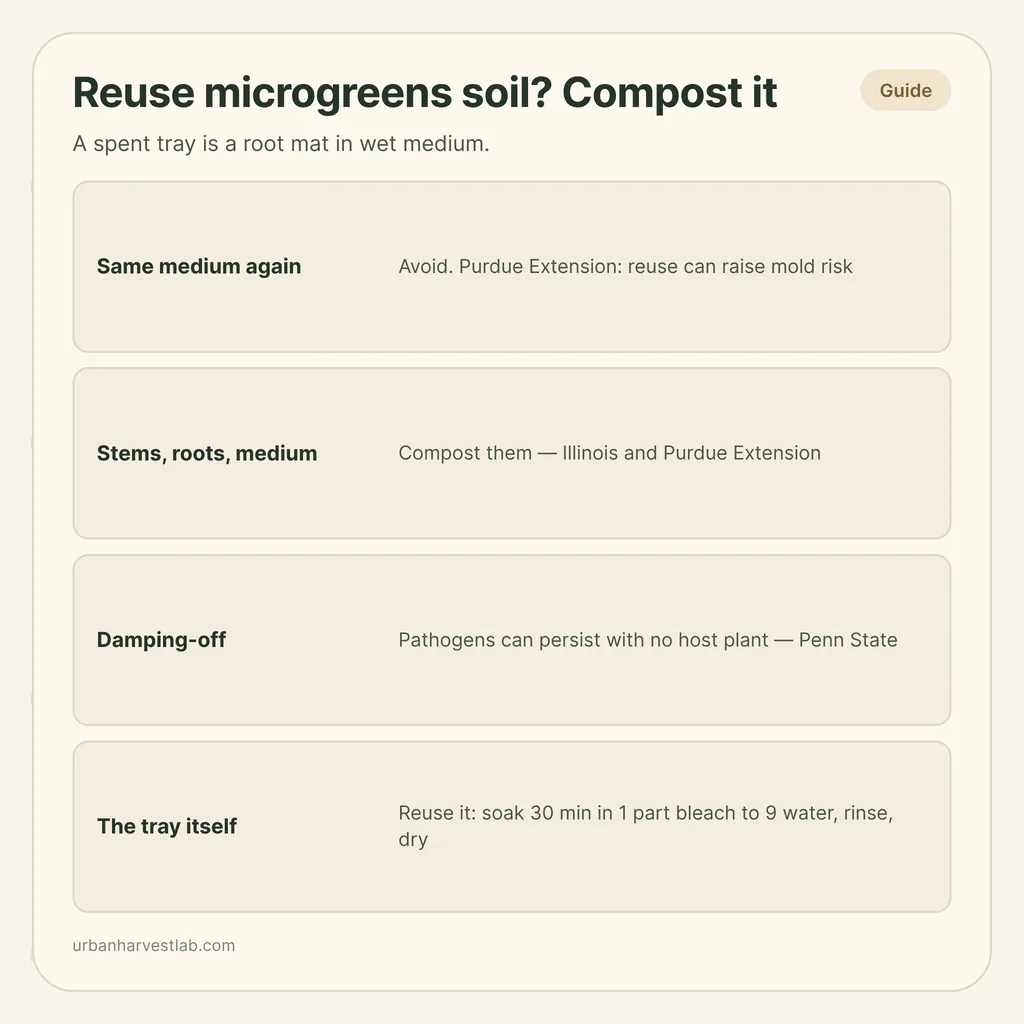
What to do with a spent microgreens tray
| Option | What the sources say | Verdict |
|---|---|---|
| Sow the next crop in the same medium | Purdue Extension: growing media are not reusable and reuse can raise mold risk | Avoid |
| Compost the stems, roots and medium | Illinois and Purdue Extension both point spent trays here | Default |
| Pasteurize it with heat first | Penn State: 180 °F for 30 minutes, for fresh home-mixed seed-starting medium | Not for spent trays |
| Reuse the tray itself | Penn State: soak 30 minutes in 10% chlorine bleach (1 part bleach to 9 water), rinse, let dry | Yes |
Do not sow a second microgreens crop in the medium from the first. Purdue Extension says growing media and substrates are not reusable for microgreens, and Illinois Extension tells you to compost the stems and soil once a tray is completely harvested. Tip the tray into the compost, wash and sanitize the tray, and start the next one with fresh medium.
That is a different answer from the one for a pot of herbs or tomatoes, where reusing the mix is often reasonable. If you came here with a pot, reusing potting soil covers it.
Why a microgreens tray is a poor candidate
A microgreens tray is a shallow layer of medium, kept evenly moist, packed with seed at high density. After the cut, what is left is a tight mat of roots and the stubs of stems, sitting in wet medium.
Purdue Extension says growing media or substrates, except stainless steel screens, are not reusable, and adds that reusing growing substrates can increase the risk of mold developing. Mold on a new tray is already hard to tell from harmless root hairs, which is what the mold versus root hairs guide is for. Starting the new tray in medium that has already grown a crop adds a source of trouble before the seed is wet.
The second concern is disease. Penn State Extension says many soilborne pathogens can survive on weeds or crop debris in the soil, and that they may produce survival structures that let them persist in the soil with no host plant present. A root mat is crop debris. If the previous tray showed any collapse at the stem base, the medium may be carrying the cause, and damping-off in microgreens shows how to recognise it. The RHS is blunter about containers: do not reuse pots and trays in which damping off has been a problem.
Penn State’s advice for prevention is to use sterile growing medium and disinfected pots, trays and flats. Fresh medium from a sealed bag is the easy way to meet the first half of that.
What to do with the spent tray
Compost it. Illinois Extension says that when the tray or container is completely harvested you can compost the remaining stems and soil. Purdue Extension agrees that many media are compostable along with the unused plant roots, and adds that the greens and roots can be a food supplement for chickens and other farm animals.
If you keep a worm bin, the spent medium and root mat are a candidate for it, though neither extension source discusses worms. Vermicomposting in an apartment covers setting a bin up and feeding it.
Can you heat-treat the medium instead?
Not for a spent tray. Penn State Extension’s fact sheet on pasteurizing medium says potting media mixed by home gardeners should be pasteurized to kill weed seeds, soil-borne insects and pathogens, by applying heat until the soil reaches 180 °F (82 °C) for 30 minutes. That is what the sheet says about fresh seed-starting medium before sowing. Three things keep it from carrying over to a used tray:
- The fact sheet is about seed-starting and potting media. It does not test a dense microgreens root mat, so the figures say nothing about whether a mat heats evenly through its depth.
- It is dated 2003, and it says most gardeners have chosen to buy presterilized mix instead.
- Heat does nothing for the tray. The sheet warns that efforts to pasteurize soil are in vain if contaminated tools, flats or pots are used.
Purdue adds that reusing substrate is not the method of choice for commercial micro farmers, and that garden soil should not be used indoors unless it has been sterilized first. For seedlings in general, the RHS advises raising them in commercial growing compost, which is usually free of damping off organisms, and says that ideally you use new pots and trays. A tray that failed to damping-off is the strongest case for fresh medium: the RHS says not to reuse pots and trays in which damping off has been a problem. Keep the rest of the routine from the microgreens food safety guide in place, because microgreens are eaten raw.
Reuse the tray, not what was in it
The tray is the part worth keeping. Penn State’s fact sheet says to disinfect containers by soaking them for 30 minutes in a 10% solution of chlorine bleach (one part bleach and nine parts water), then rinse them and let them dry before use. The RHS adds that a reused tray should have its soil brushed off and be washed first. The food safety guide has the same routine for seed, trays and water, and the beginner guide shows where it sits in the cycle.
Sources
- Purdue Extension: Grow Microgreens at Home
- Illinois Extension: Growing Microgreens
- Penn State Extension: Safeguard Your Seedlings from Damping-Off
- Penn State Extension (2003 fact sheet, archived copy at growables.org): How to Pasteurize Medium and Sterilize Containers and Tools (PDF)
- RHS: Damping off
Between one tray and the next
Reset the tray, protect the next sowing, and know what mold and damping-off look like.
Common questions
Can you reuse microgreens soil?
Extension sources advise against it. Purdue Extension says growing media and substrates are not reusable for microgreens, except stainless steel screens, and that reusing substrate can increase the risk of mold. Illinois Extension tells you to compost the remaining stems and soil once a tray is completely harvested.
What do you do with the root mat after cutting microgreens?
Compost it. Illinois Extension says you can compost the remaining stems and soil, and Purdue Extension says many media are compostable along with the unused plant roots. A worm bin is one route, and the apartment vermicomposting guide covers setting one up.
Can you sterilize used microgreens soil and use it again?
Not as a recommended route. Penn State Extension describes pasteurizing fresh home-mixed seed-starting medium at 180 °F for 30 minutes, but that fact sheet does not cover a root-packed microgreens mat, so start the next tray in fresh mix.
Can reused microgreens soil cause damping-off?
It can carry the organisms. Penn State Extension says many soilborne pathogens survive on crop debris in soil and can persist in the absence of a host plant, and the RHS says not to reuse pots and trays in which damping off has been a problem.
Related guides
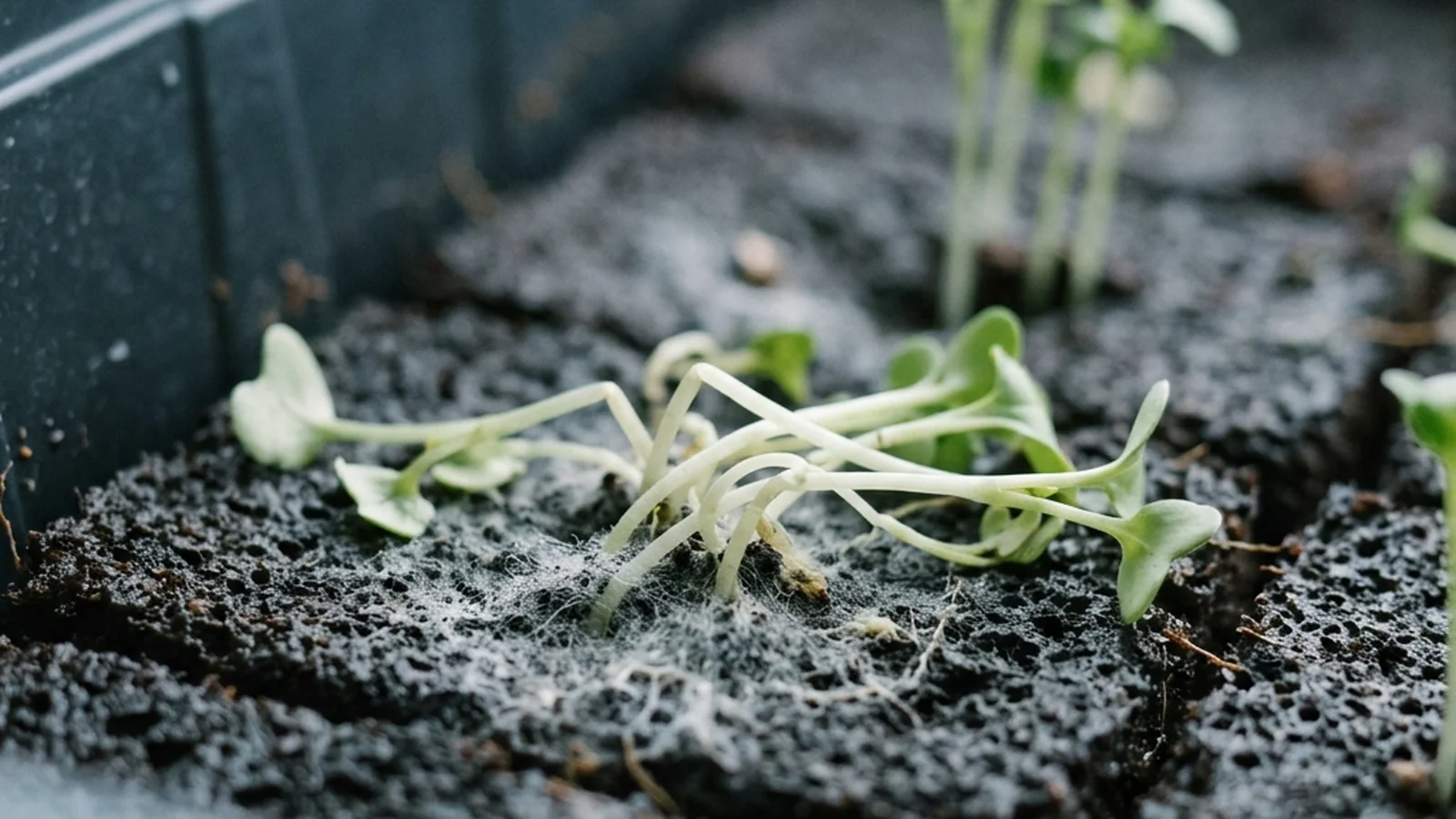
Damping-off in microgreens: symptoms and control
Damping-off attacks the seedling itself, not the tray surface. Here is how to recognize pre- and post-emergence stages and control outbreaks with sanitation, not fungicide.
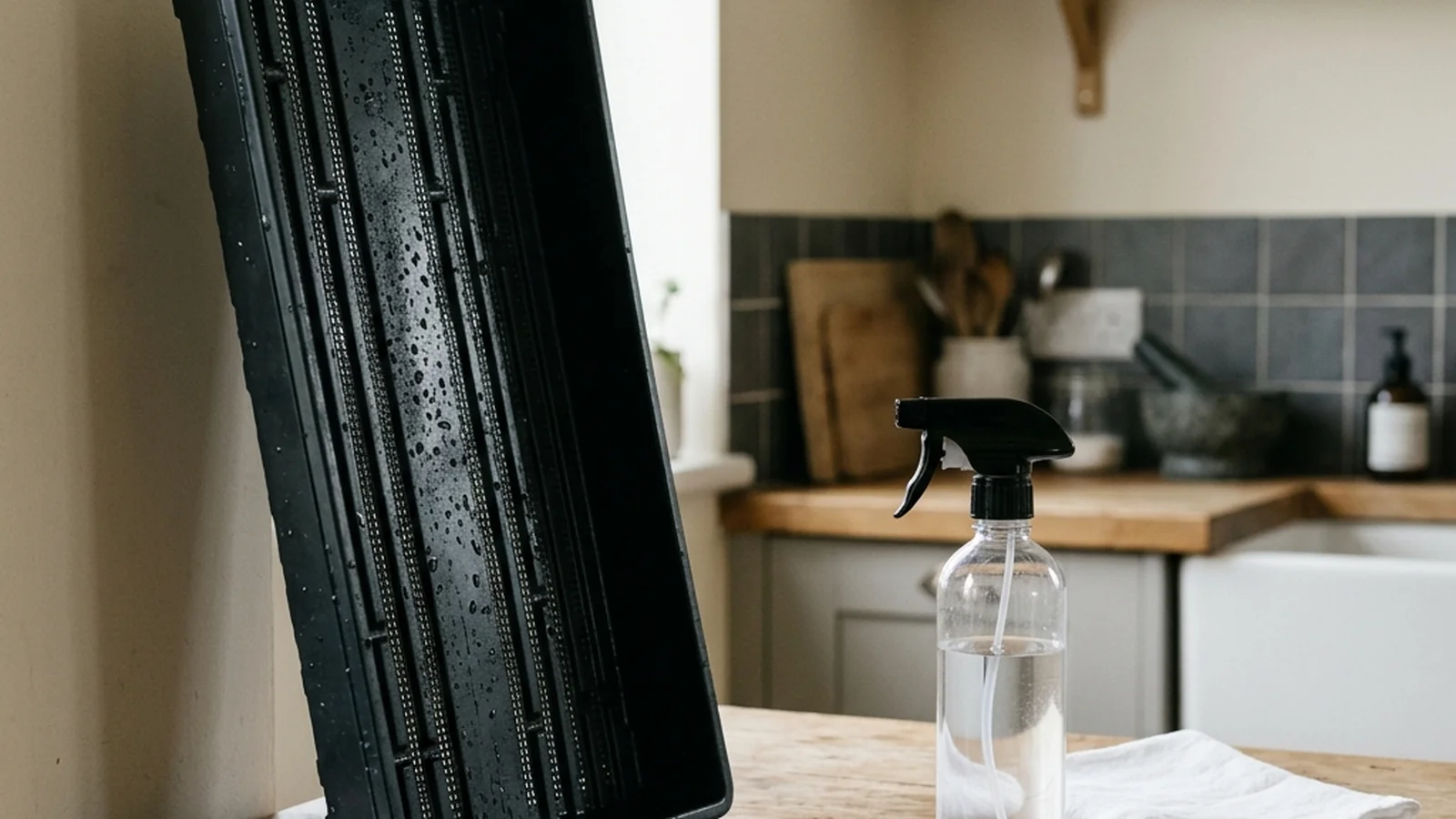
Microgreens food safety: sanitizing trays, seed, and water
Sprout recalls do not automatically make microgreens risky. The harvest method is what separates them, and one hydroponic setup can erase that gap.
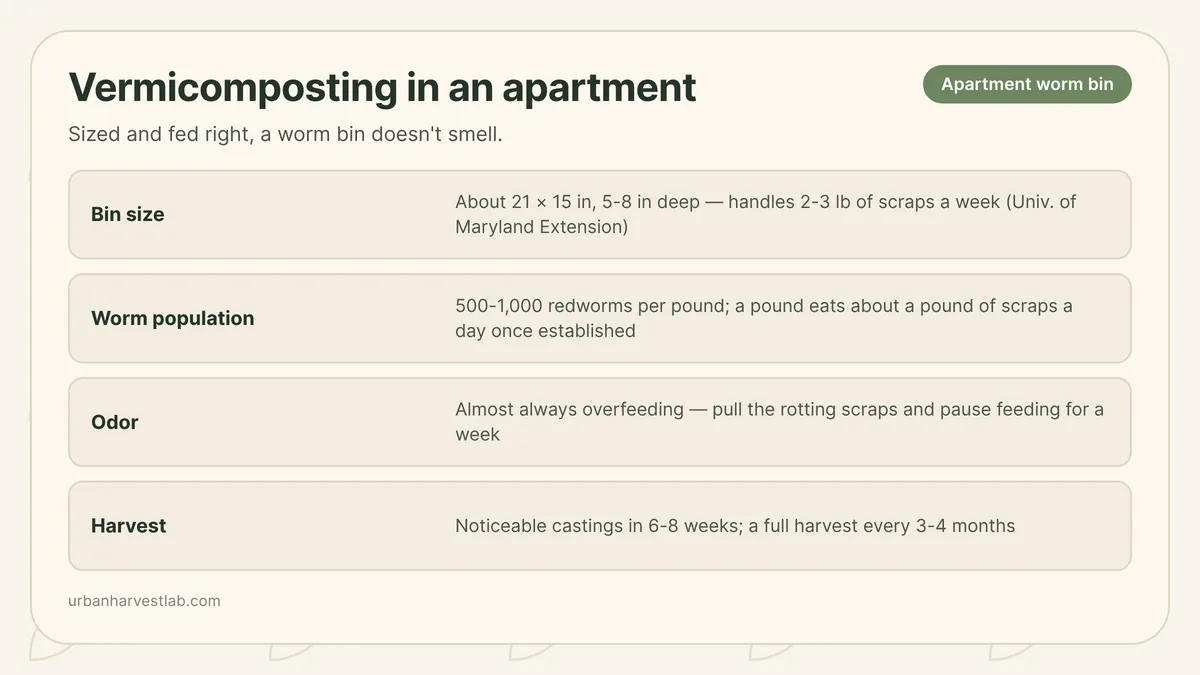
Vermicomposting in an apartment: bin setup, feeding, and harvest
A worm bin sized and fed correctly runs in a closet or under a sink without odor. Here is the setup, the feeding rules, and how to harvest the castings.