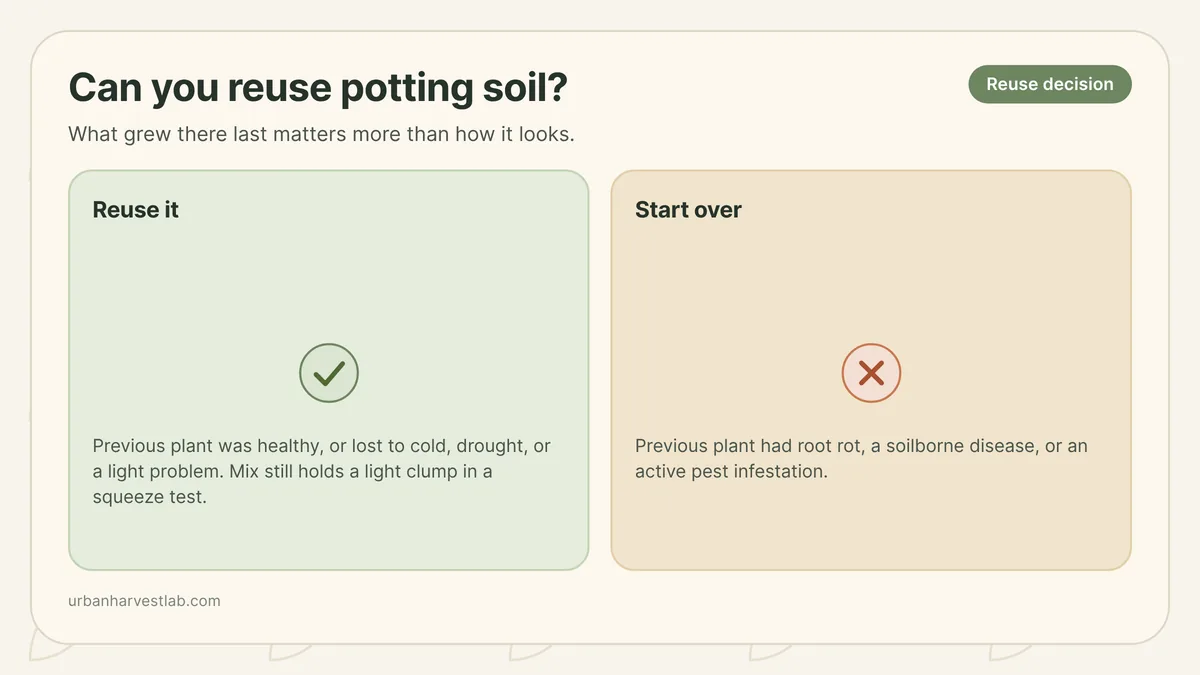
Reusing potting soil is fine when the previous plant was healthy and the mix still has some physical structure left. Skip reuse when the pot’s last occupant had a soilborne disease, root rot, or an active pest infestation — those problems tend to stay in the mix even after the plant is gone.
Before you decide, it helps to know what a bag of potting mix actually is. As how to make potting mix for container vegetables covers, a soilless mix is built from peat or coir, an aeration component, and a modest amount of compost — no mineral soil at all. None of those ingredients are sterile forever. They are treated once, at the start, and everything that happens to them afterward is on you.
What actually degrades when mix gets reused
Commercial potting soil that contains real mineral soil is typically heat-treated to around 180°F before it is bagged, specifically to kill pathogens and weed seed, according to UConn Extension’s Home Garden Education Office. That step happens once, at the factory. A season of growth, watering, and root activity afterward is not a repeat of it — whatever moved into the mix while a plant was living in it stays there unless something removes it.
Separately from the disease question, the mix itself changes physically. University of Maryland Extension recommends mixing a spent season’s growing media 50:50 with fresh mix or compost before reusing it, citing both nutrient depletion and the physical breakdown of the material’s structure. Peat and coir particles compress and fine over a season of watering, and the air-filled pore space that a container root system depends on shrinks along with them. That is a separate problem from contamination — a completely healthy pot of mix can still be too spent, structurally, to perform like a fresh bag.
When reusing is a reasonable call
| Situation | Reuse it | Start over |
|---|---|---|
| Previous plant was healthy and simply finished its cycle | Yes, as is or cut with fresh mix | — |
| Previous plant was lost to cold, drought, or a light problem | Yes | — |
| Mix still holds a light clump in a squeeze test | Yes | — |
| Previous plant had root rot or a soil-borne wilt | — | Discard or fully replace |
| Previous plant had a visible pest infestation in the container | — | Discard, or clear the pest first |
| Mix has gone fine, dusty, or compacted with no clump structure | Amend heavily or replace | Replace if amending isn’t worth the effort |
A plant that simply reached the end of its season, bolted, or was lost to something environmental — cold, underwatering, a light problem — does not leave behind a contamination risk. The mix from that pot is a candidate for reuse once you have judged its remaining structure, which is a separate call from the amendment ratios and process covered in refresh old potting soil.
The squeeze test is worth running before you commit a batch to a new plant: take a handful of the emptied mix and squeeze it gently. Fresh, structurally sound mix holds together in a loose clump and breaks apart easily when you poke it. Run the test on mix that is still damp from the last watering, or moisten it evenly first — a bone-dry sample will not clump regardless of its condition. Spent mix that has lost its structure either stays dusty and will not clump at all, or compacts into a dense, sticky ball that does not break apart — both outcomes mean the aeration components have broken down and the material needs amending before it goes back into service.
This reasoning holds the same way for an edible container as for an ornamental one — the disease and pest checks do not change because the next plant is a tomato rather than a houseplant. What does change is the compost you might add back in while refreshing the mix, since a food crop raises the herbicide-carryover question that an ornamental pot does not.
When to empty the pot instead
A previous plant lost to a soilborne disease — a wilt, a rot, a fungal pathogen that lives in the growing medium rather than just on the leaf surface — is the clearest case for starting over. Nothing in an ordinary reuse routine re-treats the material the way the manufacturer did before it was bagged, so a pathogen that took hold once has no reason to have left on its own.
Root rot specifically points at wet, low-oxygen conditions that UC IPM names as what both damages roots directly and favors the water-mold pathogens behind the rot. Overwatered vs underwatered covers confirming that diagnosis; reusing that mix in the same state repeats the conditions that caused the problem, independent of whether any pathogen survived.
An active pest infestation — fungus gnat larvae, most often — is the third case. UC IPM’s fungus gnat pest note documents the larval stage living in the growing medium itself, so removing the plant does not remove the population living in the pot. Fungus gnats in herb pots covers identifying and treating them; discarding or treating the mix is the more reliable path before reusing the container for something else.
None of this means every pot with a plant that failed needs to be thrown out. It means the reason the plant left the pot is the fact worth checking, before the physical condition of the mix.
A white crust is not the same signal
A white or grey crust on the surface of old mix, or around the rim of the pot, often gets read as a warning sign on its own. Usually it is not disease — it is mineral residue from fertilizer and tap water left behind as water evaporates, a mechanism Colorado State University Extension describes plainly for houseplant containers. That crust is worth addressing before the mix goes back into use, but it is a salt and watering issue, not evidence of a pathogen. Salt buildup in herb pots covers what causes it and how to deal with it.
Do not use a clean-looking surface as proof of the opposite, either. A pot can look tidy and still have carried root rot or a soil pathogen below the surface. The plant’s history in that container is the more reliable check than what the mix looks like once it is out of the pot.
If you decide to keep it
A mix that clears the disease and pest check but has clearly lost structure or nutrients is not an automatic discard. Cutting it with fresh mix, adjusting the compost fraction, and rebuilding aeration is a different job than deciding whether the material is safe in the first place, and it is covered step by step in refresh old potting soil. If you are topping up with fresh compost rather than commercial mix, source it with the herbicide-carryover risk in mind, which safe compost for edible containers walks through.
If the pot’s history is uncertain — a plant you inherited, a container from a neighbor, mix you cannot account for — treating it as a start-over case is the lower-risk choice. Building a fresh batch from known components, as in how to make potting mix for container vegetables, removes the guesswork entirely.
Sources and further reading
Deciding what to do with old potting mix
Once you know whether reuse is safe, these cover refreshing spent mix, building a fresh batch, and sourcing compost without risk.
Common questions
Can you reuse potting soil for a new plant?
Often, yes. If the previous plant was healthy and the mix still holds together instead of crumbling to dust, it can go back into service. Nutrient levels and structure will be lower than a fresh bag, so many growers cut it with fresh mix or compost rather than reusing it straight.
Is it safe to reuse potting soil after a plant died?
That depends on why it died. A plant that succumbed to cold, underwatering, or simple neglect leaves behind mix that is still usable. A plant lost to a soilborne disease, root rot, or a pest infestation leaves behind a pot that is safer to empty and start over in.
How do you know if old potting soil is still good?
Check what grew in it last and how that plant ended, not just how the mix looks. A dry, compacted, or fine-textured mix has lost structure; a white crust is usually salt residue rather than a warning sign. Root rot, wilting tied to a soil pathogen, or a pest problem in that container are the signs that matter most.
Can you reuse potting soil that has bugs in it?
Not directly. Fungus gnat larvae can persist in the mix even after the plant is gone, so a pot with an active infestation is a case for discarding the mix, or treating the pest before it goes back into service.
Related guides
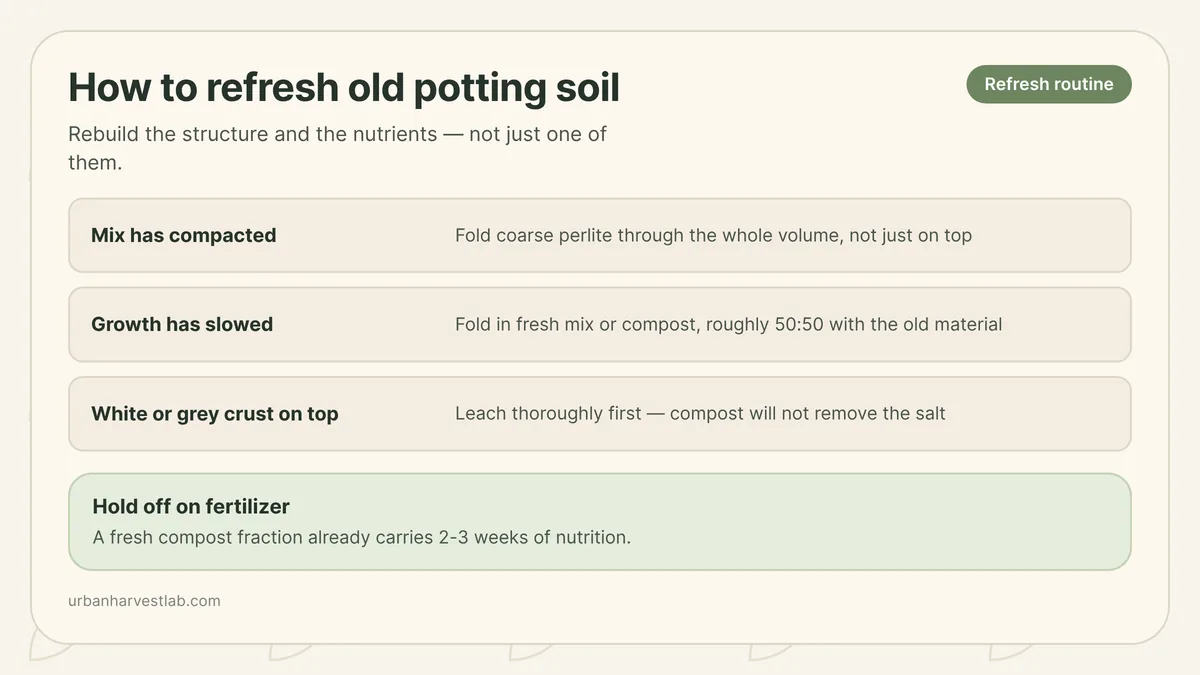
How to refresh old potting soil for another season
Old potting mix has usually lost two things at once: its air-filled structure and its nutrients. Fixing one without the other is why a refreshed pot still underperforms.
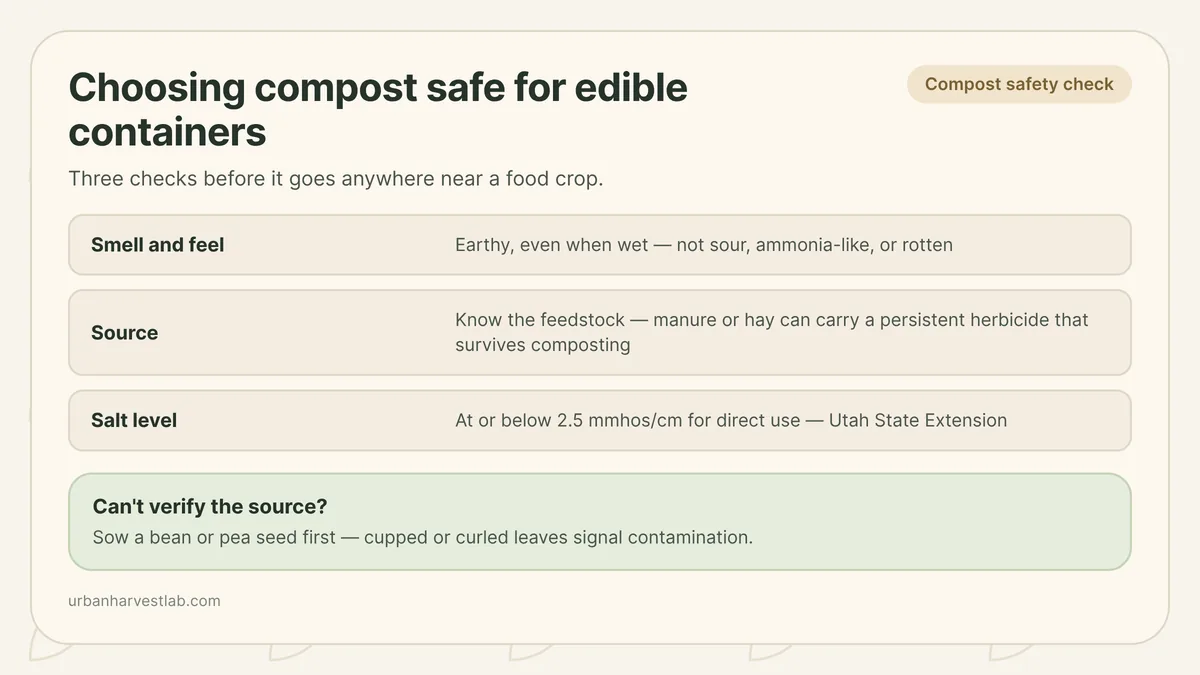
Choosing compost that's safe for edible containers
A pile or a bag that looks like good compost can still carry a persistent herbicide or too much salt for a small pot. Three checks catch most of it before you plant.
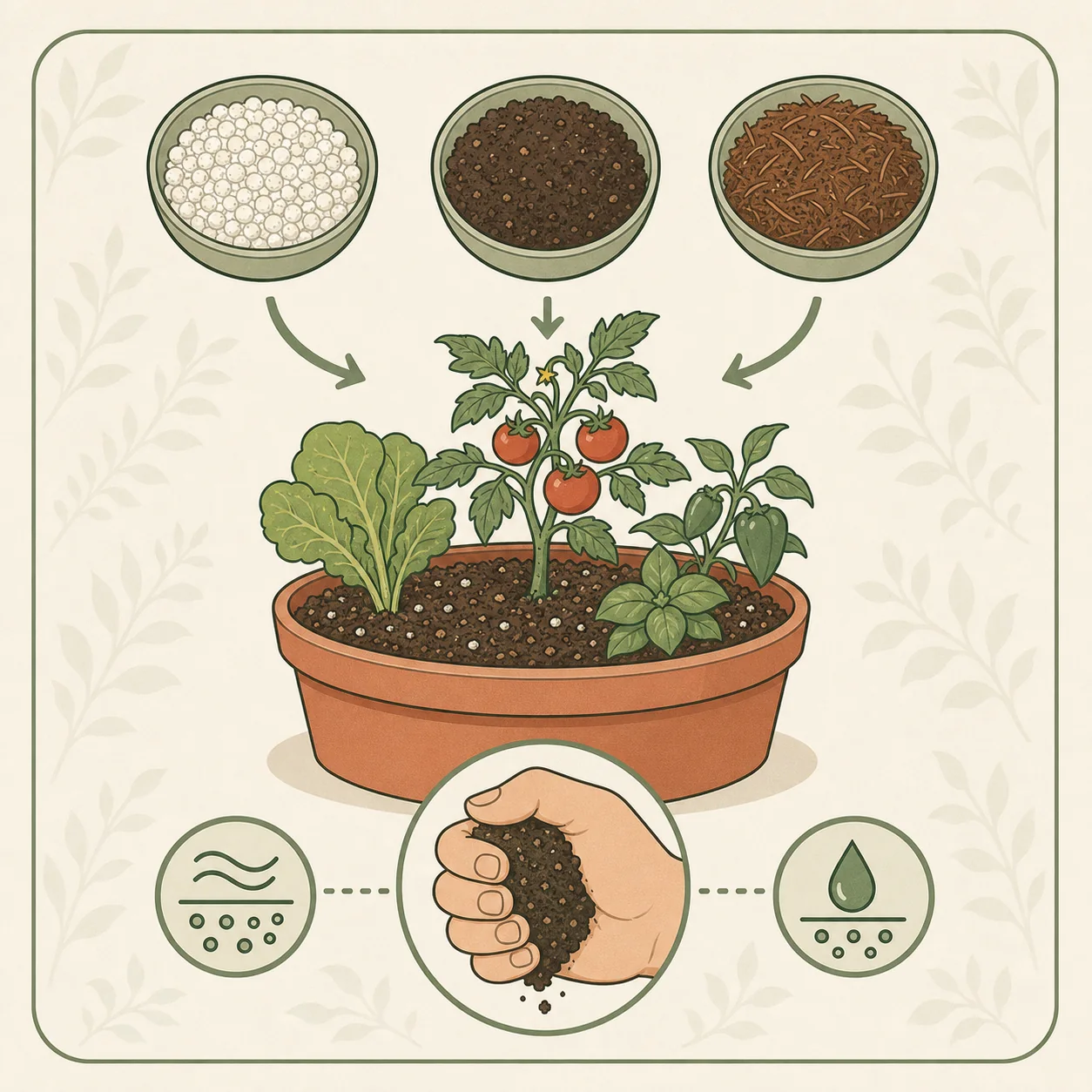
How to make potting mix for container vegetables
A useful potting mix recipe describes the job of each ingredient and gives you a way to correct the result. The goal is stable air and moisture, not a magic ratio.