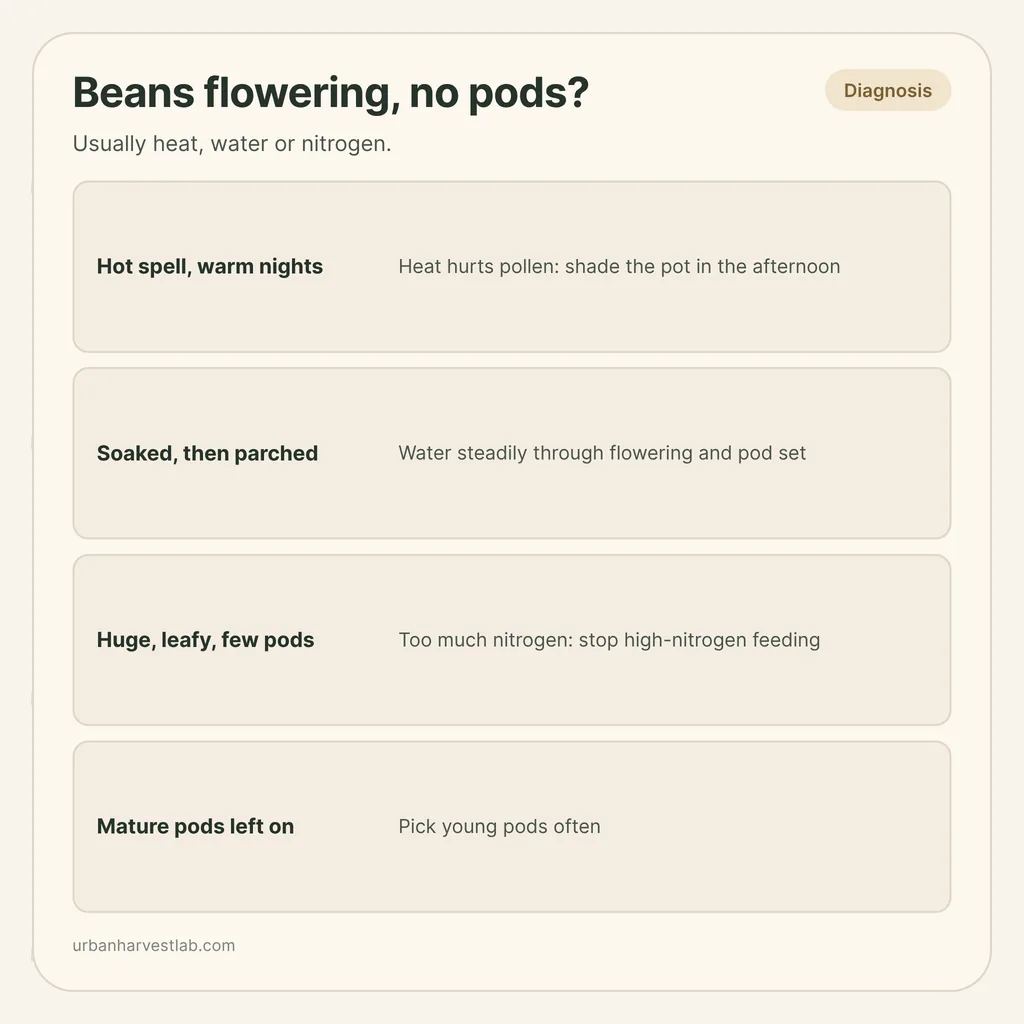
Troubleshoot the system before you change the inputs.
Symptoms
- The plant is leafy and covered in flowers, but the flowers fall and no small pods form behind them.
- A few pods start and then shrivel or drop while the plant keeps growing.
- Pods that do form are short, twisted or lumpy with few seeds.
Possible causes
- Hot weather during flowering, especially hot nights, which hurts pollen and fertilization.
- Dry soil, or swings between dry and waterlogged, around flower bud formation and pod set.
- A nitrogen-rich mix or feed that pushes leaves instead of pods.
- Mature pods left on the plant, so it puts its energy into ripening seed rather than new pods.
Quick fixes
- Shade the pot in the hottest part of the afternoon and keep the mix evenly moist through flowering.
- Stop feeding with a high-nitrogen product until pods are setting.
- Pick all pods while they are young and firm, including any hiding under leaves.
- Wait out a hot spell; plants usually set more pods when temperatures cool.
A bean plant with plenty of flowers and no pods is almost always reacting to heat, uneven water or too much nitrogen, not to a disease. Mississippi State Extension says beans drop their blooms and small pods in very hot summer weather and dry soil, and that both too much and too little moisture cause the same shedding. Work through the four causes below, starting with heat and water, which are the ones every source names first.
Growing the crop in the first place is covered in how to grow beans in pots. This is the fix for a plant that flowers and then stalls.
Match what you see to the cause
| What you notice | Likely cause | What to do |
|---|---|---|
| Flowers drop during a hot spell, especially warm nights | Heat hurts pollen and fertilization | Shade the pot in the afternoon, keep the mix evenly moist |
| Pot dries out and then gets soaked, or sits wet | Moisture extremes | Water steadily through flowering and pod set |
| Huge, dark, leafy plant with few flowers turning to pods | Too much nitrogen | Stop high-nitrogen feeding |
| Pods form early, then the plant slows | Mature pods left on the vine | Pick young pods often |
Heat, and warm nights in particular
Clemson Extension says that in hot weather above 90 °F, blossom drop may be a problem, and that the plants usually start setting more pods when daily temperatures become cooler. University of Delaware explains the mechanism: high temperatures during flowering interfere with pollen release and reduce pollen quality, so the flower is not fertilized properly.
Night temperature counts for more than you might expect. University of Delaware reports that both lima and snap beans are more affected by high nighttime temperatures than by high daytime ones, and puts the point where heat-sensitive types begin to suffer at approximately 70 °F, adding that the exact figure has not been established. It also finds that developing buds in snap beans are more heat sensitive than open flowers, so a hot stretch while buds are forming can cost you pods later.
A balcony wall or railing keeps giving off heat after sunset, so a pot there can stay warmer overnight than the forecast suggests. Afternoon shade and grouping pots help; the tactics are in protecting container plants during a heatwave. The same pollen problem drives blossom drop in tomatoes and peppers.
If the plant is flowering in the middle of summer every year, the timing is the problem. Delaware notes that early June plantings flower in mid-July, often the hottest part of the summer. Sowing a later batch so its flowers open when the weather eases is a better plan than pushing a stressed plant.
Water that swings
Purdue Extension says adequate moisture is especially important from flower bud formation to pod set, and that too much or too little water, or excessive heat, causes blossom and pod drop. Iowa State Extension gives the benchmark of 1 inch of water per week, especially during blossoming and pod development. Delaware adds that keeping soil moisture adequate during early and full flowering is the way to manage heat stress.
In a pot, that is a matter of habit more than volume. A big leafy bean in sun can empty a small pot in a day, and a soaked-then-parched cycle is the worst case. Check the mix with a finger, water when the top inch or so is dry, and make sure the pot drains. How often to water container vegetables shows how pot size and crop stage set the interval.
Purdue also warns that extremes in soil moisture can leave pods malformed, with only the first few seeds developing and the rest of the pod shriveled. Delaware describes heat-hit snap beans in similar terms: pods that are short, twisted and lumpy, with few seeds. If your pods look like that, the cause is the same weather and water stress, and the plant should produce normal pods once conditions settle.
Too much nitrogen
A very lush plant with few flowers turning to pods points to feeding. Purdue says heavy nitrogen applications should be avoided because excess nitrogen causes lush foliar growth and few pods. Mississippi State says nitrogen-rich soils result in excessive vine growth and no beans, and notes that beans are nitrogen-fixing plants. University of Maryland Extension adds that excess nitrogen will delay flowering and that side-dressing is usually not necessary.
For a container, that means checking two things: whether the potting mix came pre-charged with fertilizer, and what you have been adding on top. A leafy-green feed is the usual culprit. Pause it until pods are setting, then use something moderate. Reading the NPK numbers on a label tells you which products are nitrogen-heavy.
Pods left on the plant
The reverse also happens: the plant sets a first flush and then stops flowering. Iowa State Extension says leaving mature pods on the plant decreases yields, because the plant allocates energy to seed development rather than to additional crop production. Mississippi State’s advice is simply to harvest all beans to keep vines producing.
Pick snap beans while the pods are young and firm and the seeds are small (Iowa State). Look under the leaves, where pods hide, and remove any that have gone tough or lumpy with seed.
What to expect
None of these causes is permanent. Shade, steady water and a pause in feeding cost nothing, and Clemson observes that when the weather cools, the plant starts setting pods again. Give it time once conditions settle before deciding it has failed, and if it does not recover, sow a fresh pot so the flowers open in milder weather.
Sources
- Mississippi State University Extension, “Beans”
- Purdue Extension, “HO-175: Growing Beans in the Home Vegetable Garden”
- Iowa State University Extension, “Growing Green Beans”
- University of Delaware Cooperative Extension, “Managing Heat Stress in Lima and Snap Beans”
- Clemson Cooperative Extension, “Bush & Pole-Type Snap Beans”
- University of Maryland Extension, “Growing Beans in a Home Garden”
Keep container beans cropping
Growing, heat protection, watering and feeding guides that bean pots depend on.
Common questions
Why is my bean plant flowering but not producing beans?
Most often the weather or the watering. Mississippi State says beans drop blooms and small pods in very hot weather and dry soil, and that both too much and too little moisture cause shedding. Purdue adds that excess nitrogen causes lush foliage and few pods. Check the heat first, then the pot's moisture, then what you have been feeding.
At what temperature do bean flowers drop?
Clemson says blossom drop may be a problem above 90 °F. University of Delaware finds snap beans are more affected by high night temperatures than daytime ones, and puts the point where heat-sensitive types start to suffer at approximately 70 °F at night, though it says the exact figure has not been established.
Will my beans recover from blossom drop?
Usually. Clemson says plants usually start setting more pods when daily temperatures become cooler. Keep the mix evenly moist and keep picking in the meantime.
Does fertilizer stop beans making pods?
Too much nitrogen can. Mississippi State says nitrogen-rich soils result in excessive vine growth and no beans, and Purdue says to avoid heavy nitrogen applications. Beans fix some of their own nitrogen, so a light touch is enough.
Related guides

Tomato flowers falling off: heat, cold nights, and stress
Flowers that yellow and fall without setting fruit are usually reacting to temperature or stress, not disease. Work out which, then change the one thing that applies.

Pepper plant not producing: why flowers drop and no fruit forms
Flowers that open and fall without setting fruit point to temperature, nitrogen, water, shade or wind. Work through them in order and match each to what you see.

How to grow beans in pots: bush or pole, support and a steady harvest
Bush beans crop in a burst from a small pot with no support. Pole beans climb a trellis and keep producing for longer. Here is how to choose, plant and pick each one in a container.