
Troubleshoot the system before you change the inputs.
Symptoms
- Pepper flowers open and then fall off within days without leaving a small fruit behind.
- The plant may be green and large, with many leaves and few flowers, or may flower heavily and set nothing.
- Drop starts during a hot spell, a cold night run, a dry week, or after a heavy feeding.
Possible causes
- Day temperatures above about 90-95°F or night temperatures above 75°F or below 55-60°F, which University of Maryland and North Carolina extension sources link to flower and small fruit drop.
- Excess nitrogen fertilizer, which favors leaf growth over flowers and fruit.
- Dry or waterlogged soil, hot dry wind, or heavy shade.
- Fruit left on the plant too long, which can slow further flowering and fruit production.
Quick fixes
- Shade the pot from late afternoon sun during heat waves and keep the mix evenly moist, with a mulch layer on top.
- Stop high-nitrogen feeding if the plant is leafy but flowering poorly.
- Shelter the pot from constant wind and move it to the sunniest spot you have.
- Pick ripe peppers regularly and wait out the weather before trying sprays.
Pepper flowers but no fruit: match what you see to the cause
| What you see | Likely cause | First move |
|---|---|---|
| Flowers drop during a heat wave; nights stay warm | Heat above roughly 90°F by day or 75°F at night | Give late afternoon shade, keep soil evenly moist, wait for cooler weather |
| Flowers drop after cold nights in spring | Nights below roughly 55-60°F | Bring the pot in at night or shelter it from the cold |
| Tall, dark green, bushy plant with few flowers | Too much nitrogen | Stop high-nitrogen feeding; switch to a lower-nitrogen product |
| Flowers drop after soil dried out or stayed soggy | Uneven watering | Water deeply when the top of the mix is dry and mulch the surface |
| Constant dry wind on an exposed balcony | Wind drying flowers | Add a screen or move the pot to shelter |
| Thin, stretched plant in a shaded spot | Too little light | Move to the sunniest position available |
A pepper plant with flowers but no fruit is usually reacting to weather: per University of Maryland and North Carolina extension, nights that are too warm or too cold, or days above roughly 90-95°F. Excess nitrogen, uneven watering, wind and shade are the next suspects. Work through them in that order: North Carolina Extension says extreme temperatures are the most common reason, ahead of nitrogen.
Start with the plant’s shape
Two very different plants arrive at this problem, and they have different causes.
The first is big, dark green and bushy, and it has put out few flowers. That points to feeding. Missouri Botanical Garden states that excessive nitrogen fertilizer results in copious leaf production, at the expense of flowers and fruit.
The second flowers freely, but the blooms fall off after a day or two. That points to stress at the moment of flowering: heat, cold, drought, wind or shade. University of Maryland Extension lists all of these, together with excessive nitrogen, as causes of poor blossom and fruit set.
Temperature is the first thing to check
Sources do not agree on one cut-off, so look at the overlap.
| Source | Night | Day |
|---|---|---|
| University of Maryland Extension | below 60°F or above 75°F | above 95°F |
| North Carolina Cooperative Extension, Burke County | below 55°F or above 75°F | above 90°F |
| Missouri Botanical Garden (stated for tomato, “very similar” for peppers) | below 50°F or above 90°F, not split by night and day | below 50°F or above 90°F, not split by night and day |
The common thread: nights above 75°F are a problem, and days above about 90°F are a problem. North Carolina Extension explains the mechanism as sticky pollen, saying that at these extremes “the pollen becomes tacky and pollination can’t occur.” Missouri Botanical Garden adds that high humidity also makes pollen sticky so it does not transfer well.
That is why a plant can flower heavily in a mild May, then shed everything in July. It is also why a hand-pollination routine will not rescue a hot spell. If the pollen is the problem, moving it around does little. The technique itself is in how to hand-pollinate tomatoes and peppers on a balcony, and it is worth using once temperatures are inside the range.
What helps on a balcony:
- University of Maryland Extension suggests placing peppers where they receive late afternoon shade, and says wetting the foliage during hot, dry periods can reduce heat stress and encourage flower and fruit set.
- If the pot sits against a sun-baked wall, try moving it away during a heat wave.
- In cold spells, bring the pot inside overnight.
Do not reach for a hormone spray
Blossom-set sprays are sold for this problem. North Carolina Extension says the sprays do not help with high temperatures, and that where they do work in cold weather the fruit often ends up misshapen. Missouri Botanical Garden says they are not effective above 90°F. North Carolina Extension’s advice for heat-driven drop is to wait: when the weather moderates, the problem corrects itself.
Check the nitrogen
A fertilizer with a high first number pushes leaf growth. If your plant is large and leafy and you have been feeding it on the same schedule as your basil or lettuce, cut back. Reading the three numbers on the bag, and picking a lower-nitrogen product for a fruiting crop, is covered in how to read an NPK fertilizer label.
Do not respond to a leafy, flowerless pepper by adding more of anything. Stop the high-nitrogen feed and see whether flowers follow.
Water, wind and mulch
University of Maryland Extension lists prolonged dry or wet soil conditions among the causes of blossom drop. Missouri Botanical Garden says dry soil can result in fruit drop. A container is the extreme case: it can go from soggy to bone dry in a single hot day. North Carolina Extension recommends heavy mulching to keep ground moisture high, and it names prolonged windy conditions as a cause of blossom drop, with a windbreak suggested where wind is constant. University of Maryland Extension also lists hot, dry winds.
If you cannot tell whether the mix is too wet or too dry, the overwatered versus underwatered guide separates the two.
Light
University of Maryland Extension lists excessive shade as a cause of poor fruit set. A pepper on a shaded balcony may grow leaves and a few flowers, then drop them. Late afternoon shade helps in a heat wave, but all-day shade does not. Give the plant the sunniest spot you have, and move the shade to the hottest hours only.
Pot size and harvest
A pot that is too small dries out fast and swings between wet and dry, which feeds straight into the water problem above. Extension sources give different volume figures; the comparison is in what size pot peppers need.
One more cause that is easy to overlook: University of Maryland Extension says failure to harvest crops regularly can signal plants to slow down flower and fruit production. Pick ripe fruit.
What to do, in order
- Check the weather you have actually had during bloom, nights included.
- Look at the plant: leafy and flowerless, or flowering and dropping.
- Shade from late afternoon sun in heat, and mulch the pot.
- Hold high-nitrogen feeding if the plant is leafy.
- Move out of wind and into the sunniest place.
- Pick ripe fruit, then wait. If the same plant is also showing leaf problems, see pepper leaves curling. Tomatoes drop flowers for overlapping reasons, covered in tomato flowers falling off.
Sources
Related pepper pages
Pollination technique, pot size and feeding each have a page of their own once you know which one applies.
Common questions
Why does my pepper plant have flowers but no peppers?
The most common reason is weather. University of Maryland Extension lists night temperatures below 60°F or above 75°F, or day temperatures above 95°F, as causes of pepper flowers and small fruit dropping. Excess nitrogen, dry or waterlogged soil, hot dry wind and heavy shade are the other documented causes.
How hot is too hot for pepper flowers to set fruit?
Around 90°F by day or 75°F at night. University of Maryland Extension says days above 95°F; North Carolina Extension says days above 90°F and nights above 75°F; Missouri Botanical Garden says over 90°F can prevent pollination.
Does too much nitrogen stop peppers from fruiting?
It can. Missouri Botanical Garden says excess nitrogen fertilizer produces copious leaf growth at the expense of flowers and fruit, and University of Maryland Extension lists excessive nitrogen among the causes of poor blossom and fruit set. A lush, dark green plant with few flowers fits this pattern.
Will a bloom-set hormone spray fix it?
Not in heat. North Carolina Extension says the sprays do not help at high temperatures, and may help in cold at the cost of misshapen fruit. Missouri Botanical Garden says they are not effective above 90°F. Fix the weather exposure first.
Related guides

Pepper leaves curling: mites, aphids, heat, or virus
Curling pepper leaves are harmless in a heat wave and a warning when they come with distorted new growth. Here is how to tell the two apart.

Tomato flowers falling off: heat, cold nights, and stress
Flowers that yellow and fall without setting fruit are usually reacting to temperature or stress, not disease. Work out which, then change the one thing that applies.
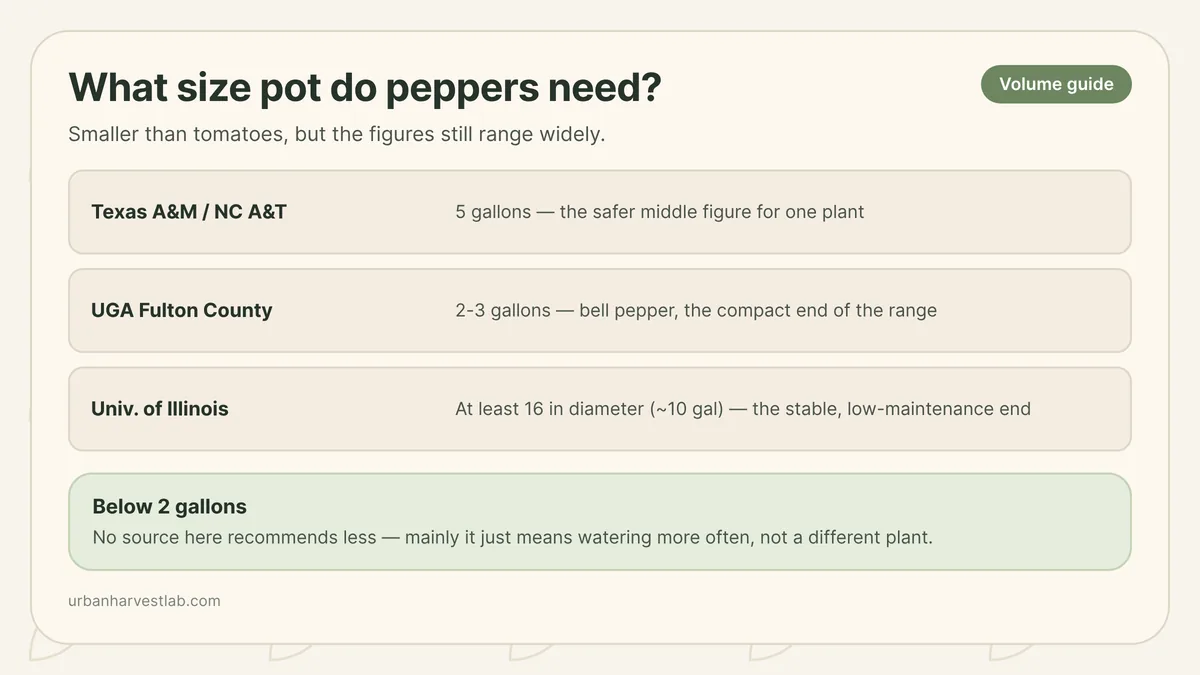
What size pot do peppers need? Smaller than tomatoes, still real
Peppers need less room than tomatoes, but not as little as their compact size suggests. Here is the real range and what moves it.