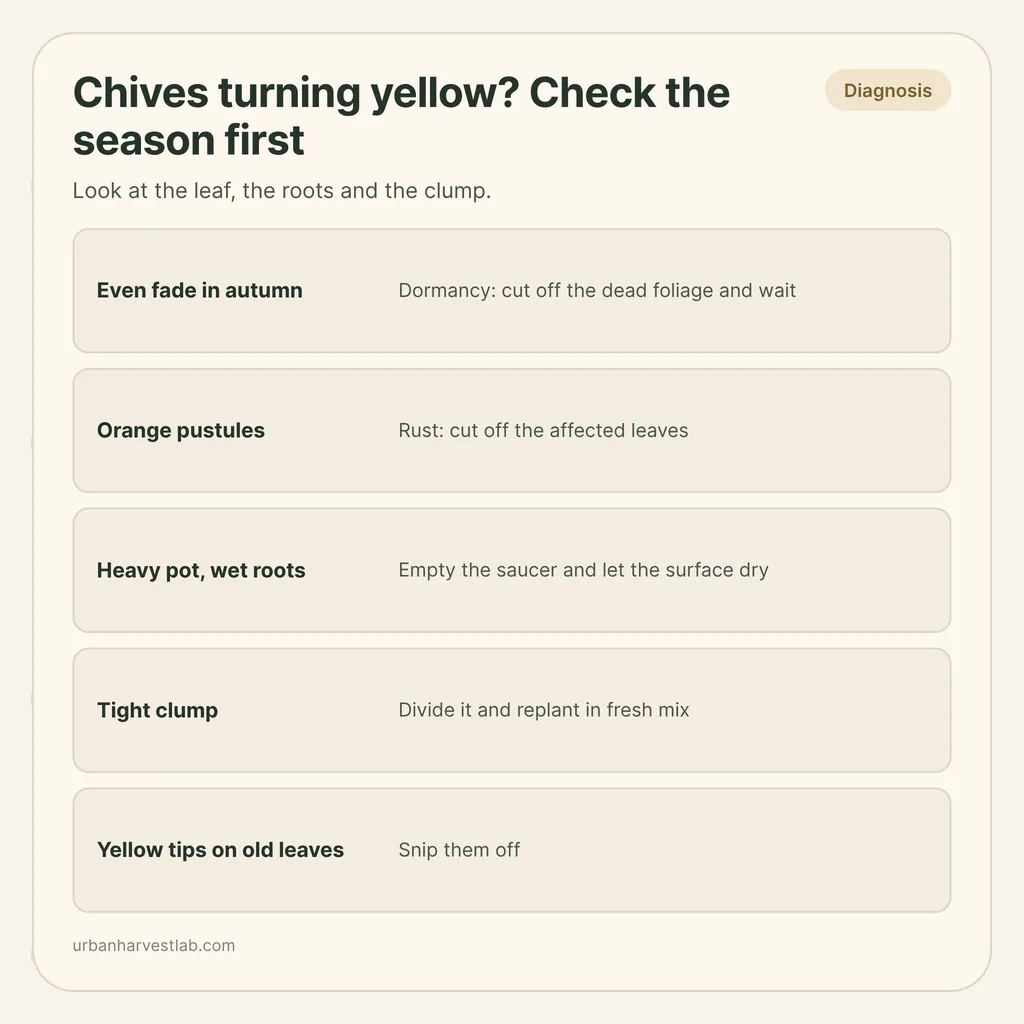
Troubleshoot the system before you change the inputs.
Symptoms
- Leaf tips or whole spears fade to yellow, then straw, and the clump looks flat.
- Orange, powdery bumps appear on the leaves.
- The pot stays heavy and wet, or the clump has packed the pot solid.
Possible causes
- Seasonal dormancy: chives are a hardy perennial and the foliage dies back in cold weather.
- Rust, a fungal disease that affects chives and other alliums.
- Roots sitting in waterlogged mix, or a clump that has not been divided for years.
- Old leaves left uncut, or a heavily harvested clump that has gone without feeding.
Quick fixes
- Check the season and whether the whole clump is fading evenly before treating anything.
- Look at both sides of a leaf for orange pustules; if present, cut the leaves off and bin them.
- Lift the pot to judge its weight, check every drainage hole, and let the mix dry more between waterings.
- Lift and divide a dense clump, then cut it back and feed lightly once new growth starts.
Yellow chives: which cause fits
| What you see | Likely cause | First move |
|---|---|---|
| Whole clump fading in autumn or winter, no spots | Seasonal dormancy | Cut back, keep the pot cool, water lightly |
| Raised orange pustules on both sides of leaves | Rust | Cut off affected leaves, bin them, thin the clump |
| Yellow tips, pot heavy and wet for days | Waterlogged roots | Clear drainage holes, let the mix dry more between waterings |
| Thick, tight clump filling the pot | Overcrowding | Lift and divide into smaller sections |
| Older leaves pale and thin, regular harvests | Hunger | Cut back, then feed lightly |
Chives that yellow evenly in autumn are going dormant and will regrow in spring; yellowing in the growing season points to rust, wet roots, a crowded clump or old leaves. The calendar and a close look at the leaf sort most cases in a minute.
For yellowing across other herbs, the yellow leaves cause finder is the wider guide.
Is it just the season?
Chives are a perennial. The RHS says you can harvest outdoors from late spring until they start to die back in autumn, and Wisconsin Extension notes that in cold climates the foliage is killed over the winter, while in mild climates the plants may remain evergreen. Illinois Extension calls them a hardy, drought-tolerant perennial.
So a whole clump fading evenly in autumn, with no spots and a firm base, is dormancy. Cut the dead foliage off; Wisconsin Extension advises removing old plant remains in late winter before growth resumes in early spring. Keep the pot somewhere cool, water lightly, and wait. The size and dormancy of a potted clump are also touched on in what size pot chives need.
If you want leaves through winter, the RHS suggests potting up a clump and bringing it indoors on a sunny windowsill. Illinois Extension warns that plants potted in the fall for indoor growing do not perform as well and tend to become leggy, so a yellowing, floppy indoor clump in midwinter is not necessarily a failure.
Orange pustules: rust
Turn a yellow leaf over. The RHS describes leek rust, which also affects chives, as bright orange pustules on both sides of infected leaves. Most attacks occur from mid-summer until late autumn. Severe attacks may cause leaves to shrivel prematurely and reduce vigour.
This is different from plain yellowing: the colour is orange and powdery, and it rubs off on a finger. What to do, going by the RHS:
- There are no fungicides approved for use by amateur gardeners to control leek rust, so cut off the affected leaves.
- Do not crowd plants, as that raises humidity. Space clumps out or divide them.
- Take care with fertiliser: infection is worse on nitrogen-rich soils with low potassium.
- Dispose of all plant debris at the end of cropping. Bin the cuttings.
The RHS also points out that the form infecting leeks may not infect chives and vice versa, so a rusty leek bed nearby is not a certain source. Mint has its own, separate rust; if your herbs share a windowsill, see mint rust to tell them apart.
Silvery scarring and distorted leaves are a different problem: Penn State lists onion thrips on chives; see the thrips guide.
Wet roots
Chives like steady moisture, not soaking. Illinois Extension says to water to maintain uniform soil moisture, and the RHS notes that plants in containers dry out more quickly than those in the ground.
Clemson Cooperative Extension states that the symptoms of over-watering and underwatering are similar, so do not diagnose by the leaf alone. Lift the pot: if it stays heavy days after watering, the roots are the problem. Unblock the holes, empty the saucer, and let the surface dry before the next drink. The finger-and-weight test for telling the two apart is in overwatered vs underwatered.
A clump that has outgrown itself
Chives grow in clumps from bulbs, and a clump left undivided for years gets tight and exhausted. Illinois Extension says to divide plants every 2-3 years; the RHS says every three or four. A clump with a mat of roots filling the pot is overdue.
Lift it out, pull it into sections, and replant each in fresh mix. Illinois Extension notes that clumps should contain about 4-6 bulbs. The RHS says to divide in spring or autumn. The full method is in dividing perennial herbs.
Old leaves, and a clump that wants feeding
Not every yellow spear is a problem. Wisconsin Extension says to use only turgid, green leaves, without yellow tips, browning or wilting. Yellow tips on old leaves are fine to snip off.
If a heavily harvested potted clump has gone pale and thin, hunger is possible. UC IPM describes nitrogen deficiency as older leaves turning uniformly pale green to yellowish, with sparse new growth. Illinois Extension says frequently harvested chives benefit from supplemental fertiliser during the season. Wisconsin Extension says they have low nutrient requirements and do not need regular fertilisation. In a pot that is cut often, feed lightly, and only after you have ruled out wet roots and crowding, because the RHS warns against heavy nitrogen where rust is a risk.
A reset cut
After clearing yellow growth, the RHS suggests cutting the whole clump down to about 5 cm (2 in) to stimulate a flush of fresh foliage that you can pick in a few weeks. The technique is covered in pruning basil, mint, parsley and chives.
Sources
More on yellow herbs and chives
Pot size, dividing, and the wider guides for yellowing leaves.
Common questions
Why are my chives turning yellow?
In autumn and winter it is usually dormancy: Wisconsin Extension says the foliage is killed over the winter in cold climates and regrows in spring. In the growing season, look for orange rust pustules, a pot that stays wet, a crowded clump, or leaves that are simply old and due to be cut.
Should I cut yellow chives back?
Yes. Snip yellow leaves at the base. The RHS suggests cutting the whole clump to about 5 cm (2 in) to stimulate a flush of fresh foliage, which you can start picking in a few weeks. If rust is present, bin the cuttings rather than composting them.
Do chives need fertiliser?
Sources differ. Illinois Extension says frequently harvested chives benefit from supplemental fertiliser during the season, while Wisconsin Extension says they have low nutrient requirements. In a pot that is cut often, a light feed during growth is reasonable, but the RHS warns rust is worse on nitrogen-rich soil, so do not overdo it.
Will my yellow chives come back?
If the clump is a healthy perennial that is dormant, yes. Keep the pot somewhere cool, water lightly, and expect fresh spears in spring.
Related guides
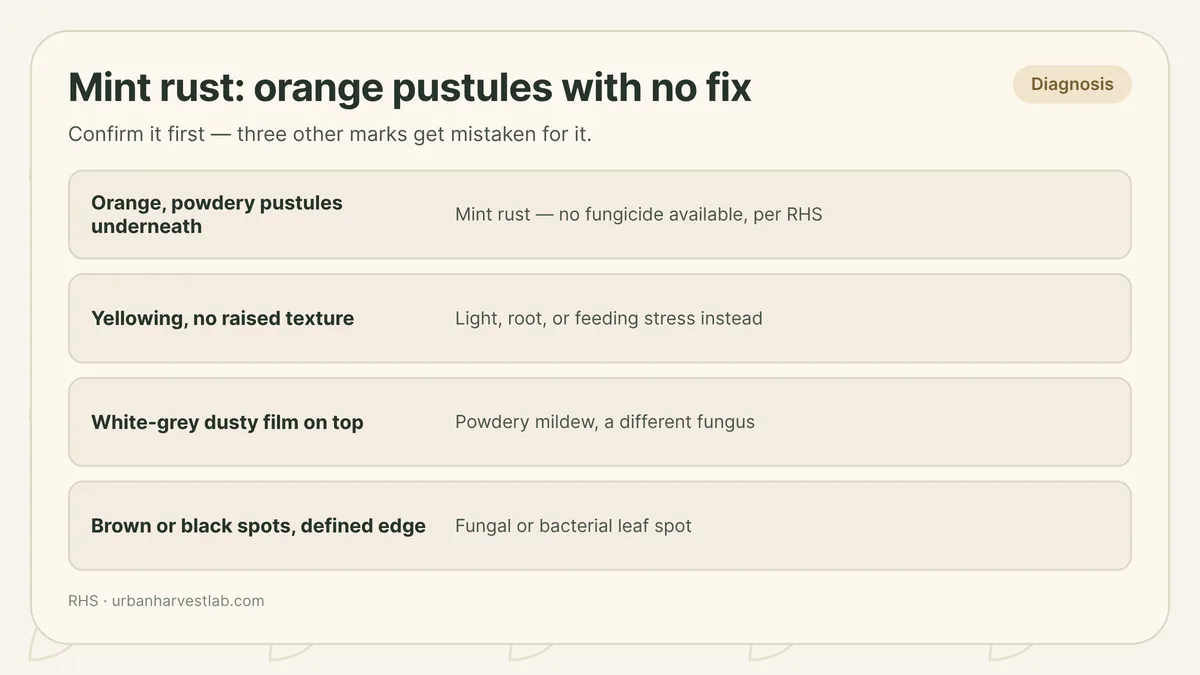
Mint rust: orange leaf pustules with no real cure
Mint rust cannot be treated away once it is on the leaf. The realistic job is removing infected growth, improving airflow, and knowing when to start over.
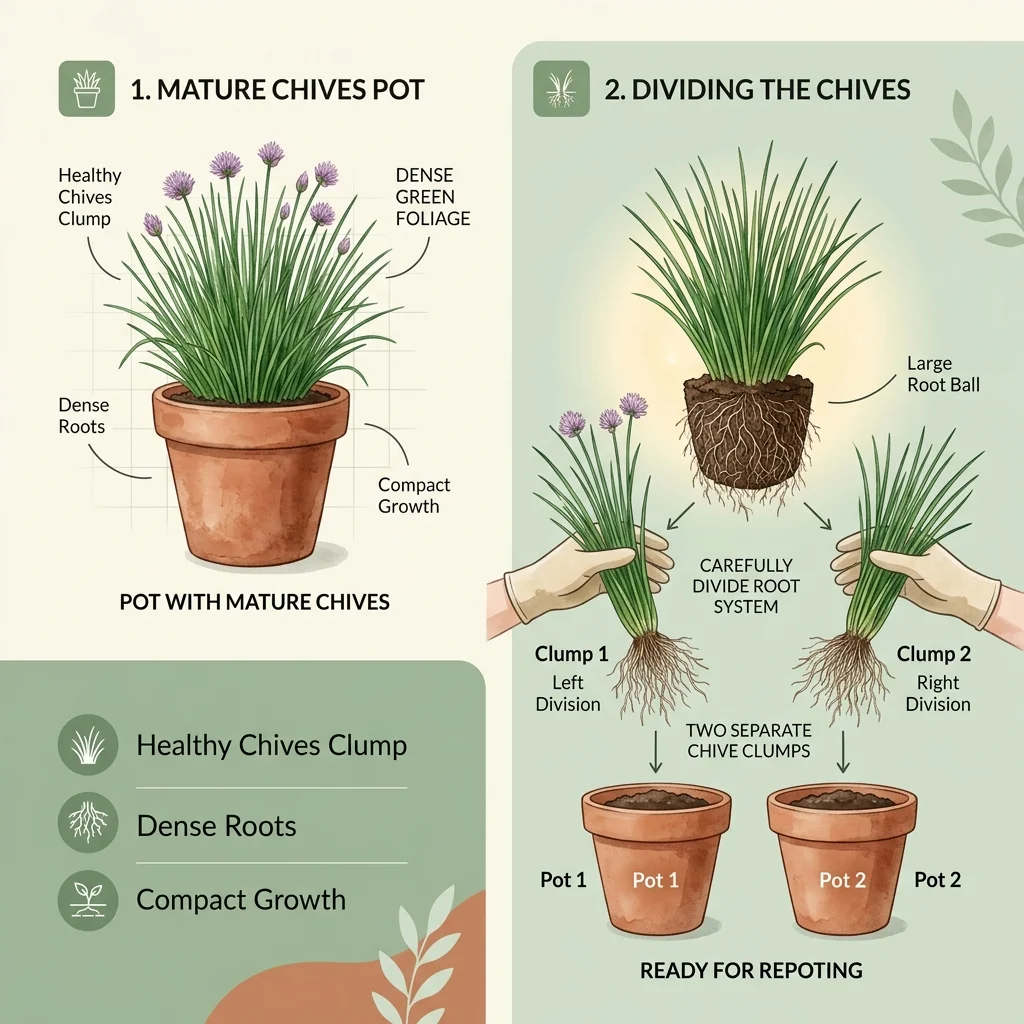
What size pot do chives need? A compact-pot guide
Chives are one of the easiest herbs to pot because their roots stay compact. A 6 inch pot is enough, and dividing the clump gives you free plants over time.

How to divide chives, mint and oregano in pots
A crowded perennial herb does not need a bigger pot. Split the clump, discard the tired centre, and replant the healthy sections in fresh mix.