
Troubleshoot the system before you change the inputs.
Symptoms
- Irregular holes or chewed leaf edges that appear overnight, with no shiny slime trail on the leaf, stem, or soil.
- Seedlings missing leaves or most of their stem.
- Slender brown insects with a pair of pincers at the tail end, hiding under pots, saucers, mulch, or inside curled leaves by day.
Possible causes
- Earwigs are chewing tender tissue at night, most often seedlings, lettuce, flower petals, or soft fruit.
- Earwigs are only sheltering in a damp, dark spot while slugs, snails, or caterpillars do the chewing.
- Earwigs are feeding on aphids or other pests and the visible damage comes from those insects.
Quick fixes
- Check the plant with a flashlight after dark to see what is actually feeding.
- Set rolled, moistened newspaper on the soil at dusk and shake it into soapy water in the morning.
- Lift pots off damp surfaces, clear debris and thick mulch, and water in a way that leaves the surface drier.
Earwigs found under or in a pot are usually just sheltering, and they eat aphids, so they only deserve a trap when you can link them to fresh chewing on seedlings, lettuce, flowers, or soft fruit. Confirm with a flashlight after dark. If they are the culprit, a rolled newspaper trap does most of the work. Holes with a slime trail point elsewhere, so start with the holes in herb leaves guide if you are not sure.
Pincers, people, and what they really chew
The pincers look alarming. UC IPM’s earwig pest notes describe the adult as about 3/4 inch long and reddish brown, with forceps-like appendages at the tail end that are used for defence. They seldom fly, and UC IPM states that earwigs are not harmful to people. Colorado State University Extension says the old stories about ears have little basis in fact, though an earwig sat on or handled can give a mildly painful bite.
Plants are a different matter. UC IPM says earwigs can seriously damage seedlings and chew holes in flowers and soft fruit. On seedlings, the damage looks like missing leaves or missing stem. On older plants, it shows up as numerous irregular holes or leaves chewed around the edges. Colorado State adds lettuce and some flower blossoms to the list of occasional targets.
That damage can look like a caterpillar’s work, and UC IPM tells you to look for webbing, frass, or pupae to rule caterpillars in. For a slug or snail, check for a slime trail instead. The slugs and snails page covers that culprit in detail.
The reliable test is to go out after dark with a flashlight, as UC IPM suggests, and watch what is feeding. Daytime tells you little. Earwigs feed at night and hide during the day in dark, cool, moist places, so finding them under a saucer at noon proves only that your pot is a good shelter.
Why they move into your pots
Colorado State lists the space under potted plants among the typical indoor hiding places for earwigs, alongside stacks of newspaper. Outdoors it names rocks, stacked wood, debris, and the unfurled leaves of plants. A pot sitting on damp paving, with a saucer that holds water and a layer of mulch on top, offers all of it.
Utah State Extension notes that earwigs are more abundant in highly irrigated or mulched areas, and UC IPM warns that mulches often harbour them. Colorado State reports its problems clustering from mid-July through mid-September, which describes Colorado. Your own season will follow your local climate.
Earwigs also shelter inside leaves curled by aphids, according to Colorado State. If you find them inside curled foliage, look at the leaf underside for the aphids that did the curling before blaming the earwigs. The aphid guide shows what to look for. And if the creature under the pot is not a pincer-tailed insect at all, the pill bug page may be the match.
Help or harm: when to leave them alone
UC IPM calls European earwigs voracious feeders on soft-bodied insects such as aphids and insect eggs, able to exert significant biological control under some circumstances. Colorado State says they feed on aphids, mites, and insect eggs. Utah State goes one step further: because earwigs can be both beneficial and detrimental, it advises treating only when there is unacceptable crop damage.
For a pot garden, that translates into a simple rule.
- Leave them be if you see a few earwigs, the foliage is intact, and you have aphids or other soft-bodied pests nearby.
- Trap them if seedlings are being cut down, lettuce is shredded overnight, or petals and soft fruit are getting chewed, and a night check confirms earwigs are present.
- Look further if there is damage but no earwigs at night. Use the pest identification chart to match the signs to another insect.
How to trap earwigs in containers
UC IPM calls trapping a key element of earwig management. The traps work because earwigs look for exactly the dark, tight shelter they offer.
- Make a shelter. UC IPM lists rolled-up newspaper, corrugated cardboard, bamboo tubes, and short pieces of hose. Colorado State says rolled corrugated cardboard can be very effective, as can rolled or crumpled newspaper, and that moistened newspaper works.
- Add bait if catches are low. Colorado State says a food bait inside the shelter can greatly improve its use, and names wheat bran and wheat germ as baits that were effective in its trials.
- Place it at dusk. UC IPM says to set traps on the soil near plants just before dark.
- Empty it in the morning. Shake the earwigs into a pail of soapy water, as UC IPM describes.
- Repeat. UC IPM says to continue every day until you stop catching earwigs. Colorado State’s interval is looser: collect traps every 2-3 days and discard the contents in a bag.
An oil trap is the other option. Both universities describe a low-sided can or small cup of vegetable oil or fish oil sunk into the soil. Colorado State says to keep the oil at least an inch below the surface, so earwigs must crawl deep into the cup. On a balcony, a cup pushed into an empty pot of soil beside your plants can serve the same purpose.
Sprays and baits are rarely worth it. UC IPM says insecticides should rarely be needed once hiding places are reduced and traps are in use, and notes that earwig baits are available but often not very effective. For anything you plan to eat, the label decides what you can use. Utah State advises verifying that a product is labeled for earwigs on the plant you are treating. The guide to choosing a pest treatment for edible plants covers how to read that label.
Take away the shelter under and around the pot
Trapping thins the numbers. Removing shelter keeps them from coming back. UC IPM’s list for gardens includes clearing debris and moving flowerpots and other objects that can harbour earwigs. It also suggests drip irrigation where possible to reduce moisture.
- Lift pots on feet or a rack so they do not sit flat on damp surfaces.
- Empty saucers and keep the soil surface from staying wet.
- Clear fallen leaves, boards, and clutter from around the pots.
- Go light on mulch, which Utah State and UC IPM both link to higher earwig numbers.
Earwigs in pots brought in for winter
UC IPM says earwigs may come indoors when conditions outside are too dry, too hot, or too cold, and that large numbers are annoying but not a health hazard. Pots you bring in for winter can carry them. Shake out the saucer, check the underside of the pot, and sweep or vacuum up any that appear. UC IPM says earwigs eventually die indoors because there is little for them to eat, and that indoor insecticides are not recommended.
Sources
Other night chewers and pests
Holes in leaves have several possible culprits. These pages help you rule out the others.
Common questions
Are earwigs in my potted plants harmful?
Sometimes. UC IPM says earwigs can seriously damage seedlings and chew holes in flowers and soft fruit, but they also feed on aphids and other insects. Colorado State University Extension adds that they occasionally injure leafy plants such as lettuce. A few earwigs hiding under a pot with no fresh damage on the plant are not a reason to act.
Do earwigs really crawl into ears or hurt people?
UC IPM states that earwigs are not harmful to people. Colorado State University Extension says the stories about ears have little basis in fact, although earwigs have been known to cause a mildly painful bite when sat upon or handled.
What is the best trap for earwigs in pots?
A rolled-up newspaper, corrugated cardboard, bamboo tube, or short piece of hose placed on the soil just before dark, then shaken into soapy water in the morning, per UC IPM. Colorado State University Extension notes that moistening the newspaper and adding a food bait such as wheat bran improves catches.
How do I tell earwig damage from slug damage?
Both feed at night and leave irregular holes. UC IPM says to check for the slime trail that slugs and snails leave behind; if there is no trail and you find pincer-tailed insects hiding nearby, earwigs are the likelier cause.
Related guides
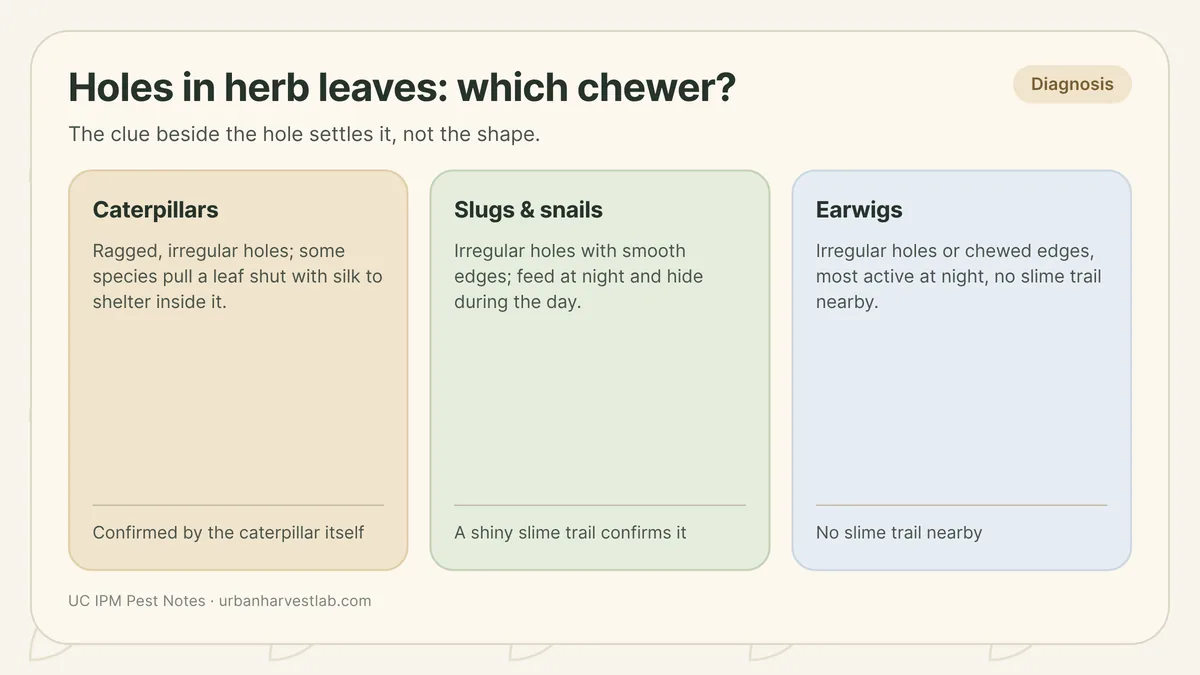
Holes in basil leaves: what's actually chewing them
Three insects punch actual holes through a herb leaf: caterpillars, slugs and snails, and earwigs. Each leaves its own clue, and the clue matters more than the shape of the hole.

Pill bugs in plant pots: when they hurt seedlings and how to cut their numbers
Grey, armoured, roll-into-a-ball creatures in your potting mix are usually decomposers. Here is when they threaten seedlings, how to confirm it after dark, and what actually reduces them.
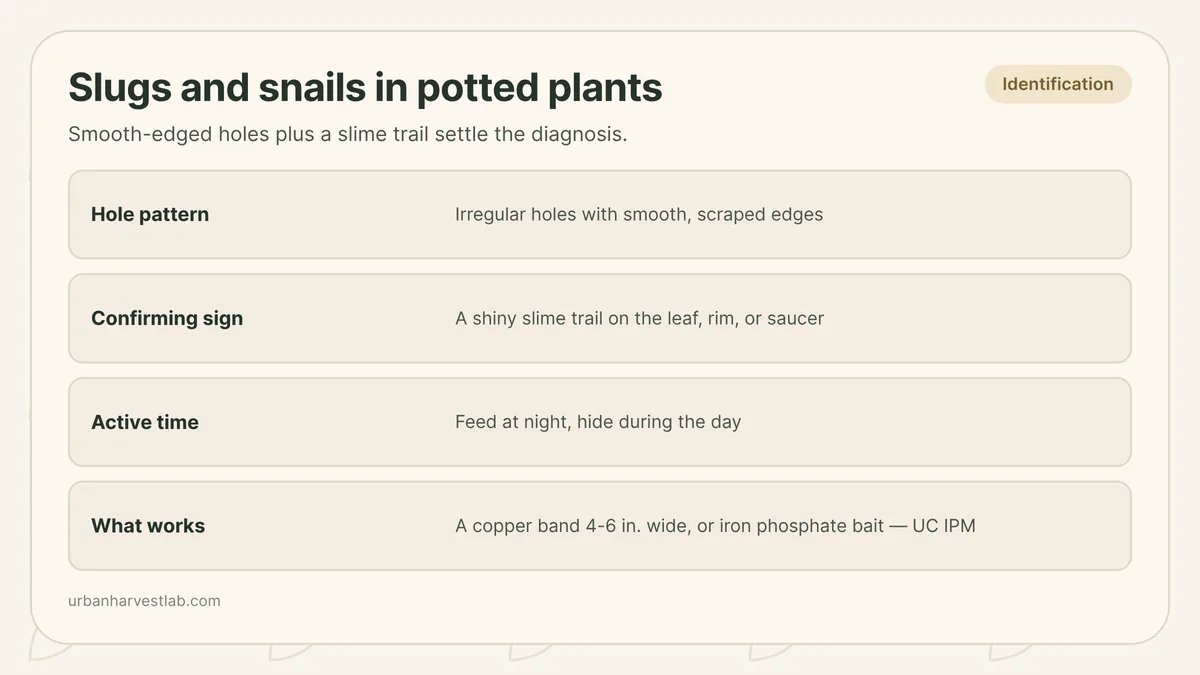
Slugs and snails in potted plants: barriers that actually work
Smooth-edged holes and a shiny trail on a potted herb point to slugs or snails. A copper barrier, iron phosphate bait, and checking after dark are the responses with evidence behind them.