
Troubleshoot the system before you change the inputs.
Symptoms
- Grey, oval, armoured creatures about 1/3 to 3/4 inch long as adults sit under the pot, in the saucer or on the soil surface, and some curl into a ball when touched.
- Seedlings disappear or are chewed at soil level overnight, or lower leaves resting on the soil have ragged edges.
- Damage appears in a damp pot with leaf litter, old mulch or dead foliage on the surface.
Possible causes
- A constantly damp soil surface with decaying organic matter on top gives pill bugs both the moisture they need and food.
- Fresh seedlings or soft new roots are the tender tissue they will chew when numbers are high.
- Slugs or another pest damaged the plant first, and pill bugs are feeding opportunistically on the wound.
Quick fixes
- Check after dark to confirm what is feeding, because the same damage can be slugs.
- Clear dead leaves and debris from the soil surface and the saucer, and let the top of the mix dry between waterings.
- Water early in the day so the surface is drier by evening, and keep compost or mulch back from stems.
Pill bugs compared with the usual suspects in a damp pot
| Clue | Pill bugs and sowbugs | Slugs and snails | Springtails |
|---|---|---|---|
| Body | Grey, armoured, seven pairs of legs | Soft, no legs, shiny slime trail | Tiny, jump when disturbed |
| Rolls into a ball | Pill bugs do; sowbugs do not | No | No |
| Seedling damage | Occasional, at soil level | Irregular smooth-edged holes | Rarely enough to matter |
| What to do first | Dry the surface, clear debris | Night checks, copper, bait | Fix the moisture |
Pill bugs in plant pots are usually decomposers, not pests: they live on decaying plant material and only occasionally nibble seedlings, new roots and lower leaves. If young plants are vanishing at soil level, confirm the culprit after dark, then dry out the surface and clear away the debris they feed and hide in.
Before blaming them, make sure of what you are looking at. Pill bugs are not insects. UC IPM describes pillbugs and sowbugs as soil-dwelling crustaceans in the order Isopoda, and says adults have seven pairs of legs, a hard shell of segmented plates and a body about 1/3 to 3/4 inch long. That separates them from the tiny jumping specks covered in springtails versus fungus gnats.
Pill bug or sowbug?
The two are managed the same way, so the distinction is trivia, but it settles arguments. UC IPM says pillbugs commonly curl into a ball when disturbed and have a smooth rounded rear end. Sowbugs cannot roll up, scurry away when disturbed and have distinct appendages protruding from the rear. Young ones are pale yellow to whitish and about 1/12 inch long when they emerge; older individuals are brown to dark gray, and may look blue or purplish just after molting.
Decomposers first, seedling chewers second
Rarely in a way that matters. Oregon State Extension says that large numbers can sometimes cause minor damage to young seedlings, but in general they are harmless detritus feeders. UC IPM says they feed primarily on decaying plant material and are important decomposers, yet occasionally feed on seedlings, new roots, lower leaves, and fruits or vegetables touching the soil.
Utah State Extension is a little firmer: they are usually minor pests but occasionally become numerous enough to damage roots, seedlings, foliage and produce that contacts the soil. It also says they are opportunistic feeders following disease, slug and other pest damage. So a pill bug on a chewed leaf is not proof it did the chewing. It may be cleaning up after something else.
Where they do cause trouble in a pot, it is the vulnerable stage:
- Seedlings with tender stems at the soil line.
- Fresh roots near the surface of a newly potted plant.
- Leaves or fruit lying on the soil, such as a strawberry or a low leaf of lettuce resting on the mix.
A mature herb or tomato with a few pill bugs underneath is not in danger. If seedlings are dying and you cannot find a chewing culprit at all, the broader checklist in why herb seedlings die covers damping-off and watering problems first.
Confirm them at night
Pill bugs hide by day. Utah State says adults and young are most active at night when humidity is high and temperatures are low. Iowa State Extension’s advice is simply to check at night to see whether they are the cause of disappearing seedlings or leaf-edge damage.
So take a torch out after dark and lift the saucer, the pot rim and any debris on the surface. Look for grey bodies actually on or beside the damaged plant, not just somewhere in the pot.
The damage itself is not distinctive. Utah State says that pill bug and sowbug feeding looks similar to slug damage, with ragged holes chewed between leaf veins and damage concentrated around soil level. A slime trail rules them out and points to slugs; the barriers and night checks in slugs and snails in potted plants apply instead. For the wider question of which pest is behind a given hole, the herb pest identification chart lines the signs up.
Dry the surface and clear the debris
Every extension source points the same way: moisture and cover are what pill bugs need, so remove them. Utah State’s isopod page lists their habitats as moist soil, leaves, mulch and stones, and says they require high moisture.
UC IPM’s recommendations translate directly to a container:
- Clear decaying matter off the soil surface. UC IPM says to reduce decaying organic matter on the soil. In a pot that means picking off fallen leaves, spent flowers and old mulch, and emptying the saucer. Utah State likewise says to remove debris on the soil.
- Let the surface dry. UC IPM says to minimise wetness of the soil surface and to reduce irrigation frequency to the extent compatible with healthy plant growth. Check the top of the mix before watering; overwatered versus underwatered shows how to tell what the pot actually needs.
- Water early in the day. UC IPM says irrigating early leaves the surface drier by evening, when pill bugs come out.
- Hold compost and mulch back from stems. UC IPM says to keep compost and mulch back from plants. Oregon State Extension adds that if you see too many sowbugs, consider reducing the amount of added compost.
- Hand-pick the ones on seedlings. For a few trays or pots this is practical, because the bugs are slow and easy to find after dark. Remove hiding places nearby as well: Iowa State names piles of leaves, boards, stones and other debris.
UC IPM also says that raised beds or planting boxes, plastic mulch instead of organic material, and drip irrigation instead of sprinklers usually keep pillbugs and sowbugs from becoming serious problems. A container is effectively a planting box, so the same logic applies.
Most plants outgrow the nibbling
Utah State says cultural management practices are generally the most effective in preventing pillbugs and sowbugs from becoming a problem. Iowa State points out that, given the chance, most vegetable plants would outgrow sowbug nibbling, and control would not be necessary. Iowa State mentions garden insecticides, but on a pot of herbs or salad greens you plan to eat, a label check comes first; choosing a pest treatment for edible plants covers what that means. Fixing the damp and the debris removes the cause, where a spray only removes the animals.
Pill bugs on the windowsill
Potted plants on a windowsill or a ground-floor balcony can bring pill bugs inside with the soil or from outside. Utah State says they come indoors when moist conditions exist and recommends vacuuming individuals that enter buildings, with tight door sweeps and sealed foundation cracks to keep more from arriving. UC IPM notes that they sometimes come indoors and can be a nuisance. Dry out the pot surface and move saucers that stay wet.
How long will it take?
Pill bugs are slow to build up: UC IPM says eggs hatch about a month after being produced and the young remain in the brood sac for about two weeks, and that adults can live 2 to 5 years. That is why removing the damp and the debris works better than waiting for the population to crash by itself, and why a few survivors are not a sign that the fix failed.
Sources
Other small creatures in pots and soil
Tiny bugs and night feeders in containers are often confused with each other; these guides separate them.
Common questions
Are pill bugs in plant pots harmful?
Usually not. They feed primarily on decaying plant material, and Oregon State Extension describes them as harmless detritus feeders. UC IPM notes that they occasionally feed on seedlings, new roots and lower leaves, and Utah State says they can become numerous enough to damage roots, seedlings and foliage. The risk is to very young plants, not established ones.
How do I know pill bugs are eating my seedlings?
Go out at night with a torch. Utah State says pill bugs and sowbugs are most active at night when humidity is high, and Iowa State recommends checking after dark to see whether they are behind disappearing seedlings or leaf-edge damage. Damage concentrated at soil level, with ragged holes between leaf veins, looks similar to slug damage.
How do I get rid of pill bugs in my pots?
Make the pot less damp and less cluttered. UC IPM recommends reducing decaying organic matter on the soil, minimising wetness of the soil surface, irrigating early in the day so the surface is drier by evening, and keeping mulch back from plants. Utah State adds removing debris from the soil surface and says cultural practices are generally the most effective control.
Do pill bugs and sowbugs differ?
Yes, slightly. UC IPM says pillbugs curl into a ball when disturbed and have a smooth rounded rear end, while sowbugs cannot roll up, scurry away and have distinct appendages protruding from the rear. Both are crustaceans, not insects, and are managed the same way.
Related guides
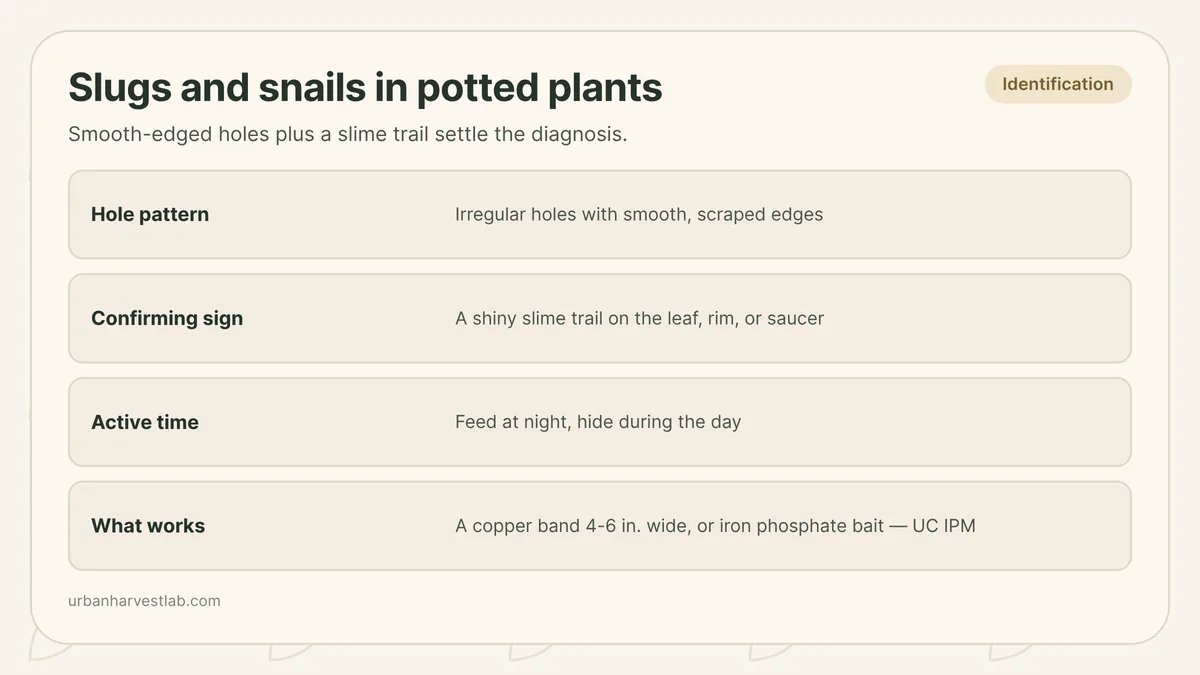
Slugs and snails in potted plants: barriers that actually work
Smooth-edged holes and a shiny trail on a potted herb point to slugs or snails. A copper barrier, iron phosphate bait, and checking after dark are the responses with evidence behind them.
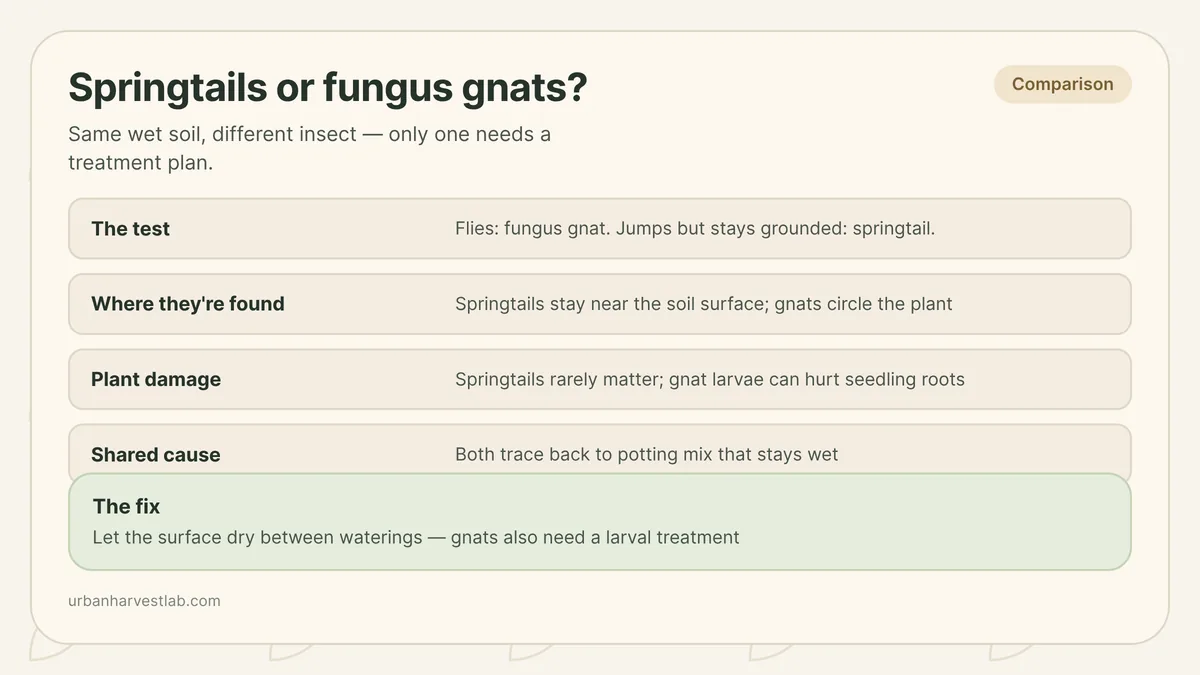
Tiny bugs in plant soil: springtails or fungus gnats?
If the bugs in your potting soil jump but stay grounded, they are springtails. If they lift off and buzz around the plant, they are fungus gnats. Both are pointing at the same watering habit.
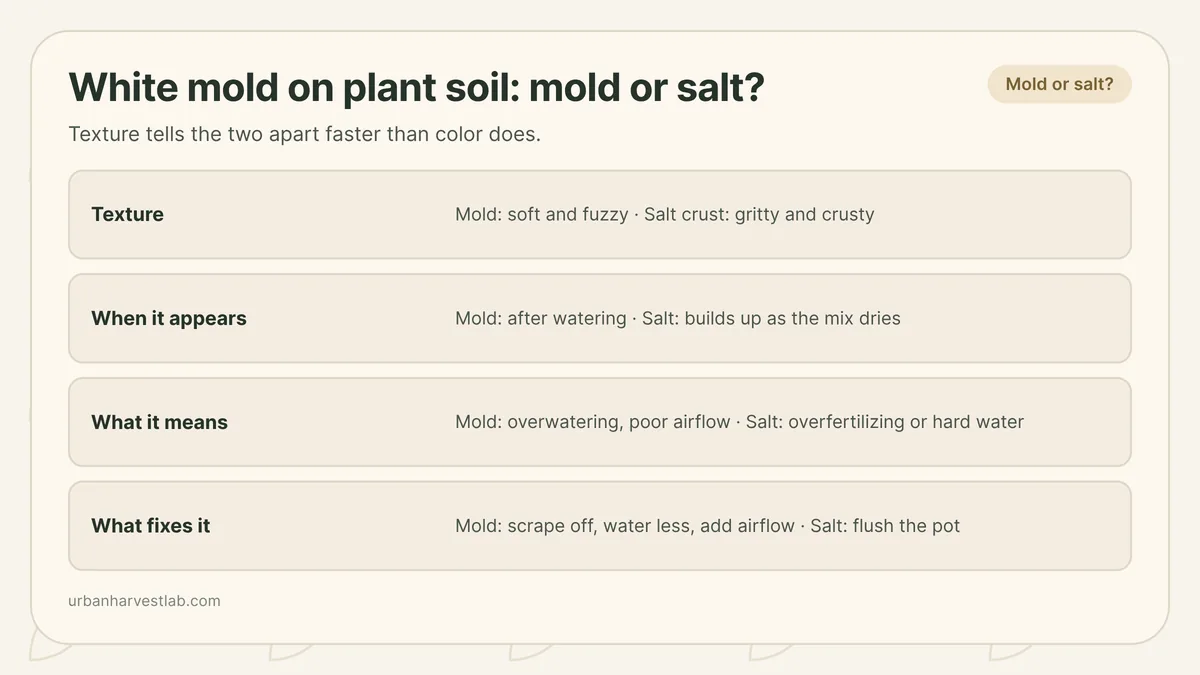
White mold on plant soil: what it means and what to do
A white, fuzzy patch spreading across the soil surface looks alarming, but it is usually a cosmetic fungus feeding on the mix, not the plant.