
Two ways to carry a pepper plant through winter
| Method | Conditions | What it takes |
|---|---|---|
| Bring it indoors as a dormant plant | A bright, unheated-feeling room or window, roughly 40-60°F | Cut back if lifted from the ground, water only when the top inch is dry, no fertilizer |
| Leave the container in a sheltered outdoor spot | Against a wall out of driving rain, a coldframe, or an open-fronted shed | Wrap the pot in bubble wrap ahead of a hard freeze; keep it from freezing solid or sitting waterlogged |
| Start fresh from seed in late winter | Indoors under light, no dormant plant to manage | Simpler for most growers, but you lose the head start and the specific plant |
A pepper plant does not have to die at the first hard frost. Pepper is classed botanically as a tender perennial rather than an annual, and a plant that is otherwise healthy can be brought indoors, held in a cool dormant state, and set back outside in spring instead of started over from seed. The method comes from how extension services already handle other tender perennials in containers, and it works the same way for a pepper plant: bring it in before frost, cut it back if you are lifting it from the ground, hold it in a cool bright spot over winter, and water it only when it needs it. If you are still deciding whether a pepper plant is worth a second season at all, an apartment vegetable garden plan covers where fruiting crops like peppers fit once a simpler crop has already proven the spot.
Why a pepper plant is not really an annual
Home gardeners treat peppers as annuals because frost ends the growing season every year in most climates, not because the plant itself runs out of life on a one-year clock. In a frost-free climate, the same plant can keep growing and fruiting beyond a single season. The overwintering methods extension services publish for other tender perennials — plants that die back at the first freeze but are not naturally short-lived — apply to a pepper plant for exactly this reason.
University of Illinois Extension’s overwintering guidance names sage, rosemary, and bay laurel as the herbs it is written for. It does not mention peppers. The steps it gives, though, are about keeping any tender perennial dormant through a cold season it cannot survive outdoors — and a pepper plant needs the same basic things those herbs do: protection from freezing, a cool holding temperature, light, and very little water until it starts growing again.
Before the first frost: decide whether to lift or just move the pot
If your pepper plant is already growing in a container, you can skip straight to bringing the pot indoors. If it is planted in the ground, it needs to come out and go into a container before the season ends. Either way, do this before frost is forecast rather than waiting to see how the plant handles the first cold night — a tender perennial that has already been frost-damaged is a much harder plant to carry through winter than one moved in ahead of it.
A plant that has been growing in open ground all season usually has more root and top growth than a container needs to support once it stops actively growing. What size pot peppers need covers the volume a single plant does well in during the growing season; for a plant going into dormancy, err toward the smaller end of that range rather than the largest, since a resting root system does not need the extra soil volume an actively fruiting plant does.
Cutting it back
University of Illinois Extension’s instruction for a tender perennial lifted from the ground is to cut the plant back so that about half of the original plant remains before potting it up. That is a significant reduction, not a light trim, and it matches what the plant can actually support once it is confined to a container and given far less light than it had outdoors. A pepper plant that has been growing in a pot all season needs less of this: remove damaged, overly long, or crossing stems, but there is no need to cut a container-grown plant back as hard as one that is being lifted straight out of garden soil.
Where to keep it and how much light it needs
Illinois Extension’s working figure for tender perennials over winter is a room in the 40-60°F range with bright light. That is cooler than most living spaces feel comfortable, which is the point — a warm room with insufficient light pushes the plant to keep trying to grow with too little light to support it, producing weak, pale stretch rather than a stable dormant plant. An unheated sunroom, an enclosed porch, or a bright spot against a cool exterior wall generally works better than the middle of a heated room. For the wider picture of keeping any plant going indoors over winter — light levels, placement, and the trade-offs of an unheated space versus a warm one — see growing herbs indoors in winter, which covers the same conditions from the plant’s side rather than the room’s.
If you do not have an indoor spot that fits that description, overwintering rosemary and thyme in pots works through the sheltered-outdoors option in full — the same underlying problem, a container’s root zone freezing or waterlogging with nowhere to drain or insulate itself the way ground soil does, applies to a pepper plant left in a pot outdoors just as it does to a herb.
A dormant pepper plant looks different from the one that was fruiting a month earlier, and it is worth knowing what to expect before assuming something has gone wrong. Expect most or all of the leaves to eventually drop as the plant settles into dormancy, leaving bare, woody-looking stems that can seem dead but are not — a light scratch on a stem revealing green tissue underneath is the check worth running before writing a plant off. Any fruit still on the plant when it comes indoors will not ripen further under winter light levels; pick and use what is there rather than leaving it to hang, since a dormant plant gains nothing from carrying fruit through the season it is meant to be resting.
Watering and feeding through dormancy
Water only when the top inch of soil has dried out, and stop feeding it entirely. Illinois Extension’s reasoning is straightforward: a dormant plant is not actively growing, so it is not using water or nutrients the way it does during the season, and it does not need either at the same rate. This is a noticeably different test than the one worth using on any potted plant that is actively growing, where checking moisture an inch or two deep and watching for the container to dry out between waterings is the better guide; potted herb care walks through that active-season version. Overwatering a resting root system in a cool room is one of the more common ways an otherwise successfully overwintered plant is lost before spring — the soil simply stays wet far longer than it would on an actively growing plant, and a root system that is not drawing down that moisture sits in it instead.
Bringing it back outside in spring
Move the plant back outside gradually, and only once day temperatures are reliably above 60°F and the frost risk for your area has passed — the same threshold Illinois Extension gives for returning any overwintered tender perennial outdoors. The RHS sets a separate, narrower bar for the crop itself: night temperatures above 10°C (50°F) for heat-loving crops including peppers, which in a cool spring can land after the last frost date rather than right on it — one figure measures the day, the other the night, and peppers want both cleared. Extension services publish frost-date tools and regional ranges rather than a single date for a specific address, so check your local cooperative extension office or the site’s guide to first and last frost dates for a balcony, which covers the county-level tools and the regional ranges, rather than picking a fixed calendar date. Moving the plant out too early, on a false warm spell, risks the same frost damage that made the whole process worth doing in the first place. Once temperatures hold, reintroduce it to full outdoor light and wind gradually over the 2 to 3 weeks the RHS gives for hardening off a tender plant, rather than moving it straight from a dim room into direct sun, which can scorch leaves that have adjusted to much lower light.
Is it actually worth it?
For most home gardeners, starting new pepper plants from seed each year is simpler, and that is what most people do. Overwintering makes the most sense when the plant itself matters — a variety you cannot easily find as seed again, or a plant that has already put in a season of growth and you would rather not lose. It is not a shortcut to an earlier harvest so much as a way to keep one specific plant going; treat it as worthwhile on those terms rather than as the default path for every pepper plant at the end of the season.
Sources
Overwintering one plant? Also useful
Sizing the pot you repot into, and the wider picture for keeping anything alive indoors over winter.
Common questions
Can you keep a pepper plant alive over winter?
Yes. A pepper plant is a tender perennial, and the same method extension services recommend for tender perennial herbs like rosemary and sage works for it: bring it indoors before frost, hold it in a cool, bright spot around 40-60°F, and water sparingly until spring.
Do you need to cut back a pepper plant before bringing it indoors?
If you are lifting it out of the ground, yes. University of Illinois Extension's method for tender perennials calls for cutting the plant back so about half of the original growth remains before potting it up. A plant that is already growing in a container needs less cutting back, mainly to remove damaged or overly long stems before it comes inside.
How much do you water an overwintering pepper plant?
Only when the top inch of soil has dried out, and skip fertilizer entirely. The plant is not actively growing over winter, so it is not drawing down water or nutrients the way it does in season, and overwatering a dormant root system is one of the more common ways to lose the plant before spring.
Is it easier to just start new pepper plants from seed each year?
For most home gardeners, yes, and that is what most people do. Overwintering is worth the extra care mainly when you want to keep a specific plant going, or hold onto a variety that is hard to find as seed, rather than because it saves meaningful effort over starting fresh.
Related guides
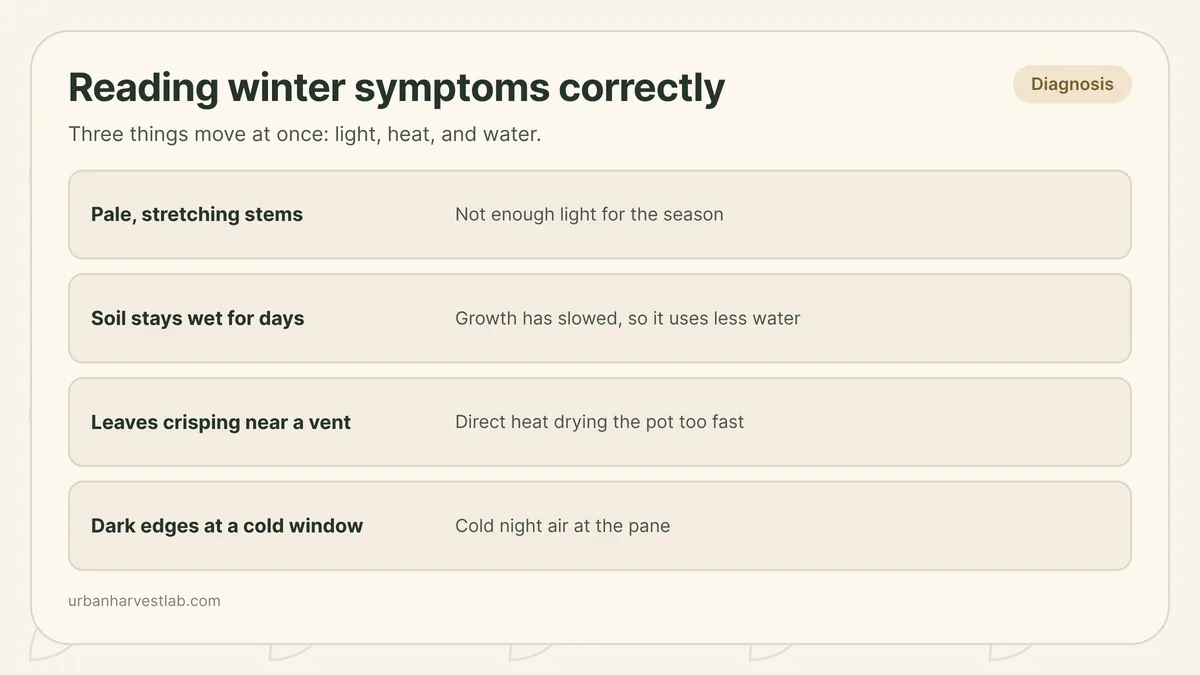
How to grow herbs indoors in winter
A kitchen windowsill that carried herbs all summer often starts failing in November, and it is rarely one single cause. Light, heated air, and watering all shift at the same time.
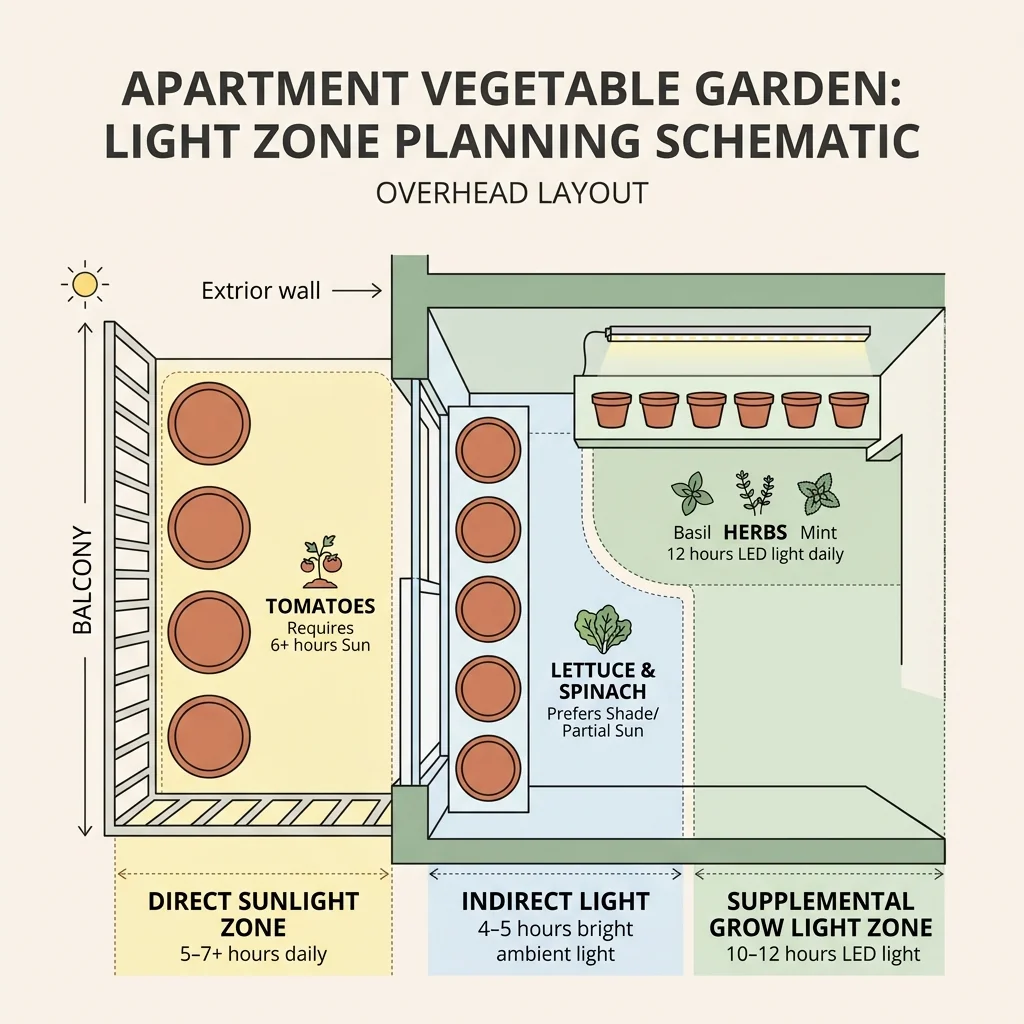
A beginner's apartment vegetable garden plan
Growing food in an apartment works when light, containers, crops, and routine are planned together. This is a simple, step-by-step plan to start from scratch.
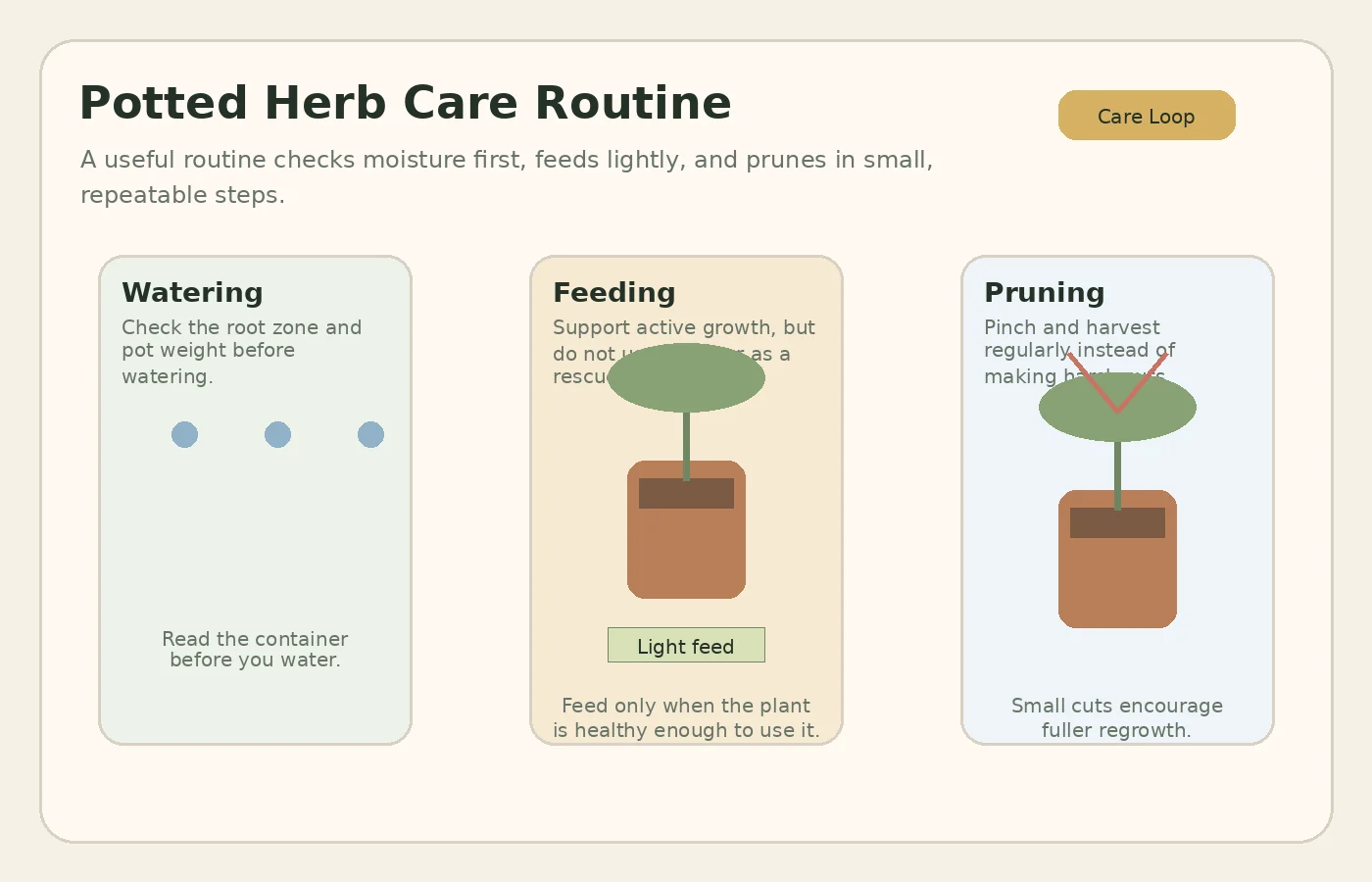
Potted herb care: watering, feeding, and pruning without guesswork
A practical guide to keeping basil, parsley, mint, thyme, and chives healthy by matching watering, feeding, and pruning to the setup.