Troubleshoot the system before you change the inputs.
Symptoms
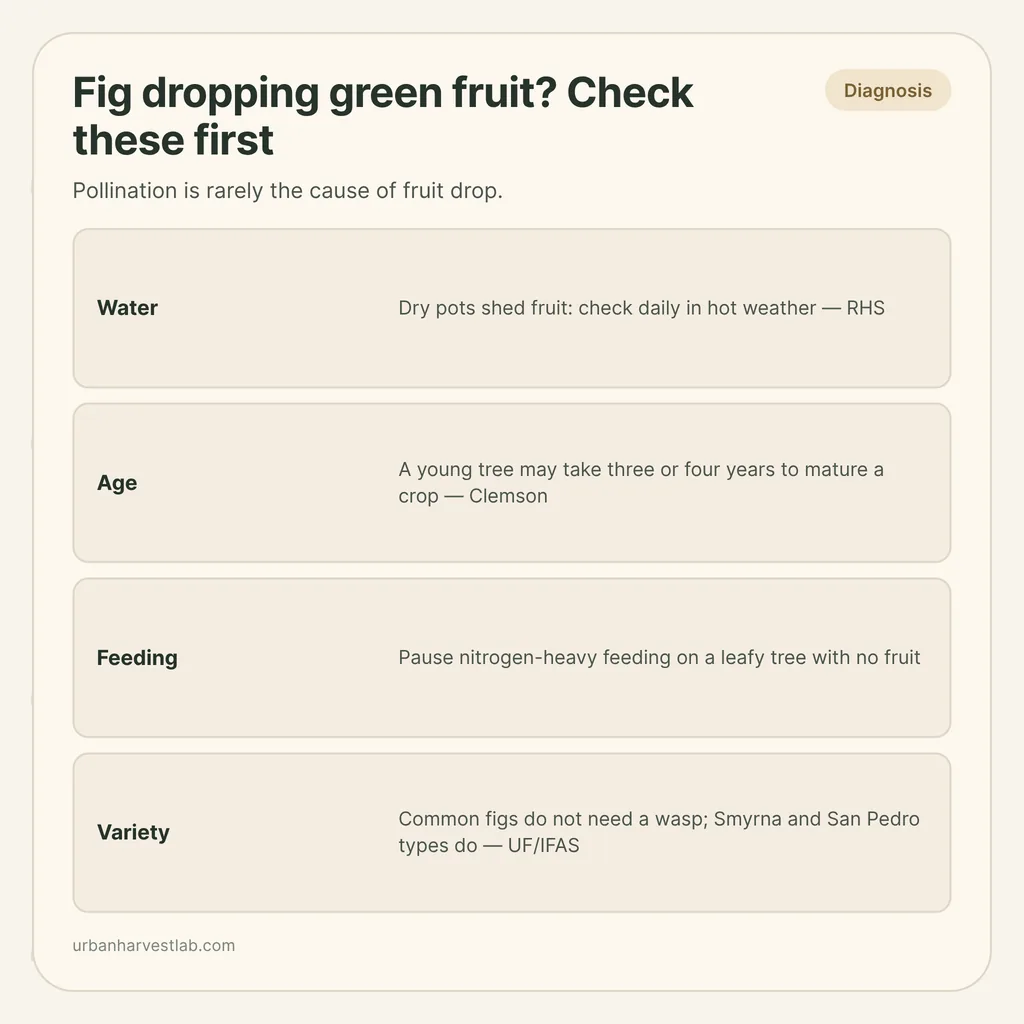
- Small green figs fall during a hot, dry spell, often with some leaf drop.
- A young tree, in its first two or three years, sets fruit that does not ripen and then drops.
- Hard green figs fall or stall late in the season, well after midsummer.
- A fig falls with a fermented smell, or with bubbles or ooze at the eye.
Possible causes
- The pot dried out between waterings, or swings between very dry and very wet.
- The tree is young, or it is being fed too much nitrogen and is putting its energy into leaves.
- The fruit belongs to a late second crop that cannot finish ripening before autumn.
- The variety is prone to dropping fruit in heat.
- The tree is a Smyrna type, or a San Pedro type in its pollination-dependent crop, with no caprifig nearby.
- Root-knot nematodes, if the tree came out of garden soil or is growing in it.
Quick fixes
- Push a finger a few inches into the mix. If it is dry down there, water until it drains, then check daily in hot weather.
- Stop feeding a tree that is growing leafy shoots but holding no fruit.
- Nip off hard green figs larger than a pea at the end of summer so the tree is not carrying fruit that cannot ripen.
- Look up your variety and its eye: open-eyed figs rot and sour more easily.
A potted fig that drops green fruit is most often short of water, too young, or fed too much nitrogen. Pollination is rarely the cause, because common figs set fruit without it. Work through the causes in that order, and check the pot before anything else.
The tree itself is covered in the guide to growing a fig in a pot: pot size, pruning and winter. Here the focus is the fruit that falls. A lemon is a different tree with a different pattern of shedding, covered in lemon tree dropping fruit.
Check the pot first
Water is the first thing to rule out, and a pot makes the problem worse. The RHS says newly planted figs and those with restricted roots are especially vulnerable to drying out, and advises checking daily in hot, dry weather. It adds that plants may shed leaves and fruit if they become too dry. Texas A&M AgriLife Extension describes fig roots as shallow and fibrous, and the tree as relatively sensitive to drought stress. UF/IFAS says drought-stressed trees will not fruit well.
Clemson Extension links dry, hot spells before ripening to poor fruit quality and recommends mulching and supplemental watering through dry periods.
Test by hand, not by calendar. University of Maryland Extension says the mix can be somewhat dry a few inches down before the tree needs water, and that it should not stay constantly wet. The RHS also warns that too much water is harmful. Both are failure modes, and overwatered versus underwatered shows how to tell them apart. For a rhythm that suits pots in general, see how often to water container vegetables, and in a heat spell the heatwave guide covers shade and extra checks. If you cannot judge the moisture by feel, what a soil moisture meter measures explains what the probe tells you.
Is the tree too young, or too well fed?
Clemson Extension lists young, vigorous plants first among the common causes of fig fruit drop: they often produce figs that do not ripen. Its advice for an excessively vigorous plant is to stop fertilizing it, and to avoid excess feeding, especially nitrogen-heavy blends. It also says it may take three or four years before a young plant matures a crop. University of Maryland Extension puts first fruit in the second or third year after planting.
University of Maryland Extension’s list of reasons figs fail to ripen includes excessive fertilizer, extreme heat and drought, fewer than 8 hours of full sun, a short growing season and crowded branches. If your tree is a tall green fountain of leaves with no fruit that holds, feeding and light are the next two things to look at.
Do not respond to a young tree’s drop by moving it to a much bigger pot. The RHS says figs fruit better when their roots are restricted, so step up slowly, as the fig guide describes.
Which crop is falling?
Some figs carry two crops, and the later one has a hard time.
- The early (breba) crop forms on last year’s wood. University of Maryland Extension calls these figs lower quality, and says a larger-than-normal breba crop reduces the tree’s ability to develop a good main crop.
- The main crop forms on the current year’s wood and typically ripens from August through the first frost, says University of Maryland Extension.
- A second crop in a cool climate. The RHS says these fruit rarely have time to ripen outdoors and stay hard and green, and recommends removing any larger than a pea at the end of summer.
So hard green figs falling in autumn in a cool climate may simply be the season ending. Maryland adds that it can take up to two months from the start of fruit formation to ripeness, and that unripe fruit does not ripen once picked.
Does your variety need a wasp?
This is the cause people search for first and the one that applies least often. UF/IFAS says common fig cultivars have only female flowers and do not require pollination. The RHS says the same of the figs it describes: the seedless fruits develop without fertilisation, so pollination is not needed.
The exceptions are specific. UF/IFAS says Smyrna types require a caprifig for pollination, and San Pedro types bear a second crop on new wood that requires pollination. It adds that Smyrna and San Pedro types will not bear fruit in Florida because the caprifig and its wasp are absent. Clemson Extension calls the need for pollination by a special wasp a rare problem among the figs sold for its region.
If your tag does not name the variety, find out which type it is before blaming water.
Variety tendencies and rot
Some varieties shed more than others. Clemson says ‘Celeste’ will often drop fruit prematurely in hot weather regardless of how well the plants are cared for. That is a variety trait, not a watering mistake, though shade and steady moisture are still worth giving it.
Fruit that falls with a fermented smell is a different problem. Clemson describes souring: a souring fig often shows gas bubbles or scummy masses oozing from the eye, and the only control is to grow varieties with a tight or closed eye. UF/IFAS adds that the fungus Rhizopus causes fruit drop in cultivars with an open eye. Pick up and bin fallen fruit like this rather than leaving it under the pot.
Rarer: roots
Texas A&M says root-knot nematodes contribute to premature fruit drop, and Clemson says to dig up a few roots and look for galling or swelling. This is a lower priority for a tree in fresh potting mix. It matters more if the tree came from the ground or the pot holds garden soil, and if nothing else in this list fits.
What to do this week
- Water by feel and check daily in hot weather.
- Pause feeding if the tree is leafy but fruitless.
- Remove hard green figs bigger than a pea at the end of summer.
- Find out the variety, and whether its eye is open or closed.
- Be patient with a tree under three or four years old.
Sources
- Royal Horticultural Society: How to grow figs
- Royal Horticultural Society: Figs, pruning and training
- University of Maryland Extension: Growing figs in Maryland
- Texas A&M AgriLife Extension: Figs (EHT-019)
- Clemson Cooperative Extension: Figs, how to grow and care for figs in South Carolina
- UF/IFAS Extension: The fig
Fig and fruit-drop guides
Growing a fig in a pot, reading watering stress, and the citrus version of fruit drop.
Common questions
Why is my fig tree dropping green figs?
In a pot the first suspect is drying out. The RHS says figs with restricted roots are especially vulnerable to drying out and may shed leaves and fruit if they become too dry. Texas A&M AgriLife Extension calls figs relatively sensitive to drought stress. After water, check the tree's age, how much nitrogen it gets, and the variety.
Does my fig tree need a second tree or a wasp to hold its fruit?
Not if it is a common fig. UF/IFAS says common fig cultivars have only female flowers and do not require pollination. University of Maryland Extension says the common varieties grown there are seedless and set fruit without pollination or fertilization. Smyrna types do need a caprifig, and San Pedro types need one for their second crop.
How long before a young potted fig holds its fruit?
University of Maryland Extension says figs usually begin to bear fruit in the second or third year after planting. Clemson Extension says it may be three or four years before a young, vigorous plant matures a crop, because most figs have a long juvenile period.
Will the green figs ripen if I pick them?
No. University of Maryland Extension says unripe, green fruits will not ripen once picked, and that it can take up to two months from the start of fruit formation to full ripeness.
Related guides
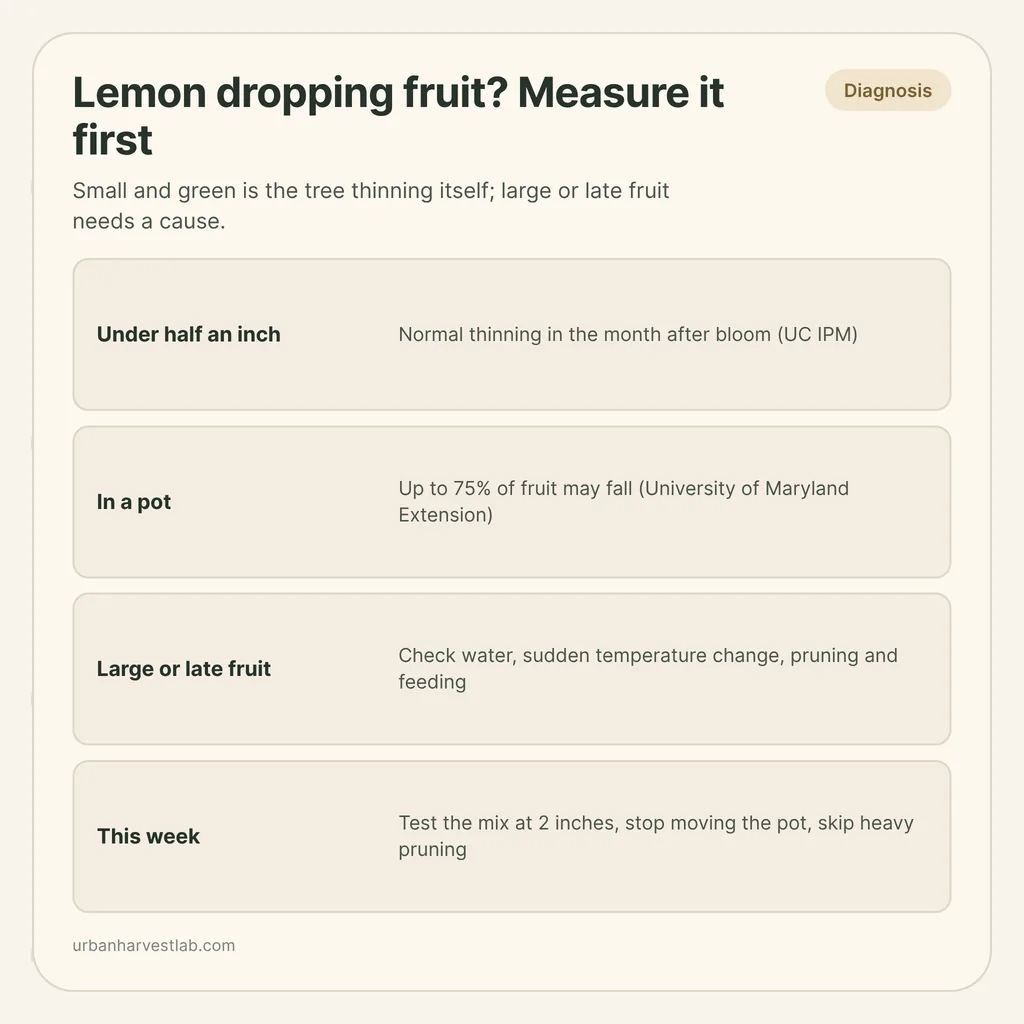
Lemon tree dropping fruit: normal shedding or a problem?
How big the dropped fruit is tells you whether your potted lemon is thinning itself normally or reacting to stress.
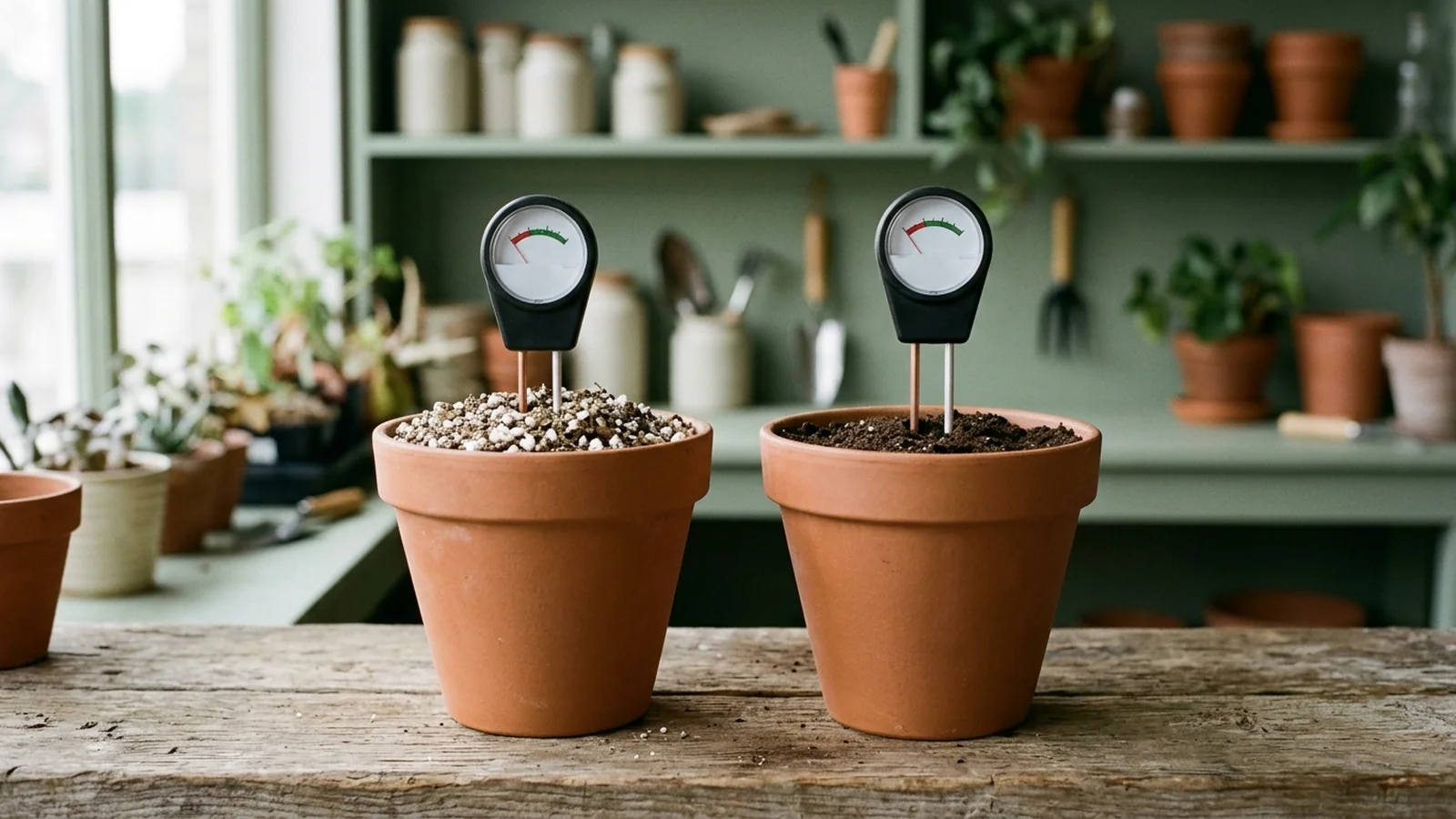
What a soil moisture meter actually measures
The two-prong dial in most garden centers does not touch water directly. It reads an electrical signal that salts, contact, and depth all distort, and knowing that changes how you should read the dial.
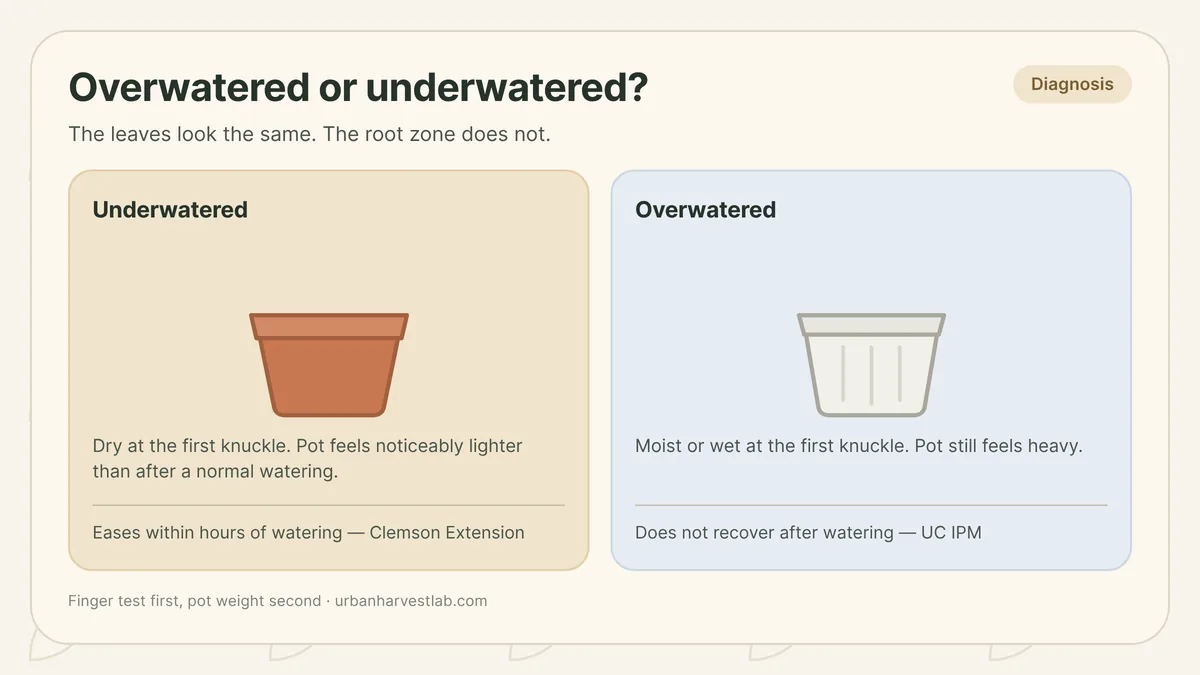
Overwatered vs underwatered: how to tell which one you have
Reading the root zone directly, with a finger test, pot weight, and how the plant responds to being watered, settles what the leaves alone cannot.