
Fig in a pot: what each source says
| Question | Figure | Source |
|---|---|---|
| Pot size | Minimum 15 gallons | University of Maryland Extension |
| Starting pot | About 30 cm (1 ft) wide and deep, then slightly larger every couple of years | RHS |
| Sun | At least 8 hours of direct light in summer | University of Maryland Extension |
| Feeding | Once a month in May, June and July (Maryland); fortnightly with high-potassium feed (RHS) | University of Maryland Extension, RHS |
| Pruning | Early to mid-spring and early to mid-summer | RHS |
| Cold limit | Often injured below 20°F; real damage below 15°F | University of Maryland Extension, Penn State Extension |
| Winter water | About monthly, until just moist | Penn State Extension |
A fig does well in a pot if the pot is large, the spot is sunny and the winter is cold but frost-free. University of Maryland Extension puts the container at a minimum of 15 gallons and says figs need at least 8 hours of direct light in summer. Prune twice a year, water by feel, and let the tree go dormant indoors in winter. The RHS says fig fruits develop without fertilisation, so pollination is not needed.
A potted fig is a small commitment in the first year and a bigger one in the winter. The tree is large, the pot is heavy and the cold season needs somewhere to put it. Check those three before you buy.
Pot size: two sources, two starting points
The two main sources start from different places. University of Maryland Extension says the container should be a minimum of 15 gallons, and that larger containers let the plant grow bigger and fruit more but are heavy and harder to move. The RHS suggests a young fig go into a pot around 30 cm (1 ft) wide and deep, then be repotted every couple of years in March into a pot just slightly larger.
Both say to hold the roots back. Maryland notes that the root restriction of pot culture may improve yields and shorten the time to harvest. The RHS warns against overpotting because figs fruit better when their roots are restricted. The RHS says limiting the roots reduces vigorous leafy growth and helps the tree focus on fruit.
So the practical route is to buy a young tree, start in a mid-size pot, and step up toward 15 gallons over a few years. Once moving the tree to a bigger pot stops being practical, the RHS says to repot into the same pot, replace any loose compost and lightly trim the roots. Between repottings it suggests topdressing with fresh compost. The same idea is behind root pruning potted herbs.
Material matters a little. Maryland says fabric bags help control root growth by air pruning small roots, while roots circling a hard-sided pot need to be cut back. The fabric versus plastic comparison covers what each wall does to drying and heat. Any pot needs drainage holes; the drainage hole guide covers them.
Maryland adds two practical tips. Fit wheeled casters, which make it much easier to move the pot to a cool, insulated place for winter. And raise the pot a couple of inches off the ground if it sits on soil, so roots do not grow through the drainage holes.
A big pot full of wet mix is heavy. Before you carry 15 gallons onto a balcony, read the balcony weight limit guide.
Which fig to buy
Maryland lists ‘Brunswick’ as doing well in containers and ‘Petite Negri’ as a genetic dwarf that grows to 4 to 6 ft, particularly well suited to pots. The RHS describes ‘Little Miss Figgy’ as a compact variety, ideal for containers, and names ‘Brown Turkey’ as a reliable choice in the UK. Ask the nursery how large the tree gets before you buy it.
Sun, water and feeding
Maryland says to keep fig containers in full sun, with at least 8 hours of direct light in summer. A windswept balcony adds stress, so see the windproof balcony guide before you pick the corner.
Watering is where pots go wrong. The RHS says restricted roots dry out fast, so check daily in hot, dry weather and water to keep the mix evenly moist. It adds that a fig can shed leaves and fruit if it gets too dry. Maryland puts the cue differently: the soil can become somewhat dry a few inches below the surface before you need to water, and the mix should not be constantly wet. Both fit together if you check with a finger rather than by calendar. In a heatwave, the heatwave guide covers shade and extra checks.
Feeding differs between sources. Maryland says to fertilize once a month in May, June and July, in a 50:50 mix of compost and soilless medium. The RHS uses a soil-based compost and an organic, high-potassium liquid fertiliser fortnightly throughout the growing season until the figs start to ripen in late summer. Pick one pattern and follow it.
Pruning a fig in a pot
Fruit forms on the current year’s wood, according to Maryland, in the leaf axils. The RHS adds that the first crop comes from pea-sized fruitlets that overwinter at the shoot tips. That is why pruning is about timing, not tidiness.
The RHS prunes twice a year:
- Early to mid-spring, after the last hard frost. Fig trees tend to grow long bare branches, and the RHS says shortening them achieves very little. Prune hard instead, to encourage replacement shoots low down, and keep the compact shoots with tiny fruitlets at their tips.
- Early to mid-summer. Pinch out the tip of new shoots once they have five leaves, to make the tree branch instead of stretching.
Maryland prunes in March or April, removing root suckers, dead, crowded and weak wood, and pinches the tips of first-year shoots in late spring. Maryland also says to keep the centre of the canopy open so light gets in.
Fig sap is a skin irritant. Maryland suggests gloves to avoid contact with the milky latex.
Winter: the part that decides whether you get figs
Cold limits are lower than people expect, and a pot is more exposed than the ground. Penn State Extension says even the most cold-resistant edible figs only tolerate temperatures down to 20°F and suffer true winter damage below 15°F, with the exception of ‘Chicago Hardy’. Maryland describes injury from sustained temperatures below 20°F, and says above-ground roots are more vulnerable to cold. Iowa State Extension adds that potting mix above ground in winter may drop into single digits, so a pot left outside leaves the root system at risk.
Two sources describe a similar winter, with different temperatures:
- Penn State Extension: after a hard frost, remove all the remaining leaves and unripe figs, then place the pot in an insulated, unheated, preferably dark room, garage or cool basement. Water monthly until just moist. Penn State says figs need a minimum of 100 hours of chilling to produce fruit, so they should stay dormant, not toasty. Bring them outdoors in April. Do not prune or fertilize until spring unless the tree is very large.
- RHS: in autumn, move free-standing container figs into an unheated greenhouse, shed or porch until after the last frost in late spring. The point is to protect the tiny fruitlets that form in late summer, because frost damage would ruin the following year’s crop.
Maryland says that after the leaves drop, you should remove suckers and prune back long branches before moving the pot to a protected area.
If you have a balcony and no garage, the practical question is where that cold, protected place is. An unheated porch or shed fits the RHS advice. A heated living room does not: it keeps the tree growing. If you are unsure of your dates, start with the frost date guide for balconies. The same cool, bright-or-dark logic appears in the guide to overwintering rosemary and thyme, although a fig rests in the dark while those herbs want light.
Fruit: when to pick, and what to remove
Maryland says fig plants usually begin to bear in the second or third year, and that it can take up to two months from the start of fruit formation to ripeness. Unripe green figs do not ripen once picked, though fruit that has started to colour and soften will keep softening on the counter. Birds and squirrels may need to be kept off with fine polyethylene netting.
Two fruit jobs help the main crop. The RHS says second-crop figs that grow larger than a pea are best removed at the end of summer, since they rarely have time to ripen outdoors in the UK. Maryland says a larger-than-normal early breba crop reduces the tree’s ability to develop a good main crop, so removing those early figs as soon as they form helps the main one.
Sources
Fruit and winter in pots
Overwintering, pot materials and the weight of a big container on a balcony.
Common questions
How big a pot does a fig tree need?
University of Maryland Extension says the container should be a minimum of 15 gallons, and that larger pots give bigger plants and more fruit but are heavy to move. The RHS starts a young fig in a pot about 30 cm (1 ft) wide and deep and repots every couple of years in March into a pot only slightly larger. Both agree on keeping the roots restricted rather than giving the tree a huge pot.
When should I prune a potted fig?
The RHS says to prune twice a year: in early to mid-spring after the last hard frost, and in early to mid-summer. In spring, cut long bare branches hard and keep the compact shoots with tiny fruitlets at their tips. In early summer, pinch out new shoots once they have five leaves. University of Maryland Extension prunes in March or April and pinches the tips of first-year shoots in late spring.
How do I keep a fig tree alive in winter in a pot?
After a hard frost, strip the remaining leaves and unripe figs and move the pot into an insulated, unheated, preferably dark room, garage or cool basement (Penn State Extension). Water about monthly until just moist. The RHS says an unheated greenhouse, shed or porch works too, and to keep the tree there until after the last frost. Penn State brings pots back outdoors in April.
Why does my potted fig have leaves but no fruit?
Sources point to tree age, root room and sun. University of Maryland Extension says figs usually begin to bear fruit in the second or third year and need at least 8 hours of direct summer sun. The RHS says figs fruit better with restricted roots, and that a frost-damaged winter can ruin the following year's crop.
Related guides
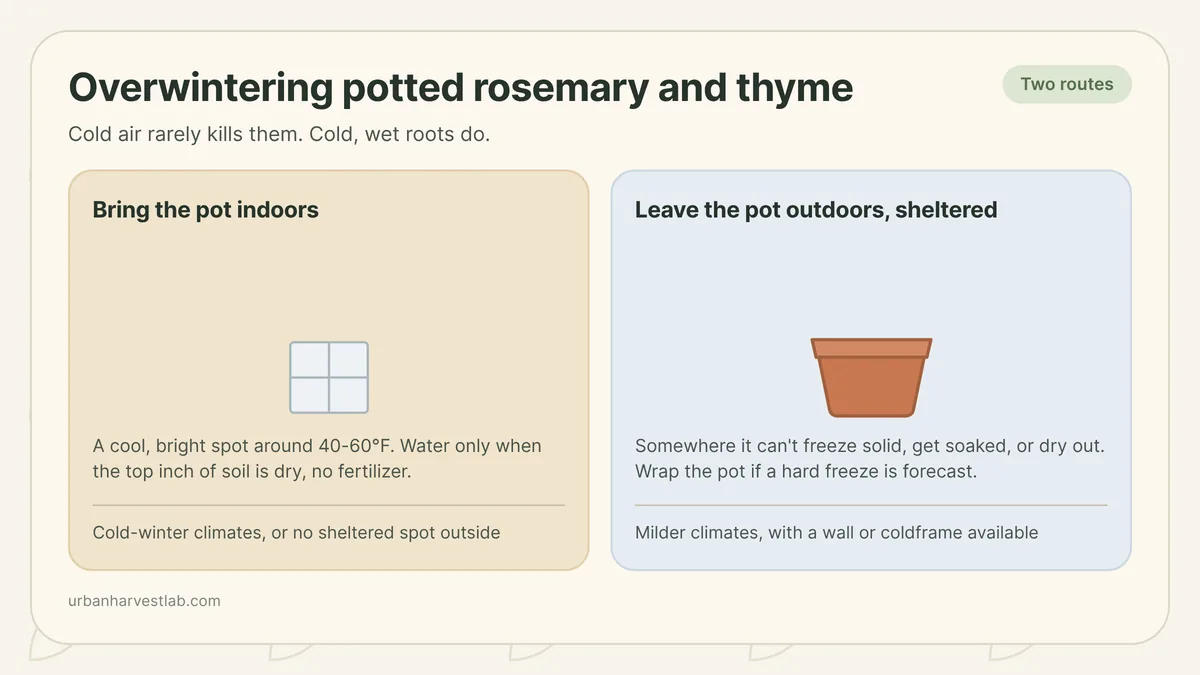
How to overwinter rosemary and thyme in pots
Winter kills more potted rosemary and thyme through mistimed watering and cold-wet roots than through cold air alone. Here is what to do indoors and out.
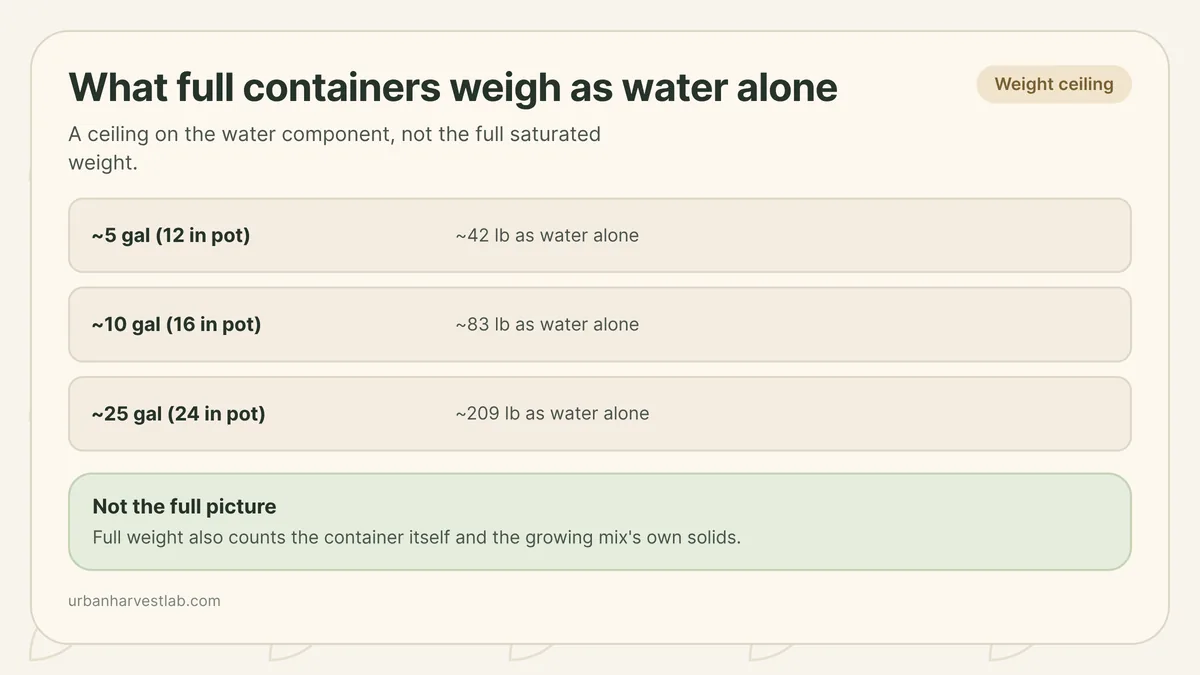
Balcony weight limit: calculate what your container garden really weighs
A balcony's real weight allowance comes from its own structural documentation, not a one-size figure online. What you can calculate yourself is exactly how much your containers weigh once every one of them is soaked through.
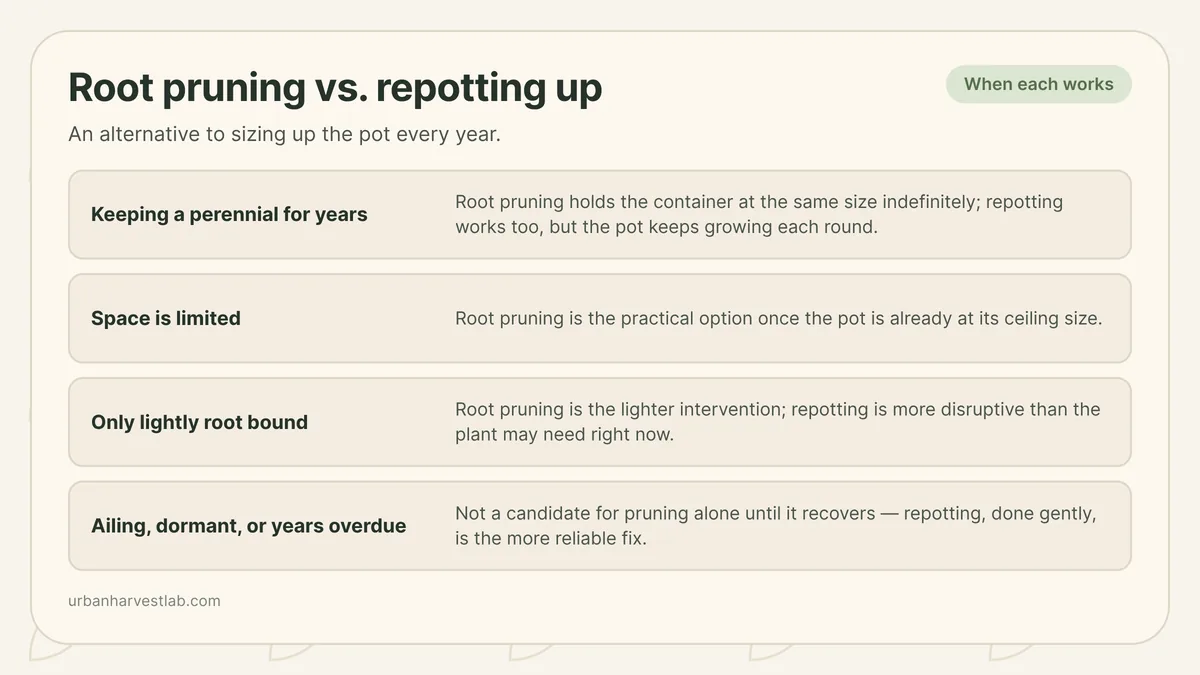
Root pruning potted herbs: an alternative to sizing up every year
A bigger pot is not the only answer to a root-bound herb. Trimming the root mass and refreshing the soil can hold a perennial in the same container for years, for the herbs it actually suits.