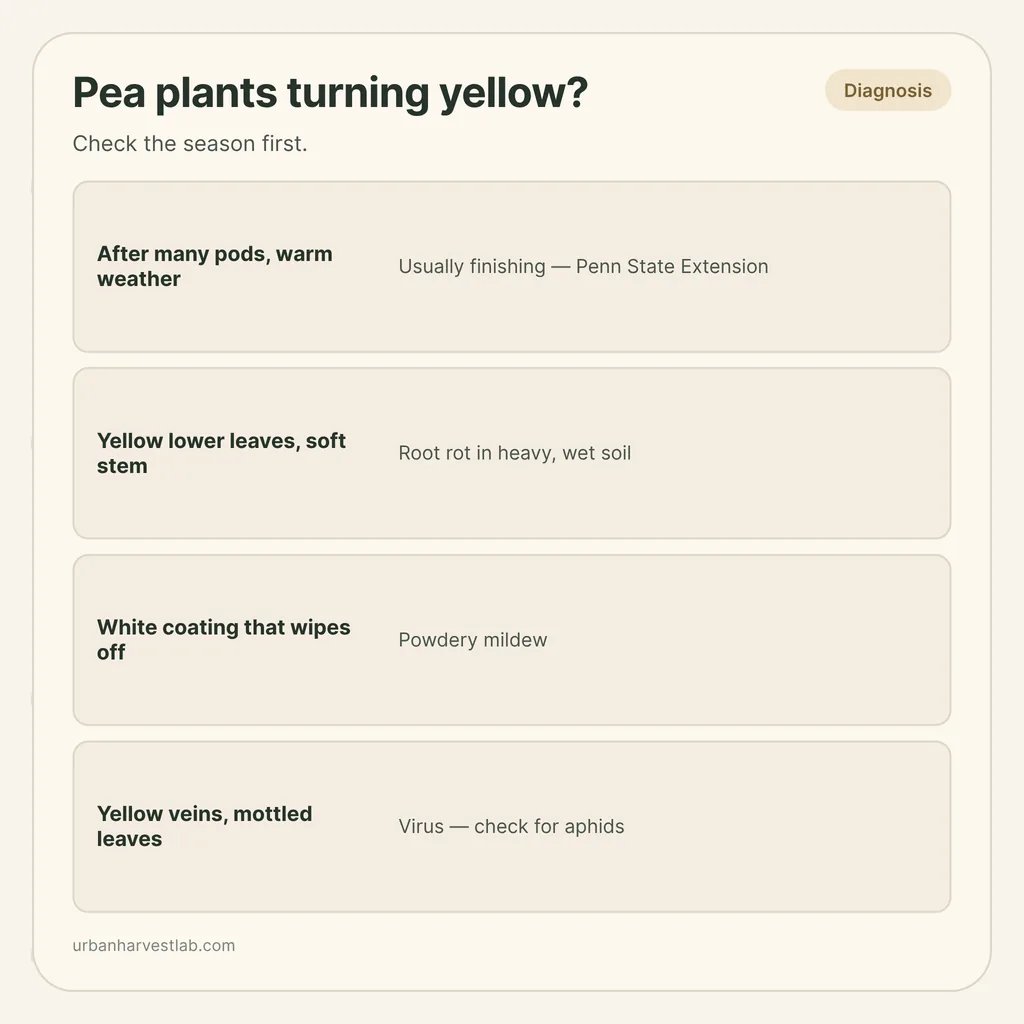
Troubleshoot the system before you change the inputs.
Symptoms
- Leaves turn yellow from the bottom of the plant, or the whole plant fades at once.
- A white powder coats leaves, stems or pods.
- Leaves are mottled yellow and green, with pale veins.
- The stem is soft and brown at the soil line and the plant wilts.
Possible causes
- End of the crop in warm weather, since peas do not do well in higher temperatures.
- Root rot or wilt in heavy, wet mix.
- Powdery mildew, most common on late-planted peas.
- A virus spread by aphids.
- Ascochyta blight, a fungal disease that survives on plant debris and seed.
Quick fixes
- Check the calendar and the pod count first: a plant that has cropped for weeks and is yellowing in warm weather is finishing.
- Lift the pot, check every drainage hole and feel the stem base; let the mix dry more between waterings.
- Water the soil, not the leaves, and sow earlier next time.
- Look for aphids on the growing tips and remove plants showing mottling or steady decline.
Yellow pea plants: which cause fits
| What you see | Likely cause | First move |
|---|---|---|
| Whole plant fading after weeks of picking, weather warm, few new flowers | End of season or heat | Pick the last pods, then cut the plant down |
| Lower leaves yellow and wilting, stem base brown and soft, pot heavy and wet | Root rot in soggy mix | Check drainage; pull the plant if the stem base is mushy |
| White powdery coating on leaves, stems or pods | Powdery mildew | Water the mix, not the leaves; expect it on late sowings |
| Yellow or white veins, mottled leaves, fewer, smaller or malformed pods | Virus | Check for aphids; remove the plant if it is declining |
| Yellow leaves with brown spots and a blackened stem base | Ascochyta blight | Remove the plant and its debris |
Peas that yellow late in the crop, in warm weather, are usually finishing; yellow lower leaves with a soft stem base mean wet roots, a white coating means powdery mildew, and mottled leaves point to a virus. Where the yellow starts and what the stem looks like sort the cases in a minute.
For sowing dates, pot size and support, see growing peas in containers. For yellowing across other plants, the yellow leaves cause finder is the wider guide.
Start with the calendar and the pod count
Penn State Extension is blunt about the end of a pea plant: when it turns yellow, it is time for it to go. A plant that has cropped for several weeks and fades evenly is finishing, not sick.
Heat speeds the finish. UConn Extension says peas do not do well in higher temperatures, and gives 55 to 70 degrees F as the growing period in which most varieties reach maturity in about 60 days. The University of Maryland Extension puts the favoured range at 65 to 70 degrees F and says plants do not grow well in hot weather. A pot on a sunny balcony runs warmer than a bed, so a late-spring warm spell can end the crop early. Neither source says heat itself turns the leaves yellow, so treat it as the likely backdrop and still check the stem and roots.
If the plant is clean, Penn State says it may be cut at ground level with the roots left in the soil, because peas store nitrogen from the air in their roots. If any of the problems below is present, pull the whole plant instead.
Yellow lower leaves and a soft stem: the roots
UConn Extension says that wilt and root-rot diseases show as yellowing and wilting of the lower leaves, stunted growth, and brown, black or red mushy stems. The University of Minnesota Extension describes one of them, Aphanomyces root rot, as yellow, stunted shoots that may wilt, a brown soft stem at the soil line and soft rotten spots on the roots, most common in heavy wet soils.
In a pot, heavy and wet is a matter of drainage. Lift the pot: a heavy one days after watering has a drainage problem. Check that every hole is open and that the saucer is not holding water. UConn says well-drained soil lessens the possibility of wilts, and that if seedling decay, wilt or root rot has been a problem before, you should change location or improve drainage. For a pot, that means fresh mix, not the old mix again.
Press the stem base: soft and brown means rot, and a firm stem sends you back to your watering routine. The Maryland advice is to keep the root zone moist by watering deeply and regularly in dry periods, not to keep it wet. Overwatered vs underwatered separates the two, and how to save a potted plant with root rot covers what a rotted root system can and cannot recover from. A mushy stem base on a pea plant is a reason to pull it.
White coating: powdery mildew
Penn State Extension names powdery mildew and damping off as the two primary diseases of peas. The University of Minnesota Extension describes powdery white fungal growth that forms spots on or completely coats leaves, stems and pods, and says it is most common on late-planted or late-maturing plants.
Penn State says applying water to the soil rather than from above may reduce the risk of disease. UConn says powdery-mildew-resistant varieties are best for fall planting. A sowing that gets going early is the main defence on offer from these sources, which is one more reason to sow as soon as the mix can be worked. The same fungus family on squash is covered in white powder on zucchini and cucumber leaves; peas have their own species, so follow the pea advice here.
Mottled leaves: virus, and the aphids that carry it
The University of Minnesota Extension lists two viruses of peas, both of which turn leaf veins yellow or white and give the leaves a yellow-to-white mottled or mosaic pattern. Plants may be stunted, pods reduced and malformed, and premature death may occur. UConn says aphids rarely damage pods but may carry one of the viruses that affect peas.
Check the growing tips for small, soft, green insects. Minnesota says large numbers feeding on leaves can cause wilting or death of the plant. For identification and handling, see aphids on indoor herbs. If a plant is mottled and declining, remove it rather than hope.
Yellow with brown spots: a blight
UConn Extension describes Ascochyta blight, a complex of three fungi that survive winter in plant debris or arrive on infected seed: plants show yellow foliage, brown spots on leaves and stems, and bud drop, and the stem blackens from the soil line up. UConn says to remove and dispose of infected plants as soon as the disease appears and to rotate peas with non-susceptible crops yearly. In a pot, the equivalent of rotation is fresh mix and a different crop in that pot next.
Sources
More on yellow leaves and peas
The pea growing guide and the wider diagnosis pages for yellowing, watering and root problems.
Common questions
Why are my pea plants turning yellow?
Late in the season it is usually the end of the crop: Penn State Extension says that when a pea plant turns yellow, it is time for it to go. Earlier in the season, look at where the yellow starts. Lower leaves with a soft brown stem base point to wet roots, a white coating means powdery mildew, and mottled leaves with yellow veins suggest a virus.
Can I save yellow pea plants?
It depends on the cause. A plant that is yellowing because the season is over cannot be extended. UConn Extension says well-drained soil lessens the chance of wilts and root rots, and that infected plants of Ascochyta blight should be removed and disposed of as soon as the disease appears. A plant with a mushy stem base is unlikely to recover.
Why did my peas turn yellow in hot weather?
UConn Extension says peas do not do well in higher temperatures, and the University of Maryland Extension says they do not grow well in hot weather. Neither source says heat alone turns the leaves yellow, so check the stem base and the leaves for rot, mildew or mottling before blaming the weather.
Should I cut yellow pea plants down or pull them out?
Penn State Extension says a plant free of insect and disease pests may be cut at ground level, leaving the roots in the soil because peas store nitrogen there. If the plant had root rot, mildew or a virus, remove it instead and do not reuse the mix for peas.
Related guides
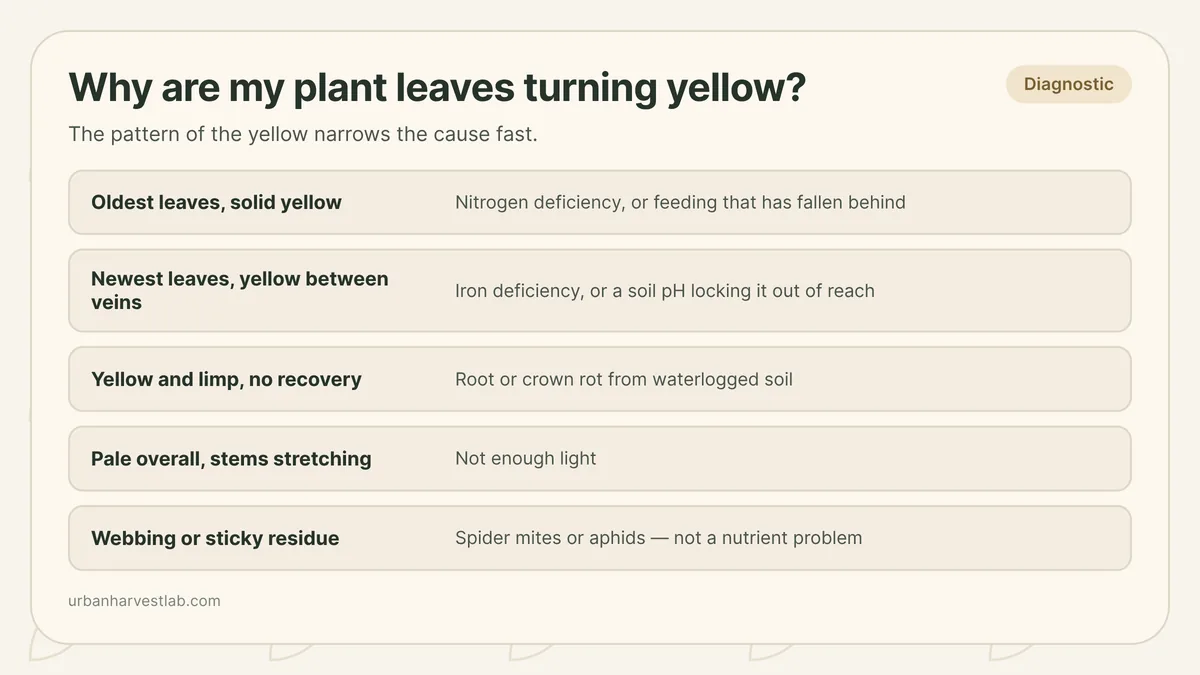
Why are my plant leaves turning yellow? Find the likely cause
Yellow leaves have a short list of real causes, and the pattern of the yellowing narrows it fast, once you know what to look for.
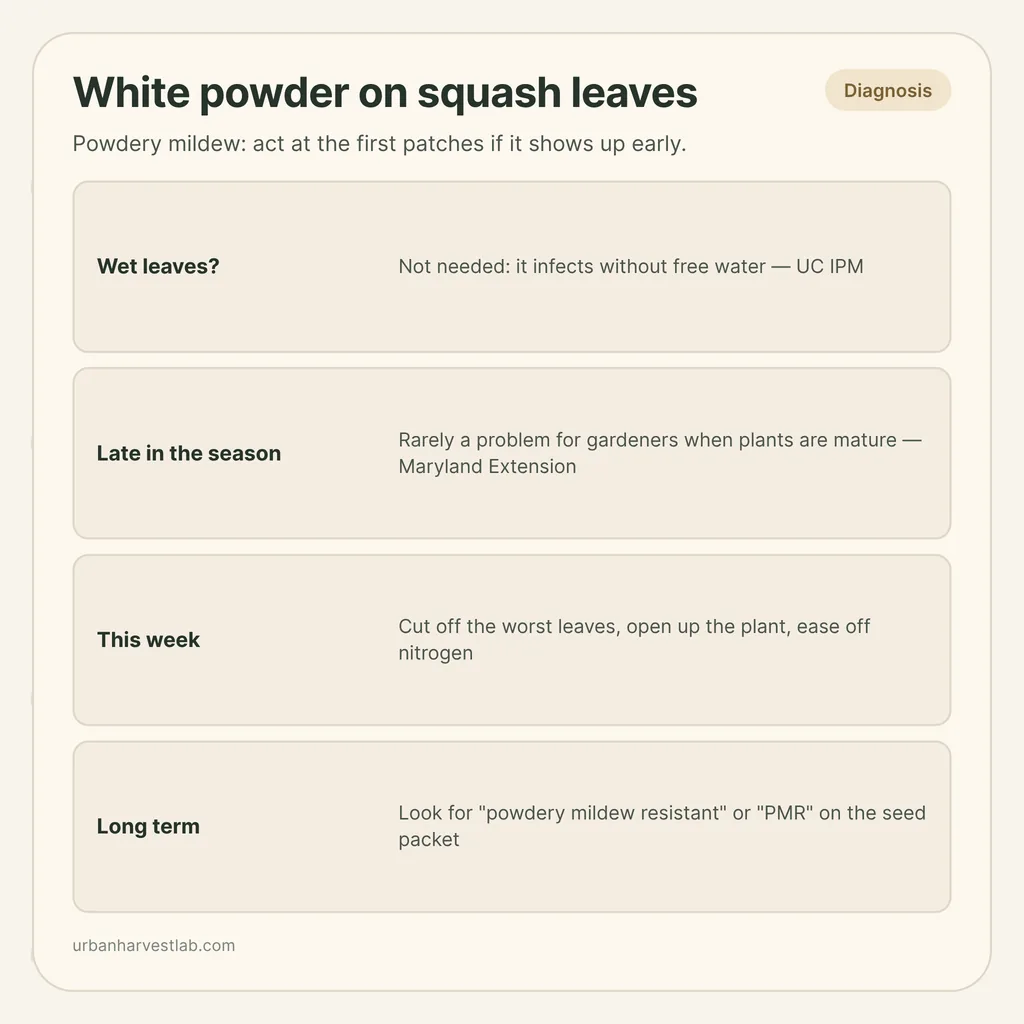
White powder on zucchini and cucumber leaves: powdery mildew
White powder on zucchini and cucumber leaves is usually powdery mildew. Late in the season it is often a nuisance; early on, act before it spreads.
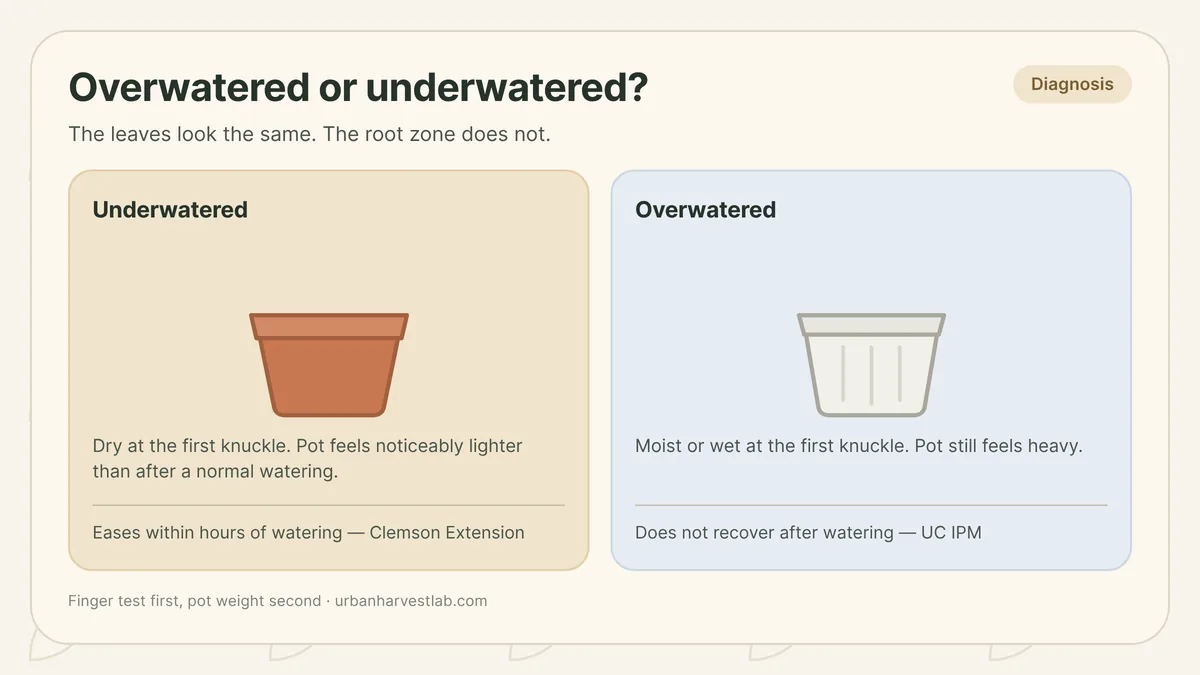
Overwatered vs underwatered: how to tell which one you have
Reading the root zone directly, with a finger test, pot weight, and how the plant responds to being watered, settles what the leaves alone cannot.