
Troubleshoot the system before you change the inputs.
Symptoms
- Leaves turn dull, yellow-brown or dark and the plant droops while the mix is still damp.
- Lower stems are bare and woody with leaves only at the tips, and some branches have dried out.
- White powdery film on leaves, or brown tips and edges with a crust on the soil or pot rim.
Possible causes
- Wet roots from a mix or pot that holds water, which can lead to root rot.
- Ordinary aging of a short-lived woody shrub, or old stems cut back too hard.
- Powdery mildew, spider mites, salt buildup, or hot dry air causing brown tips and edges.
Quick fixes
- Check the root zone: let the top few inches of mix dry thoroughly before watering and make sure the pot drains freely.
- In spring, cut dead woody stems and trim green growth, but do not cut into mature wood expecting regrowth.
- Inspect leaf undersides for mites, wash off mildew spores, and flush the pot if a salt crust has formed.
Brown sage leaves in a pot most often mean the roots are sitting too wet; if the mix is dry, look next at age, mildew, mites or salt. Sage is a Mediterranean shrub. Clemson Cooperative Extension says it requires “excellent drainage and dry soil in full sun,” so a pot that stays damp is the first suspect, well ahead of thirst.
Start with the root zone
Push a finger into the mix up to the first knuckle. If it is wet a few inches down while the leaves brown, water is the problem. NC State Extension describes common sage as intolerant of wet or poorly drained soils, and University of Maryland Extension says it needs very well-drained soil to overwinter. Illinois Extension makes the same point: to behave as a perennial, sage needs very well drained soil, especially over winter.
The tell for rot is how the plant answers water. UC IPM’s Pest Note on Phytophthora root and crown rot says affected leaves may wilt and turn dull green, yellow, red or purplish, and that unlike plants suffering from water stress, they don’t recover when irrigated. A sage that perks up within hours of a drink was thirsty. One that stays limp or keeps browning was not.
Speed matters. UC IPM states that Phytophthora diseases can develop in as little as 4 to 8 hours of soil saturation, so a saucer left full after a heavy watering counts. Its management advice is to let the top few inches of soil dry thoroughly between waterings. Its verdict on advanced cases is blunt: a plant with a substantial infection rarely recovers.
If you suspect rot, slide the plant out of the pot. Roots that are brown to black and soft are finished; firm pale roots are alive. Trim the dead ones, repot into fresh fast-draining mix in a pot with open drainage holes, and hold off watering until the top few inches are dry. Overwatered vs underwatered lays out the pot-weight and finger tests in full, and what size and kind of pot sage needs covers the container side of the fix. The same pattern, with the same prognosis, plays out in rosemary.
Is it just old wood?
Sage does not stay a soft green herb. Wisconsin Extension says the stems are green at first but become somewhat woody in their second year, and that the species tends to be short-lived. University of Maryland Extension says culinary sage should be replaced every 3-4 years.
So bare, brown lower stems with leaves only at the tips are often age, not disease. How you prune decides whether it gets better or worse. Maryland advises hard pruning when regrowth appears in spring, taking off dead, woody stems but not the new growth. NC State is more cautious: do not prune into mature woody stems, as these seldom sprout new growth. Read together, cut back to a point just above green shoots or buds, and leave bare old wood alone. A stem with no green on it is not coming back.
On how much to take at once, the sources differ. Wisconsin says you can pick as desired as long as you do not cut back more than half the plant or it will stop producing. Illinois Extension’s general rule for perennial herbs is about one-third at a time. With a woody plant in a pot, the smaller figure is the safer one.
Summer cuttings are the cheap insurance. Illinois Extension notes that cuttings taken in summer root easily and can be potted up, so a young replacement is ready before the old plant gives out.
Powdery mildew
White powdery growth on leaves and shoots can be a sign of powdery mildew, per UC IPM. Sage is on NC State’s list of plants where it can occur, and NC State says well-drained soil and good air circulation reduce the chance of foliar diseases. UC IPM adds that moderate temperatures of 60 to 80 °F and shade encourage the disease, so a cramped pot in a shady corner is the setup to avoid. Confirm that the white film is living growth and not residue, then follow powdery mildew on container herbs for control. Browned leaves that are covered in mildew can simply be removed.
Pests that brown the foliage
NC State lists leaf hoppers, slugs, spider mites and spittlebugs as possible insect problems on sage. Mites are the one that browns leaves: look at the undersides with a hand lens, or tap a leaf over white paper. The identification steps and control are in spider mites on indoor herbs. UC IPM says mites multiply in warm, dry indoor conditions, so a sage kept inside over winter is the likelier host.
Brown tips and edges: air, water, salt
When only the tips and margins brown and the plant is otherwise firm, the cause is less clear-cut. Clemson lists four: exposure to hot, dry air, improper watering, insect feeding and salt accumulation. White to grey crusty deposits on the soil surface or pot rim indicate salt buildup. Water until it runs out of the bottom of the pot and empty the saucer; brown tips on potted herbs separates the four.
Sage does tolerate drought, but Wisconsin Extension says it produces better with consistent water. A pot that bone-dries for weeks and then floods is harder on it than steady, moderate watering.
When to replace it
Start over if the crown is soft or the stems are dark and mushy at soil level, if the roots are mostly black, or if there is no green left on any stem. Pot the replacement in fresh mix, not the old soil, and put it in the sunniest spot you have. If the plant is merely old, take cuttings first.
Sources
- Clemson HGIC: Herbs
- Clemson HGIC: Houseplant Diseases & Disorders
- NC State Extension Plant Toolbox: Salvia officinalis
- University of Maryland Extension: Sage
- Illinois Extension: Sage
- Illinois Extension: Harvesting herbs
- Wisconsin Horticulture Extension: Sage, Salvia officinalis
- UC IPM: Phytophthora Root and Crown Rot in the Garden
- UC IPM: Powdery Mildew on Ornamentals
Fix the pot, the pruning, and the neighbours
These pages cover the pot, the diseases, and the look-alike woody herbs.
Common questions
Why are my sage leaves turning brown?
The most common cause in a pot is wet roots. Clemson Extension says sage requires excellent drainage and dry soil in full sun, and NC State calls it intolerant of wet or poorly drained soils. Other causes are old woody stems dying back, powdery mildew, spider mites, and brown tips from hot dry air or salt buildup. Check how wet the mix is first.
Can brown sage recover?
Often, if the roots are sound; rarely, if they have rotted. Leaves browned by dry air, salt or mildew can be trimmed and the plant improved. Root rot is harder: UC IPM says a plant with a substantial Phytophthora infection rarely recovers. If green shoots remain at the base, cut back to them and repot into fresh, fast-draining mix. If the whole plant is woody and brown, replace it.
How often should sage be replaced?
University of Maryland Extension says culinary sage should be replaced every 3-4 years, and Wisconsin Extension describes it as a short-lived perennial often best replaced every few years. Taking cuttings in summer gives you a successor before the old plant fails.
Should I cut back woody sage?
Prune in spring as new growth resumes. Maryland Extension advises removing dead, woody stems but not the new growth, and NC State warns that mature woody stems seldom sprout new growth, so cutting into bare old wood usually leaves a stump rather than a bushier plant.
Related guides
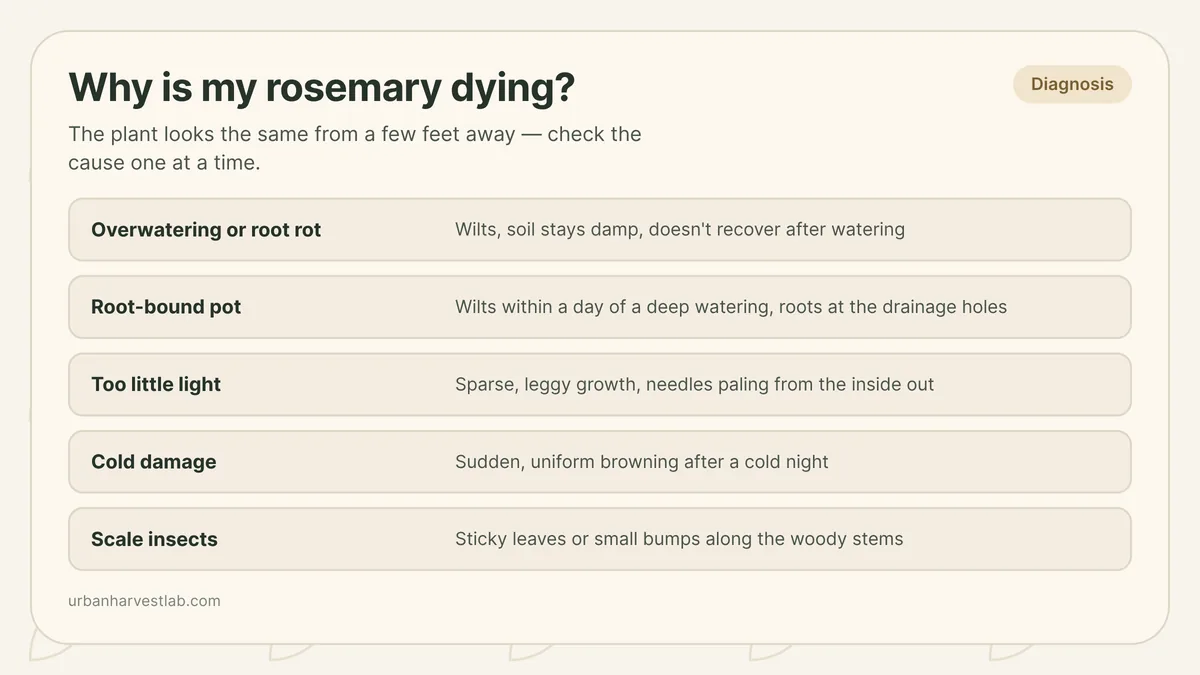
Why is my rosemary dying? A cause-by-cause diagnosis
A dying rosemary looks much the same from a few feet away no matter what caused it, so finding the fix means ruling causes in and out one at a time, not guessing.
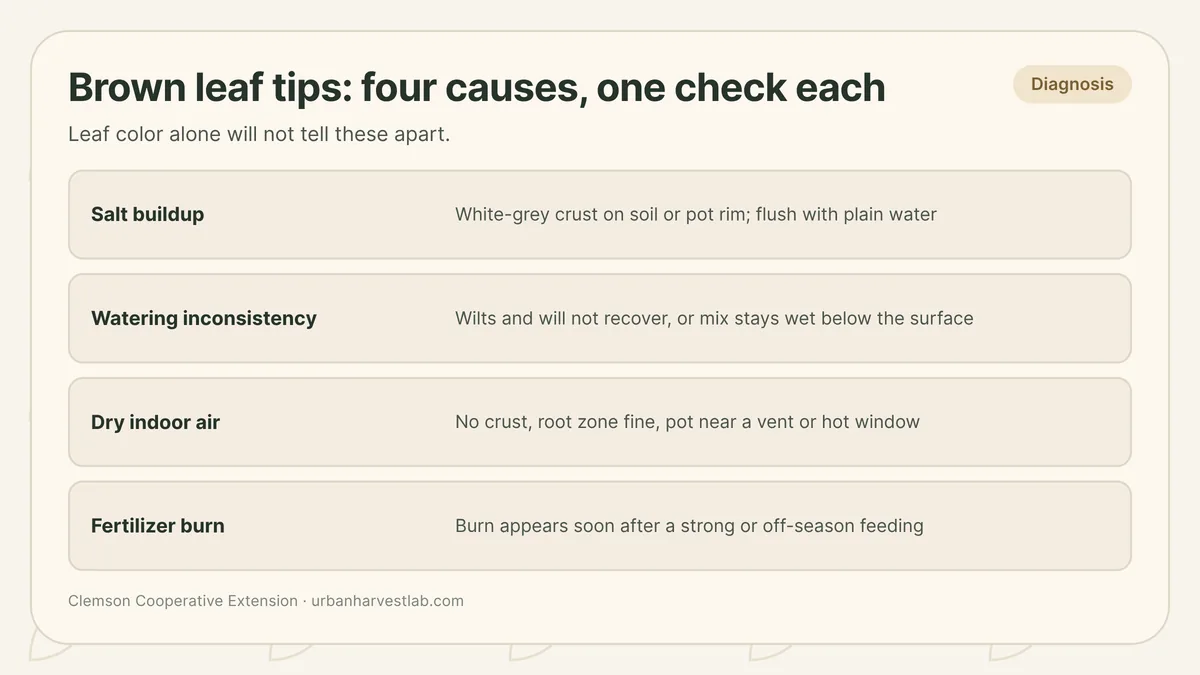
Brown tips on potted herbs: four causes and how to tell them apart
Four different problems produce the same crisped, brown tip. The soil surface, the root zone, and your last feeding date each point at a different one.
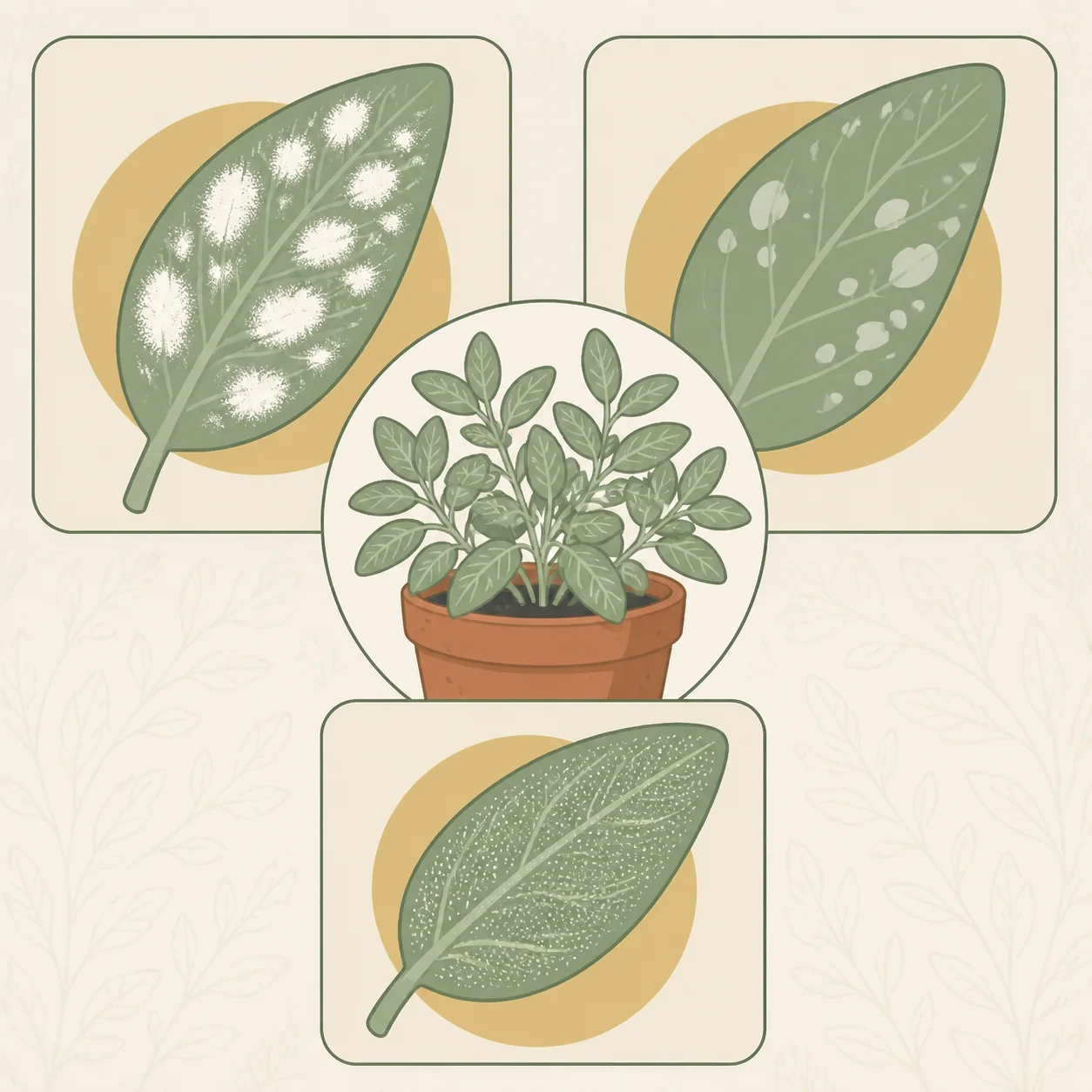
Powdery mildew on container herbs: diagnosis and control
A white mark is not automatically mildew. Confirm whether patches recur and spread on living tissue before changing the entire care routine.