Troubleshoot the system before you change the inputs.
Symptoms
- A shiny white or yellowish patch on the side of a fruit that faces the sun
- The patch dries into a sunken, wrinkled, leathery or papery area
- The shaded side of the same fruit looks normal
Possible causes
- Fruit that was covered by leaves has been suddenly exposed to direct sun
- Leaves lost to pruning, leaf-spot disease or insect feeding
- Hot, dry weather on a thin canopy
Quick fixes
- Pick and discard sunscalded fruit, as University of Maryland Extension advises
- Stop removing leaves that shade developing fruit
- Shade the crop in the hottest weeks and treat any leaf disease that is stripping the canopy
Marks on tomato fruit, compared
| Clue | Sunscald | Late blight | Cold injury |
|---|---|---|---|
| Where | Only the side exposed to the sun | Round spot that can cover the whole fruit | Soft, water-soaked fruit that rots |
| Look | Tan or white, dry, wrinkled or papery | Round, olive-coloured spot | Soft and water-soaked |
| Weather | Hot, sunny, often after leaves were lost | Cool, wet weather | Cold nights, below about 50 °F |
| Leaves | Often thin or missing over the fruit | Water-soaked lesions that turn olive, then brown | Water-soaked, soft, then black |
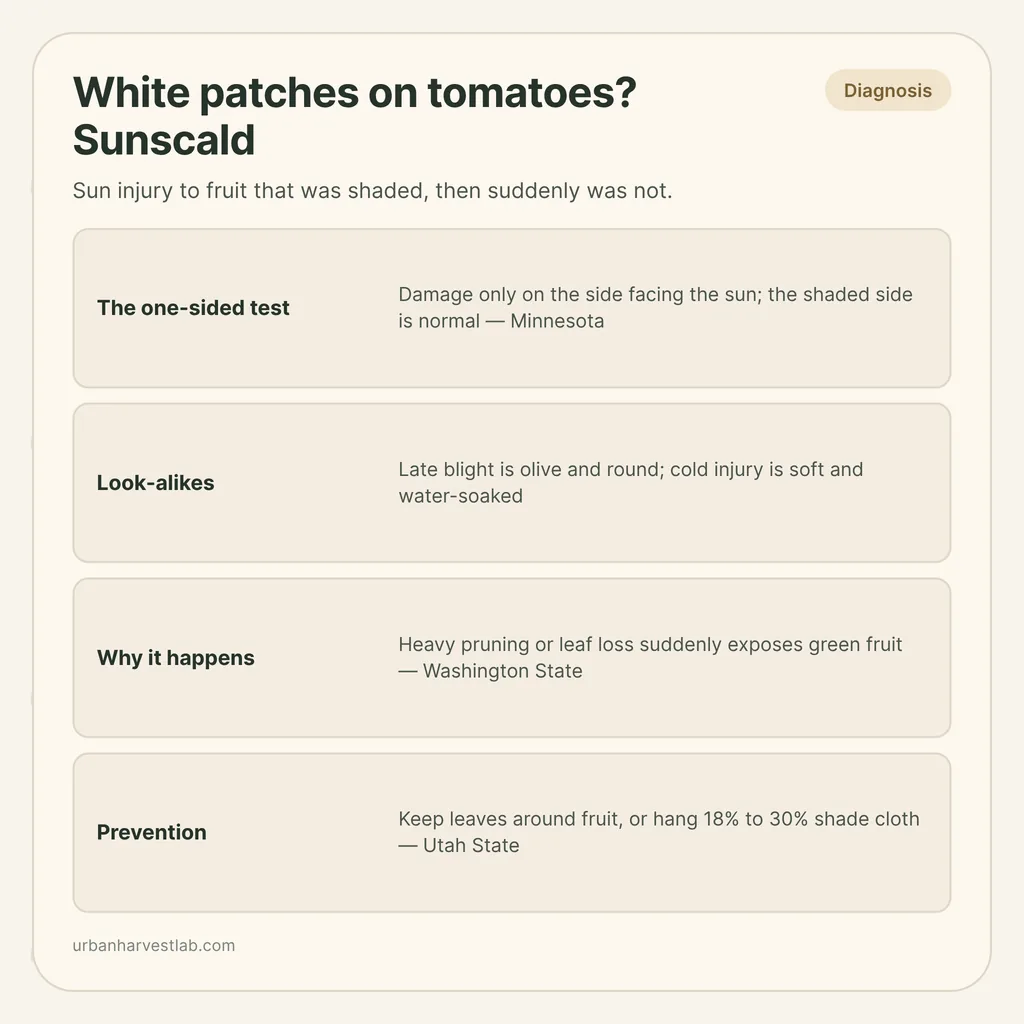
White, pale or papery patches on only the sun-facing side of a tomato or pepper are sunscald. It is a sun injury to fruit that was shaded and then suddenly was not. It is not a disease, it does not spread, and the damaged patch will not heal.
Washington State University describes it this way: the sunward side of green fruit develops a yellowish, light brown or white leathery patch, which may become wrinkled or blister-like as the fruit matures. On ripe tomatoes the damaged areas look like flattened, grayish-white patches with a papery texture. Iowa State Extension adds the early stage: shiny white or yellow areas, which later dry out and collapse into slightly sunken, wrinkled spots.
If the marks are on leaves rather than fruit, you are looking at a different problem: see scorched leaves after moving plants outside.
Turn the fruit over: the one-sided test
The one test that settles it is position. The University of Minnesota says sunscald occurs only on tissue exposed to the sun. Turn the fruit over. If the shaded side is normal and the damage sits on the side that faces out of the plant, that is sunscald. A mark that wraps around the whole fruit, or appears on fruit buried deep in foliage, points elsewhere.
Then rule out the look-alikes.
- Late blight. Minnesota describes the fruit spot as round and olive-coloured, and it can cover the whole fruit. It sits alongside water-soaked lesions on leaves that turn olive and then brown. Sunscald is pale, dry and one-sided.
- Cold injury. Minnesota lists soft, water-soaked fruit that rots, at temperatures below 50 °F. That is the opposite of a dry, papery, sun-side patch.
- Dark base of the fruit. A dark, sunken patch at the blossom end is a calcium and water problem, covered in blossom end rot in container tomatoes.
- Splits in the skin. Cracks are a watering problem, not a sun one: see why tomatoes crack.
How the sun gets to the fruit
Sunscald needs two things: strong sun and fruit that was not ready for it. Washington State says it frequently occurs in hot, dry weather, but may occur whenever green fruit is suddenly exposed to direct sun. Utah State Extension adds that it most commonly occurs on plants that have lost foliage to insect feeding or disease.
The usual routes to sudden exposure:
- Heavy pruning. Stripping leaves from around fruit in summer uncovers it all at once. Washington State’s advice is to prune with care so fruit is not suddenly exposed. How much to take off a container tomato is covered in pruning container vegetables.
- Leaf loss to disease. Maryland Extension gives early blight as an example: it can kill enough leaves to expose fruit to intense sun. Iowa State names Septoria leaf spot and other foliar diseases for the same reason.
- Insect damage. Maryland lists insect feeding alongside disease as the way plants lose their canopy.
- A canopy that shifts. A heavy truss pulls stems sideways, a stake slips, or a pot is turned or moved to a sunnier spot, and fruit that sat in shade now faces the sun. Peppers are covered by the same advice: Maryland lists bell and chile peppers with tomatoes.
In a pot, a turn or a move to a sunnier spot changes which fruit faces the sun, so check the fruit as well as the leaves after you shift a container.
Can you still eat it?
The patch will not repair itself. Iowa State says the affected tissue dries out and collapses, and that secondary organisms invade the area, causing the fruit to rot. Washington State likewise notes the spots are sometimes attacked by rot organisms.
- Any patch: Maryland Extension states that the condition renders fruit inedible and advises removing affected fruit immediately.
- Soft, wet or smelly patch: this is rot on top of sunscald. Discard the fruit.
No spray fixes it. Washington State lists no chemical management for tomato sunscald.
Keeping the next fruit covered
The fix is shade: keep the fruit covered by leaves, or cover it yourself.
- Keep the leaves that shade fruit. Take off yellowing or diseased lower leaves, but leave the foliage around developing trusses, particularly in hot weather.
- Treat leaf disease early. If lower leaves are dying from spots, work out which disease it is in brown spots on tomato leaves before the canopy thins.
- Use a cage. Iowa State says cage-grown tomato plants provide good foliage protection for the fruit.
- Choose leafy varieties. Washington State recommends varieties with good foliage density.
- Add shade cloth where the sun is fierce. Utah State Extension recommends installing 18% to 30% shade cloth over the crop, pepper or tomato, after the first fruits begin to reach maturity, hung horizontally above the plants, with vertical cloth in the areas that get the most sun.
- Plan for the hottest stretch. Afternoon shade, grouped pots and watering are covered in protecting container plants during a heatwave.
Fruit that is still shaded by leaves is the fruit to protect, so the changes above matter more than anything you do to the damaged fruit.
Sources
- Iowa State University Extension: Why does side of tomato in sun develop white or yellow areas?
- Washington State University, Hortsense: Tomato sunscald
- University of Minnesota Extension: Tomato, discolored fruit
- University of Maryland Extension: Sunscald of vegetables
- Utah State University Extension: Vegetable IPM production update, 23 August 2016
Related heat and fruit problems
Heat damage shows up differently on leaves, flowers and fruit, and each needs its own response.
Common questions
What are the white patches on my tomatoes?
If the patch is pale, leathery or papery and sits only on the side facing the sun, it is almost certainly sunscald. Iowa State Extension describes the first stage as shiny white or yellow areas that later dry out and collapse into slightly sunken, wrinkled patches.
Is sunscald a disease, and does it spread?
No. The University of Minnesota lists it as an abiotic problem that occurs only on tissue exposed to the sun, so it does not spread from fruit to fruit. The danger is secondary rot, because other organisms can invade the damaged patch.
Can I eat a tomato with sunscald?
The University of Maryland says the condition renders affected fruit inedible and advises removing it immediately. Washington State notes the spots are sometimes attacked by rot organisms, so a patch that is soft, wet or smelly is a clear reason to discard the fruit.
Do peppers get sunscald too?
Yes. Maryland Extension lists bell and chile peppers alongside tomatoes, and Utah State recommends 18% to 30% shade cloth over peppers or tomatoes once the first fruits begin to reach maturity.
Related guides

Plants scorched after moving outside? What to do
A houseplant or seedling that goes straight into outdoor sun can bleach within hours. The damaged leaves will not heal, but the plant usually does.

Green tomatoes not ripening: heat, cold, and what to do
A full-size green tomato that refuses to blush is usually waiting on the weather. Heat above the mid-80s and nights below the mid-50s both stall color, and fruit picked at the right stage will finish indoors.
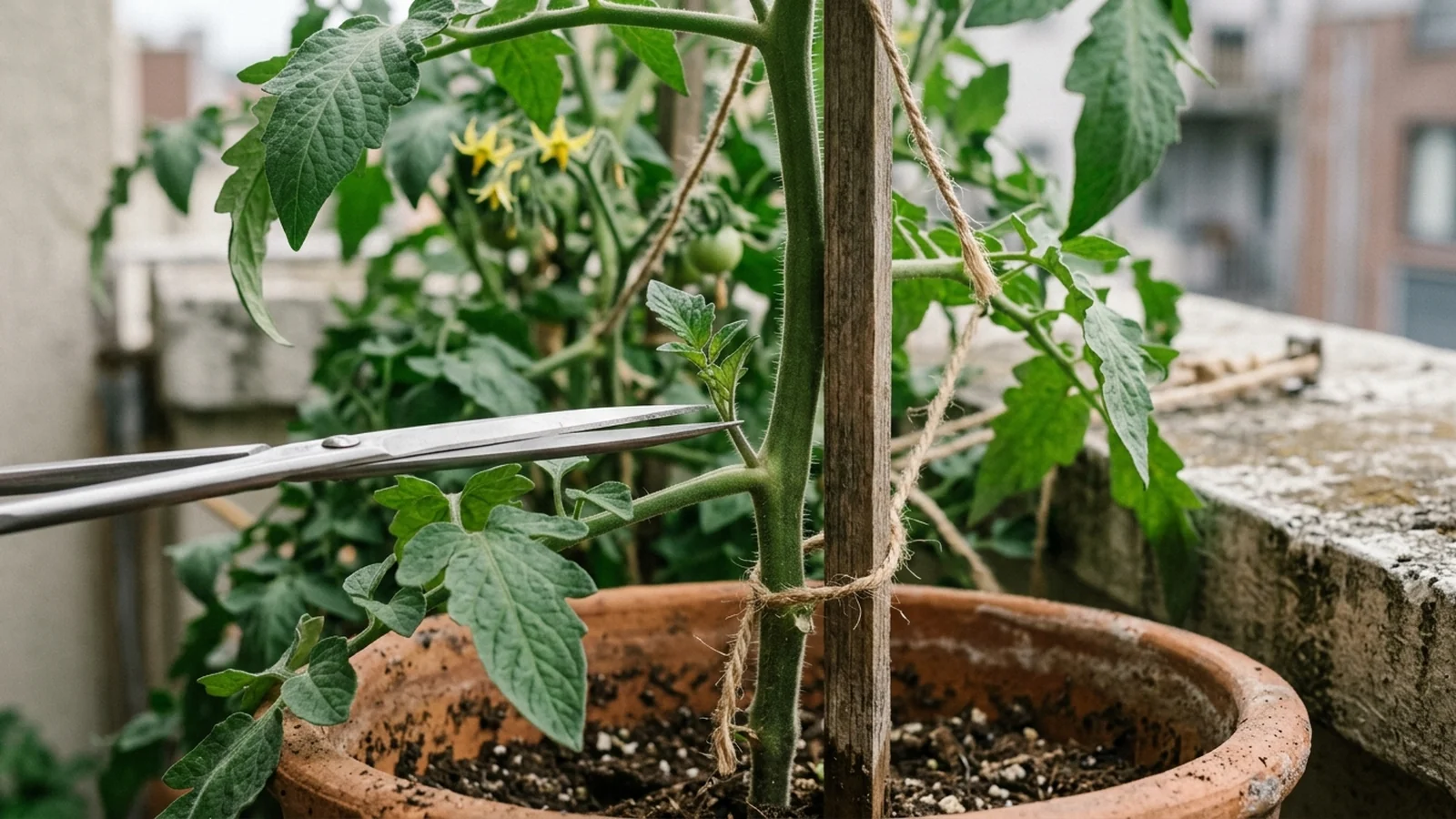
Pruning container vegetables: what to cut, what to leave alone
Cut a leafy herb and it branches back thicker. Cut a container tomato the same way and you are managing how much plant a bucket of potting mix can actually support. Same scissors, opposite goal.