
Troubleshoot the system before you change the inputs.
Symptoms
- Papery white, tan or bleached patches on leaves, mostly on the surfaces that faced the sun or wind.
- Green tissue right beside the dead patches, with a sharp edge between them.
- Leaf edges that crisp and curl, or a plant that droops through the afternoon.
- Damage appeared within a few days of moving the plant outdoors or into a brighter spot.
Possible causes
- The plant was grown indoors or in a greenhouse and went straight into direct outdoor sun.
- A seedling skipped hardening off, or went out on a windy day.
- A heat wave or a hot reflective wall pushed a settled plant past what its leaves could take.
Quick fixes
- Move the plant into shade or a sheltered spot, away from midday sun and wind.
- Check the pot and water when the top of the mix is dry; keep the root zone from drying out while the plant recovers.
- Keep leaves that still have green tissue and trim only fully dead parts.
- Build exposure back up over 10 to 14 days (Penn State) or longer.
Papery white or tan patches on leaves, a few days after a plant went outside, are almost certainly scorch: the leaf was grown under weak light and could not handle the strong light and wind outdoors. The dead patches will not turn green again. The plant itself usually recovers, provided you shade it now and keep it watered while new leaves grow.
Scorch is a different problem from a slow decline. It shows up fast, it is confined to the parts of the plant that took the sun, and it does not spread once the plant is out of the light. If you are staring at a plant that has been outdoors for weeks and is still getting worse, work through the yellow leaves cause finder first.
What scorch looks like
University of Maryland Extension describes the first sign as an area on the leaf turning “papery white or tan.” That patch is dead tissue. A scorch mark has a clean edge with healthy green right beside it, and it sits where the sun or wind hit the leaf: the upper surfaces, the side of the plant facing the open, the tips and margins of the leaves. In the University of Maryland description of scald on transplants, only the parts of a leaf that got long direct sun are scalded, and nearby tissue stays green.
Other signs on the same plant:
- Leaf edges that dry, crisp and curl.
- Leaves that droop in the afternoon, then perk up in shade.
- Marks that appear in the first days after the move and then stop appearing, once the plant is in a gentler spot.
That last point is the check that matters. Scorch happens to tissue that was already there. New leaves that open after you fix the exposure come in clean.
Why a move outside burns leaves
A leaf grown behind glass or in a greenhouse is built for filtered light. University of Maryland Extension puts the cause for greenhouse plants plainly: they are moved outdoors too abruptly, “the plants at times are not ready for the extra UV light they are going to receive.” University of Georgia Extension says the same about houseplants: moving one “from a relatively dark home into very bright sunshine will cause severe leaf burn.” It describes direct sun bleaching the chlorophyll in the leaf and overheating it, and it notes that the strongest summer light falls between 10 a.m. and 3 p.m.
Seedlings are the commonest victims. Jerry Brust, University of Maryland IPM vegetable specialist, writing for University of Delaware Cooperative Extension, notes that sunscald can occur when plants are set out after coming straight from the greenhouse, and that hardening off would have prevented it. Wind adds to the damage on a tender seedling, which is why both Penn State Extension and University of Maryland Extension say not to put tender seedlings outdoors on windy days.
A settled plant can scorch too. A heat wave, a south-facing wall or a hot paved floor can push leaves past their limit, and the fix then is the one in protecting container plants in a heatwave.
Check it is scorch and not something else
Scorch is easy to confuse with a few conditions that need a different response.
| What you see | Quick check | Likely cause |
|---|---|---|
| Papery white or tan patches on the sun side, sharp edge, no change after you shade the plant | Compare the marked side with the shaded side of the same plant | Scorch |
| White powder that wipes off, patches that grow day by day | Mark one patch and look again in two or three days | Powdery mildew |
| Silvery stippling with tiny dark specks | Look under the leaf with a hand lens | Thrips |
| Whole plant limp, soil bone dry or soggy | Lift the pot and feel the mix | Water stress |
| Pale, slowly yellowing older leaves | Look at the whole plant, not one spot | Light, nutrition or water |
UC IPM identifies the dark specks as thrips excrement, which scorch does not produce.
Basil in particular gets white marks from three sources, covered in white spots on basil leaves. Clemson Extension says the symptoms of over-watering and underwatering are similar, so do not decide on a watering fault from the leaf alone. Missouri Botanical Garden lists leaf scorch among the signs of overwatering too, so a scorched plant sitting in wet mix needs the root check before the shade. Check the root zone, as described in overwatered vs underwatered.
A seedling that wilted, then stood up again when you moved it into shade, is also stressed by the move itself rather than burnt. That is the territory of transplant shock in seedlings. Tough corky bumps under the leaf after a wet, dim spell are a different condition, edema.
What to do today
- Get it out of the exposure. Move the pot into shade or a sheltered spot. For a houseplant, University of Georgia Extension recommends the shade of a large tree or bush, where plants can stay all summer. On a balcony that means the spot behind a railing screen, under a taller plant, or against a wall that does not bake in the afternoon.
- Check the pot. Keep the root zone from drying out while the plant recovers. University of Maryland Extension says to water and feed plants with sunscald while they recover; feed at the normal label rate, not extra. Water when the top of the mix has dried, and let it drain. University of Georgia Extension notes that most container plants do best if the soil gets fairly dry before watering, so judge by the mix and not the calendar.
- Leave the green parts. A leaf that is half bleached and half green is still working. Remove only leaves or parts that are fully dead and dry, using clean scissors, and treat the trim as tidying.
- Do not spray. Nothing applied to the leaf repairs dead tissue. A fungicide or insecticide does nothing for scorch.
- Wait for new growth. University of Maryland Extension says all that can be done once leaves are damaged is to support the plant until it grows new leaves. University of Georgia Extension warns that damage from an hour of intense light can take a houseplant months to recover from.
Recovery: bring the light back in steps
After the plant has put on some clean growth, move it toward the light you want in stages. A full day-by-day schedule for seedlings is a longer subject; the principles are short.
- Start in shade or a sheltered spot, then raise sun exposure a little each day. Penn State Extension says to do this gradually over 10 to 14 days, and the RHS’s frost-timing guidance says hardening off takes 2 to 3 weeks.
- Keep the midday hours (10 a.m. to 3 p.m., according to University of Georgia Extension) for last.
- Keep tender plants in on windy days. Penn State Extension adds that seedlings should stay indoors when temperatures are below 45 °F (7 °C).
- Water less often to slow soft growth, but do not let plants wilt, as Penn State Extension and University of Maryland Extension both advise.
Houseplants follow the same logic with more time. A plant that spent the winter behind a window needs shade first, then dappled light, and only then its place in the sun, if it has one coming at all. University of Georgia Extension says most houseplants can stay in shade all summer, while sun-lovers such as cactus and weeping figs can be moved gradually into brighter light. Before putting a pot outdoors for good, measure the sunlight on your balcony so you know how many hours of direct sun the spot gets, and check the plant’s need against the herb sunlight chart for herbs.
Sources
- University of Maryland Extension, Sunscald on vegetable leaves
- University of Delaware Cooperative Extension, Weekly Crop Update (J. Brust, University of Maryland)
- University of Georgia CAES, Use care when moving houseplants outside for the spring, summer
- Penn State Extension, Transplanting annuals into the garden
- University of Maryland Extension, Hardening off vegetable seedlings for the home garden
- RHS, When to plant out tender plants to avoid late frosts
- Clemson HGIC, Indoor plants: watering
- Missouri Botanical Garden, Overwatering
- UC IPM, Thrips pest note 7429
Rule out other causes
Confirm it is scorch, then check light and water and the look-alikes.
Common questions
Why are my plants scorched after I moved them outside?
Plants grown indoors or under a greenhouse get filtered, weaker light. University of Maryland Extension says such plants are not ready for the extra UV light outdoors, and University of Georgia Extension says moving a houseplant from a dark home into very bright sunshine will cause severe leaf burn. Wind and a sudden jump in temperature add to it.
Will scorched leaves turn green again?
No. The bleached or tan tissue is dead. University of Maryland Extension says that once leaves are damaged, all that can be done is to support the plant until it manages to grow new leaves. Leaves that are only partly marked keep working with their green tissue.
Should I cut off the scorched leaves?
Leave leaves that still have green tissue, because they keep feeding the plant. Trim off leaves or parts that are fully dry and papery if they bother you, with clean scissors. Cutting is cosmetic and does not speed recovery.
How long does a plant take to recover from sun scorch?
It depends on the plant and how much of it was damaged. University of Georgia Extension notes that an hour of intense light can cause leaf damage that takes a houseplant months to recover from and regrow leaves. A fast-growing seedling with a few marked leaves recovers sooner.
Related guides

Transplant shock in seedlings: wilting after you plant them out
Wilting after transplanting is common and usually temporary. Prevention is mostly hardening off and watering; recovery is measured in days to a couple of weeks.
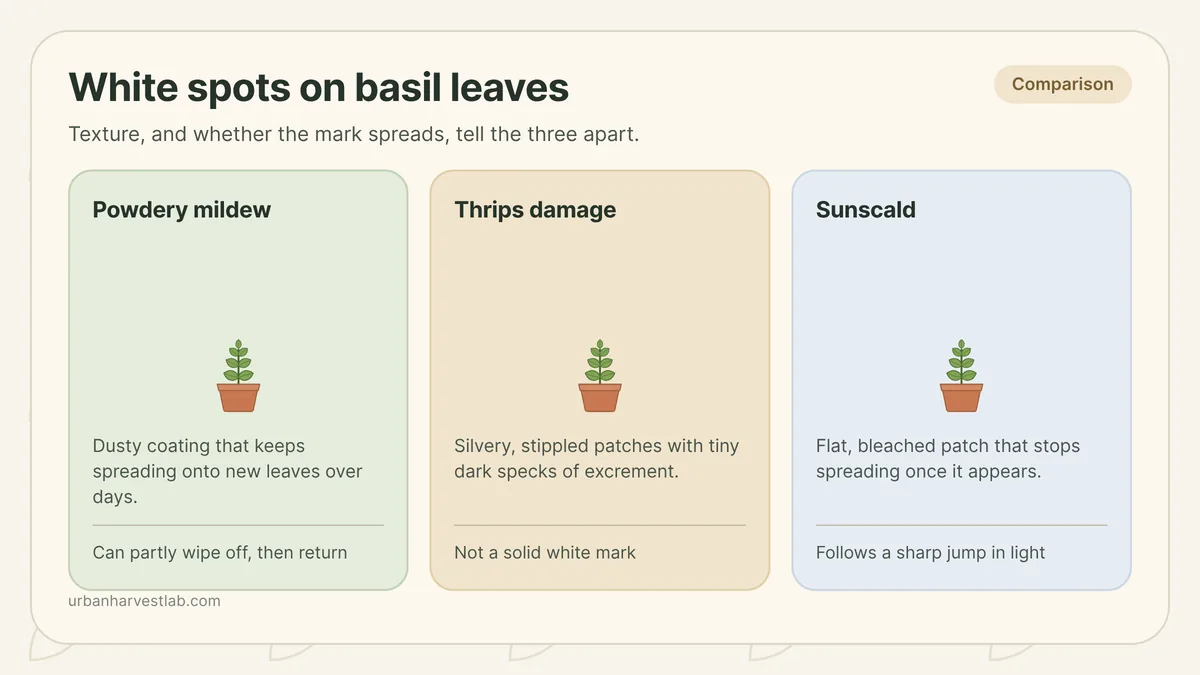
White spots on basil leaves: mildew, thrips, or sunscald
White spots on basil usually come from one of three different causes, and a hand lens plus a few days of watching tells you which.
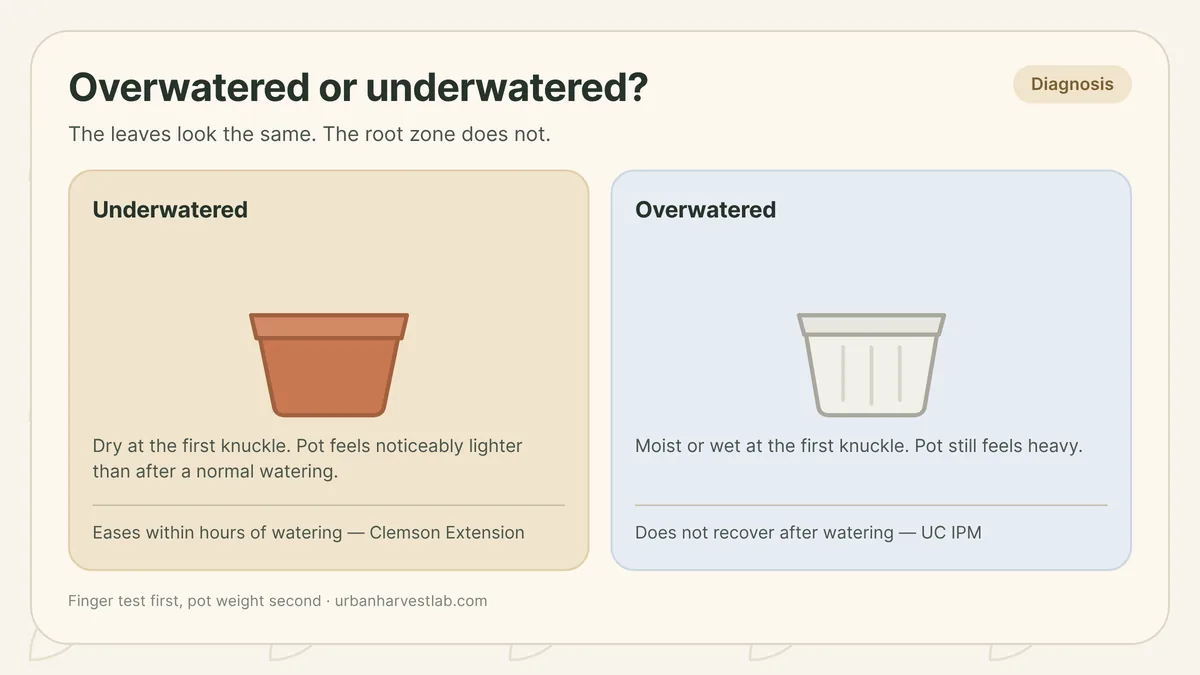
Overwatered vs underwatered: how to tell which one you have
Reading the root zone directly, with a finger test, pot weight, and how the plant responds to being watered, settles what the leaves alone cannot.