
Troubleshoot the system before you change the inputs.
Symptoms
- A pale tan spot on the bottom (blossom end) of a green fruit, opposite the stem.
- The spot widens, sinks, and turns dark brown to black and leathery.
- Leaves and stems look healthy, and other fruit on the plant may be fine.
Possible causes
- The potting mix swung between very dry and very wet, interrupting the water flow that carries calcium into the fruit.
- The pot is small for the plant, so the mix dries out within a day in warm weather.
- Heavy early feeding with ammonium-based nitrogen, which competes with calcium uptake.
- Less often, a mix that is genuinely low in calcium.
Quick fixes
- Water deeply until it runs from the drainage holes, then check the pot daily in warm weather.
- Add a layer of mulch over the mix to even out moisture.
- Pick off affected fruit and bin it.
- Ease off the fertiliser while fruit is setting, and avoid ammonium-heavy products.
A black, sunken, leathery patch on the bottom of a potted tomato is blossom end rot, and in a container it is usually caused by uneven watering rather than a lack of calcium in the mix. Illinois Extension says it is usually not a lack of calcium in the soil but how well the plant absorbs it. Fix the water rhythm, remove the damaged fruit, and fruit that sets afterwards is often clean. The size of your pot has a lot to do with how hard that rhythm is to keep, so check how much soil a tomato needs too.
What you are looking at
Illinois Extension describes the early sign as a light tan spot at the end of the fruit opposite the stem. It expands and eventually turns black and leathery. The patch sits on the bottom of the tomato, away from the stem.
Leaves and stems stay healthy. That is the first clue that this is not a disease. Illinois Extension calls it a physiological disorder, and the University of Maryland notes it typically occurs when plants are growing rapidly and often affects the first developing fruits. Larger-fruited and long-fruited types such as Roma are the ones Illinois Extension says show it most.
A watery, mouldy or fuzzy patch anywhere on the fruit is a different problem, and cracks or splits are covered by the tomato cracking page.
A pot cuts the calcium supply faster than a bed
New Mexico State University explains that calcium travels through the plant dissolved in water. When the water stops moving, the fruit, which sits at the end of the supply line, goes without. The plant itself can have plenty of calcium available and still fail to deliver it.
A pot makes that interruption easy. Illinois Extension says containers dry out quickly, so potted plants are more likely to develop blossom end rot without consistent watering. The Morton Arboretum says container tomatoes will most likely need watering every day because of the small volume of the pot. New Mexico State University puts it more bluntly for a case of repeated blossom end rot in containers: the problem is probably that the containers are too small, and the solution is to prevent the wilting of the plants.
Then the flip side. A pot you flood after it has dried out solid swings from drought to saturation, and that swing is the pattern that cuts calcium delivery. A pot that stays soggy is not safe either: Illinois Extension lists cold or waterlogged soils, as well as drought stress and inconsistent moisture, among the causes, so a pot that stays waterlogged can cause the rot too. To check whether the roots themselves are damaged, see overwatered versus underwatered.
How to fix it
- Water deeply, then let the pot tell you when to water again. Illinois Extension advises watering deeply starting when fruits first form and continuing throughout the season. The Morton Arboretum says to water until some comes out of the drainage holes. Do not give a sip every day and call it done.
- Test the mix with a finger every day it is hot. Push a finger into the mix. A routine built around the pot, not the calendar, is in how often to water container vegetables. A moisture meter can help, but know what it measures first: what a soil moisture meter actually reads.
- Mulch the surface. The University of Maryland advises keeping plants well mulched and watered through the season. A layer on top slows evaporation from the mix.
- Pick off the damaged fruit. The Morton Arboretum says to remove affected tomatoes so they do not divert calcium from unaffected ones. Illinois Extension says it is best to remove the fruit and discard it.
- Ease up on feeding while fruit sets. Illinois Extension advises avoiding excessive fertilisation during early fruiting and says ammonium competes with calcium uptake. The University of Maryland says to avoid high-nitrogen fertilisers like urea.
- Look at the pot itself. If a full-grown plant is dry by afternoon every sunny day, the pot is too small for it. Moving up is the lasting fix, and so is choosing a less prone type next year: Illinois Extension names Celebrity, Mountain Pride and cherry tomatoes, and the University of Maryland says symptoms are rarely seen in cherry tomatoes. Container depth for tomatoes covers what the root system needs.
What does not work, or only partly
Calcium sprays. Illinois Extension states that foliar calcium applications do not help much because the calcium does not move into the fruit well. The University of Maryland says a calcium chloride spray may offer some temporary relief, so the sources differ on sprays, but both put steady watering first.
Eggshells. They are too slow to help this season’s tomatoes, which the eggshell myth page explains.
Epsom salt. It supplies magnesium, not calcium, and is covered on its own page: Epsom salt for plants.
Adding calcium to the mix. This is the one case with a caveat. The Morton Arboretum notes that, unlike garden soil, potting mixes for containers may need calcium supplements added. If you have fixed the watering and fruit still blackens, check the mix, and check its pH with container soil pH, before reaching for anything else.
Reading your own pot
| What you see | Most likely reason | First move |
|---|---|---|
| Black patches on the first few fruits, plant growing fast | Rapid growth outpacing water delivery | Deeper, steadier watering |
| Pot dry within a day, plant wilts by afternoon | Pot too small for the plant | Water more often now; larger pot next time |
| Heavy feeding just before fruit set | Ammonium competing with calcium | Pause feeding, keep watering even |
| Watering fixed, rot continues on new fruit | Mix low in calcium or off pH | Check the mix and its pH |
Judge your fix by the fruit that sets after you change the routine, not by fruit that was already marked. New Mexico State University notes the damage is done while the fruit is small and the symptoms do not show for a few weeks, so fruit that blackens shortly after you change the routine may already have been affected.
Sources
Keep your tomato pot steady
Pot size and watering rhythm decide whether calcium reaches the fruit. These cover both.
Common questions
Why do my tomatoes in pots have black bottoms?
It is almost certainly blossom end rot. Illinois Extension describes it as a physiological disorder in which too little calcium reaches the fruit, and says containers dry out quickly, so potted plants are more likely to develop it without consistent watering. The usual fix is deep, regular watering rather than adding calcium.
Will adding calcium to the pot fix blossom end rot?
Usually not on its own. Illinois Extension says foliar calcium sprays do not help much because calcium does not move into the fruit well, while University of Maryland Extension says a calcium chloride spray may offer some temporary relief. Both put steady watering first. The Morton Arboretum notes that potting mixes, unlike garden soil, may need calcium supplements, so a soil or mix check is reasonable, but steady watering comes first.
Will the rest of the fruit on the plant be affected?
Not automatically. It is not an infection that spreads from fruit to fruit. University of Maryland Extension notes it often hits the first developing fruits while the plant is growing rapidly, and fruit that sets later can be fine once watering is steady. Remove the damaged fruit so the plant does not divert calcium to it.
Can I just eat the good part of an affected tomato?
Illinois Extension's advice is to remove affected fruit and discard it, and it gives no guidance on eating the unaffected part, so binning it is the cautious choice.
Related guides
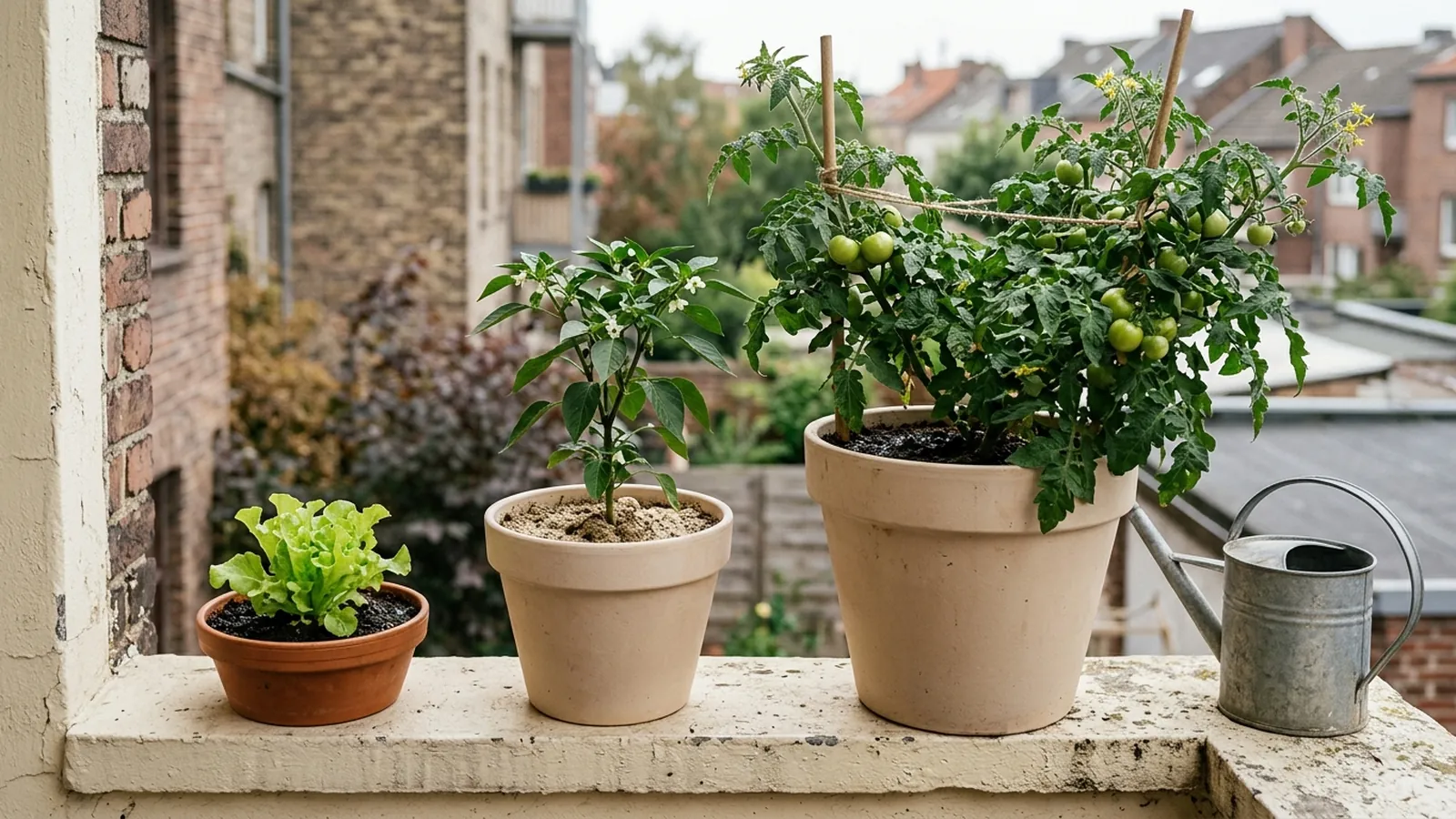
How often to water container vegetables: volume and crop stage set the interval
A pepper in a 2-gallon pot in May and the same pepper in the same pot in August are two different watering problems. Once you can see why, the question stops being how often and becomes how much mix you gave the plant, and what it is carrying right now.
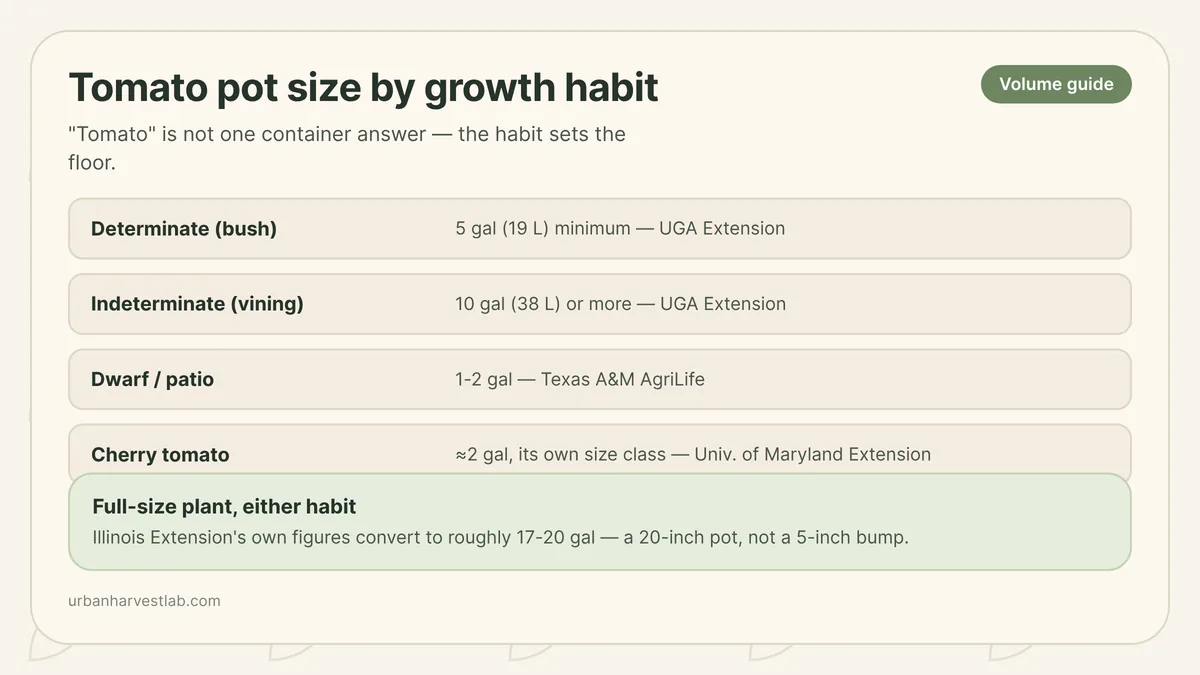
What size pot for tomatoes? Volume by growth habit
The right container for a tomato depends less on the fruit than on how the plant grows: determinate, indeterminate, or dwarf. Extension figures for the same word vary by more than three times.
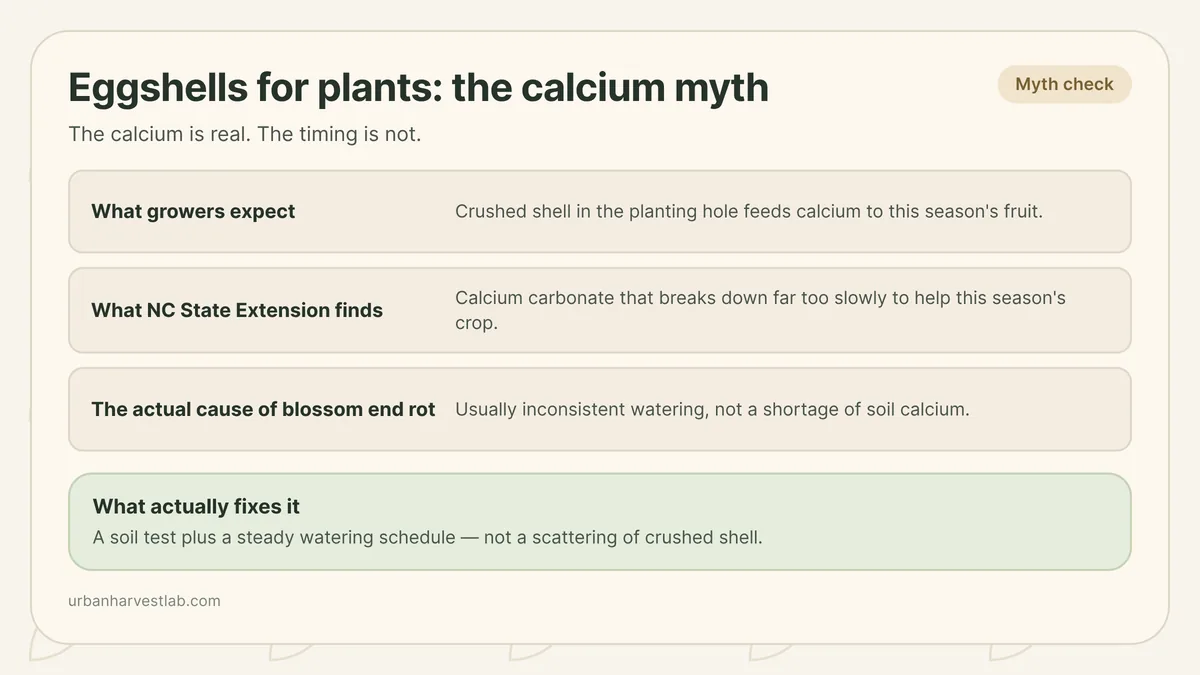
Eggshells for plants: what the calcium myth gets wrong
Crushed eggshells in the potting mix feel like free calcium, but the shell breaks down far slower than a growing tomato needs it to.