
Troubleshoot the system before you change the inputs.
Symptoms
- Purple or red-purple stems and leaf undersides on young seedlings
- Lower leaves dark green with purple tints
- Slow growth after a cold spell or after transplanting
Possible causes
- Cold root zone limiting phosphorus uptake
- Transplant stress after a large temperature change
- Soil pH outside the range where phosphorus is available
- A real phosphorus shortage in the mix
- Normal early pigment or strong supplemental light
Quick fixes
- Warm the root zone and keep seedlings out of cold drafts and windowsills at night
- Wait for new growth: green new leaves mean the stress has passed
- Check pH and have the mix tested before adding phosphorus
- Hold off on fertilizer unless plants are yellowing and have been in the same mix for 8 weeks
Purple stems and leaf undersides on seedlings are a stress response, and cold roots are one of the commonest triggers. Warm the root zone, watch whether new leaves come in green, and skip the fertilizer unless a test says otherwise.
What the purple actually is
The colour comes from anthocyanin, a pigment plants build when they are stressed. A peer-reviewed study of tomato found that anthocyanin production “can be induced by exposure to low temperatures” (Qiu and colleagues, PLoS One, 2016). In seedlings that usually shows on the stems and the undersides of the leaves first.
UConn Extension describes phosphorus deficiency in tomato as a dark green or purple-reddish discoloration on lower leaves and stems. It also says cold soil is “the most common look-a-like”, with visual symptoms similar to a true deficiency. The two are hard to tell apart by eye, which is why the checks below matter more than the colour.
Cold roots: a common trigger
Maryland Extension’s Home and Garden Information Center lists cool conditions preventing proper phosphorus absorption as a possibility for seedlings set outdoors on cool days, and its tomato problem key calls the purple colouring “very common in new tomato seedlings and transplants” and attributes it to a lack of phosphorus and possibly other stress factors. Maryland’s list of stresses also covers temperature changes, light, humidity, crowding and poor airflow.
Where the cold comes from indoors:
- A tray on a cold windowsill, a garage shelf or a tiled floor, where the mix runs colder than the room air.
- A cool night after a warm day, particularly right at the glass.
- Seedlings set outside to harden off on a cool day.
- A large temperature change at transplanting. UConn Extension notes that plants can experience a large temperature change, which causes a stress response.
If the mix feels cold to the touch, that is your answer. Lifting the tray off the sill or onto a mat is the fix, and the seedling heat mat and thermostat guide covers warming the mix without overshooting.
How to tell cold from a real shortage
Run through these in order.
| What you see | Points to | What to do |
|---|---|---|
| Purple appeared after a cold night or a move; new leaves coming in green | Cold roots | Warm the mix; watch whether the next leaves come in green |
| Purple on undersides and stems of otherwise sturdy plants under a strong light | Light-related pigment | Watch new growth; Maryland Extension notes it is common under supplemental lighting |
| Purple persists, growth is stunted, and the mix is warm | Possible real shortage or pH problem | Check pH, get a soil or tissue test |
| Pale, stretched stems with little purple | Not this problem | See leggy seedlings |
| Wilted, drooping plants just after moving them | Transplant stress | See transplant shock in seedlings |
Cold injury looks different. The University of Maryland describes it as light tan or gray blotches on leaves, and says affected leaves out-grow the injury if plants are healthy and not stressed further by low temperatures.
When it is normal
Some purple is part of how young seedlings look. In a PLoS One study of tomato lines that differ in one pigment gene, two-day-old seedlings of the purple-stemmed line had a dark purple stem below the seed leaves that faded over the next 10 days, while the green-stemmed line stayed green. Some varieties simply start purple. Maryland Extension also says some purpling of stems and leaf undersides is very common in tomato transplants grown under supplemental lighting.
Leave the plant alone when:
- the purple is light and limited to stems or undersides,
- the seedling is growing and new leaves are green,
- the mix is warm (the heat mat guide covers target temperatures).
When it is a real phosphorus problem
If the mix is warm and the purple spreads, the plant stalls and new leaves stay dark and small, look at the mix itself.
Check pH. UConn Extension suggests adjusting soil pH to the 6.5 to 6.8 range for high nutrient availability. The nutrient lockout and soil pH guide explains how pH changes what roots can take up.
Test. UConn Extension: confirming a phosphorus deficiency takes a soil or tissue test. A purple leaf is not a test result.
Check what the seedlings are growing in. If you filled trays with garden soil or a heavy mix, seed-starting mix vs potting mix covers what each mix is built to do.
Feeding: hold back
Maryland Extension’s answer to a gardener with purple tomato seedlings is to not fertilize unless the plants are yellowing and have been growing for at least 8 weeks in the same potting mix. Plants typically grow out of the symptoms once planted in the garden. For yellowing rather than purple, the tomato leaves turning yellow guide sorts the patterns.
Sources
- UConn Extension IPM, “Tomato – Phosphorous Deficiency”
- University of Maryland Extension Home and Garden Information Center, Ask Extension: purple leaves and stems on tomato seedlings
- University of Maryland Extension, “Key to Common Problems of Tomatoes”
- Qiu et al. (2016), PLoS One 11(3): e0151067, Tomato Hoffman’s Anthocyaninless gene
Fix the root zone and the mix
These guides cover the warmth, the starting mix and the pH that decide whether seedlings can take up what they need.
Common questions
Why are my seedlings turning purple?
Purple is a stress response, and cold roots are one of the commonest triggers. The plant builds purple anthocyanin pigment in stems and leaf undersides. The University of Maryland tomato key attributes it to a lack of phosphorus and possibly other stress factors. Maryland Extension lists cool conditions that prevent proper phosphorus absorption as a possibility for seedlings set outdoors on cool days, and UConn Extension calls cold soil the most common look-alike of phosphorus deficiency.
Will purple seedlings recover?
Usually yes. Maryland Extension says plants typically grow out of these symptoms after being planted in the garden, and says affected plants recover once roots are fully established. Check the new leaves: if they come in green, the stress has passed.
Should I add phosphorus fertilizer to purple seedlings?
Not as a first move. If cold is the trigger, warming the roots addresses the cause. UConn Extension says true confirmation of a phosphorus deficiency needs a soil or tissue test, and Maryland Extension advises against fertilizing unless plants are yellowing and have been in the same potting mix for at least 8 weeks.
Is purple on a seedling ever normal?
Some purple is. In a PLoS One study of tomato lines that differ in one pigment gene, two-day-old seedlings of the purple-stemmed line had a dark purple stem below the seed leaves that faded over the next 10 days, while the green-stemmed line stayed green. Some varieties simply start purple. Maryland Extension notes some purpling of stems and leaf undersides is very common in tomato transplants grown under supplemental lighting. Purple that spreads, persists or comes with stunting is worth acting on.
Related guides

Why are my seedlings leggy? Light, heat, crowding, and what to save
A tall, thin, floppy seedling is telling you it is short of light, too warm, crowded, or started too early. Find which, fix the setup, and bury the stems that can take it.

Transplant shock in seedlings: wilting after you plant them out
Wilting after transplanting is common and usually temporary. Prevention is mostly hardening off and watering; recovery is measured in days to a couple of weeks.
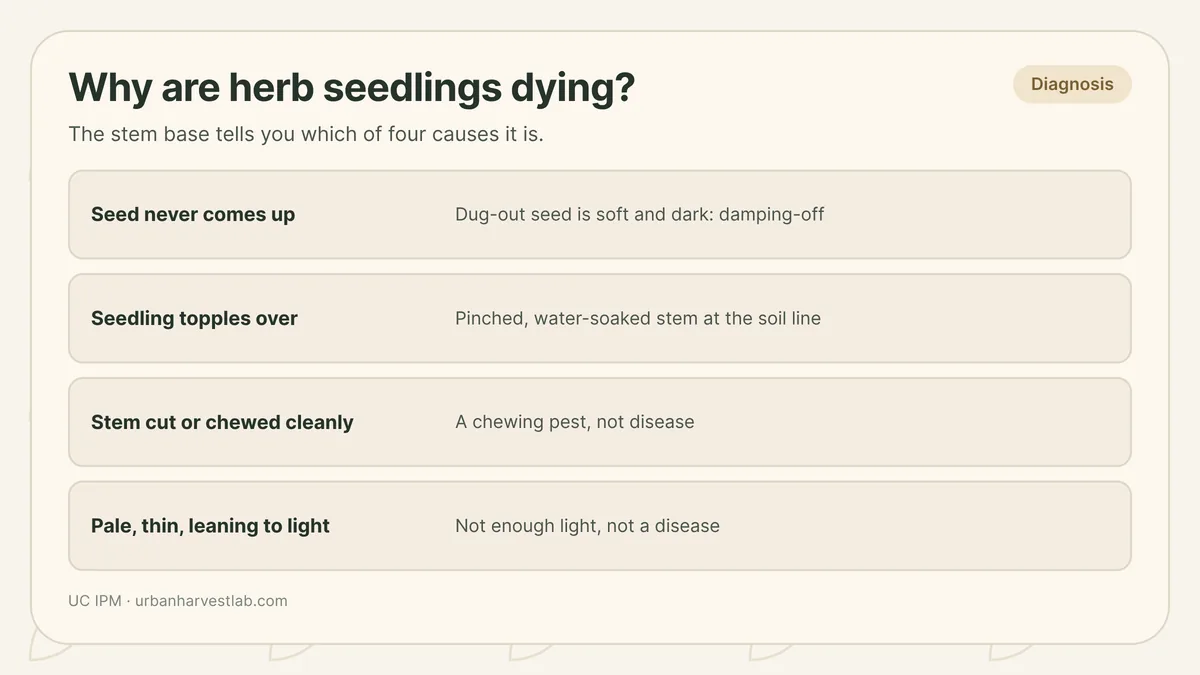
Why are my herb seedlings dying?
A tray of herb seedlings can fail three or four different ways, and they do not all look the same up close. The stem base and the seed itself tell you which one you have.