Vermiculite vs perlite: what each material does in a mix
| Property | Vermiculite | Perlite |
|---|---|---|
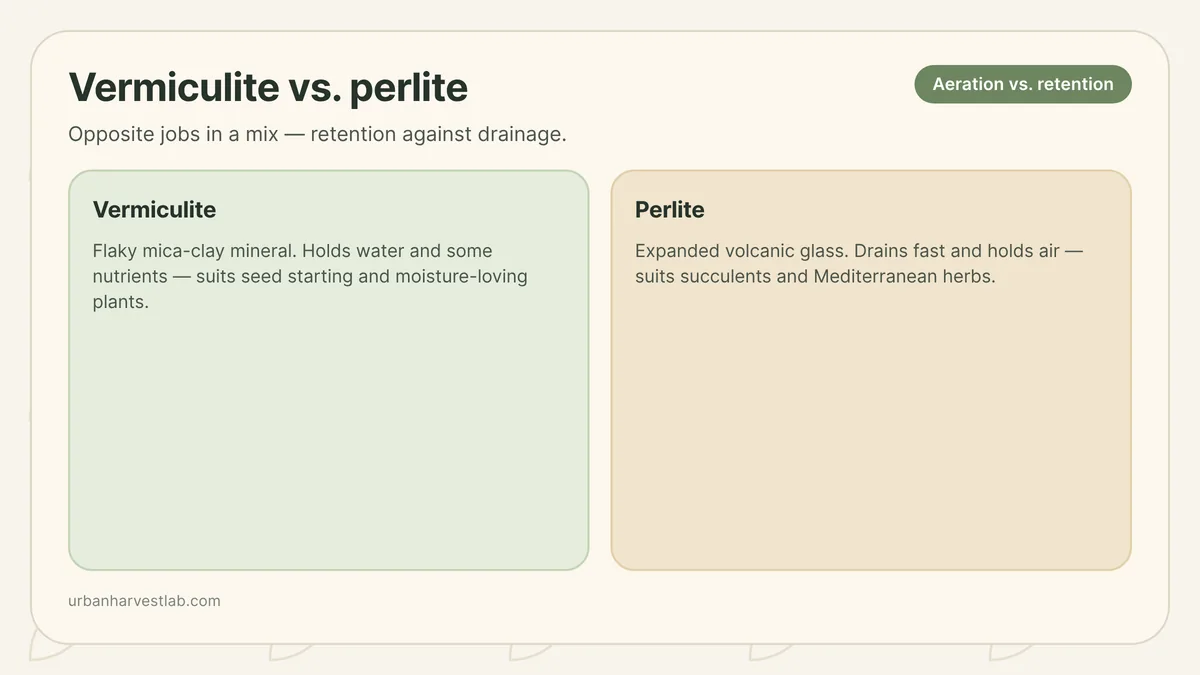
| What it is | Shiny, flaky mica-clay mineral | Expanded volcanic glass, "puffed up like popcorn" |
| Job in the mix | Holds water and some nutrients | Drains water and holds air pores |
| Water behavior | Acts like a sponge, retains to saturation | Excess water passes through readily |
| Nutrient exchange | Water- and nutrient-retentive (Iowa State) | Holds air, not nutrients |
| Cost | Relatively expensive | Cheaper, most common aeration component |
| Handling risk | None specific to the material | Dry perlite produces dust that irritates lungs and eyes |
| Good fit | Seed starting, moisture-loving houseplants, mixes that dry too fast | Succulents, Mediterranean herbs, mixes that stay too wet |
Vermiculite and perlite are not competing versions of the same ingredient. Vermiculite is a flaky mineral that holds water and some nutrients; perlite is a porous volcanic material that lets water and air pass through quickly. They solve opposite problems, which is why a mix built around one usually cannot just swap in the other at the same ratio and behave the same way.
A bag that lists both perlite and vermiculite on the label, or a homemade batch that came out heavier and wetter than expected, is usually a sign the two got swapped for each other rather than used for what each one does. The potting mix guide for potted herbs and the DIY potting mix for container vegetables cover choosing the whole mix; this is the one ingredient swap inside it that trips people up.
A sponge and a popcorn kernel
Both are standard components of a soilless potting mix, alongside peat moss, coir, and bark. Iowa State University Extension describes vermiculite as “a shiny, flaky mica-clay component” that is water- and nutrient-retentive and relatively expensive, adding that it is “often unnecessary in an already well-built mix.” Perlite, by contrast, is expanded volcanic material — “puffed up like popcorn” — and is the most common aeration ingredient because its structure creates long-lasting air pores.
That description lines up with how the two are used in named recipes: Clemson Cooperative Extension’s own soil-mix guidance and Penn State Extension’s propagation guidance both call for vermiculite at up to 25-50% by volume specifically in seedling mixes, where moisture retention around a germinating seed is the priority.
Neither material brings the weed seed and compaction problems that garden soil brings to a container, and perlite’s heat-processing step also leaves it sterile out of the bag. That is a separate question, covered in potting mix vs. raised bed soil for containers — the comparison here assumes a soilless base is already the starting point, and the question left is which aeration or retention ingredient belongs in it.
Why the difference matters more than it looks
A potting container behaves differently from open ground. University of California Cooperative Extension’s Stanislaus County Master Gardeners explain that water moves poorly from a layer of fine material into a layer of coarser material below it — the fine layer has to reach saturation first, which is why gravel at the bottom of a pot does not improve drainage and can push the saturated zone higher instead — the gravel-in-the-pot myth covers that mechanism in full. The same fine-versus-coarse contrast plays out inside the mix itself: Which one dominates in your mix determines how long a pot stays wet after watering.
Iowa State University Extension measured what handling alone does on top of that: a filled container loses air-filled pore space from about 15% to 9% just from tapping it down, and to roughly 4% from pressing the mix firm. A container built with a generous perlite fraction can still end up dense and slow-draining if the person filling it pressed down at every layer — mounding the mix loosely and stopping there does more for aeration than the ratio on the bag.
When vermiculite is the right call
Reach for vermiculite, or a mix already weighted toward it, when:
- You are starting seeds and want the medium to stay evenly moist against a germinating seed without frequent watering — the recipe range Clemson and Penn State give (up to 25-50% by volume) is aimed at exactly this. A seed-starting mix leans on this retention deliberately; see seed-starting mix vs. potting mix for how the rest of that recipe differs from a general potting mix.
- You are growing a moisture-loving houseplant in a mix that currently dries out faster than you want to keep up with.
- You want a small nutrient buffer beyond water retention alone: Iowa State describes vermiculite as nutrient-retentive as well as water-retentive, unlike perlite, which holds air rather than nutrients.
Vermiculite is not free of downsides. Iowa State’s own framing — “often unnecessary in an already well-built mix” — is a caution against reaching for it by default. If a mix’s peat or coir already retains enough moisture, added vermiculite can push a container toward staying wet longer than the plant wants, which is exactly the failure mode described below for succulents.
When perlite is the right call
Reach for perlite, or a mix weighted toward it, when:
- You are growing succulents, cacti, or Mediterranean herbs that need the medium to dry out between waterings rather than hold moisture.
- Your current mix stays soggy, smells sour, or drains slowly, and the fix is more air-filled pore space, not more water-holding capacity.
- You want the cheaper, more widely available aeration ingredient — perlite is the default aeration component in most commercial soilless mixes for that reason.
The one handling caveat: dry perlite generates real dust, which Iowa State flags as a hazard to breathe or get in the eyes. Lightly dampen a bag before working with it, and consider a mask if you are mixing a large batch indoors.
If the question is which aeration material to buy rather than whether you need aeration at all, perlite vs pumice vs rice hulls compares the three on cost, durability and sterility.
Why the two are usually paired, not swapped
The standard definition of a soilless mix does not choose one over the other; it includes both, alongside peat moss or coir. Actual bagged products vary widely by manufacturer and often list little on the label, so read the ingredient panel rather than assuming a standard formula. The University of Connecticut’s Home & Garden Education Center describes traditional potting soil as a blend of “peat moss, bark, sand, compost and vermiculite,” while its soilless-mix definition lists “peat, perlite, vermiculite, sphagnum moss and composted bark.” Vermiculite supplies moisture and a nutrient buffer; perlite keeps the same mix from staying waterlogged after that moisture is added. Removing one changes what the other has to compensate for.
That is why the practical question for most containers is not “vermiculite or perlite” but “how much of each, for this plant.” A seed tray leans toward vermiculite’s retention because a drying seed bed stalls germination. A succulent bowl leans toward perlite because standing moisture around Mediterranean or drought-adapted roots invites rot. A general all-purpose mix for leafy vegetables or herbs usually sits somewhere in between, which is exactly what a commercial bag is trying to pre-balance for you.
A quick way to decide for your container
- Identify the failure mode you are trying to prevent. A mix that dries out too fast between waterings needs more retention (vermiculite, or more peat/coir). A mix that stays wet, smells sour, or drowns roots needs more aeration (perlite).
- Check what the plant actually wants, not just what is easiest to buy. Succulents and cacti want the mix to dry down; seedlings and moisture-loving houseplants want it to stay even.
- Add incrementally and observe, rather than reformulating the whole batch. A cup of perlite folded into an already-bagged mix is easier to correct than an already-firm homemade blend that turns out too wet.
- Rule out compaction before blaming the recipe. If a mix with plenty of perlite in it is still draining poorly, check whether it got packed down while filling the container before you add more aeration material.
Sources
- Iowa State University Extension, Yard and Garden — “Potting Media: Components and Handling”
- UConn Extension, Home & Garden Education Center — “Potting Media”
- UC ANR, Stanislaus County Master Gardeners — “Adding gravel to your planting container does not improve drainage”
- Penn State Extension — “Potting Media and Plant Propagation”
- Clemson Cooperative Extension, HGIC — “Indoor Plants – Soil Mixes”
Building or fixing a potting mix
These guides cover the mix itself, the aeration materials that compete with perlite, and where seed-starting mix differs from potting mix.
Common questions
Can I use vermiculite instead of perlite?
Not usually as a like-for-like swap. Vermiculite is a flat, absorbent mica-clay material that holds water and some nutrients, while perlite is a porous volcanic material that drains fast and holds air. Substituting one for the other changes how wet the mix stays, which matters most for plants that need either a quick dry-down or a steady moisture supply.
Is vermiculite or perlite better for succulents and cacti?
Perlite is the closer fit for succulents and cacti, because that mix needs to dry out between waterings rather than hold moisture. Vermiculite's water retention works against a fast dry-down and can leave a slow-draining mix around roots that are prone to rot in wet conditions.
Can vermiculite and perlite be used together?
Yes, and commercial soilless mixes commonly include both alongside peat or coir. Vermiculite supplies moisture and nutrient retention while perlite keeps the mix from staying waterlogged, so combining them balances two properties that neither material provides alone.
Does perlite or vermiculite affect soil pH or nutrients?
Iowa State University Extension describes vermiculite as nutrient-retentive as well as water-retentive, so it holds some of what you feed rather than letting it pass straight through. Perlite holds air, not nutrients — neither material is a substitute for a fertilizer program.
Related guides
Seed-starting mix vs. potting mix: why your seedlings need a different bag
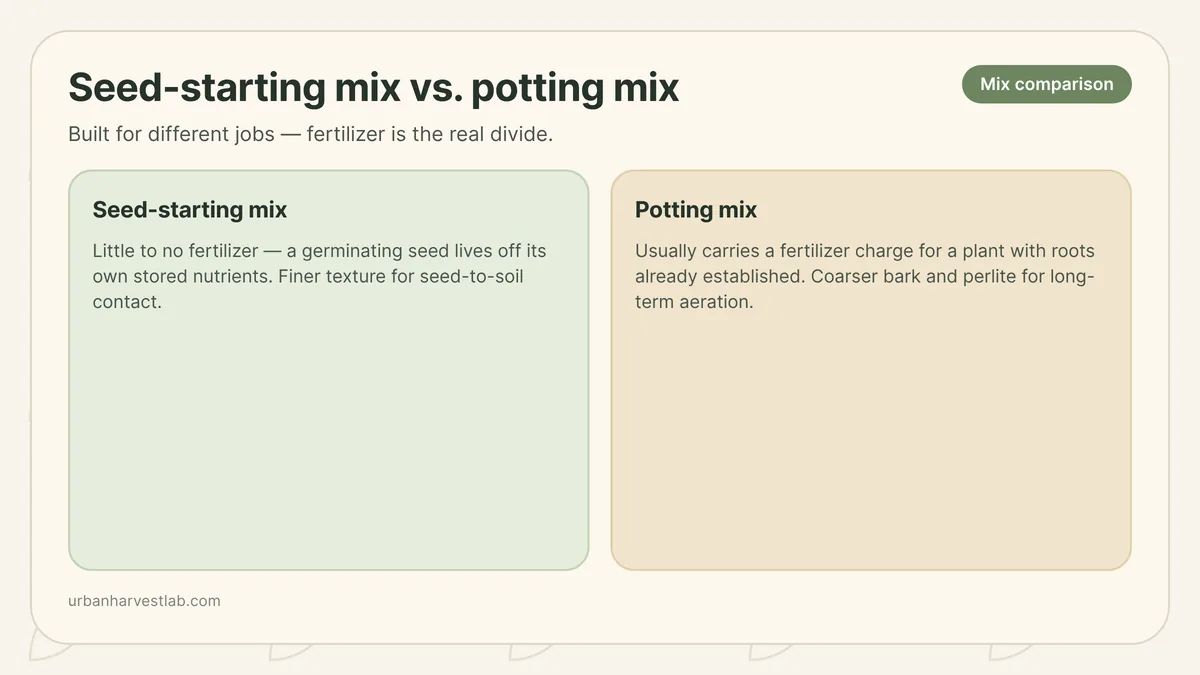
Potting mix is built to feed an established plant; seed-starting mix is built to stay out of a germinating seed's way. The difference is fertilizer content and particle size, and it matters before the first true leaf appears.
How to make potting mix for container vegetables
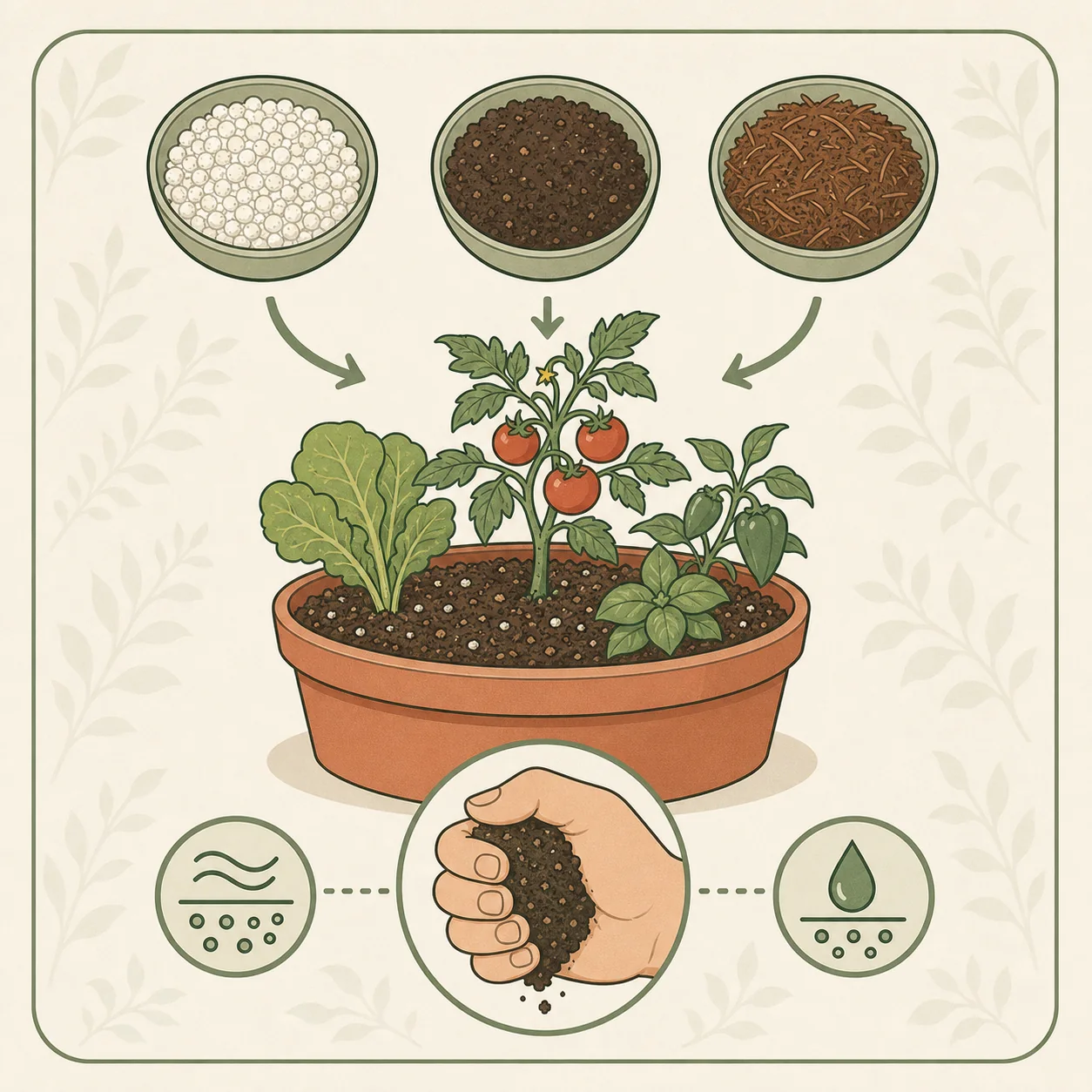
A useful potting mix recipe describes the job of each ingredient and gives you a way to correct the result. The goal is stable air and moisture, not a magic ratio.
Best potting soil for potted herbs: how to pick the right mix
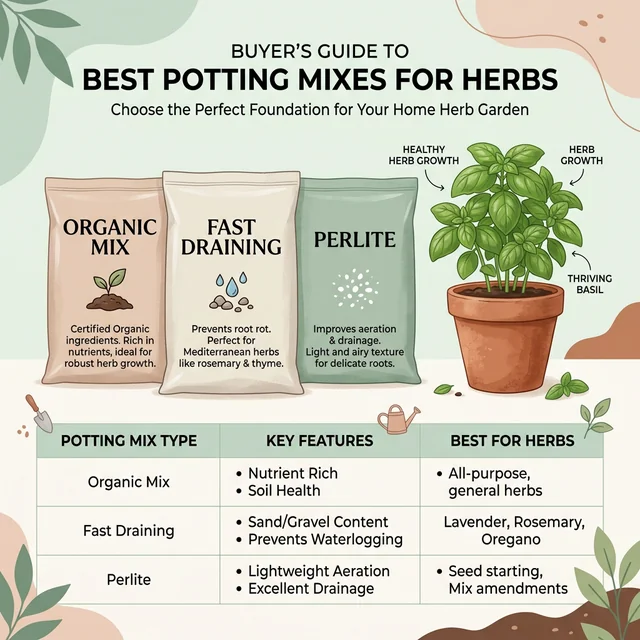
A practical buyer's guide to choosing potting mix for potted herbs, from richer blends for basil and parsley to faster-draining options for rosemary and thyme.