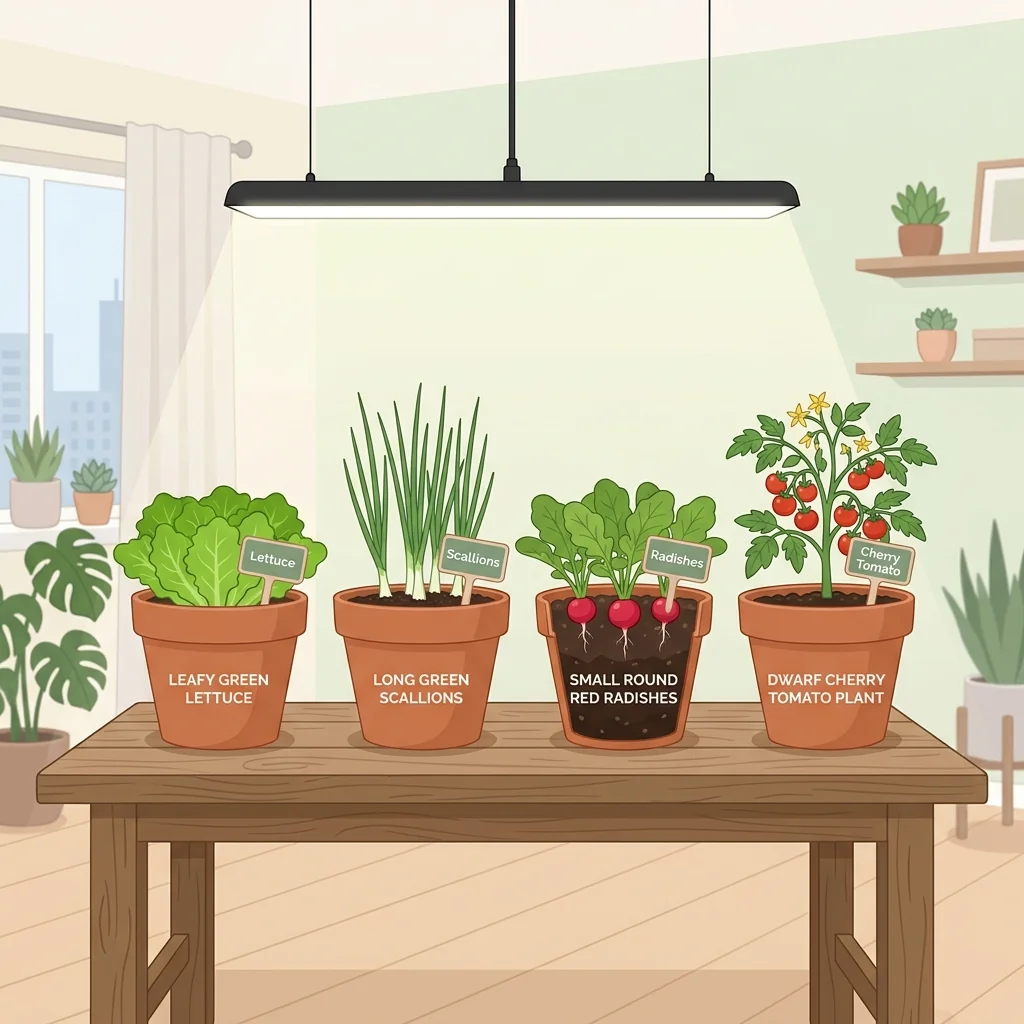
Best indoor apartment vegetables
| Vegetable | Difficulty | Light needed |
|---|---|---|
| Leafy greens (lettuce, spinach, kale) | Easy | Bright window or grow light |
| Green onions / scallions | Easy for a short second flush | Bright light; soil or a managed system for sustained growth |
| Radishes | Easy, fast | Bright window or grow light |
| Microgreens | Very easy | Modest; grow light helps |
| Cherry / dwarf tomatoes | Harder | Strong grow light, 14-16 h |
| Peppers / chillies | Harder | Strong grow light, warmth |
Herbs are the usual starting point, but plenty of vegetables grow indoors in an apartment too. As a quick answer: the easiest indoor vegetables are leafy greens, green onions, radishes, and microgreens, while cherry tomatoes and peppers are possible with a strong grow light. The whole setup comes together in the beginner apartment vegetable garden plan.
The easy wins: leafy greens and fast crops
If you want quick, reliable results, start here:
- Leafy greens — loose-leaf lettuce and arugula can provide baby-leaf harvests when light and temperature are suitable. A window may work, but do not assume every “bright” sill supplies enough plant light. Greens are also common starter crops in hydroponics, as explained in the countertop hydroponic herbs guide.
- Green onions / scallions — saved bases may produce a short second flush in water. For sustained growth, start with seed or transplants in potting mix or a managed hydroponic system that provides nutrients.
- Radishes — fast and compact, ready in weeks in a deeper pot.
- Microgreens — sprouted greens harvested young; very forgiving and quick.
The harder, rewarding crops
Fruiting vegetables are possible indoors but demand much more light:
- Cherry and dwarf tomatoes — choose compact varieties, give a strong grow light for 14 to 16 hours, and hand-pollinate the flowers.
- Peppers and chillies — similar light and warmth needs; slower but rewarding.
These need far more light than greens, which is why a grow light matters; see best grow lights for herbs (the same fixtures work for vegetables).
Match the crop to your light
The deciding factor indoors is light:
- Bright window only: stick to leafy greens, green onions, radishes, and microgreens.
- Grow light available: add cherry tomatoes, peppers, and a wider range of greens.
For the outdoor-leaning version of this with a little more space, see best vegetables for small balconies.
Start with one or two
Pick one easy crop and one you are excited about, learn your light, then expand. One measured crop cycle tells you more than a crowded shelf of struggling pots.
Use a crop trial, not a promise
For three days, record the direct-sun period at leaf height. Then grow one labelled batch and log sowing date, germination, watering, lamp hours if used, and edible harvest weight. Seed-packet maturity dates are comparisons under suitable conditions, not deadlines for a particular apartment.
A practical first experiment is microgreens or baby lettuce under a stable light source. Radishes need enough light for leaf growth plus uniform moisture and depth for roots; they are not automatically “easy” on a dim sill. Spinach can be temperature-sensitive, while kale becomes much larger if grown beyond baby-leaf stage.
What fruiting crops add
Tomatoes and peppers need more than a long timer setting. Fixture output, distance, illuminated area, temperature, variety, container volume, nutrition, and pollination all affect the result. A 14- to 16-hour schedule cannot compensate for an underpowered lamp, and plants still need a dark period. Follow the lamp’s coverage and safety instructions, and change distance in response to measured output and plant symptoms.
Choose a compact variety whose stated mature size fits the apartment. Budget for a support, a larger container, runoff protection, and air movement. Indoors, gently vibrating tomato flower clusters or moving pollen as appropriate can help when natural pollinators are absent.
Food-safety basics
Use potable water, clean containers, and seed from a traceable supplier. Keep pets and dirty tools away from edible trays. Rinse produce under running water before eating; soap and produce wash are not recommended. Discard crops with decay, sewage exposure, or animal contamination rather than trying to salvage them.
Sources
If you are growing vegetables indoors, also read
These guides connect indoor vegetable choice to a full apartment plan, containers, and hydroponic options.
Common questions
What vegetables can you grow indoors in an apartment?
Leafy greens (lettuce, spinach, kale, arugula), green onions, radishes, and microgreens are the easiest. Cherry tomatoes, peppers, and chillies are possible with a strong grow light and more patience.
What is the easiest vegetable to grow indoors?
Microgreens and baby leafy greens are practical first crops. Green-onion bases can make a short second flush in water, but sustained growth requires adequate light and nutrients; it is not a perpetual harvest.
Can you grow tomatoes indoors in an apartment?
Yes, but choose compact cherry or dwarf varieties and give them a strong grow light for 14 to 16 hours, plus hand pollination. They need far more light than leafy greens to actually fruit.
Do indoor vegetables need a grow light?
Leafy greens can manage at a very bright window, but most apartments benefit from a grow light, and fruiting crops like tomatoes and peppers essentially require one indoors.
Related guides
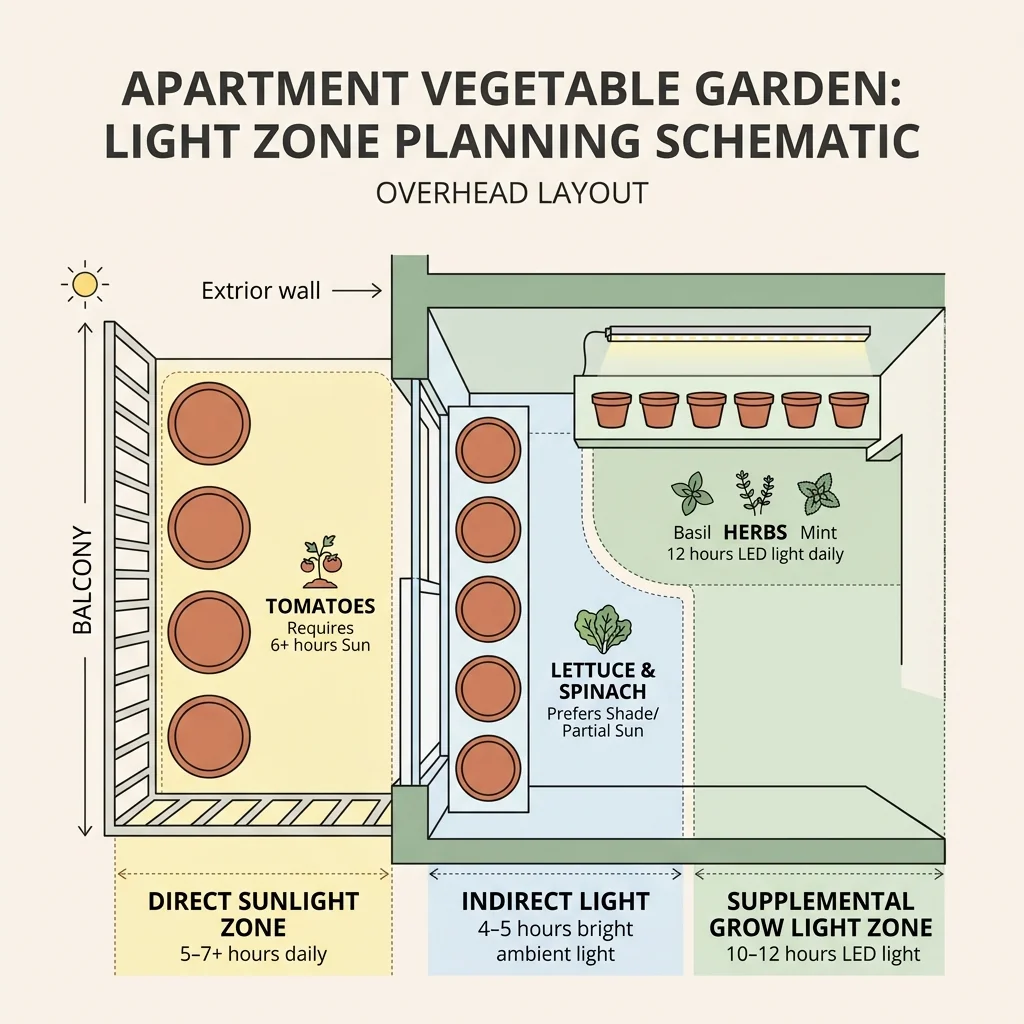
A beginner's apartment vegetable garden plan
Growing food in an apartment works when light, containers, crops, and routine are planned together. This is a simple, step-by-step plan to start from scratch.
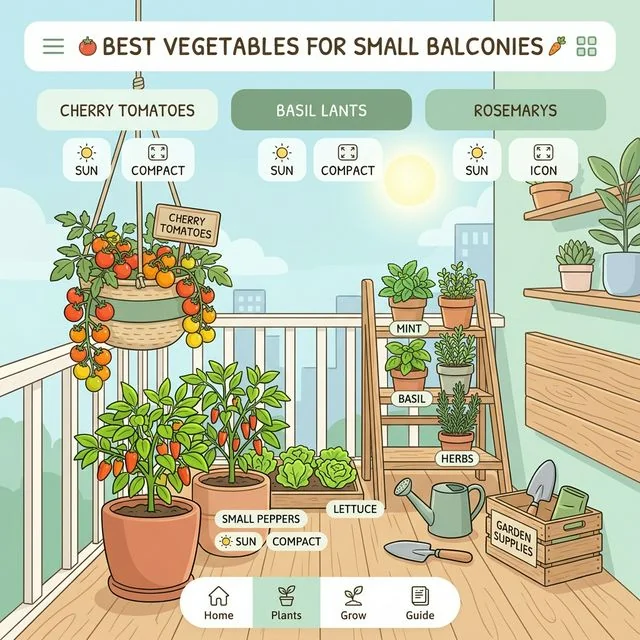
Best vegetables for small balconies: what produces well in tight spaces
Not every vegetable belongs on a balcony. These are the crops most likely to reward limited square footage without turning watering and support into a daily headache.
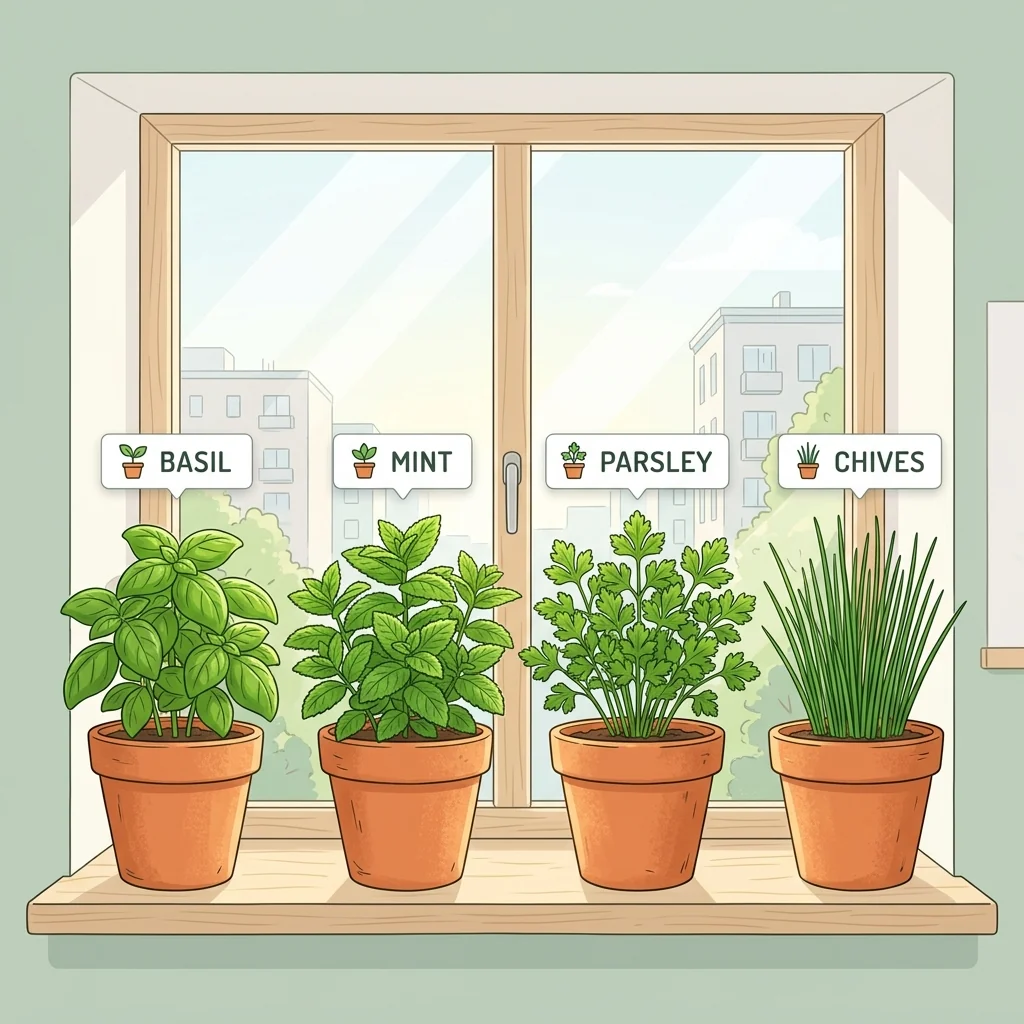
Best herbs to grow in an apartment (no yard needed)
You do not need a yard to grow herbs. These forgiving, compact herbs do well on apartment windowsills and counters, matched to how much light you actually have.