
Bok choy spacing and timing by harvest stage
| Harvest stage | Spacing between plants | Time to harvest |
|---|---|---|
| Baby leaves, cut-and-come-again | 8-10 cm (3-4 in) | As little as four weeks (Royal Horticultural Society) |
| Semi-mature plants | 20 cm (8 in) | Eight to ten weeks for semi-mature or full-size heads (Royal Horticultural Society) |
| Mature, full-size plants | 25-30 cm (10-12 in) | Eight to ten weeks; 45-75 days for semi-mature or full-size heads (Royal Horticultural Society) |
Bok choy grows well in a pot, provided the pot is at least 30 cm (12 in) wide and the plant matures in cool weather. The Royal Horticultural Society (RHS) says pak choi, the same plant under its British name, grows well in containers and growing bags, and that it is a cool-season crop that does best in mild, damp weather. Heat and drying out are what go wrong in a container, so most of the work is timing and moisture. If you are planning a whole cool-season pot, growing salad greens in containers this fall covers the companions that share the same window.
Start with the pot
The RHS puts the minimum at 30 cm (1 ft) wide, “as smaller containers dry out too rapidly.” That is the figure to plan around. A small pot is a common way to lose a bok choy crop on a balcony: the mix goes from damp to dry between visits, and a plant that wants steady moisture reacts by flowering. Use a multi-purpose potting mix with drainage holes in the base, and for a rule of how often to check the pot, see how often to water container vegetables.
Kentucky State University Cooperative Extension, in its bok choy fact sheet, lists container gardening as an option for small spaces and asks for well-drained fertile soil with a pH between 6.0 and 7.5. It also suggests adding compost or aged manure before sowing if the soil needs it. In a bag of potting mix, the useful part of that is the drainage and the fertility.
Pick your harvest size first, then the spacing
Spacing is not fixed for this crop; it follows the stage at which you cut. The RHS gives final spacings of 8-10 cm (3-4 in) for baby leaves, 20 cm (8 in) for semi-mature plants and 25-30 cm (10-12 in) for mature plants. Sow thinly, 2 cm (¾ in) deep according to the RHS, then thin the seedlings and use the thinnings in salads.
In one 30 cm pot, that works out two ways:
- Baby leaves: sow thickly enough for plants 8-10 cm apart and cut a few leaves from each plant. The RHS says plants keep producing fresh leaves for repeated pickings until they start to flower.
- Full-size heads: thin hard. Mature plants at 25-30 cm apart fill the pot on their own.
Kentucky State gives 6-8 inches (15-20 cm) between plants, close to the RHS spacing for semi-mature plants. Either way, thinning is the step that decides whether you get tender heads or a crowded clump.
The timing differs too. The RHS reports baby leaves in as little as four weeks and semi-mature or full-sized heads in eight to ten weeks. Semi-mature or full-sized pak choi is ready in 45-75 days, when still compact and firm. The University of Guam’s extension fact sheet puts baby types at about 5 weeks after germination and standard types at 5-8 weeks.
When to sow
Bok choy wants cool, damp weather. The RHS names spring and early summer, and late summer into autumn, as the best windows. The Ontario Ministry of Agriculture (OMAFRA) lists an optimal temperature range of 15-18°C, and the University of Guam says plants grow best at 55-70°F (13-21°C) but can tolerate higher temperatures with ample soil moisture. Both describe it as frost tolerant; OMAFRA specifically says it can withstand mild frosts.
For a balcony, that translates into two sowing windows, not one. Spring plantings need to mature before summer heat. Late-summer plantings are often more forgiving because temperatures and day length are both falling as the plants fill out. Your own frost dates set where the windows fall: first and last frost dates for a balcony shows how to find them, and a balcony vegetable garden calendar places this crop in the wider year.
If you sow a little at a time rather than the whole pot at once, you cut baby leaves for longer. Succession planting in containers explains how to stagger it. The RHS makes the same suggestion for pak choi: small sowings every few weeks give a steadier supply.
Why bok choy bolts, and what slows it
Bolting means the plant sends up a flower stalk and the leaves become unusable. Several things trigger it, and they are not all about heat:
- Hot, dry weather. The RHS says pak choi is liable to bolt in hot, dry weather.
- Cold snaps. The same RHS page notes that cold snaps can also trigger flowering. Early spring sowings are not immune.
- Day length. OMAFRA says bok choy is sensitive to daylength and will bolt if exposed to long-day photoperiods.
- Stress. OMAFRA lists extreme changes in temperature, poor soil conditions and low nutrient levels as inducing bolting, and low temperatures early in the season as able to cause premature seedstalk development.
What helps follows from the list. For a summer crop, the RHS advises a bolt-resistant variety, a cool, lightly shaded spot, soil kept moist, and harvest as salad leaves or semi-mature heads rather than waiting for full size. It names ‘Summer Breeze’ and ‘Glacier’ as having good resistance to bolting. For spring, the RHS suggests protecting seedlings with cloches or biodegradable fleece if temperatures drop.
Light shade matters more in a pot than in the ground, because a pot on a sunny south-facing balcony can heat up fast. Move it to where it gets morning sun and afternoon shade once the weather warms. The mechanism is the same one that ends cilantro; why cilantro bolts covers the heat and day-length trigger in more detail.
Once a plant has bolted, the RHS says bolting usually makes the crop unusable. Pull it and resow rather than waiting.
Water, feeding and pests
The RHS says pak choi grows best in moist soil, so water in dry weather, and recommends growing it in the cooler, damper parts of the year to reduce the need for watering. Kentucky State advises watering at the base of the plant rather than over the foliage, which can raise the risk of disease, and suggests mulching to conserve moisture. For a pot, a thin layer of mulch over the mix does the same job.
The pests are the usual brassica ones. Slugs and snails like the juicy leaves, and the RHS suggests protecting seedlings, especially in damp weather. Tiny holes in the leaves are flea beetles, which the RHS says cause only cosmetic damage; if you want clean leaves, cover the crop with insect-proof mesh.
Harvesting
For baby leaves, pick a few from each plant and let the rest keep growing, as the RHS describes. For a whole plant, the RHS says to cut through the base of the stem with a sharp knife. The University of Guam describes the same approach: cut the plant just above the soil line for a one-time harvest, or pick leaves from the outside for repeated harvests from the same plant.
Sources
- Royal Horticultural Society, “How to grow pak choi”
- Ontario Ministry of Agriculture, Food and Agribusiness (OMAFRA), “Bok choy” (Specialty Cropportunities)
- Kentucky State University Cooperative Extension, “Bok Choy (Brassica rapa subsp. Chinensis)” fact sheet, 2025
- University of Guam Cooperative Extension, “Growing Bok Choy (Brassica rapa Chinensis Group)”, FPP-07
Keep a cool-season container going
Related guides on sowing in batches, other fall greens, and fitting a season around your frost dates.
Common questions
How big a pot does bok choy need?
The Royal Horticultural Society recommends pots at least 30 cm (1 ft) wide for pak choi, because smaller containers dry out too rapidly. It describes pots and growing bags as suited to baby leaves, and gives 25-30 cm between plants if you want mature heads, so a single full-size plant fills a pot of that width.
How long does bok choy take to grow in a pot?
The Royal Horticultural Society gives as little as four weeks for baby leaves cut as cut-and-come-again, and eight to ten weeks (45-75 days) for semi-mature or full-sized heads. The University of Guam gives about 5 weeks after germination for baby types and 5-8 weeks for standard types.
Why did my bok choy flower?
The Royal Horticultural Society says pak choi is liable to bolt in hot, dry weather and that cold snaps can also trigger flowering. The Ontario Ministry of Agriculture adds sensitivity to long day length, extreme temperature changes and low nutrient levels. Sow for spring or late-summer harvest, keep the mix moist, and cut plants young if the weather turns.
Can you harvest bok choy more than once?
Yes, as baby leaves. The Royal Horticultural Society describes picking a few leaves from each plant as a cut-and-come-again crop, with fresh leaves continuing until the plants start to flower. A full-size head is cut once through the base of the stem.
Related guides
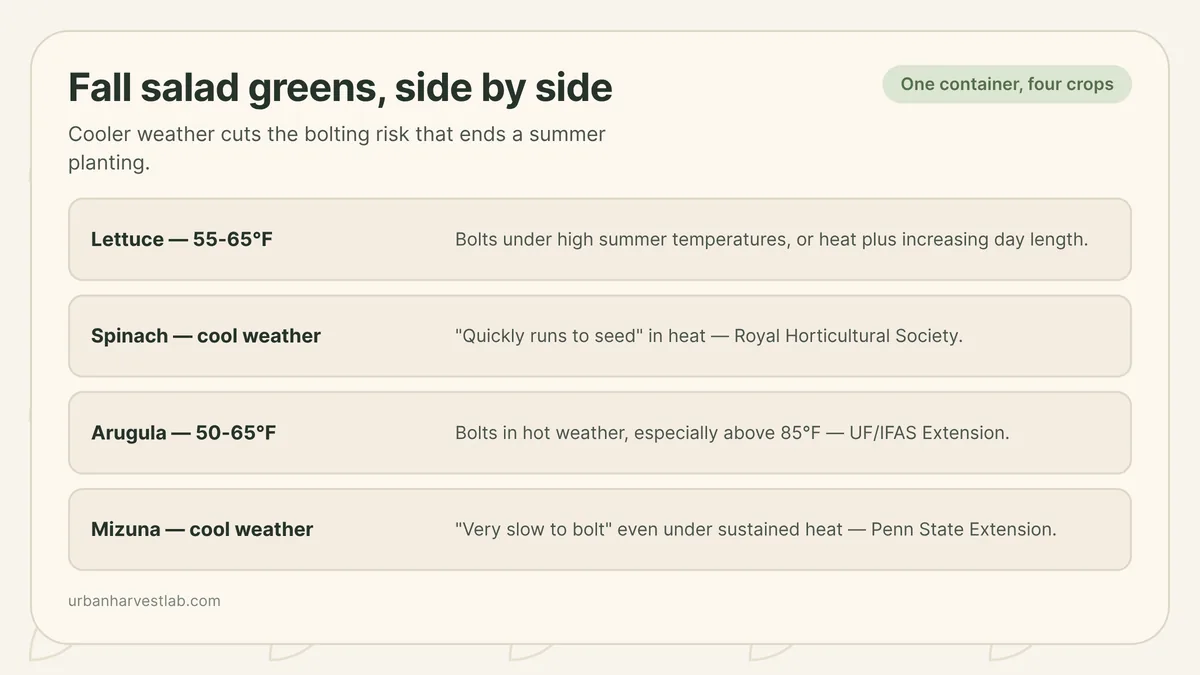
Growing salad greens in containers this fall
Lettuce, spinach, arugula, and mizuna all share the same summer problem and the same fall fix. Here is how to grow them together once the heat breaks.
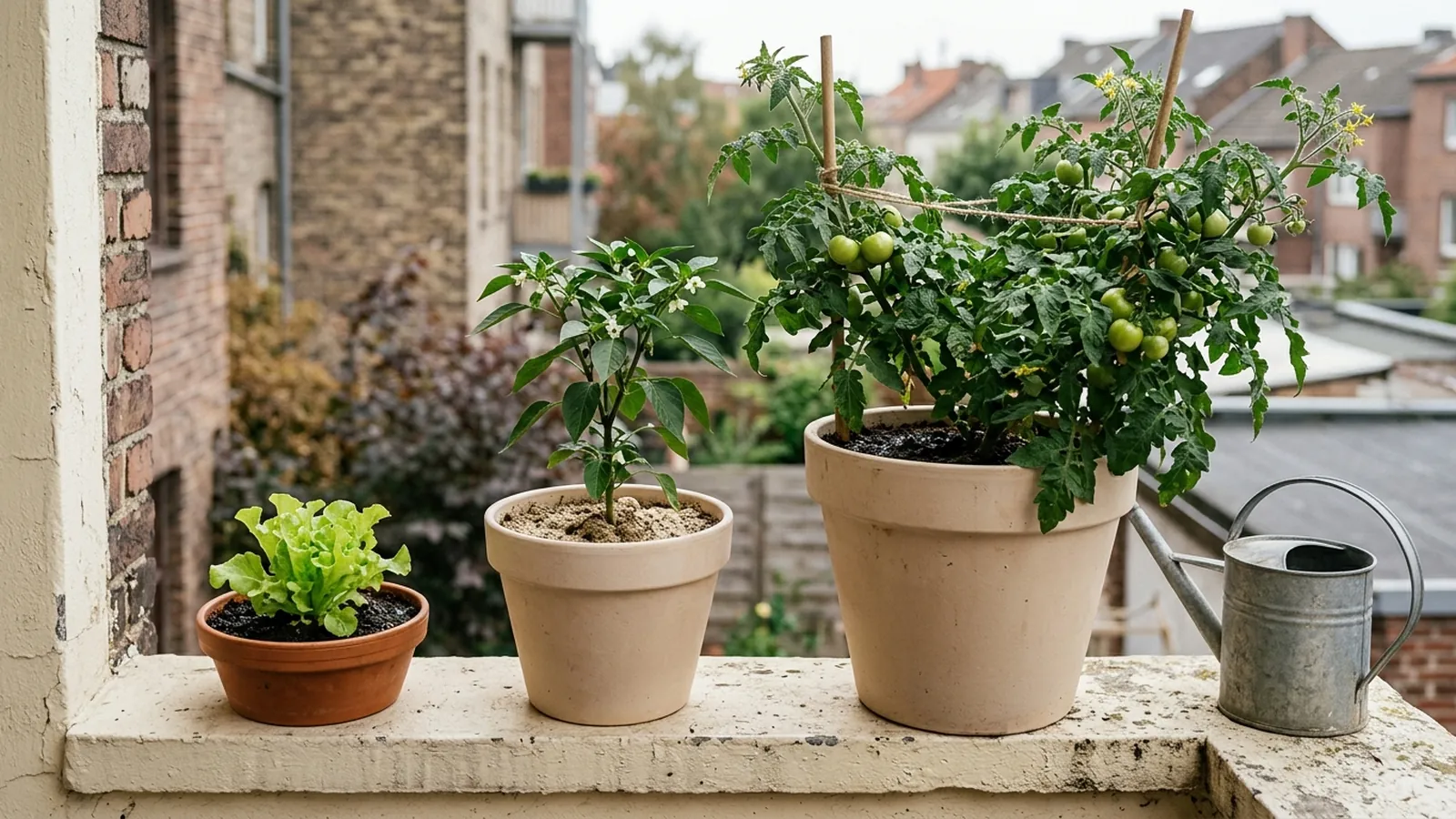
How often to water container vegetables: volume and crop stage set the interval
A pepper in a 2-gallon pot in May and the same pepper in the same pot in August are two different watering problems. Once you can see why, the question stops being how often and becomes how much mix you gave the plant, and what it is carrying right now.
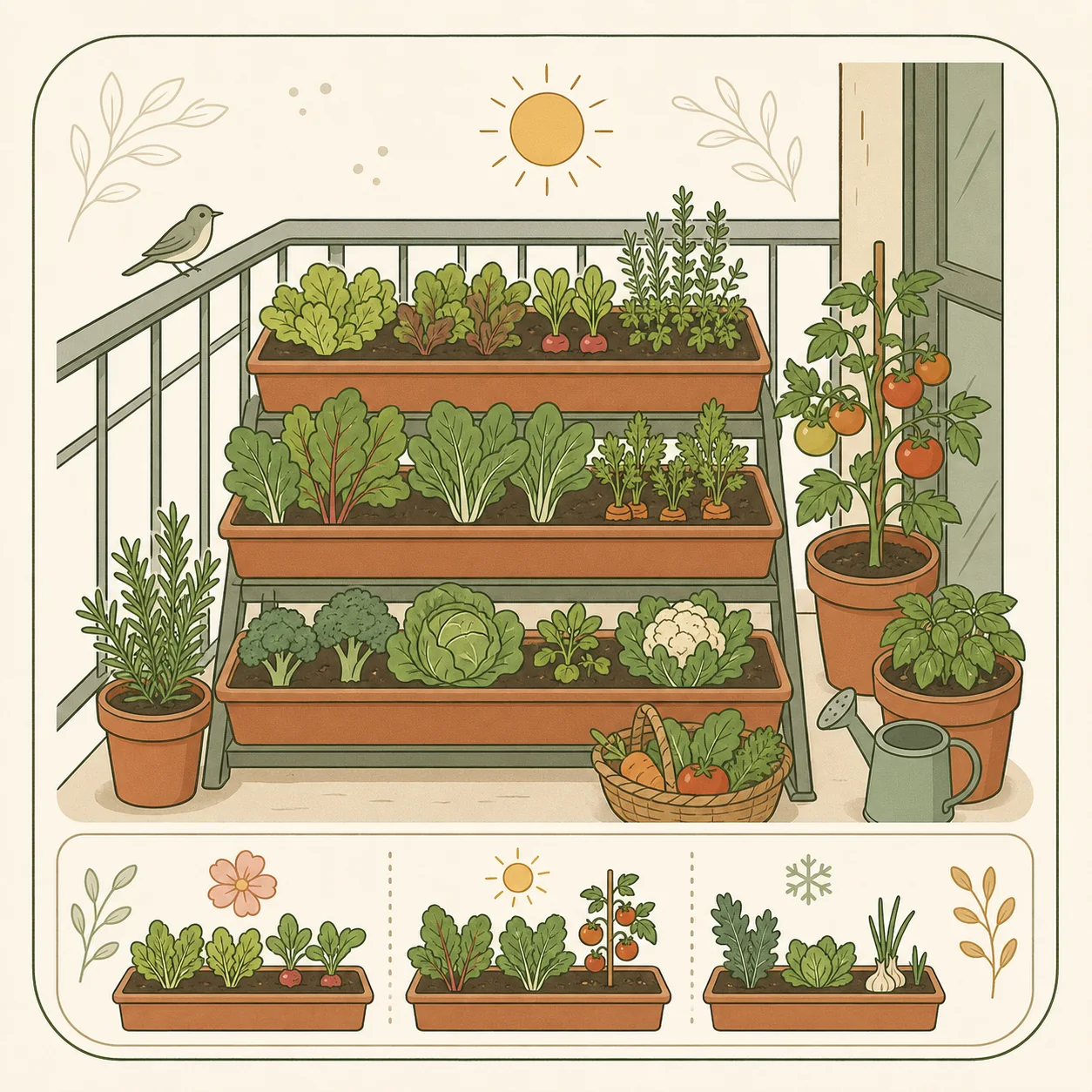
Balcony vegetable garden calendar: what to do each season
A useful balcony calendar is a set of seasonal decisions, not twelve fixed planting lists. Use temperature, light, and container conditions to decide what happens next.