Tomato Variety Comparison
| Tomato Class | Max Height | Minimum Pot Size | Pruning Required | Best Varieties |
|---|---|---|---|---|
| Micro-Dwarf | 10 to 18 inches | 1 to 2 Gallons | None. Keep all branches. | Tiny Tim, Red Robin, Micro Tom, Hahms Gelbe. |
| Patio / Dwarf | 2 to 4 feet | 3 to 5 Gallons | Very minimal (dead leaf removal). | Patio Choice, Dwarf Tomato Project varieties, Totem. |
| Standard Determinate | 3 to 5 feet | 5 to 7 Gallons | Support with a cage; do not prune suckers. | Roma, Celebrity, San Marzano. |
| Standard Indeterminate | 6 to 10+ feet | 10+ Gallons | Constant sucker pruning; heavy staking. | Sweet Million, Cherokee Purple, Early Girl. |
If you ask any urban gardener what they want to grow most, the answer is almost always the same: Tomatoes.
There is nothing quite like the taste of a sun-warmed, home-grown cherry tomato harvested straight from your balcony. But for many apartment dwellers, their first attempt at tomato growing turns into a jungle disaster. They buy a standard cherry tomato seedling (which is almost always an indeterminate variety), plant it in a small pot, and watch in horror as it grows into an aggressive 8-foot beast that swallows their seating area, climbs the walls, collapses under its own weight, and dies of thirst.
You do not need to give up your tomato dreams. You simply need to choose the right genetic category of plant.
With modern dwarf and micro-dwarf patio tomatoes, you can grow heavy yields of sweet, juicy fruit on a compact, bushy plant that physically cannot grow taller than 2 feet. Here is the ultimate guide to growing dwarf tomatoes on a small balcony.
The Direct Quick Answer
To successfully grow tomatoes on a small balcony, you must choose compact patio, dwarf or micro-dwarf varieties (such as Tiny Tim, Red Robin, or Patio Choice).
These plants grow into compact, sturdy bushes rather than climbing vines, most dwarf types are not pruned, and they need only basic staking.
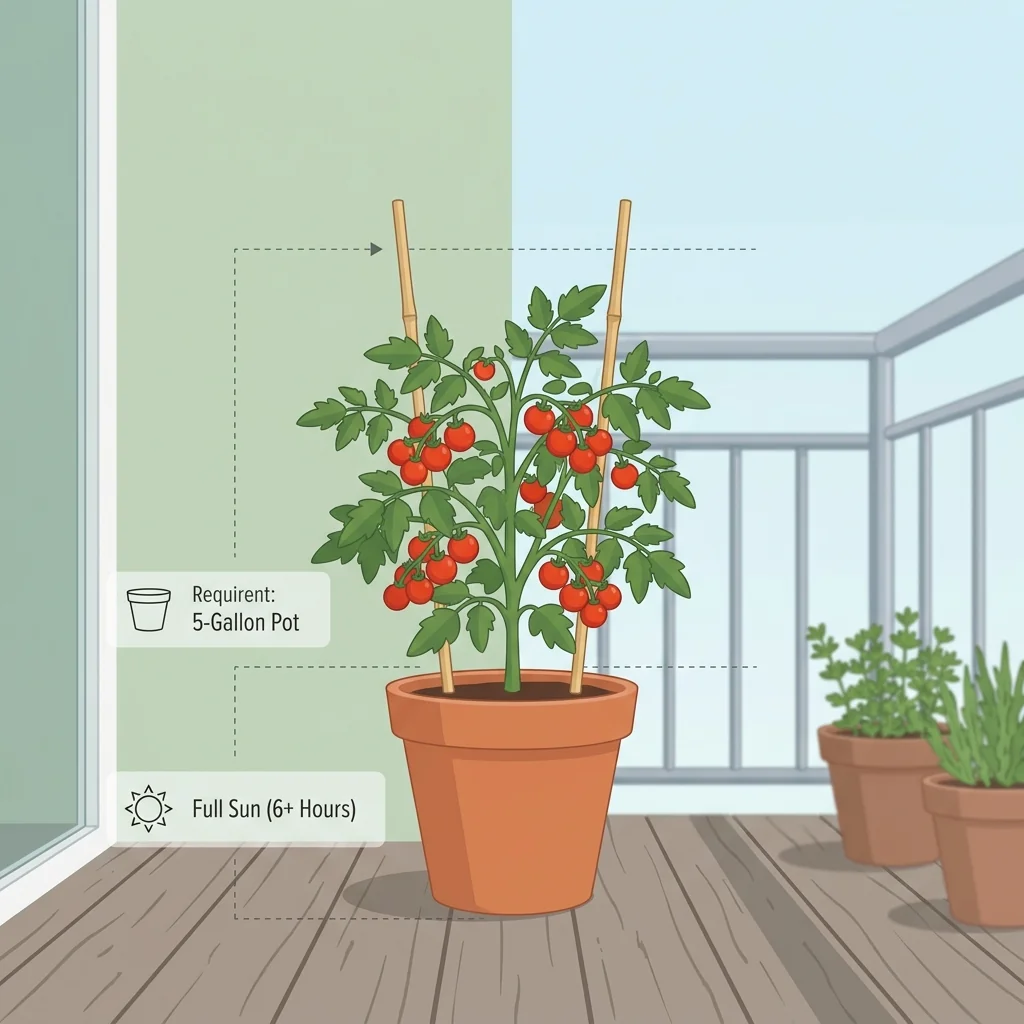
Plant each dwarf tomato in a 3 to 5-gallon container (preferably terracotta to promote root aeration, as explained in our Container Comparison Guide). Fill the pot with high-quality, free-draining potting mix (never garden soil), place it in a spot that receives 6+ hours of direct sunlight, and water consistently to keep the soil evenly moist like a wrung-out sponge.
Indeterminate vs. Determinate (The Tomato Secret)
Before buying tomato seeds or seedlings, look closely at the label. Tomatoes are divided into two distinct growth habits:
1. Indeterminate (Climbing Vines - Avoid)
These are genetic vines. They keep growing until frost or disease stops them. They require massive pots, and constant pruning of “suckers” (side branches) to keep them from turning into an unmanageable thicket. They are highly unsuitable for small balconies. When pruning helps is covered in pruning container vegetables.
2. Determinate (Compact Bushes)
These are genetic bushes. They are programmed to grow to a specific height (Illinois Extension notes most modern determinates grow 3 to 4 feet tall), stop growing, produce all their flowers on their side branches at once, ripen their fruit, and then naturally decline. Illinois Extension notes dwarf and container types are not suitable for pruning, and they fit beautifully into container setups.
3. Micro-Dwarfs (Patio Champions)
Smaller still are micro-dwarf varieties bred for windowsills and containers; like other dwarfs, check the tag for growth habit. Varieties like Micro Tom or Tiny Tim top out at a tiny 12 to 18 inches tall. They can easily be grown in a 1-gallon pot on a balcony table or windowsill.
The Balcony Tomato Blueprint: 4 Rules for Heavy Yields
To ensure your dwarf plants produce baskets of sweet fruit rather than just green leaves, follow this setup checklist:
1. The 5-Gallon Pot Minimum (For standard Dwarfs)
While a micro-dwarf can survive in a 1-gallon pot, standard patio dwarfs (which grow to about 2.5 feet) need a 3 to 5-gallon container.
- The Physics: Tomato roots are highly metabolic. In a small pot, the soil will dry out in hours on a hot summer day. This cycle of extreme drying followed by heavy watering stresses the plant, leading to blossom drop (flowers falling off before fruiting) and Blossom End Rot (a Calcium deficiency that turns the bottom of the tomato black and leathery).
- The Pot Choice: Terracotta pots are excellent because they allow the roots to breathe, but they evaporate water faster. Plastic pots retain moisture better but can overheat.
2. Choose the Right Soil
Never scoop dirt from a backyard garden or buy “raised bed soil” for your pots. As discussed in Potting Mix vs. Raised Bed Soil, container plants require an incredibly light, airy medium. Use a high-quality organic potting mix amended with extra perlite to ensure excellent drainage.
3. Feed the Heavy Feeder
Tomatoes are incredibly hungry plants. They need a massive amount of Nitrogen to build leaves, followed by high amounts of Phosphorus, Potassium, and Calcium to build flowers and fruit.
- The Routine: Mix a slow-release organic fertilizer into the potting soil when planting. Once the first yellow flowers appear, begin feeding every two weeks with a liquid organic tomato fertilizer (rich in Potassium and Calcium).
4. Provide Structural Support
Even though dwarf tomatoes are sturdy bushes, once they become loaded with dozens of heavy cherry tomatoes, the branches will bend and can snap during high balcony winds.
- The Fix: Insert two bamboo stakes into the pot when planting. As the branches grow, loosely tie them to the stakes using soft garden twine to support the weight of the developing fruit.
By matching a compact dwarf or patio variety with a spacious pot, rich soil, and consistent water, you can enjoy sweet, vine-ripened cherry tomatoes all summer long without sacrificing your balcony seating.
Sources
Diagnosing watering and nutrient stress?
Balcony tomatoes are highly susceptible to blossom end rot and drying out. Read these guides to secure your irrigation and feeding routine.
Common questions
Do dwarf tomato plants need pruning?
Check the variety first. 'Dwarf' and 'patio' describe a compact plant, not a growth habit, so a dwarf tomato can be determinate or indeterminate. Illinois Extension describes determinate plants as stopping growth at a set height. For when pruning helps, see the pruning container vegetables guide.
Why are the bottom leaves of my balcony tomato plant turning yellow?
This is usually a sign of nitrogen deficiency, or more commonly, irregular watering. Balcony pots dry out quickly in the sun. If you let the pot dry completely, then soak it to waterlogging, you stress the roots, leading to yellowing. Maintain consistent moisture.
Do I need bees to pollinate my balcony tomatoes?
No. Tomatoes are self-pollinating (they contain both male and female parts in each flower). If your balcony gets no wind or bees, you can easily pollinate them by gently shaking the plant's main stem or tapping the back of the open flowers once a day to release the pollen.
Related guides
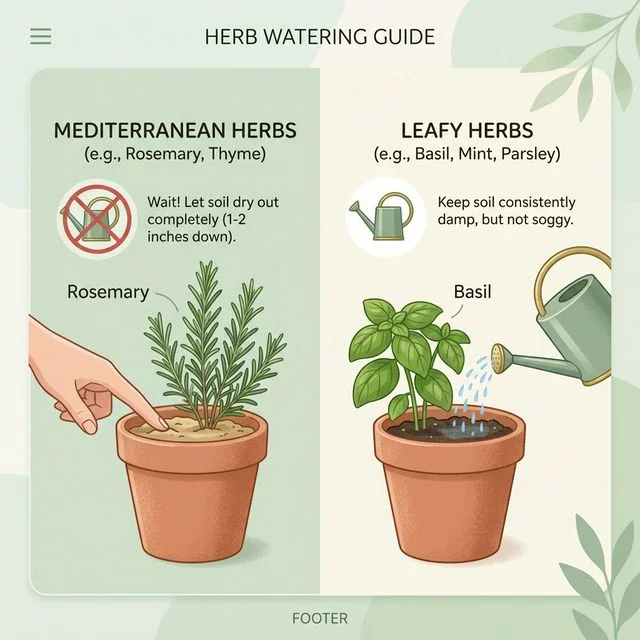
How often to water potted herbs: a by-herb chart
Most potted herbs should be checked often but watered only when the root zone is actually drying. Judge the pot instead of following a rigid calendar.
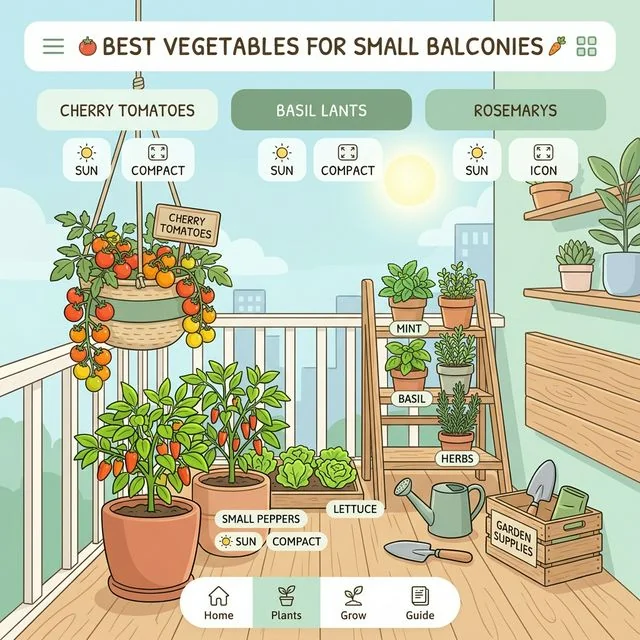
Best vegetables for small balconies: what produces well in tight spaces
Not every vegetable belongs on a balcony. These are the crops most likely to reward limited square footage without turning watering and support into a daily headache.
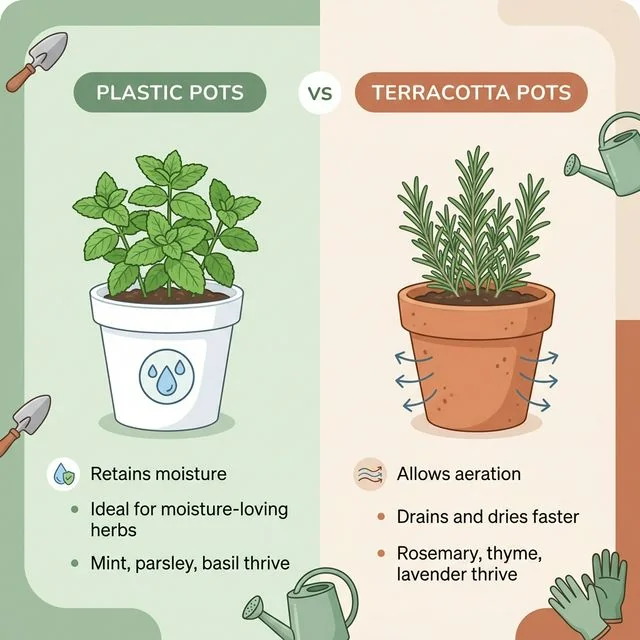
Plastic vs. terracotta pots for herbs: which makes care easier?
The material of your pot dictates how fast your soil dries out. If you put a thirsty mint plant in unglazed terracotta, you will be watering every single day. If you put rot-prone rosemary in a plastic pot, you must be extremely careful.