
Sweet marjoram and oregano compared
| Trait | Sweet marjoram | Oregano |
|---|---|---|
| Flavor | Sweeter, more delicate (Iowa State) | Stronger, more pungent (Iowa State) |
| Winter hardiness | Tender; hardy to USDA zone 9 (Iowa State) | Hardy perennial in Iowa winters (Iowa State) |
| Typical treatment in a pot | Annual, or brought indoors (Iowa State) | Perennial, stays outdoors in cold-winter areas (Iowa State) |
| In the kitchen | Often added toward the end of cooking (Iowa State) | Tomato sauces, pizza, roasted vegetables (Iowa State) |
Grow marjoram in a pot of 2 to 5 gallons, in full sun, in a free-draining mix, and treat it as an annual. Sweet marjoram (Origanum majorana) is closely related to oregano but sweeter and more delicate, and it is tender enough that most growers start a fresh plant each spring. If you want the hardy, punchy herb for pizza and tomato sauce, you want oregano, and the pot advice for that lives in the oregano pot size guide.
Marjoram or oregano: which one do you want?
They look alike and share a family, so garden centers sometimes blur them. Iowa State Extension separates them on two points. Flavor: oregano is stronger and more pungent, marjoram sweeter and more delicate. Winter: oregano is a hardy perennial that survives Iowa winters, while sweet marjoram is a tender perennial typically grown as an annual.
The kitchen difference follows from that. Iowa State notes that because marjoram’s flavor is milder, it is often added toward the end of cooking, and lists soups, egg dishes, poultry, sausage, cheeses and vegetable recipes as its natural home. Buy marjoram if those are the dishes you cook. Buy oregano if tomato and roasted-vegetable cooking dominates.
Treat it as an annual
The RHS calls sweet marjoram an upright, tender perennial sub-shrub, 30 to 50 cm tall, often grown as an annual or biennial. Iowa State puts the hardiness at USDA zone 9 and says it grows 1 to 2 feet tall and wide. NC State Extension says it may not survive a winter north of zone 9, where it is typically grown as an annual.
In practice, that sets the plan. Outside zone 9, expect to sow or buy a plant each spring and enjoy a full summer of leaves. Your frost dates decide when it can go out, since the RHS describes the plant as frost-tender. Warm-climate growers can keep a plant going for several years, and a few options for colder places are covered under winter below.
Starting from seed or cuttings
Sweet marjoram is easily grown from seed or cuttings, according to the University of Illinois Extension. The RHS adds division and basal softwood cuttings in spring. Three routes, then:
- Seed. Iowa State and NC State both say to start seed indoors 6 to 8 weeks before your last spring frost, and Iowa State also allows direct sowing outdoors once frost danger has passed. Illinois Extension suggests soaking the seed in water overnight to enhance germination.
- Cuttings or division. Useful if a friend has a plant, or if you overwinter one and want more in spring.
- A nursery plant. The quickest route, and the right one if you only want a single pot. Starting from seed or buying plants weighs the choice for herbs generally.
Pot, mix and sun
University of Maryland Extension groups marjoram with the smaller culinary herbs (basil, cilantro, thyme, mint, oregano and tarragon) that grow well in pots of 2 to 5 gallons. One plant fits comfortably in the middle of that range. Make sure the pot has drainage holes. Marjoram will rot in poorly drained, saturated soil, as NC State puts it, and Iowa State names root and stem rots as the most common problems, usually tied to poor drainage or excess moisture.
Both Iowa State and the University of Illinois describe the same recipe: full sun and well-drained soil. Iowa State sets the sun at at least 6 hours of direct light each day, and says Mediterranean herbs like these prefer soil with low to moderate fertility. A south-facing balcony or a bright windowsill suits it. The herb sunlight chart shows how it compares with other herbs if you are fitting several into one space.
Watering and feeding
Iowa State’s advice is short: water during extended dry periods, but let the soil surface dry slightly between irrigations. It also warns that excessive watering and overfertilizing can reduce flavor and encourage weak growth.
A pot dries out faster than a bed, so check the soil rather than following a calendar. Marjoram’s needs sit close to oregano’s, and how often to water oregano covers the finger-depth and pot-weight checks that apply here too. Skip rich fertilizer and heavy feeding.
Pinch early, harvest before flowers
Young marjoram is a low, spreading plant. Illinois Extension recommends pruning it back when it is 6 to 8 inches tall to encourage a bushy habit, and Iowa State says pinching shoot tips on young plants gives fuller, bushier growth.
For harvest, the sources give you two cues that point the same way:
- Illinois Extension says to harvest when ball-like tips appear at the ends of the stems.
- Iowa State says the highest concentration of aromatic oils occurs just before flowering, which makes that the best time for larger harvests.
Cut stems several inches above the soil and leave enough foliage to regrow, as Iowa State advises. If the plant starts to bloom, Illinois Extension says to cut it back close to the ground to stimulate a new flush, and that the second flush tends to be the more desired crop than the first. NC State agrees that the leaves have their best flavor before the small white flowers open, and it recommends cutting back stems before flowers appear.
Dry the surplus by bundling stems in a warm, dark, well-ventilated place; Iowa State says properly dried marjoram retains its flavor for many months. The drying guide has the methods, and the harvest calendar shows where marjoram sits among the other herbs.
Winter: let it go, or bring it in
Iowa State says marjoram can be grown in a container indoors during winter or allowed to die with the first frost. Illinois Extension says it is easily grown as a container plant indoors in a sunny spot, and suggests digging plants up before frost to bring them in. The RHS suggests containers that can be overwintered in an unheated greenhouse, with protection from very low temperatures and excess winter wet.
Temper your hopes, though. NC State says container plants may be brought indoors in fall before frost but usually do not overwinter well. Take cuttings in late summer as insurance, or accept the annual cycle and sow again in spring.
Problems to watch
Marjoram has few pest troubles. Iowa State lists aphids and spider mites as occasional visitors, particularly in hot, dry weather or when plants are grown indoors, and says they rarely cause significant damage and can often be managed with a strong spray of water. Rot from wet soil is the real risk, and it comes back to the pot, the mix and your watering.
NC State also notes that sweet marjoram can be toxic for pets, so keep the pot out of reach of a cat or dog that chews plants.
Sources
- Iowa State University Extension, All About Oregano and Marjoram
- University of Illinois Extension, Marjoram: Sweet
- Royal Horticultural Society, Origanum majorana (sweet marjoram)
- NC State Extension Gardener Plant Toolbox, Origanum majorana
- University of Maryland Extension, Growing Vegetables in Containers and Salad Tables
Pot herbs from the same family
Sizing, watering and harvesting guides that apply to marjoram as much as to oregano.
Common questions
How do you grow marjoram in a pot?
Start it from seed or cuttings and set it in a pot of 2 to 5 gallons (University of Maryland Extension) with well-drained mix in full sun, at least 6 hours of direct light (Iowa State Extension). Water when the soil surface has dried slightly (Iowa State Extension), pinch young shoots for a bushier plant and harvest just before flowering.
Is marjoram the same as oregano?
No. They are closely related members of the mint family, but Iowa State Extension says oregano has a stronger, more pungent flavor and marjoram a sweeter, more delicate one. Marjoram is also less cold hardy: it is a tender perennial typically grown as an annual, while oregano survives Iowa winters.
Does marjoram come back every year?
Usually not outdoors in a cold-winter climate. Iowa State Extension says sweet marjoram is hardy to USDA zone 9 and typically grown as an annual, and NC State Extension says it may not survive a winter north of zone 9. A potted plant can be brought indoors before frost, but NC State warns that container plants usually do not overwinter well.
When do you harvest marjoram?
Just before it flowers. Iowa State Extension says the highest concentration of aromatic oils occurs just before flowering, and the University of Illinois Extension says to harvest when ball-like tips appear at the ends of the stems. Cut stems several inches above the soil so enough foliage remains for regrowth.
Related guides
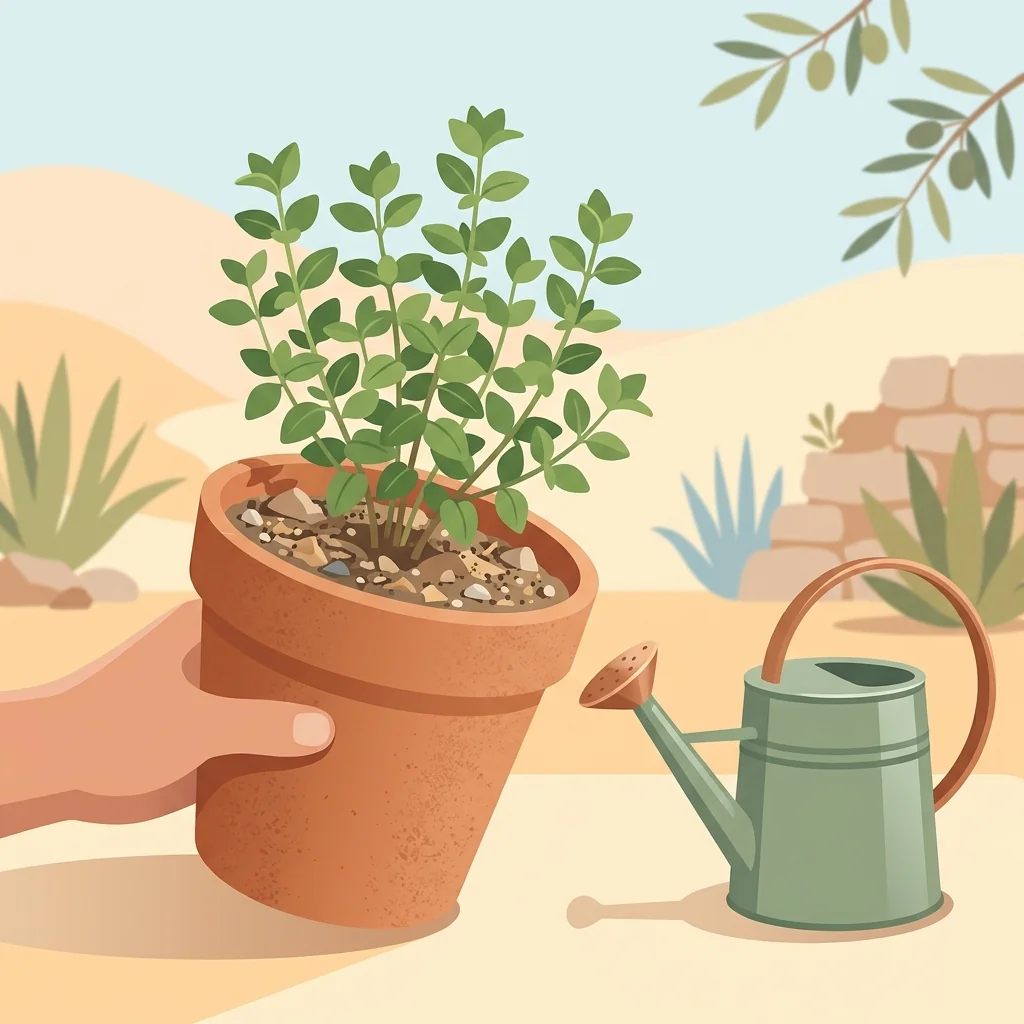
How often to water oregano: every 7 to 10 days in a pot
Oregano is a Mediterranean herb that prefers dry, gritty soil. Overwatering is the fastest way to kill it. Water only when the soil has dried out, not on a schedule.
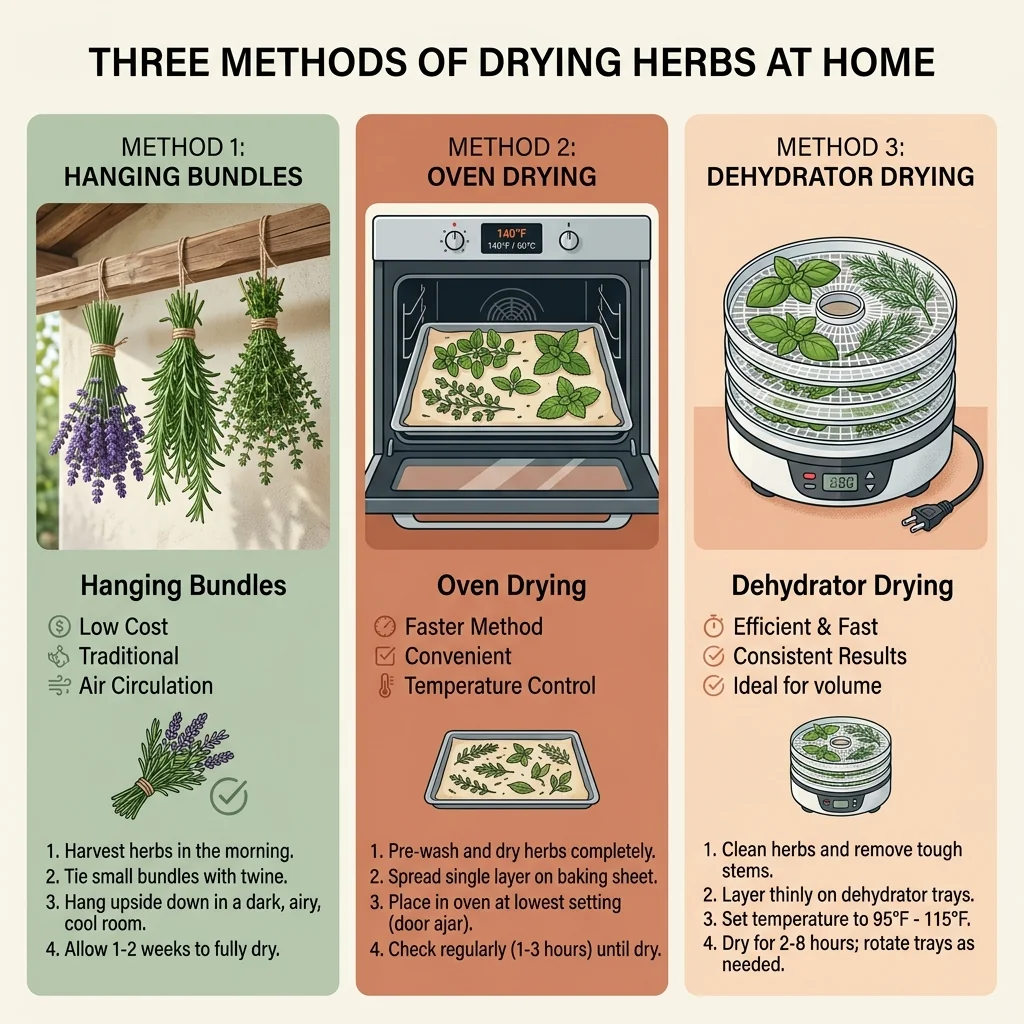
How to dry herbs at home (air, oven, dehydrator)
Drying is the best way to preserve woody herbs like rosemary, thyme, and oregano. Here are three methods, the temperatures to use, and which herbs to skip.
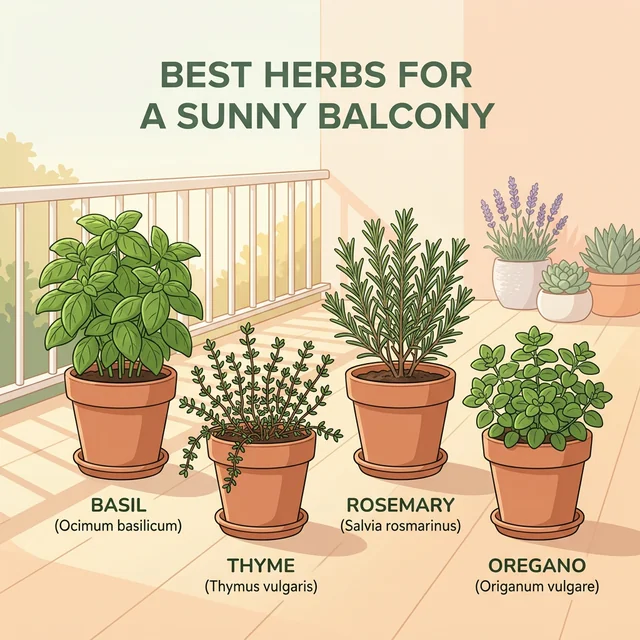
Best herbs for a sunny balcony: full-sun picks that handle heat and wind
A sunny balcony is perfect for herbs, but the intense heat and wind require the right crop choices. Start with basil, thyme, and rosemary for reliable harvests.