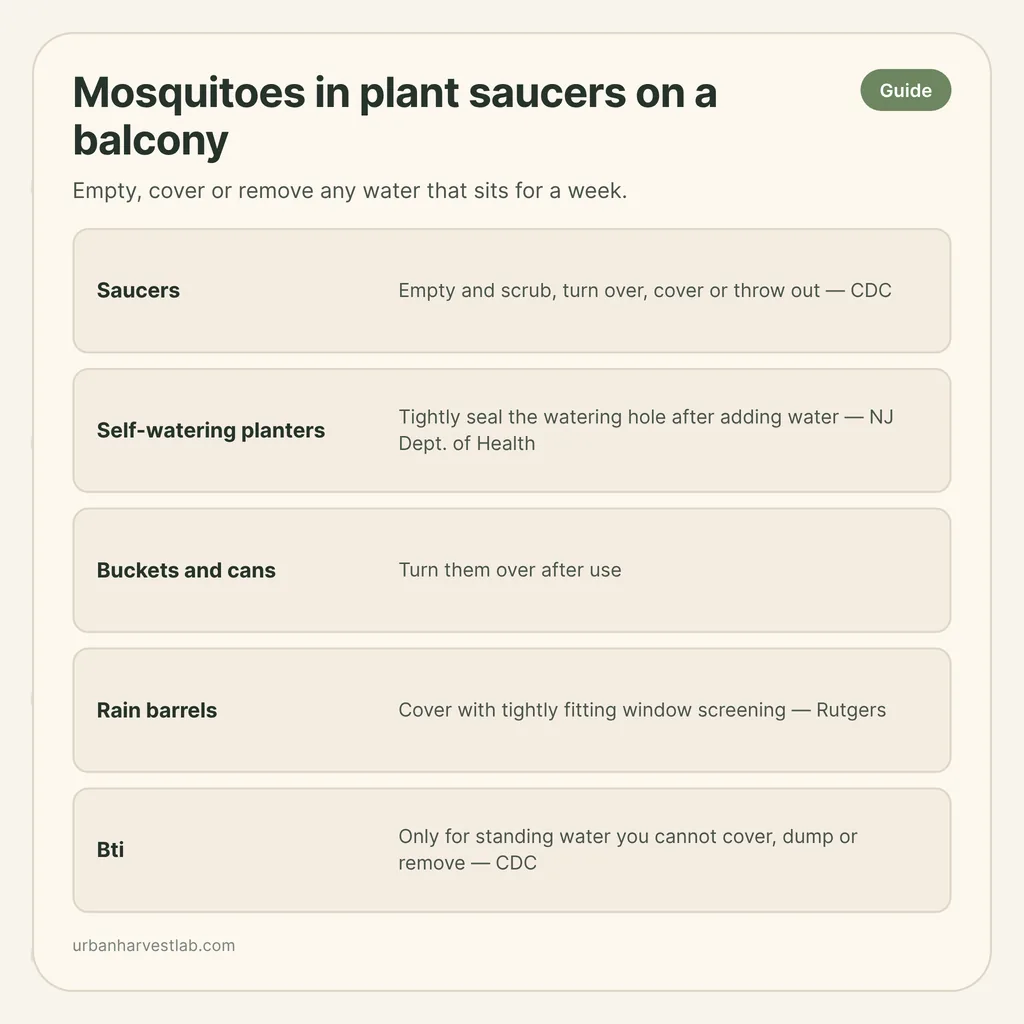
Where balcony mosquitoes breed and what the agencies advise
| Water source | What to do | Who says so |
|---|---|---|
| Pot saucer or plant tray | Empty at least weekly (CDC, EPA); NJ Department of Health says every 3 to 5 days | CDC, EPA, NJ Department of Health |
| Self-watering reservoir | Seal the watering hole after filling; the state health department says not using these planters is most effective | NJ Department of Health |
| Rain barrel or bucket | Screen the top tightly; check for larvae if water remains after 72 hours | Rutgers Extension |
| Water you cannot empty, cover or remove | Treat with a label-directed larvicide such as Bti | CDC, EPA |
Yes, mosquitoes breed in plant saucers, and the fix is to empty, cover or remove any water that sits for a week. The CDC’s weekly rule is to empty and scrub, turn over, cover or throw out items that hold water, and its list includes flowerpot saucers. On a balcony that means saucers, self-watering reservoirs, buckets and watering cans, each handled a little differently.
How a saucer affects the roots is a separate question, covered in should potted plants sit in water. This is about the insect.
Why a week is the number
The EPA describes four stages: egg, larva, pupa and adult. The first three happen in water. The female lays eggs directly on or near water, soil and the base of some plants in places that may fill with water, and the eggs can survive dry conditions for a few months. That last point matters for a dry saucer: wet it again and eggs left on the rim can hatch.
On timing, the EPA says the life cycle typically takes about two weeks but can run from 4 days to as long as a month depending on conditions. Rutgers Extension says that in the warmest weather some species can go from egg to adult in 5 to 7 days, and that the Asian tiger mosquito, a container breeder, can do it in one week in a hot New Jersey summer. So a weekly check catches most batches in cool weather and cuts it fine in a heat wave.
Only females bite, and the adults fly off. Once they emerge, emptying the saucer no longer helps. The EPA says the stages before that are where control works best.
What mosquitoes pick on a balcony
The EPA says the Aedes mosquitoes it describes lay eggs in water containing organic material such as decaying leaves or algae, in containers with wide openings, and prefer dark containers in shade. It lists potted plant trays and saucers, plastic covers and places as small as bottle caps. A dark plastic saucer in the shade of a tomato, holding a film of water and a few dead leaves, fits that description closely.
Where the surface under the pot does not need protecting, no saucer means nothing to forget.
Self-watering planters
A reservoir is standing water by design. The New Jersey Department of Health’s mosquito-proofing guide says to tightly seal the watering hole after adding water. It adds that the most effective method for preventing mosquitoes is to not use these planters. If you keep one on a balcony, fill it, close the opening, and treat the reservoir like any other container you check weekly. The pot-side details are in self-watering pots for herbs, and a home-built version is in the DIY self-watering planter.
Buckets, cans and rain barrels
Rutgers Extension says larvae turn up in any container that can catch and hold water for a week or so. For a rain barrel it advises covering the top with tightly fitting window screening, and checking for larvae if water remains after 72 hours. Rutgers notes the larvae are small and hard to see early on. Rainwater for container plants covers the rest of barrel setup, including overflow hoses and screening.
For a watering can or bucket, turn it over after use. That is the CDC’s “turn over” step, and it takes seconds.
When Bti makes sense
Bti is Bacillus thuringiensis subspecies israelensis, a soil bacterium. The CDC says to use larvicides to treat standing water that will not be used for drinking and cannot be covered, dumped or removed. That is the narrow job: a rain barrel you rely on, a birdbath, a pond tub. For a saucer, emptying it is simpler and does more.
What the agencies say about it:
- The EPA says Bti can be used around homes in containers where water collects, such as flower pots, tires and bird baths.
- The EPA says Bti has no toxicity to people, and can be applied to mosquito habitat without a detrimental impact on food crops or water supplies.
- The EPA says studies indicate minimal toxicity to honey bees.
- The CDC says Bti is toxic to mosquito larvae, blackflies and fungus gnats, and that it does not control biting female mosquitoes.
- Rutgers Extension says Mosquito Dunks are labeled for use in bird baths and rain barrels.
The CDC says to follow the label and not to apply more than directed or reapply more often than instructed. Read the product’s label for amounts and for what water it is cleared for. If you want a dunk for a barrel, you can browse mosquito dunks on Amazon.
Because the CDC lists fungus gnats among Bti’s targets, it matters in a different place too: fungus gnats in herb pots covers that side.
A weekly routine
Pick one day. Tip every saucer, turn over buckets and cans, check that self-watering fill holes are closed, and look at the barrel screen. The EPA says egg and larva measures are generally the most effective and least costly, though not 100% effective where breeding sites are scattered. For bites on the balcony, the CDC points to EPA-registered repellents.
Sources
- CDC, Preventing mosquito bites
- CDC, Larvicides and Bti for mosquito control
- US EPA, Mosquito life cycle
- US EPA, Success in mosquito control: an integrated approach
- US EPA, Bti for mosquito control (questions and answers)
- Rutgers NJAES, Rain barrels and mosquitoes (FS1240)
- NJ Department of Health, Mosquito-proof your yard
Standing water on a balcony
Saucers, reservoirs and barrels each hold water in a different way.
Common questions
Can mosquitoes breed in a plant saucer?
Yes. The EPA lists potted plant trays and saucers among the places Aedes mosquitoes lay eggs, along with places as small as bottle caps, and the CDC names flowerpot saucers in its weekly empty-or-cover list.
How often should I empty saucers to stop mosquitoes?
At least once a week, according to the CDC and EPA. The New Jersey Department of Health gives every 3 to 5 days for planter saucers, which leaves more margin in hot weather, when Rutgers Extension says some species can go from egg to adult in 5 to 7 days.
Is Bti safe to use around vegetables and herbs?
The EPA says Bti has no toxicity to people and can be applied to mosquito habitat without a detrimental impact on food crops or water supplies. The CDC says larvicides do not harm people, pets or the environment when used as the label says. Follow the product label.
Does Bti kill adult mosquitoes?
No. The CDC states that Bti does not control biting female mosquitoes. It acts on larvae, so it works only on water where larvae are living.
Related guides
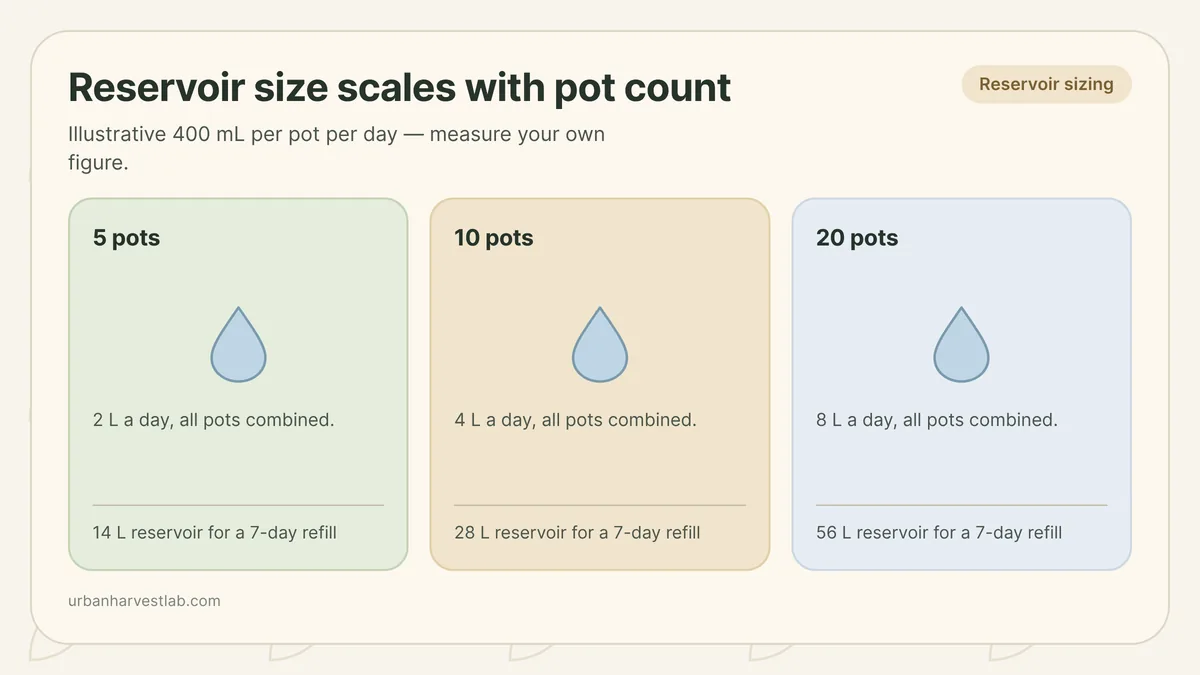
Balcony drip irrigation: sizing your emitters and reservoir
A gravity-fed drip system with its own reservoir waters a whole row of balcony pots without a hose bib. Here is how to size the emitters and the tank from your own numbers.
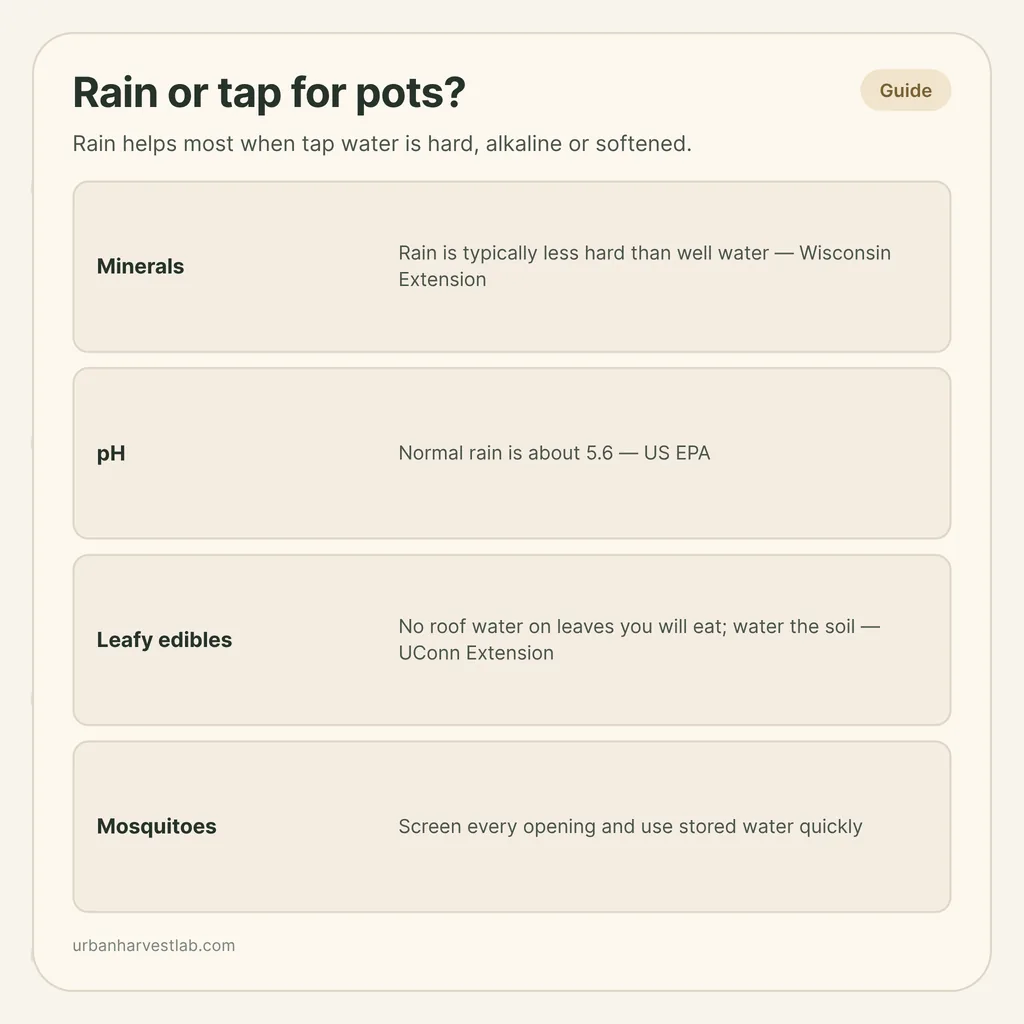
Is rainwater better for container plants? When it helps and how to collect it safely
Rain carries fewer dissolved minerals than most hard tap water, which matters in a small pot. It is not a cure-all, and where you collect it decides whether it is safe near food.
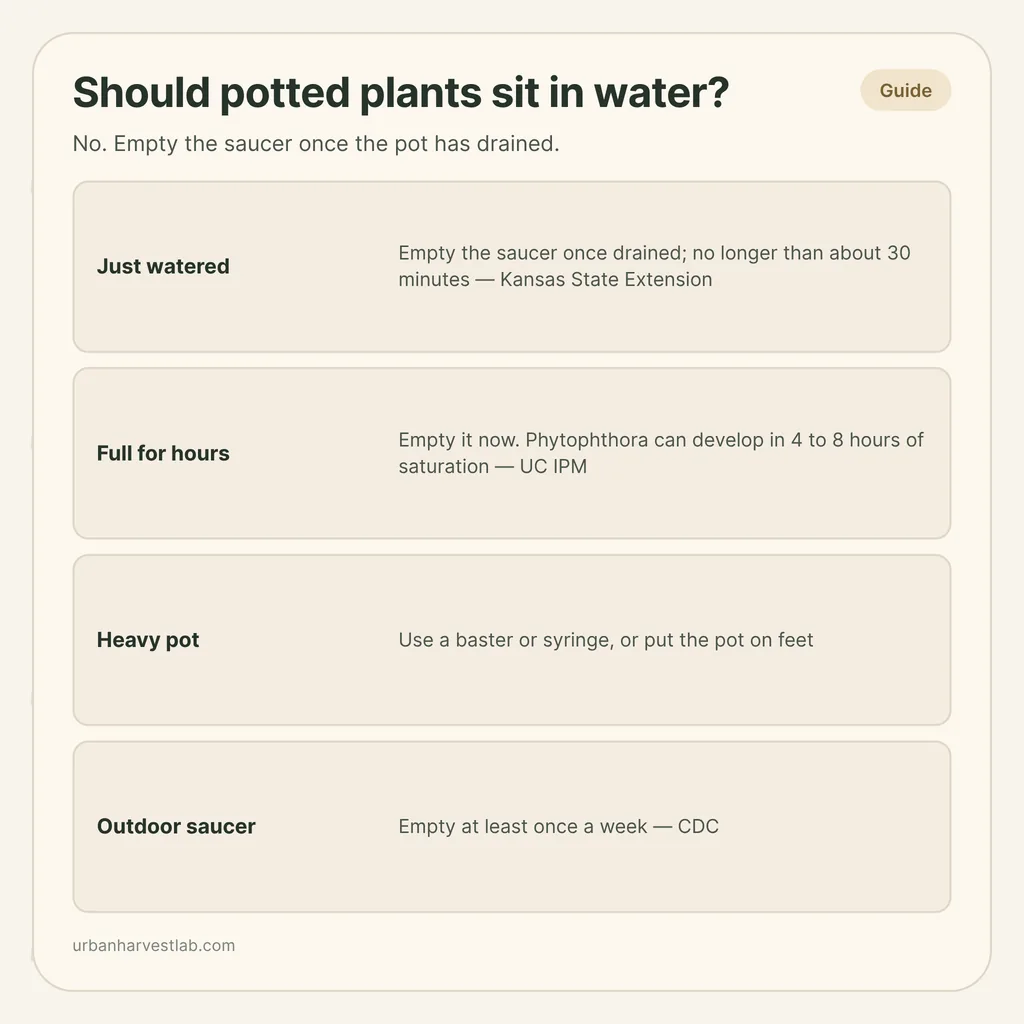
Should potted plants sit in water? How long to leave a saucer full
A full saucer feels like a safety net and works like a trap. Here is when to empty it, when a pot feet or riser is better, and what to do on a balcony.