Best Grow Lights for Herbs: What Actually Matters Before You Buy
The best grow light for herbs is the one that matches your footprint, crop density, and tolerance for heat and visual clutter. This guide focuses on fit before hype.
Most indoor growing issues trace back to light quantity, distance, or schedule. This section translates lighting concepts into practical setup decisions for shelves, tents, and kitchen corners.
Grow lights are often overcomplicated. This hub focuses on the decisions that matter for indoor herbs, seedlings, and compact crop systems: runtime, distance, fixture shape, and signs of plant stress.
The best grow light for herbs is the one that matches your footprint, crop density, and tolerance for heat and visual clutter. This guide focuses on fit before hype.
A longer light schedule is not always a better one. Herbs need enough daily light, but they also benefit from a stable dark period and realistic fixture placement.
These grouped sections mirror the main topic hub so archive pages still support topic discovery and internal linking.
Start with runtime, distance, and the basic relationship between fixture strength and crop response.
A longer light schedule is not always a better one. Herbs need enough daily light, but they also benefit from a stable dark period and realistic fixture placement.
Seedlings usually need grow lights much closer than beginners expect, but the exact distance depends on fixture strength, lens design, and plant response.
These pieces help you choose a fixture and place it sensibly inside a shelf, rack, or countertop setup.
The best grow light for herbs is the one that matches your footprint, crop density, and tolerance for heat and visual clutter. This guide focuses on fit before hype.
Countertop hydroponic systems can work very well for herbs, but only if you treat them as small growing systems rather than decorative appliances.
Use these when herbs stretch, pale out, or underperform under artificial light.
Yellow basil rarely has a single universal cause. The pattern of yellowing, the growing medium, and the recent care routine usually tell the story.
Slow hydroponic lettuce is usually a systems problem, not a mystery deficiency. The goal is to find the bottleneck without overcorrecting five variables at once.
Once the basics are stable, these guides help fine-tune crop density and equipment fit.
Most hydroponic problems are not mysterious. They come from concentration drift, pH drift, heat, or neglected maintenance. This guide covers the basics clearly.
The best grow light for herbs is the one that matches your footprint, crop density, and tolerance for heat and visual clutter. This guide focuses on fit before hype.
Browse the current library in Grow Lights. Additional articles can be added to the content collection without changing the page structure.
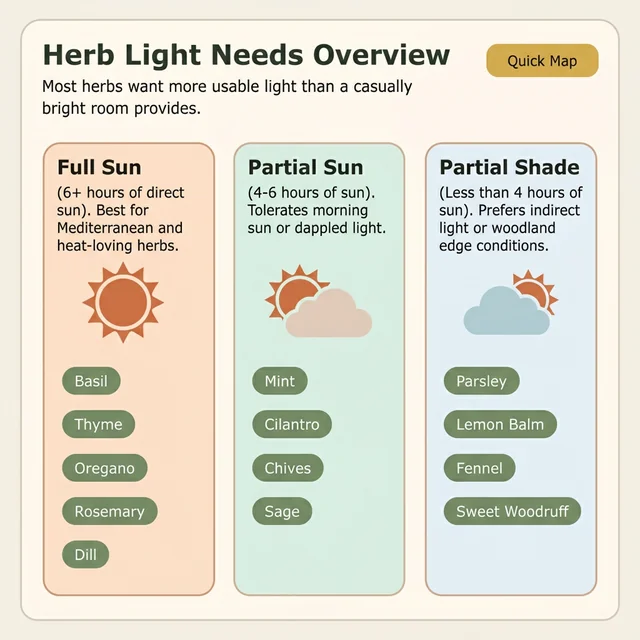
A practical guide to herb light needs for real homes, with clear rules for sunny windows, balconies, dimmer apartments, and beginner grow light setups.
The best grow light for herbs is the one that matches your footprint, crop density, and tolerance for heat and visual clutter. This guide focuses on fit before hype.
A longer light schedule is not always a better one. Herbs need enough daily light, but they also benefit from a stable dark period and realistic fixture placement.
Seedlings usually need grow lights much closer than beginners expect, but the exact distance depends on fixture strength, lens design, and plant response.