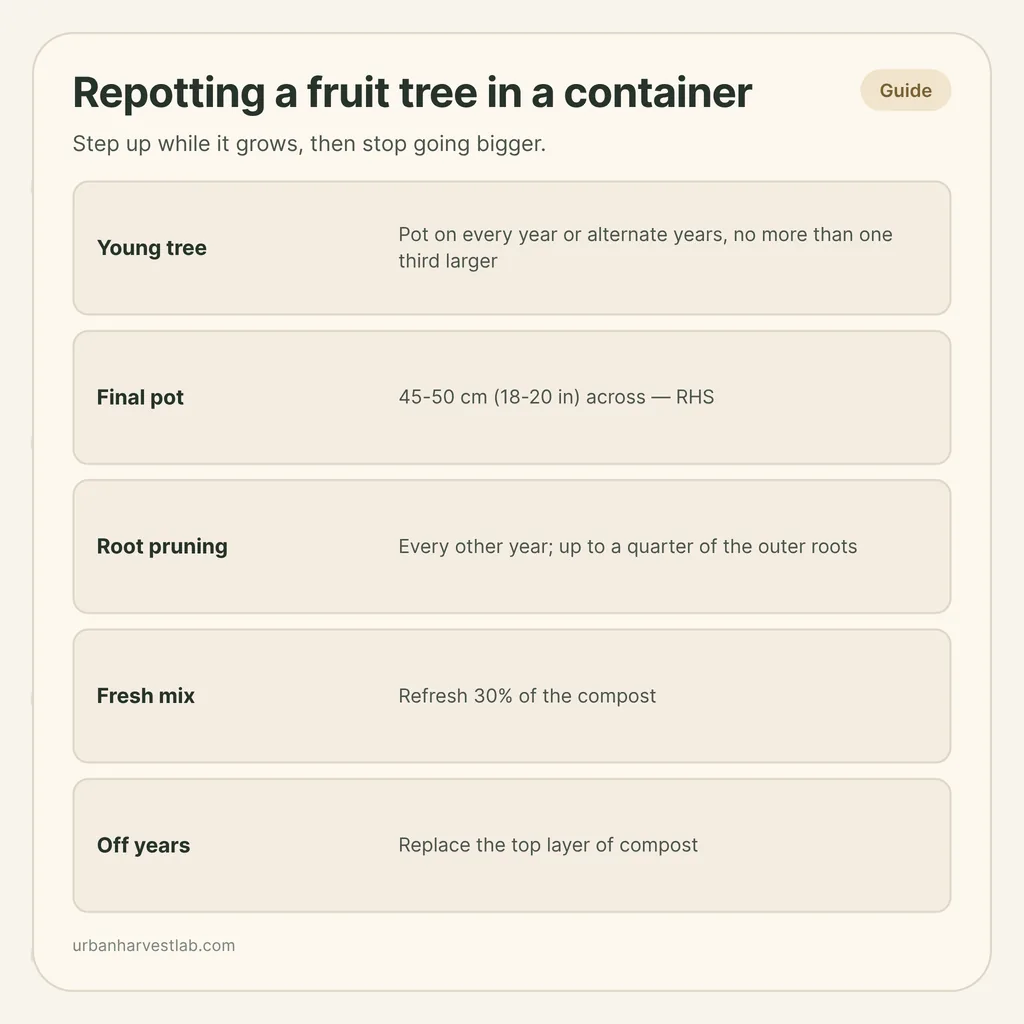
Repot a young fruit tree into a pot only a little bigger every year or two, and once it reaches a pot you can still move, stop going up: trim the roots every other year and replace part of the mix. The Royal Horticultural Society (RHS) sets out that routine for fruit in containers, and it is why a fruit tree can live in one 45-50 cm pot for years instead of needing an ever larger one.
A pot is a fixed volume. The RHS notes that compost slumps over time as its organic material breaks down, which reduces air spaces, drainage, and nutrient and water retention. Meanwhile, UGA Extension describes a root-bound plant as one whose roots outgrow the container, overlap, circle the bottom and turn back up against the wall. Repotting fixes both problems: more room while the tree is small, then fresher mix and fewer roots once it is not.
Which job are you doing?
| Stage | What to do | Source |
|---|---|---|
| Young tree, still going up in size | Pot on every year or alternate years | RHS, fruit in containers |
| Tree in its final pot | Root-prune every other year, refresh 30% of the compost | RHS, fruit in containers |
| The years in between | Replace the top layer of compost | RHS, fruit in containers |
| Tree too heavy to lift | Same pot, remove loose compost, lightly trim roots | RHS, apples |
For the herb version of the same idea, see root pruning potted herbs. Trees differ mostly in how long the process runs and how heavy the pot gets.
Step up a pot size, but not too far
The RHS says the new pot should be no more than one third larger than the current one. For containers under 25 cm (10 in) across and deep, it suggests 2.5-5 cm (1-2 in) wider and deeper. Past that, it warns of overpotting. UGA Extension gives a similar rule for woody plants: a pot 3 to 4 inches wider than the current one, big enough for about two years of root growth.
The target for most fruit is a pot 45-50 cm (18-20 in) across, according to the RHS. If you are shopping for the final container, check that width against the listing (browse 18-inch planters on Amazon). The RHS notes that clay is heavy and stable, while plastic is lighter and easier to manage. Fully watered, a big pot is heavy, so check the load against your balcony weight limit before you commit.
When to repot
The RHS gives two answers that do not quite agree, and both are worth knowing. Its fruit-in-containers page says to repot every year or alternate years after leaf fall. Its general repotting guide says spring is generally the best time and advises avoiding autumn and winter, when growth slows or stops and fresh compost is more likely to stay too wet. Its apple page says container trees are best repotted in spring. UGA Extension also names spring.
A workable reading: spring, as growth starts, is the safest window anywhere that gets cold wet winters. If you repot after leaf fall instead, the RHS warning about wet compost is the risk to manage, so use the grit or perlite mix described below. Tree fruit that you move under cover in winter is covered in overwintering perennials in pots.
How to repot, step by step
- Ease the tree out. The RHS says to lift by the sturdy main stems while holding the pot down. If it sticks, lay the pot on its side. A dry, shrunken rootball comes out more easily. UGA Extension advises against grabbing the top and pulling; support the base and let the plant come out into your hand.
- Look at the roots. Spiralling roots need teasing out. The RHS also suggests trimming soft, rotted roots and checking the compost for vine weevil larvae.
- Prune if the tree is staying in the same size pot (next section).
- Add fresh compost, then set the tree. Put a layer in the bottom, firm it slightly and check the top of the rootball sits just below the rim, as the RHS describes. UGA Extension says to keep the root crown, where the first lateral roots start, at or slightly above the soil, which it calls especially important for trees.
- Backfill and water. Fill the sides with fresh compost, then water through.
For the mix, the RHS suggests John Innes No 3 or a multi-purpose compost with one-third by volume of grit or perlite. It adds controlled-release fertiliser pellets, or a fortnightly high-potassium liquid feed. A slow-release feed is covered in slow-release versus liquid fertilizer.
Root pruning in the final pot
The RHS notes that the cost, size and weight of larger containers can make going up unrealistic, and that many plants stay healthy for years in the same pot if their roots are pruned. Its figures:
- A light trim of up to 15% of the root system every few years can be enough.
- For a pot-bound plant going back into the same container, prune up to a quarter of the outermost roots.
- If the roots are very congested, cut a slice from one side or the base of the rootball, and spread the reduction over several years to limit stress.
- UGA Extension, for a strongly root-bound plant, slices off the outer 1/2 inch of soil and roots and says to save as much living root as possible.
The RHS general guide pairs root pruning with trimming top growth on shrubs that suit spring pruning, so root and shoot stay in balance. For how to prune the branches, see the fruit-specific pages such as columnar apples in pots, and fig trees in containers for one fruit that is repotted on its own schedule. In the final pot, the RHS fruit page root-prunes every other year and refreshes 30 per cent of the compost each time.
Top-dressing in the off years
In the years between, the RHS fruit and apple pages say to remove the top layer of compost and replace it with fresh. They do not give a depth, so take off what comes away easily without exposing the main roots. Feeding and watering through the season matter just as much: the RHS says to water generously but let the surface dry before the next watering.
For herbs, the same mix-refresh logic is in repotting herbs without shock.
Sources
Fruit trees in pots
Root trimming, a single-species repotting guide and a compact apple for small balconies.
Common questions
How often should I repot a fruit tree in a pot?
The RHS says to repot a young tree every year or every other year to avoid roots becoming pot bound. Once it is in its final pot, it root-prunes every other year with 30 per cent of the compost refreshed, and replaces the top layer in the years between. For container plants in general the RHS says repotting every three to five years suits most.
When is the best time to repot a potted fruit tree?
The RHS fruit-in-containers advice says to repot after leaf fall. Its general repotting guide says spring is the best time and warns against autumn or winter, when fresh compost can sit too wet. UGA Extension also calls spring a good time. The RHS warns that repotting in autumn or winter risks fresh compost sitting too wet.
How much root can I cut off a container fruit tree?
The RHS says a light trim of up to 15 per cent of the root system every few years can be enough, or up to a quarter of the outermost roots when a pot-bound plant goes back into the same container. UGA Extension slices off the outer 1/2 inch of a strongly root-bound ball. Spread larger cuts over several years.
How big a pot does a fruit tree need in the end?
For most fruit the RHS recommends pots 45 to 50 cm (18 to 20 in) across. The RHS says the cost, size and weight of larger pots can make going up unrealistic, and holds the tree in its final pot with root pruning instead.
Related guides
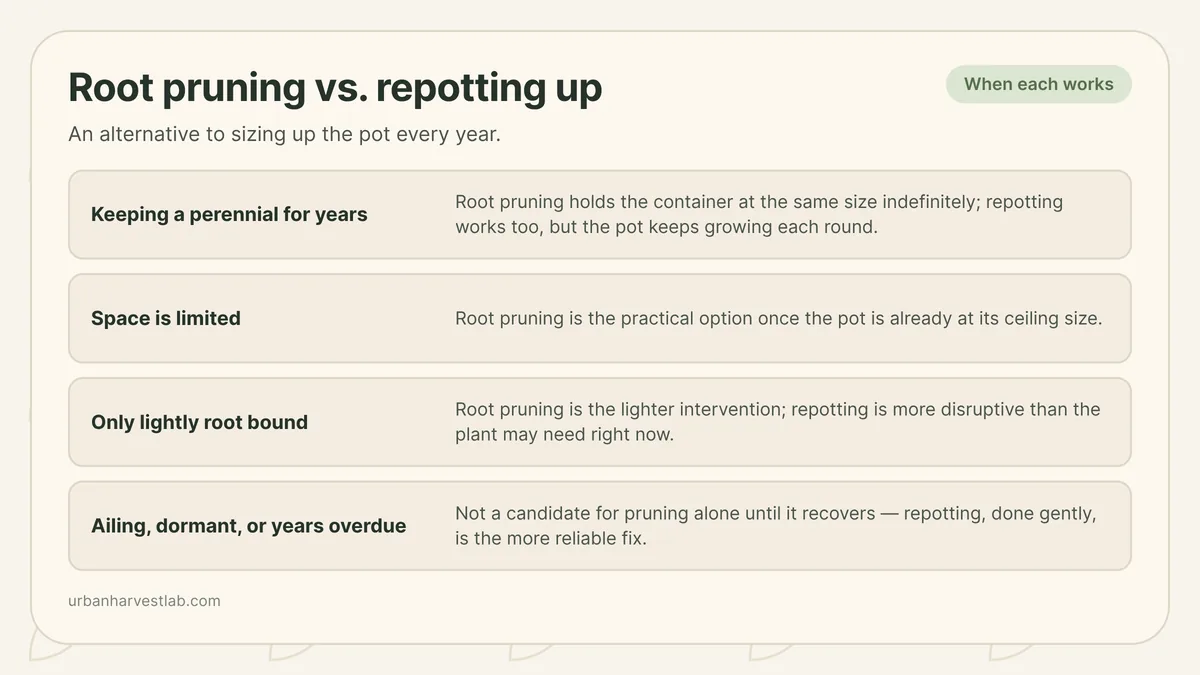
Root pruning potted herbs: an alternative to sizing up every year
A bigger pot is not the only answer to a root-bound herb. Trimming the root mass and refreshing the soil can hold a perennial in the same container for years, for the herbs it actually suits.
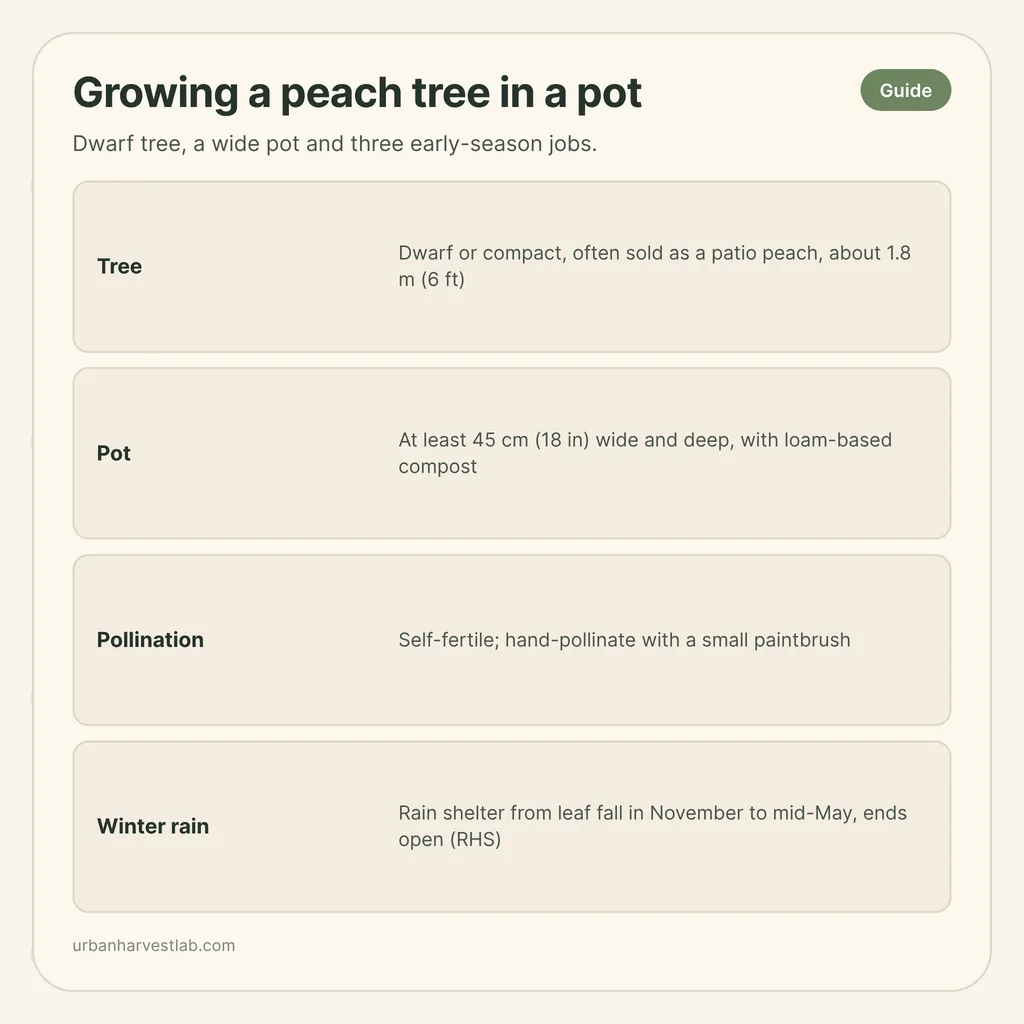
Growing a peach tree in a pot: dwarf trees, hand pollination and a winter roof
Peaches and nectarines suit a sunny patio or balcony when you choose a genuinely compact tree and handle three jobs: flowering-time frost, hand pollination and a rain cover in winter.
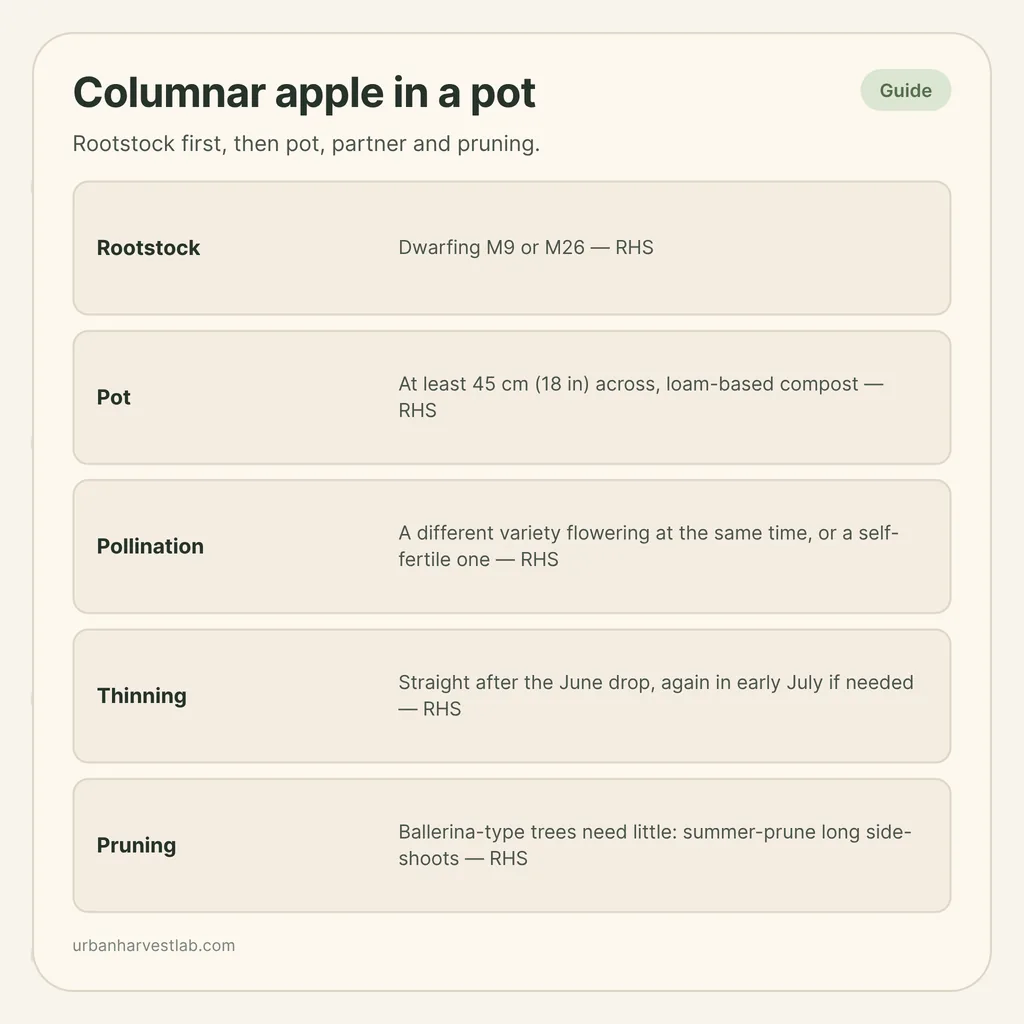
Columnar apple trees in pots: pollination, thinning and pruning
A columnar apple suits a pot if the rootstock is dwarfing, the pot is wide and a second tree flowers at the same time. Here is how to pollinate, thin and prune it.