
Light figures from extension sources, by plant type
| Plant type | Daily light integral (mol·m⁻²·d⁻¹) | Source |
|---|---|---|
| Leafy greens and herbs, controlled environment | 12 or more | Michigan State University Extension |
| Seedlings before transplant, even full-sun plants | about 8-14 | University of New Hampshire Extension |
| Full-sun plants growing, flowering, fruiting | 14-20 | University of New Hampshire Extension |
| Day-neutral strawberry (cv. Albion), 18 h photoperiod | 14, 20 and 26 tested; 26 best | UNH trial reported to SARE |
Quick answer: fruiting plants need more light than herbs, and a bigger plant needs it for longer. University of New Hampshire Extension puts full-sun plants at 14-20 mol·m⁻²·d⁻¹ while they grow, flower and fruit. Michigan State University Extension asks for 12 or more for leafy greens and herbs. A shelf that grows good basil can still starve a tomato.
Herb and lettuce targets, the per-herb research and the temperature effect sit in DLI targets for herbs and leafy greens. The question here is different: what tomatoes, peppers and strawberries ask of a fixture, and why hours alone will not close the gap.
Why a fruiting plant needs a bigger daily total
University of New Hampshire Extension explains daily light as a bucket the plant fills each day. “Sun loving plants, like tomatoes, have bigger buckets,” and the same page notes that a pepper seedling has a smaller bucket than a pepper plant that is ripening fruit. The bucket grows with the plant. A seedling under a lamp is not a preview of what the mature plant will want.
UNH Extension’s Q&A on indoor lighting turns that into bands: 4-6 mol·m⁻²·d⁻¹ for houseplants, 6-8 for shade plants, 10-12 for part shade, and 14-20 for full sun, the last band meant for growing, flowering and fruiting. Seedlings are treated separately. Before transplant, UNH suggests aiming for about 8-14 even for full-sun plants. University of Maryland Extension lists tomatoes as a full-sun plant that prefers 8-10 hours of direct light a day outdoors, so the 14-20 band is the one that applies to a fruiting tomato. The UNH bands do not split full-sun plants by species, so pepper and tomato share the range.
Seedling-stage light is a separate job, covered in grow lights for seedlings. If you are moving seedlings on to fruiting size, expect the target to rise.
Strawberries: the one fruiting crop with a tested range
A University of New Hampshire trial reported to SARE grew day-neutral strawberries (cultivar Albion) in a hydroponic system at 14, 20 and 26 mol·m⁻²·d⁻¹, all on an 18-hour photoperiod. The plants at 26 produced significantly higher yields, more fruit and higher sugar content than those at 14. The report also states that plants at 20 produced similar yields to 26, and that a medium treatment may be more economical despite a slight loss of fruit.
Two limits matter. The trial tested one cultivar, and the authors say a repeat with higher light would show more of the relationship. Nothing above 26 was tried, so 26 is the best result in that trial, not a ceiling for strawberries in general. The three treatments ran at 216, 308 and 401 µmol·m⁻²·s⁻¹ respectively, which shows how much fixture output the upper end takes.
Hours cannot stand in for intensity
The daily total is intensity multiplied by hours, so a weak lamp can run all day and still fall short. UNH Extension says a plant could have a low-intensity lamp on for 15 hours a day and still not reach its DLI. Day length also acts as a calendar cue. UNH notes that daylength mostly relates to flowering and fruiting responses, so changing the hours does more than change the total.
University of New Hampshire Extension gives two examples from seedling work, where UNH assumes seedlings want about 12 mol·m⁻²·d⁻¹. A tomato seedling can fill its bucket in about five hours of full sun, while the same plant may need 22 hours under fluorescent tubes. One commercially available LED bar the author tested needed 8 hours a day at 8 inches above the crop but 16 hours at 20 inches. These are single products and seedlings, so they show how steeply height changes the hours; they are not run times for your fixture.
To get from a fixture to a daily total, measure the light at leaf height and convert it with the DLI calculator. The wattage guide explains why the watt rating on the box cannot answer that question, and the electricity cost guide shows how to price the extra hours a fruiting crop adds.
Signs the light is too low
UNH Extension’s advice is plain: if plants are stretched and pale, you need more light, and you can get it by going brighter, closer or longer. For a fruiting plant, the other symptom is a plant that grows leaves but flowers or sets little. That pattern fits a daily total below the target, though pollination and temperature can cause it too. The hydroponic tomato page covers hand pollination and the rest of the system, and hydroponic peppers and strawberries have their own crop pages.
Feeding changes once flowers appear; the sibling page on bloom nutrients for fruiting crops covers that.
Light stops mattering once tomatoes are mature
University of Maryland Extension states that light is not necessary for ripening mature tomatoes, and that tomatoes finish ripening on a kitchen counter. The shelf light earns its keep earlier, in growth, flowering and fruit size. A mature green fruit you pick can be moved off the shelf.
A practical order of work
- Pick the band: 14-20 mol·m⁻²·d⁻¹ for tomato and pepper, and for strawberry the range UNH tested.
- Measure what your fixture delivers at leaf height, at the height you will actually hold it.
- Convert to a daily total with the calculator and adjust height or hours until the total lands in the band.
- Raise the fixture as the plant grows, and measure again.
If the total cannot reach the band without an impractical number of hours, the fixture is too weak for the crop. That is a reason to pick a leafy crop for that shelf, not to keep stretching the day.
Sources
- University of New Hampshire Extension, Optimizing Plant Growth with Indoor Lighting Q&A
- University of New Hampshire Extension, Growing Seedlings Under Lights
- SARE final report GNE18-169, University of New Hampshire day-neutral strawberry DLI trial
- University of Maryland Extension, Growing Tomatoes in a Home Garden
- Michigan State University Extension, Lighting Greenhouse Vegetables
Measure and hit the number
Work out what your fixture delivers, then check hours, wattage and running cost.
Common questions
How much light do tomatoes need indoors?
University of New Hampshire Extension gives 14-20 mol·m⁻²·d⁻¹ for full-sun plants while they grow, flower and fruit, and tomatoes are full-sun plants. Leafy greens and herbs need 12 or more according to Michigan State University Extension, so a tomato wants the same or more light, delivered to a much larger plant. The sources read here give no tomato-only figure, so treat 14-20 as the working band and check it with a meter.
How many hours a day should grow lights run for tomatoes?
University of New Hampshire Extension gives 14 to 18 hours a day as a general run time for home hydroponic systems. That is not a tomato-specific figure, and hours only count once the intensity is right. UNH shows a tested LED bar reaching a seedling target in 8 hours at 8 inches but needing 16 hours at 20 inches. Set the height and output first, work out the daily total, then choose the hours that reach it.
Do strawberries need more light than tomatoes?
The sources read here compare neither directly. A University of New Hampshire trial on day-neutral strawberries found the highest yield and sweetest fruit at 26 mol·m⁻²·d⁻¹ on an 18-hour photoperiod, with 20 giving similar yields.
Do tomatoes need light to ripen?
No. University of Maryland Extension states that light is not necessary for ripening mature tomatoes. Light matters earlier, for plant growth, flowering and fruit size.
Related guides

DLI targets for herbs and leafy greens: what to aim for
A single DLI number does not fit every herb. Here is the general target for leafy greens, and what published research on basil, sage, and mint actually measured.

When to switch to bloom nutrients for hydroponic tomatoes and peppers
The switch from growth to bloom feed is really a staged rise in nitrogen and potassium, timed by flower trusses rather than by the calendar. Here is what the university programmes change, and what they leave alone.
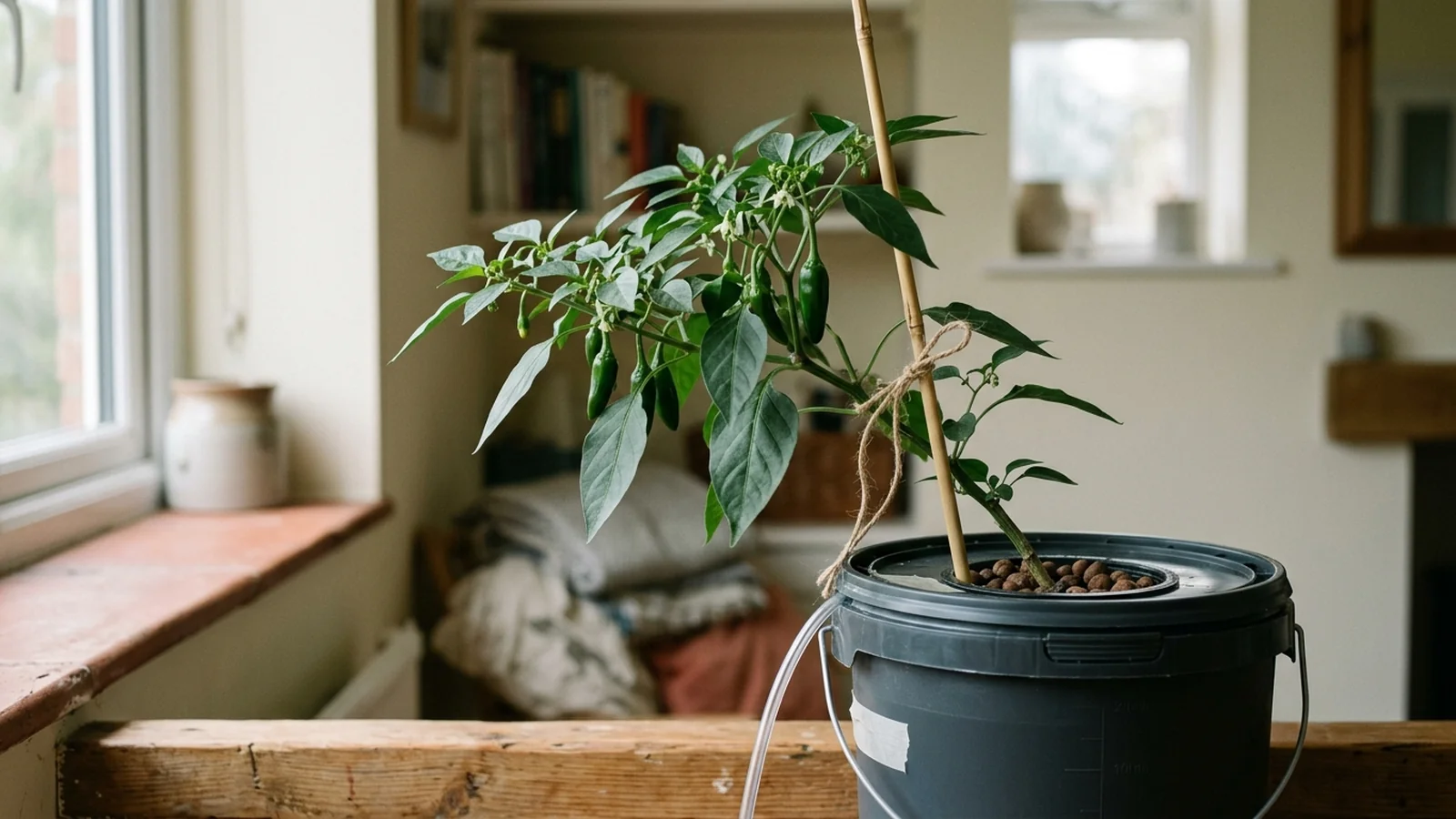
Hydroponic peppers indoors: EC, pH, and how they differ from tomatoes
Peppers are the hydroponic fruiting crop that forgives a mixing mistake tomatoes would not. That does not make them a light or pollination shortcut.