
Reported nutrient strength for woody Mediterranean herbs
| Herb | Reported EC and pH | Where it comes from |
|---|---|---|
| Rosemary | EC 2.0 +/- 0.2 mS/cm, pH 6.0 +/- 0.2 | Jerash University greenhouse trial, 45 days |
| Thyme | EC 1.2 mS/cm (half-strength herb solution) | Korean deep-flow trial |
| Oregano and marjoram | Half-strength herb solution; oregano withered at three times strength | Korean hydroponic trial |
| Sage | EC 1.0-1.6 mS/cm, pH 5.5-6.5 | Oklahoma State University Extension |
Rosemary, thyme and oregano can be grown hydroponically, but they are the herbs most likely to fail in a standard reservoir. They are adapted to dry, free-draining ground, so the fix is not a different nutrient mix. It is a system that lets the roots drain and breathe between feeds. The easier soft herbs are covered in the hydroponic herbs guide; this is the harder end of the bench.
Why they struggle in water culture
The Royal Horticultural Society puts it plainly for each plant. Rosemary “hates having wet roots, especially in winter”. Thyme “dislikes damp conditions, especially in winter, which can cause the roots to rot”. For oregano, the RHS says it is important to protect it from waterlogging over winter, which causes root rot. Penn State Extension groups rosemary, thyme, oregano, marjoram and sage together as herbs that should dry out slightly between waterings, and singles out basil as the herb that should not dry out completely.
That is guidance for soil and potting mix, but the mechanism carries straight over. Roots sitting in saturated medium or solution have little air around them, and rot follows. The root rot guide covers how to spot it early, and dissolved oxygen explains why stagnant, warm solution makes it worse.
Basil has the opposite need, so woody herbs and basil do not belong in one reservoir.
Proof that it can work
A 2025 trial at Jerash University in Jordan, published in the Journal of Pharmacognosy and Phytochemistry, grew 180 one-month-old rosemary seedlings for 45 days in a greenhouse, 60 each in soil, volcanic tuff and a hydroponic system of PVC pipes fed from a reservoir. The hydroponic plants were held at pH 6.0 and EC 2.0 mS/cm, both with a tolerance of 0.2. In the Jerash data, soil plants came out heaviest: 282 g fresh and 75 g dry per plant, against 220 g fresh and 70 g dry for hydroponics. The authors also report that hydroponics significantly increased rosmarinic acid production.
Read that as one greenhouse trial, not a recipe. It shows rosemary survives and grows in an intermittently fed pipe system; it does not show hydroponics beats soil for weight, and it ran only 45 days.
Nutrient strength: low for thyme and oregano
The research on thyme and oregano points the same way, toward weaker solutions.
A trial published in the Journal of Bio-Environment Control found common thyme grew better in deep-flow culture than in substrate cultures, with the best result at half the strength of a European herb solution, which the authors give as EC 1.2 mS/cm. A second trial on common and lemon thyme found that as ionic strength rose from 1.2 to 7.2 mS/cm, dry-matter share went up while shoot length, root length and fresh weight went down.
For oregano and marjoram, a Korean study in the Journal of Bio-Environment Control tested a herb solution at 0.5, 1, 2 and 3 times strength over 40 days. Half strength was judged adequate for both, and oregano withered at three times strength.
Oklahoma State University Extension lists sage, the one woody herb in its table, at EC 1.0 to 1.6 mS/cm and pH 5.5 to 6.5. These figures come from separate trials with different solutions, so use them as starting points and judge by the plants. If new growth pales or stretches, change one thing at a time. The EC chart by crop and nutrient basics cover measuring and adjusting.
Setups that fit
No trial found compares hydroponic systems for rosemary, thyme or oregano, so the ranking below applies the RHS and Penn State “let it dry slightly” rule to how each system wets the roots.
- Ebb and flow in an inert medium. The tray floods, then drains, so the medium dries slightly between feeds, which is the pattern Penn State describes. Set the interval by feeling the medium, not by a fixed clock. See ebb and flow for beginners.
- Intermittently fed pipes. The Jerash rosemary plants sat in PVC pipes, with solution supplied twice daily by pumps on a 5-minute cycle, which the authors say was to ensure adequate delivery without waterlogging. That is an intermittent-feed setup close to ebb and flow, and it supports the idea that these herbs need time between feeds.
- Deep-flow culture. The Korean thyme trial used it successfully, in a deep tank. Rosemary has no comparable result here, so treat it as a thyme and oregano option.
- Wick systems. The weakest fit. A wick keeps the medium damp continuously, which is the condition these herbs resist. The wick guide explains what wicks suit instead.
- Kratky. The falling water level leaves some roots in air, but woody herbs are slow, and these are plants you keep for months, not weeks. See the Kratky guide before trying it.
Start from a cutting, and give it light
The RHS notes rosemary is simple to grow from cuttings, while from seed it may take several years before plants are large enough to harvest. A cutting or small plant gets you to picking sooner, with the soil washed from the roots before it goes into the system.
On light, Penn State lists rosemary and thyme among herbs that do best in direct sunlight. Its general rule is 6 hours of direct sun, or 14 to 16 hours at 6 to 12 inches from two 40-watt cool white fluorescents. Herbs short of light become thin and spindly with a weaker aroma. Keep these plants apart from the soft herbs, so the nutrient strength and watering rhythm suit them.
Sources
- Penn State Extension: Growing herbs indoors
- RHS: How to grow rosemary
- RHS: How to grow thyme
- RHS: How to grow oregano
- Rosemary in soil, volcanic tuff and hydroponics, Jerash University (Journal of Pharmacognosy and Phytochemistry, 2025)
- Thyme nutrient solution concentration and substrate trial, Journal of Bio-Environment Control
- Common and lemon thyme ionic strength trial, Journal of Bio-Environment Control
- Marjoram and oregano nutrient solution strength trial, Journal of Bio-Environment Control
- Oklahoma State University Extension HLA-6722: EC and pH guide for hydroponics
Related hydroponic herb guides
Pick a system, set EC, and compare with the easier herbs.
Common questions
Can you grow rosemary hydroponically?
Yes. In a 45-day greenhouse trial at Jerash University, rosemary seedlings grown in PVC pipes fed twice daily from a reservoir at EC 2.0 mS/cm and pH 6.0 reached 220 g fresh weight per plant, against 282 g in soil. Plan for a slow crop and a system that does not keep the roots saturated.
What EC does thyme need in hydroponics?
A trial in the Journal of Bio-Environment Control found common thyme grew best at half the strength of a European herb solution, which the authors give as EC 1.2 mS/cm. Higher strengths cut shoot length, root length and fresh weight.
Can I put rosemary in the same reservoir as basil?
It is a poor match. Penn State Extension says rosemary should dry out slightly between waterings, while basil should not dry out completely, so the two want opposite root-zone conditions.
Is a wick system good for rosemary?
Usually not. A wick keeps the medium continuously damp, which is the condition that rots rosemary, thyme and oregano roots. By the same reasoning, ebb and flow, where the medium drains between floods, fits better.
Related guides
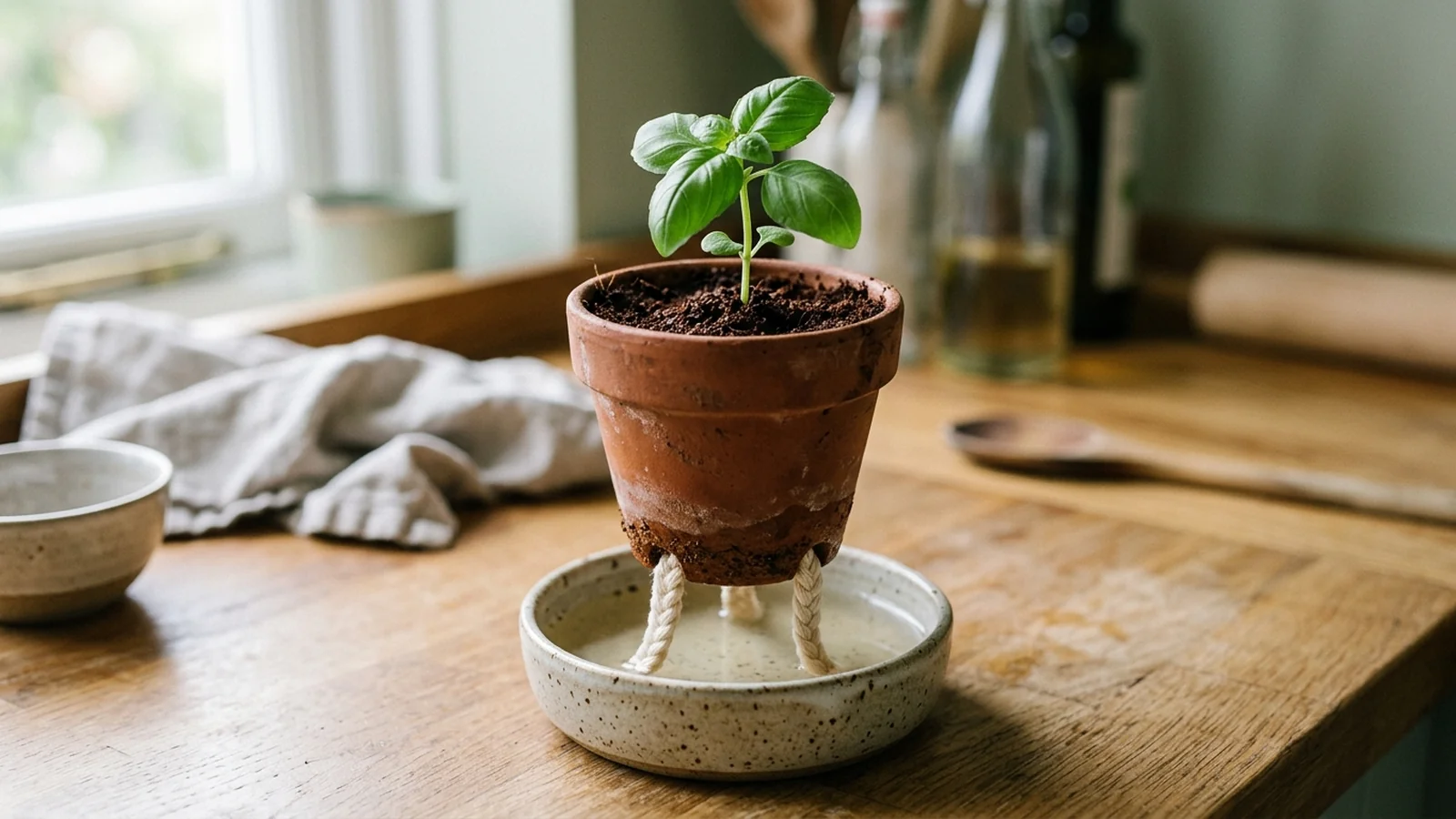
Wick hydroponic systems: what they grow well, and what they can't
A wick hydroponic system has no pump, no air stone, and no moving parts at all; a wick just pulls nutrient solution up into the growing medium. That simplicity is also its ceiling.
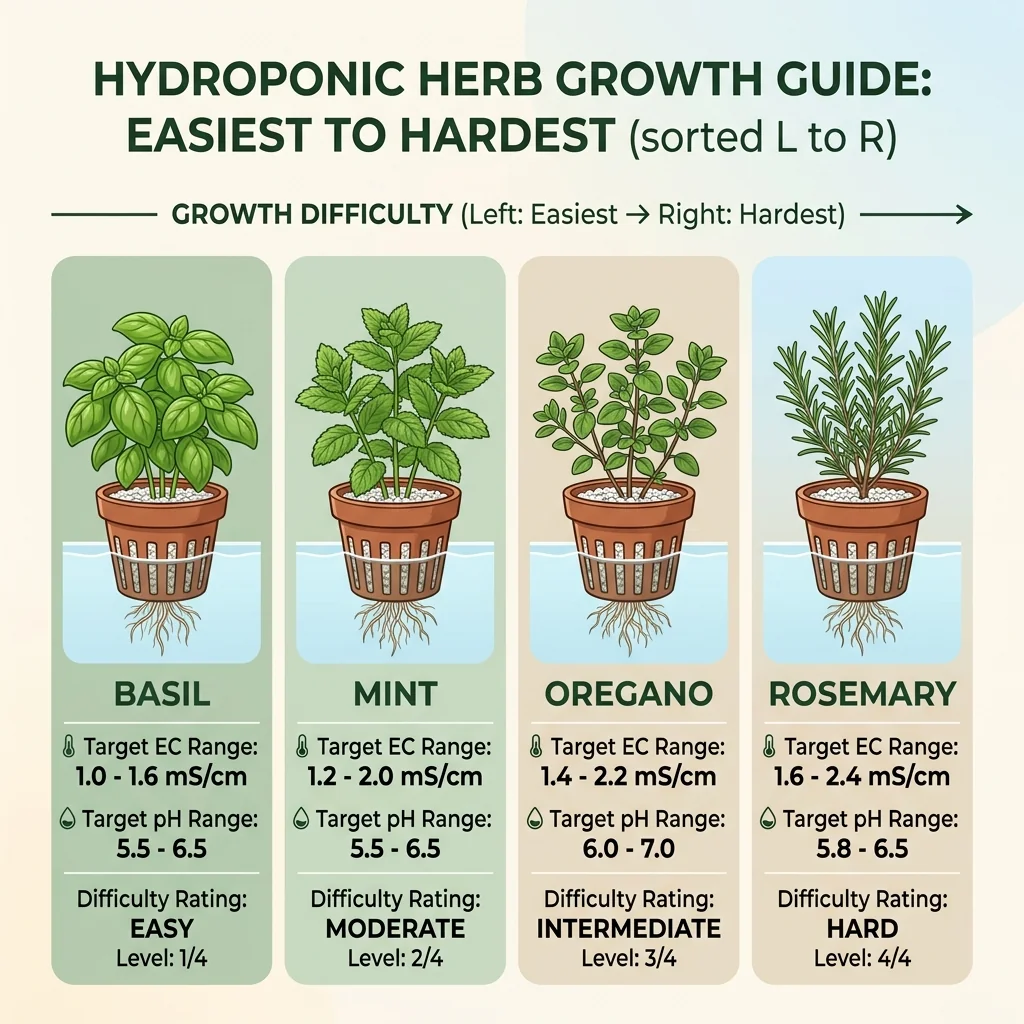
Hydroponic herbs: which grow best and how
Most soft, leafy herbs thrive in hydroponics, while woody Mediterranean herbs are trickier. Here is a ranked guide to which herbs grow best and how to set them up.
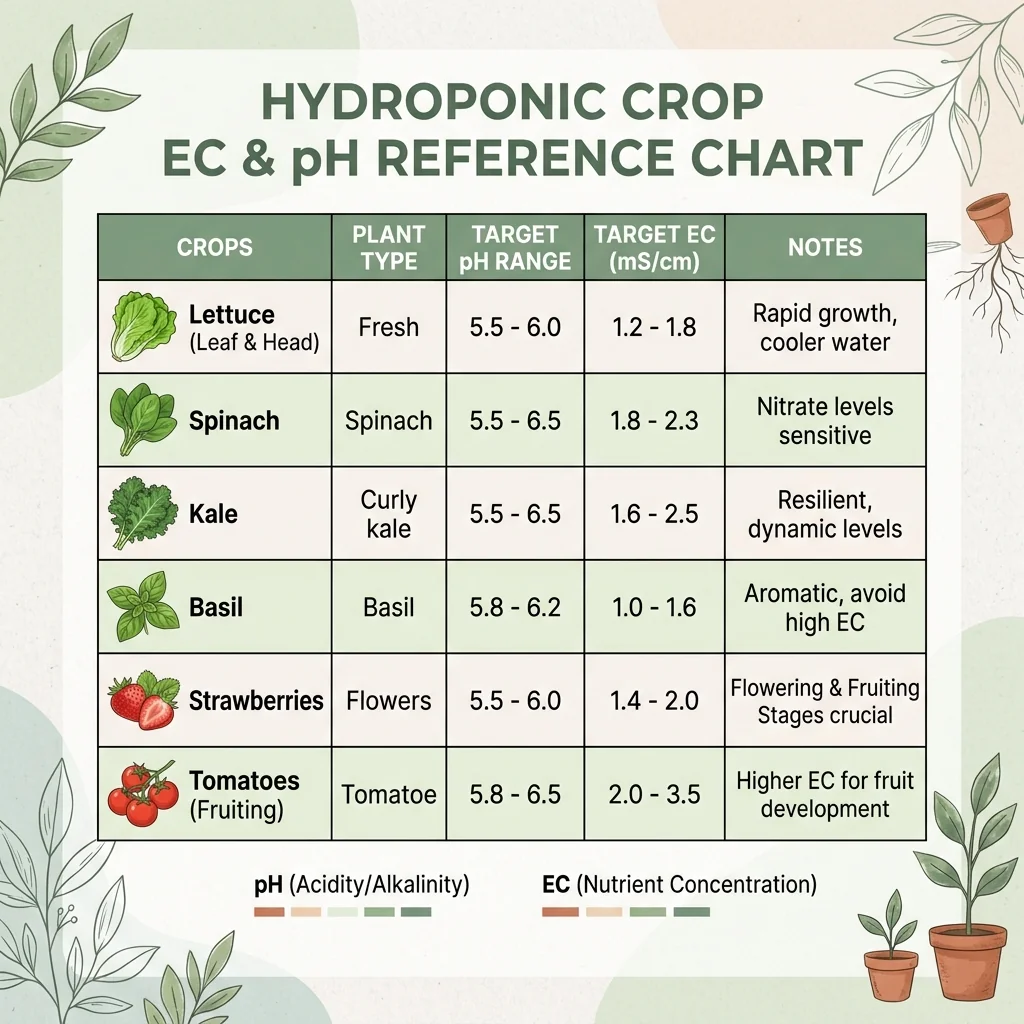
Hydroponic EC chart by crop (not just lettuce)
One reference chart for the EC and pH targets of common hydroponic crops, from leafy greens and herbs to fruiting plants, plus how to use the numbers safely.