Troubleshoot the system before you change the inputs.
Symptoms
- Solution pools or overflows at the upper end of the channel while plants near the drain look dry
- A dense root mat fills the channel width and water seems to flow over or around it instead of beneath
- Flow at the outlet is weak or intermittent even though the pump runs normally
- Roots at the low end are brown, slimy or sit in standing water
- Tubing, drip fittings or the pump intake are narrowed by green growth or white crust
Possible causes
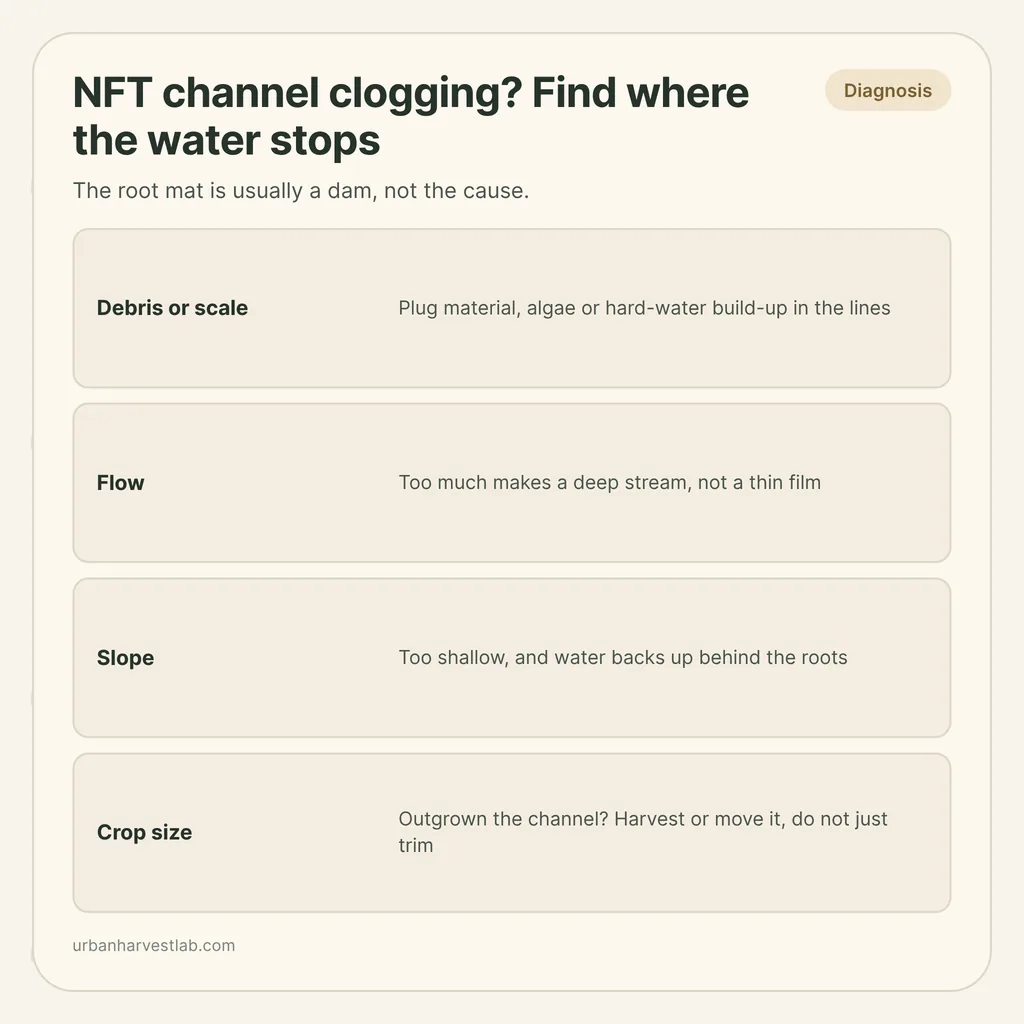
- The slope is too shallow for the flow, so water backs up behind roots
- Flow is too high for the channel, producing a deep stream instead of a thin film
- The starter plug or loose media sheds material that gathers in the channel and drain
- The crop has stayed in the channel longer than a channel this size supports, so the root mat has become a dam
- Algae, precipitated nutrients or hard-water scale have narrowed fittings and the pump intake
Quick fixes
- Switch off, lift the lid and look: find where the water stops and clear loose roots, plug fragments and debris at that point
- Lower the flow if the stream is deep, or raise the supply end a little if water pools behind the roots, and recheck after a few minutes
- Harvest or move the crowded plants rather than trimming around them repeatedly
- Clean tubing, fittings and the pump intake, and use a fully-bonded plug for the next crop
- Fix the underlying conditions behind slimy or brown roots using the root rot guide, not by trimming alone
An NFT channel clogs because the root mat acts as a dam, and the fix depends on why the water cannot get past it. Check four things in order: debris or scale in the line, the flow, the slope, and whether the crop has outgrown the channel. The first three take minutes to correct. The fourth means harvesting or rehousing the plant.
The channel is built to carry a thin film of solution under the roots, which is the arrangement NFT and DWC compare in detail. A blocked channel loses that film. Water backs up, the roots sit in still, low-oxygen water, and plants downstream get nothing.
Find where the water stops
Stop the pump, open the channel and run it again while you watch. Where does the water slow, pile up or leave the channel’s path?
| What you see | Most likely cause |
|---|---|
| Pooling and overflow at the inlet end, dry plants at the drain end | Slope too shallow for the flow, or a dam of roots or debris near the drain |
| A deep stream rather than a thin film all along the channel | Flow too high |
| Weak outlet flow, but clean channel | Narrowed tubing, fittings or pump intake |
| Dense root mat fills the width of the channel | Crop too big for the channel |
| Chunks of plug material or peat in the drain | Starter media shedding |
Clear the debris first
The cheapest cause is the first to rule out. Greenhouse Management, an Apex Publishers handbook, warns that the propagation unit must not contribute peat moss or other loose substances that will plug the system. Loose-fill starter media works its way into the drain, where it catches roots and builds a dam.
Scale and growth do the same job in the plumbing. University of Minnesota Extension notes that excessive algae clogs tubing and plugs pump intakes, and that precipitated nutrients and hard-water mineral build-up do too. University of Florida IFAS Extension flags the same mineral build-up in NFT tubing under hard-water conditions. If your tap water is hard, hard water in hydroponics explains what it does to the solution. University of Minnesota Extension adds that over-fertilising promotes algae on roots and inside NFT systems, so check the strength of the mix too.
Clear the intake and the lines before you touch the channel.
Check the flow
Too much flow is a quiet cause of overflow. A strong inflow produces a deep stream that fills the channel, and a root mat then has even less room to pass water.
Published figures give a starting point, not a prescription. A handbook from Apex Publishers offers 1 litre per minute (15.8 gallons per hour) per channel as a general guide and recommends lower rates for lettuce than for fruiting vegetables. University of Minnesota Extension’s own trial found 8 to 10 ounces of solution per minute ideal for lettuce, on a 25-gallon reservoir. Both describe the aim as enough for a regular film that keeps roots wet, without drowning them.
Remember the pump’s rating is measured at zero lift. If your channel sits well above the reservoir, pump flow at real head height explains why the water you get is less than the label says, which matters when you are trying to tune a trickle rather than a flood.
Check the slope
A shallower slope slows water, and a root mat then has more time to hold it back. A commercial handbook and a lettuce trial give very different slopes:
- The Apex handbook gives channels on a slope of 1.2 to 3.0 percent, with solution applied at the elevated end, and says the channel base must be flat and not curved to maintain a shallow stream.
- A trial in the Revista Brasileira de Engenharia Agrícola e Ambiental grew iceberg lettuce in NFT channels at several slopes. Flow increased with slope, and production rose until a slope of 8 to 9 percent, then levelled off. The same paper notes that in the aquaponic-water treatment at 8 percent, the larger root mass and length possibly reduced flow compared with the conventional hydroponic solution.
The authors flag root mass as a possible brake on flow even at 8 percent, though flow still rose with slope overall. The trial used a single lettuce cultivar and, in part, aquaponic water, so treat its 8 to 9 percent as evidence about direction, not as a target for a home channel. Raise or lower the supply end a little at a time, let the film settle, and judge by whether water reaches the drain without pooling at the inlet.
Ask whether the plant has outgrown the channel
If the channel is clean, the flow is gentle and the slope is workable, but the root mat still dams the water, the plant is too big for this system. NFT suits short crops. University of Florida IFAS Extension says short-term crops of 50 to 60 days, such as lettuce, grow in a wide range of systems, while crops that run longer than 60 days are harder in NFT or floating beds. Minnesota names arugula, butterhead lettuce, collard greens, herbs, kale, mustard greens, microgreens, spinach and Swiss chard as leafy greens that perform well in NFT.
If a plant has stayed in too long:
- Harvest it, or move it to a deep-water bucket where a large root mass has room. The deep water culture in a small space suits plants you want to keep.
- Do not just trim to restore flow. Cutting back a root mat restores flow only until the roots grow back into the same gap.
- Harvest the next crop sooner, before the root mat fills the channel width, and plant fewer per channel. University of Kentucky Extension lists about 2 lettuce plants per square foot for NFT.
The roots can also be a symptom, not the blockage. Slimy, brown roots that sit in standing water are a separate problem, covered in root rot prevention and brown roots: stain or rot.
Keep the channel flowing
- Use bonded plugs. University of Kentucky Extension strongly recommends bonded 1-inch plugs for water-based systems such as NFT because they hold together when submerged.
- Use channels with a flat base rather than round pipe; the Apex handbook says a flat, uncurved base keeps the stream shallow, which leaves a root mat less to dam.
- Rinse lines and the pump intake between crops, as described in sanitising between crops.
- Keep a plan for the day flow stops altogether: University of Kentucky Extension notes that NFT and drip systems dry out rapidly when flow ceases, which is why the pump failure plan is worth reading before you need it.
Sources
- University of Minnesota Extension, Small-scale hydroponics
- UF/IFAS Extension, Growing Lettuce in Small Hydroponic Systems (HS1422)
- University of Kentucky Center for Crop Diversification, Hydroponic Lettuce Production in Controlled Environments
- Greenhouse Management (Apex Publishers), Nutrient Film Technique for Greenhouse Crops
- Revista Brasileira de Engenharia Agrícola e Ambiental, Lettuce production in hydroponic and aquaponic systems under different channel slopes in NFT
Related NFT and pump guides
These cover choosing a system, sizing the pump and what to do when flow stops entirely.
Common questions
What slope should an NFT channel have?
A greenhouse production handbook from Apex Publishers gives channels on a slope of 1.2 to 3.0 percent, with solution fed at the elevated end. A Brazilian trial on iceberg lettuce found production rose with slope up to 8 to 9 percent, so published figures differ by crop and system. Change the slope in small steps and watch the water.
How fast should solution flow through an NFT channel?
The same handbook offers 1 litre per minute (15.8 gallons per hour) per channel as a general guide and says lower rates suit lettuce. University of Minnesota Extension found 8 to 10 ounces per minute ideal for lettuce in its trial on a 25-gallon reservoir. The goal is a shallow stream, not a flooded channel.
Can I cut roots that are blocking the channel?
Trimming is a stop-gap for a single crop: it does not remove the cause. If the root mat is dense enough to dam the flow, the plant is usually past the size the channel suits, so harvest it or move it to a larger-volume system.
Why does the water overflow at the start of the channel?
Overflow at the inlet means water is arriving faster than it can leave. Either a root mat or debris downstream is restricting the exit, the slope is too shallow for the flow, or the flow is higher than the channel was meant to carry.
Related guides
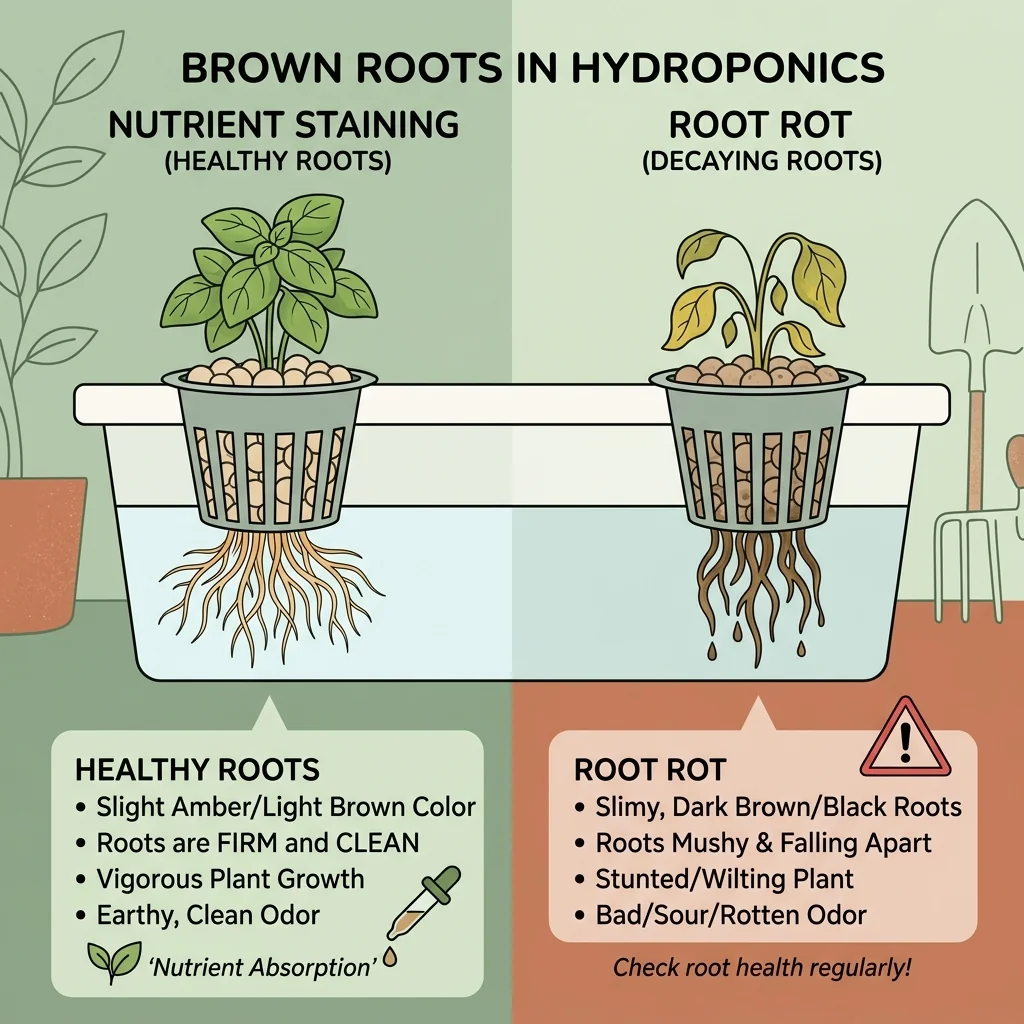
Brown roots in hydroponics: staining vs. root rot
Finding brown roots in your hydroponic reservoir can cause instant panic. But before you dump your nutrients, you need to know: is it a harmless stain or a fatal infection? Here is how to diagnose the difference in seconds.
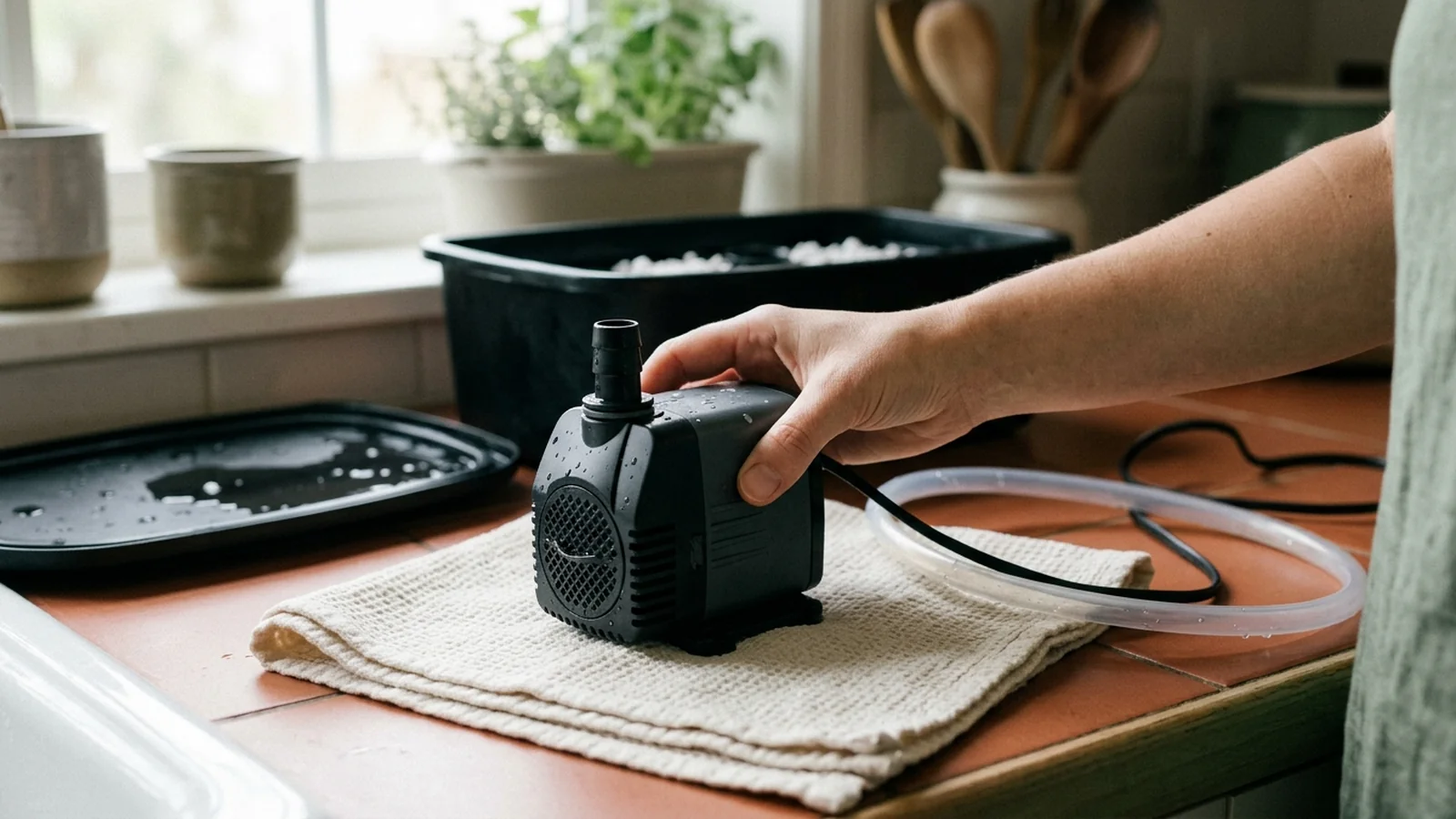
Hydroponic pump failure: what happens and what to do
A stopped pump does not threaten every hydroponic system the same way. Here is the mechanism behind each one, and the plan to run when yours goes quiet.
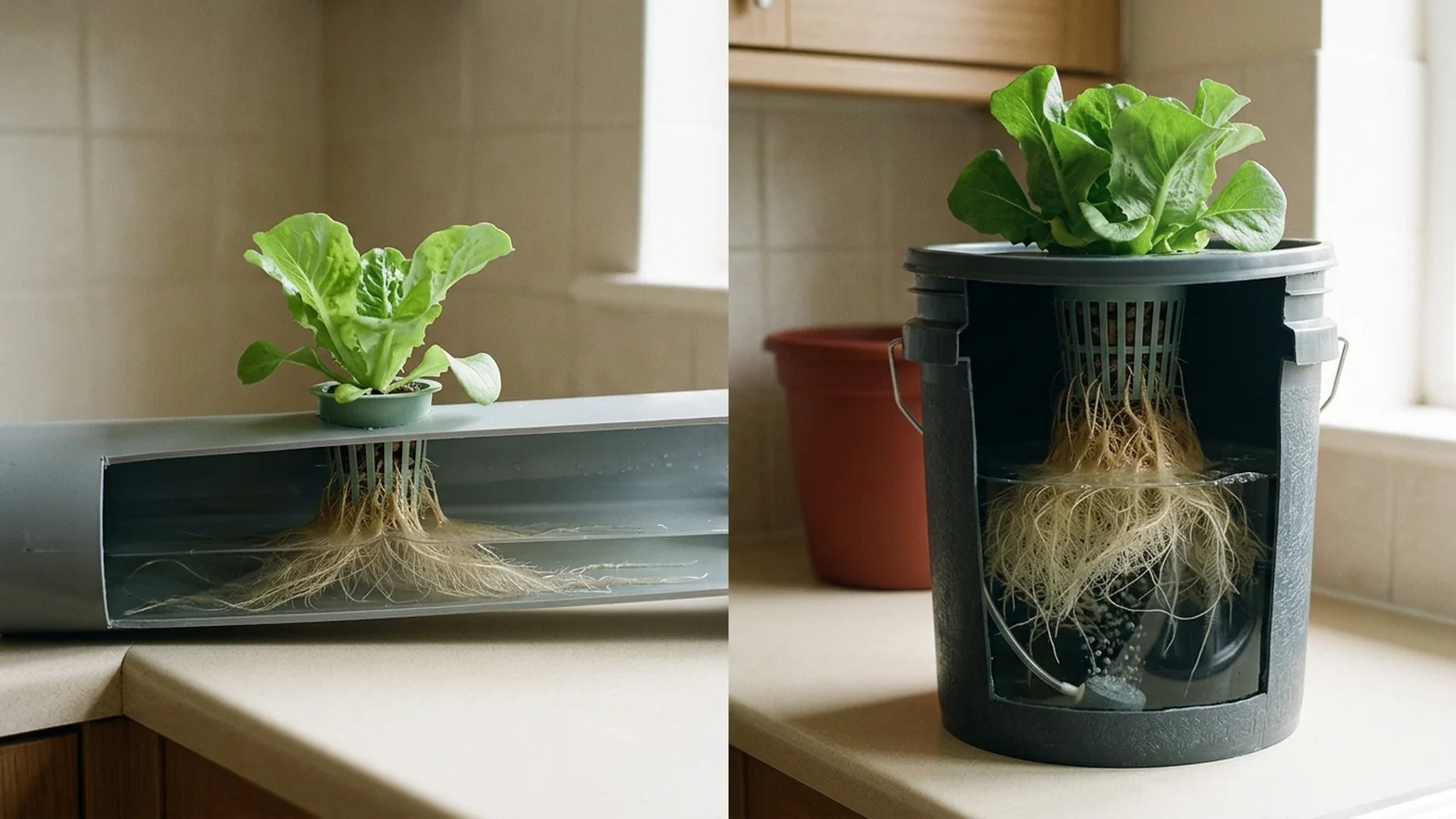
NFT vs DWC: the concrete differences that decide which one fits
NFT and DWC both grow lettuce and greens well, but they get oxygen to the roots in opposite ways, and that difference decides how each one fails.