
Vertical tower, NFT and DWC compared
| Factor | Vertical tower | NFT | DWC |
|---|---|---|---|
| Floor space per plant | Smallest; plants stack upward | Moderate; channels lie flat | Largest; rafts or buckets lie flat |
| What the pump does | Lifts solution to the top of the column every cycle | Lifts solution to the high end of a gentle slope | Runs air only; no lift of nutrient solution |
| Light across the plants | Uneven; falls from top to base | Even across the channel | Even across the raft |
| Root oxygen | Roots hang in air or damp medium between waterings | Thin film plus humid air | Needs an air pump and air stones |
| If the pump stops | Top-fed roots dry out; the exposed medium is the only buffer | Roots dry out quickly | Water stays; oxygen slowly falls |
| Best crops | Lettuce, greens, herbs | Lettuce, greens, herbs | Lettuce and soft herbs |
A vertical hydroponic tower is worth building when floor space is your limit and you want lettuce, leafy greens or herbs. It is the wrong choice when you want the most food per plant or have a weak, one-sided light. Stacking plants upward multiplies how many you can grow on one footprint. It also puts the bottom plants in the shade of the top ones and forces a pump to lift every litre to the crown of the column.
The trade is real and measurable. Here is what each side of it looks like, how to size the pump, and when a flat system is the better call. If you have not yet picked a system type, start with the beginner comparison of NFT, DWC and Kratky.
What a tower is, and what the research found
A tower is a stack of pockets or pots, with nutrient solution pumped to the top and trickling down through the column back to a reservoir at the base. UF/IFAS Extension describes the vertical system as one “designed to produce crops in vertical rows irrigated from the top”, built from vertical bags or stacked pots. UF/IFAS says it suits growers short on space, because gardeners can increase plant populations when space is a limitation. The University of New Hampshire Extension notes that ready-made home units now range from small table-top pods to large free-standing towers, and that most include lamps.
The most direct measurement comes from Lancaster University. Researchers grew ‘Little Gem’ lettuce in upright cylindrical columns and in a flat hydroponic system with a similar root-zone volume and planting density, under metal halide lamps. The columns produced 13.8 times more crop per square metre of floor. That is because each column took up 0.02 m² of floor against 0.4 m² for the flat system, and held about 20 times more plants per floor area.
The same paper explains why a tower is not simply better. Lettuce in the flat system weighed more per plant, and the authors tie the lower column yield to light: PPFD and shoot fresh weight both fell significantly from the top of the column to its base, and within the column more light meant more growth. Put plainly, a tower wins on yield per square metre of floor and loses on yield per plant.
An undergraduate study at Eastern Kentucky University points the same way on design. The study compared a commercial tower and a student-built one with two thinner pipes, each with 24 compartments. Eastern Kentucky reports that the commercial tower averaged 66.9 g of leaf per compartment against 52.2 g, and the authors suspected poor light distribution left the lettuce between the two pipes under-lit. Where the plants sit relative to the light matters as much as how many there are.
Why the bottom of the tower lags
Light is the main limit. Lancaster’s team gives two causes for the gradient: light weakens with distance from the lamp, and plants higher in the column obscure those below. Natural light adds a second gradient. In glasshouse trials they cite, light was lower on the north side of a column than the south side. UF/IFAS Extension also warns that lighting can be a major issue in a vertical system because of shading of the lower plants.
For a leafy crop the bar is not high, but it is real. The University of Kentucky gives a lettuce daily light integral of 12 to 17 mol per square metre per day as optimal, with a minimum requirement of roughly 6.5 to 9.7. The bottom tier of a tower is the place most likely to sit near or below that minimum. Read how much light hydroponic lettuce needs indoors before you decide where the tower goes.
What helps, going by the Lancaster paper: side-on lighting, also called interlighting, which the authors suggest could ease the shading effect and flatten the yield gradient, and wider column spacing, since spacing between columns affected productivity in the glasshouse trials they cite. Your own versions of those two ideas are a light running the full height of the column rather than one lamp overhead, and a gap between the tower and the wall or the next tower.
Two practical habits follow. Plant the fastest, most light-hungry crop in the top tiers and shade-tolerant herbs lower down, and harvest or rotate by tier so the lower plants are not held back by the ones above.
Airflow matters too. UF/IFAS Extension says a lack of consistent airflow in a vertical system can decrease productivity and cause fungal and bacterial disease outbreaks through the cycle. Tight, crowded pockets are exactly where air stalls. If leaf tips brown on crowded greens, see lettuce tip burn.
The pump: your tower height is your head
In a flat system the pump fights a short rise. In a tower it lifts solution to the top of the column on every cycle, so the height of the column plus the tubing, elbows and any distribution ring is what the pump works against. A pump’s rated GPH is measured with no lift, so the figure on the box overstates what reaches the crown. The full explanation, with a worked flow curve, is in why a pump’s GPH rating falls as soon as it has to lift water.
For a tower, three consequences follow.
- Choose from the curve, not the box. Find the manufacturer’s flow-versus-height chart for the exact model and read the flow at your column height plus the tubing run.
- Leave headroom. A pump already near its maximum head delivers a trickle, and the top pockets are the first to go dry.
- Use a timer. UF/IFAS Extension says an automatic irrigation timer may be needed for NFT, vertical towers and other hydroponic systems. In the Lancaster trial the pump ran for one minute every hour, spraying solution on the top layer of a perlite-filled column, which shows that a column fed in short timed bursts can grow lettuce. It is one trial’s schedule, not a rule for every medium and tower, so watch your own plants.
One failure is easy to forget. A top-fed tower has almost no standing water at the roots, so a dead pump dries the root zone much like NFT does. The steps for that case are in what to do when a hydroponic pump fails.
Tower, NFT or DWC?
The table above sets the three side by side. In short: choose a tower when floor area is the constraint, NFT when you want even light and a simple flat channel, and DWC when you want a forgiving, high-volume reservoir. The NFT versus DWC comparison goes deeper on the two flat systems.
A tower is a weaker choice if the room has light from one direction only, if you cannot add side or full-height lighting, or if you want the heaviest possible harvest from a few plants. It also asks more of your plumbing than a bucket does, because every pocket depends on solution trickling down evenly.
What to grow
Pick short crops. UF/IFAS Extension says short-term crops of 50 to 60 days, such as lettuce, grow in a wide array of systems, while crops taking over 60 days are harder in hydroponic systems such as NFT or floating beds. That points a tower at lettuce, leafy greens and compact herbs, in line with the University of Minnesota’s list of leafy greens that perform well in NFT, which includes arugula, butterhead lettuce, kale, spinach, swiss chard and herbs. For herb choices, see which hydroponic herbs grow best.
Fruiting crops are a poorer fit. The University of Minnesota lists strawberries, tomatoes, cucumbers and peppers as summer choices, and New Hampshire says fruiting plants with high light requirements need supplemental lighting. A stacked column is where light is scarcest.
Sources
- Touliatos, Dodd and McAinsh (2016), Vertical farming increases lettuce yield per unit area compared to conventional horizontal hydroponics, Food and Energy Security, Lancaster University
- Cavasos (2017), Comparison of two hydroponic tower systems for lettuce production, Eastern Kentucky University
- UF/IFAS Extension HS1422, Growing Lettuce in Small Hydroponic Systems
- University of Kentucky CCD-CP-63, Hydroponic Lettuce Production in Controlled Environments
- University of New Hampshire Extension, Hydroponics at Home
- University of Minnesota Extension, Small-scale hydroponics
Before you commit to a tower
These guides cover the pump maths, the flat systems a tower competes with, and how much light a leafy crop needs.
Common questions
Is a vertical hydroponic tower worth it for a small space?
It is worth it when floor space is the limit and you are growing lettuce, leafy greens or herbs. In a Lancaster University trial, upright columns produced 13.8 times more lettuce per square metre of floor than a flat hydroponic system, because they held about 20 times more plants per floor area. The flat system still produced more per plant, because light fell from the top of the column to the base.
Why do the bottom plants in my tower grow slower?
Usually light. Lancaster University measured light and lettuce weight falling from the top to the base of upright columns, and found that more light meant more growth within the column. Plants higher up also shade the ones below. UF/IFAS Extension flags shading of the lower plants as a major issue in vertical systems.
What size pump does a vertical hydroponic tower need?
One whose own published curve still delivers usable flow at the full height of your tower plus the tubing and fittings. A pump's GPH rating is measured with no lift at all, so it overstates what reaches the top. No single GPH figure fits every tower; check the manufacturer curve for your exact model at your real head.
What can you grow in a vertical hydroponic tower?
Lettuce and leafy greens are the best documented, and herbs suit the same compact pockets. UF/IFAS Extension notes that crops taking over 60 days are harder to grow in hydroponic systems such as NFT or floating beds. Fruiting crops such as tomatoes and cucumbers need more light than a small indoor setup usually supplies.
Related guides
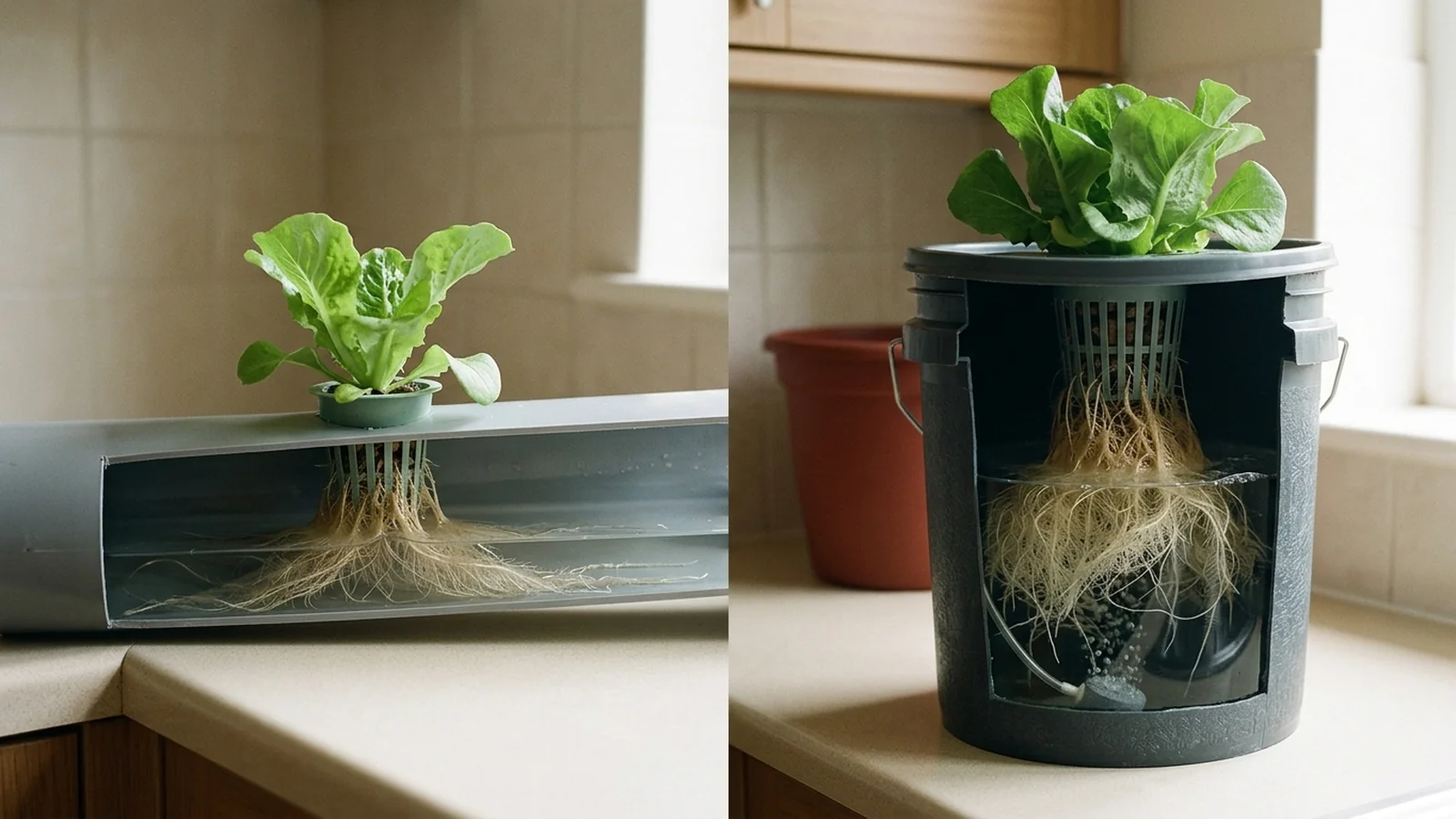
NFT vs DWC: the concrete differences that decide which one fits
NFT and DWC both grow lettuce and greens well, but they get oxygen to the roots in opposite ways, and that difference decides how each one fails.
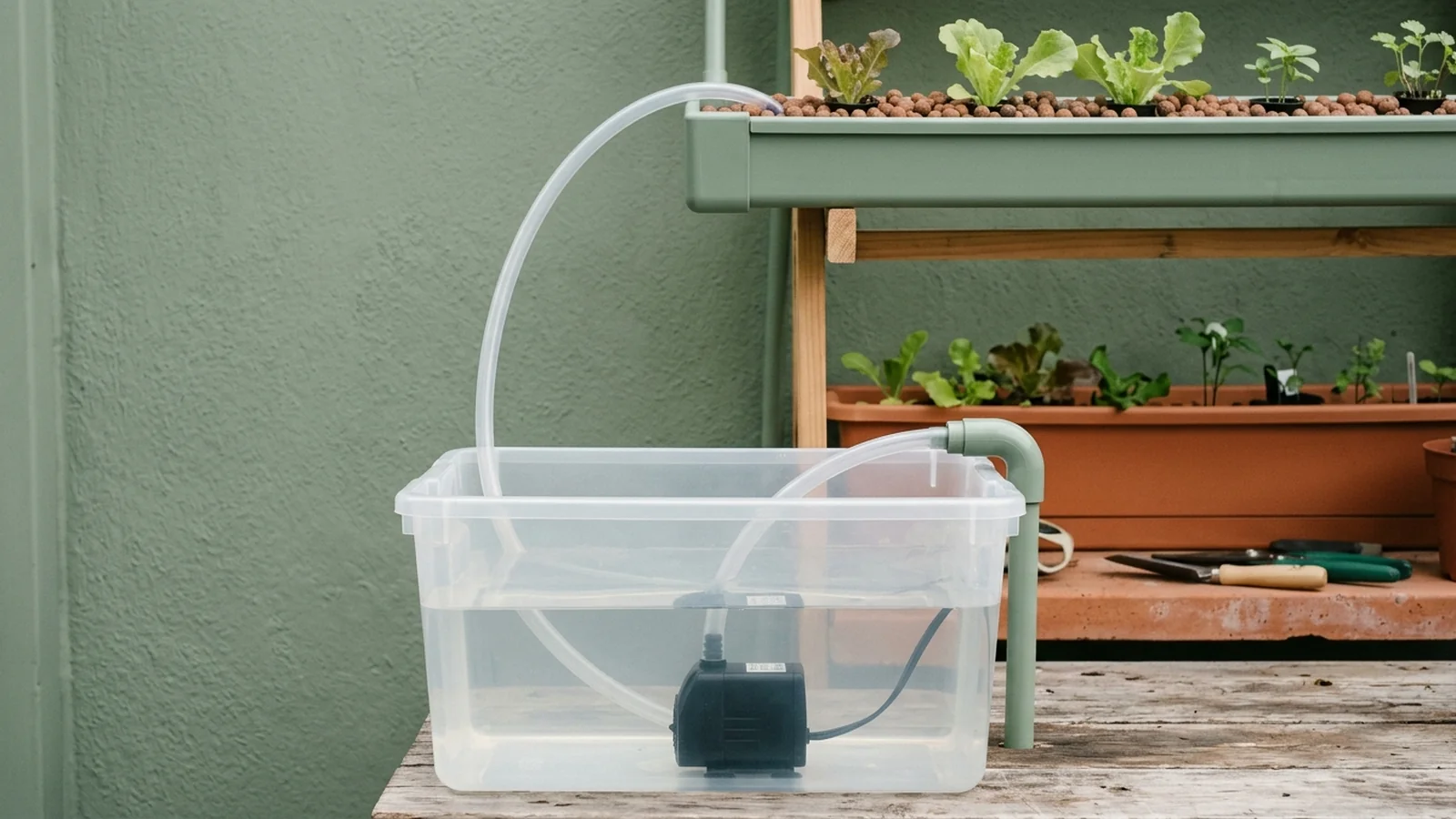
Why a pump's GPH rating falls as soon as it has to lift water
The GPH figure on a submersible pump's box is measured with no vertical lift at all. The moment that pump has to raise water, flow drops along a curve specific to that model, reaching zero at its maximum head.
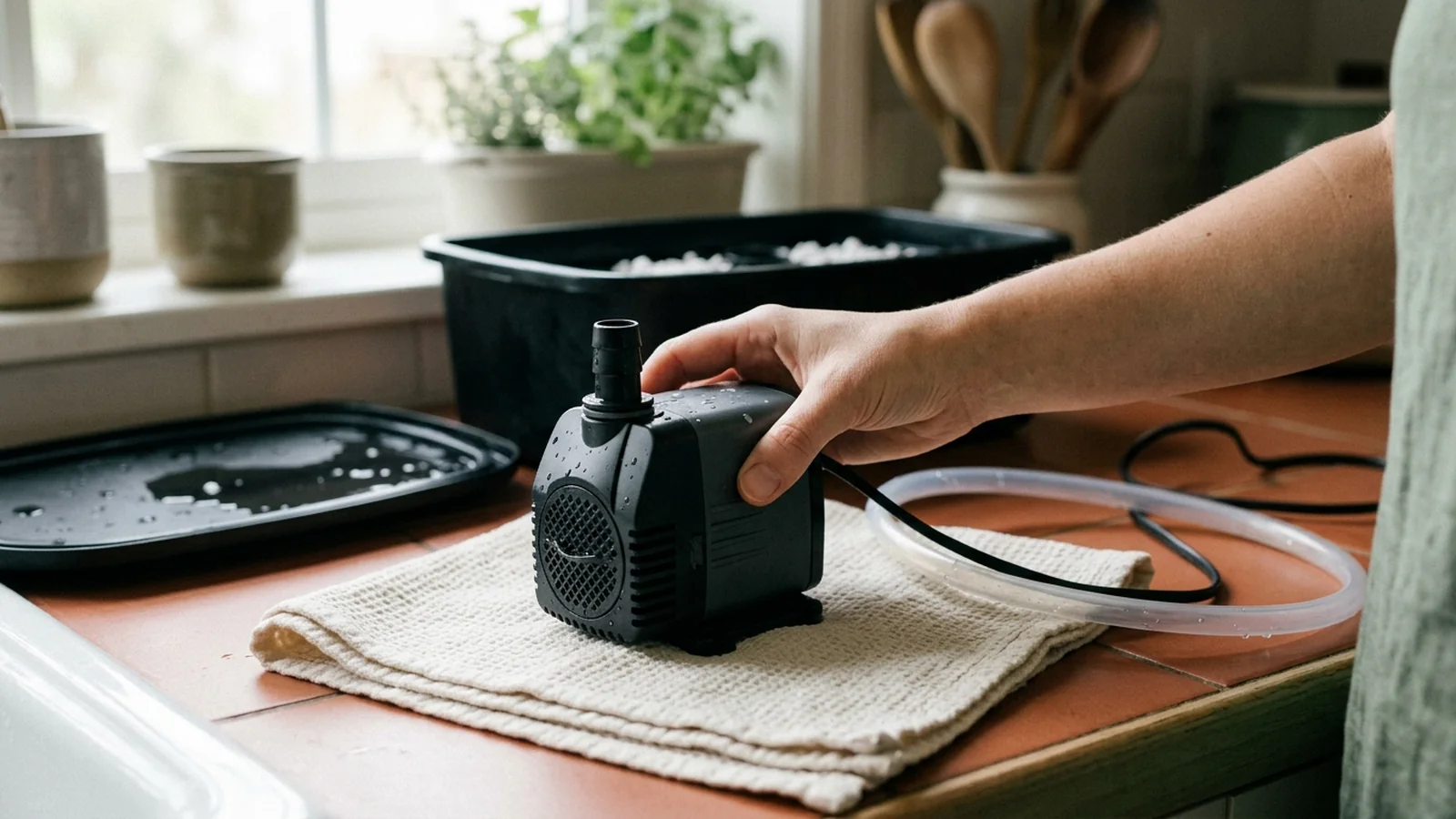
Hydroponic pump failure: what happens and what to do
A stopped pump does not threaten every hydroponic system the same way. Here is the mechanism behind each one, and the plan to run when yours goes quiet.