Troubleshoot the system before you change the inputs.
Symptoms
- Brown or black papery shells clamped on the tips of the seed leaves at harvest
- Loose hulls scattered across the surface of the tray
- Hulls still attached after the cover has been off for a day or two
Possible causes
- Too little weight on the shoots during germination: Penn State Extension says weight kept on the shoots helps hulls detach from the cotyledons.
- Seed not pressed into the medium at sowing, which New Mexico State University lists as one of its methods.
- Variety and growing system: in a George Mason trial Black Oil sunflower kept fewer hulls than Gray Striped, and a George Mason abstract describes hulls as typically falling off in soil but needing manual removal in hydroponics.
Quick fixes
- Pick off remaining hulls with sterilized tweezers or rub gently with sterilized gloves
- Next sowing, press the seed into the medium and keep a weight on the tray through germination
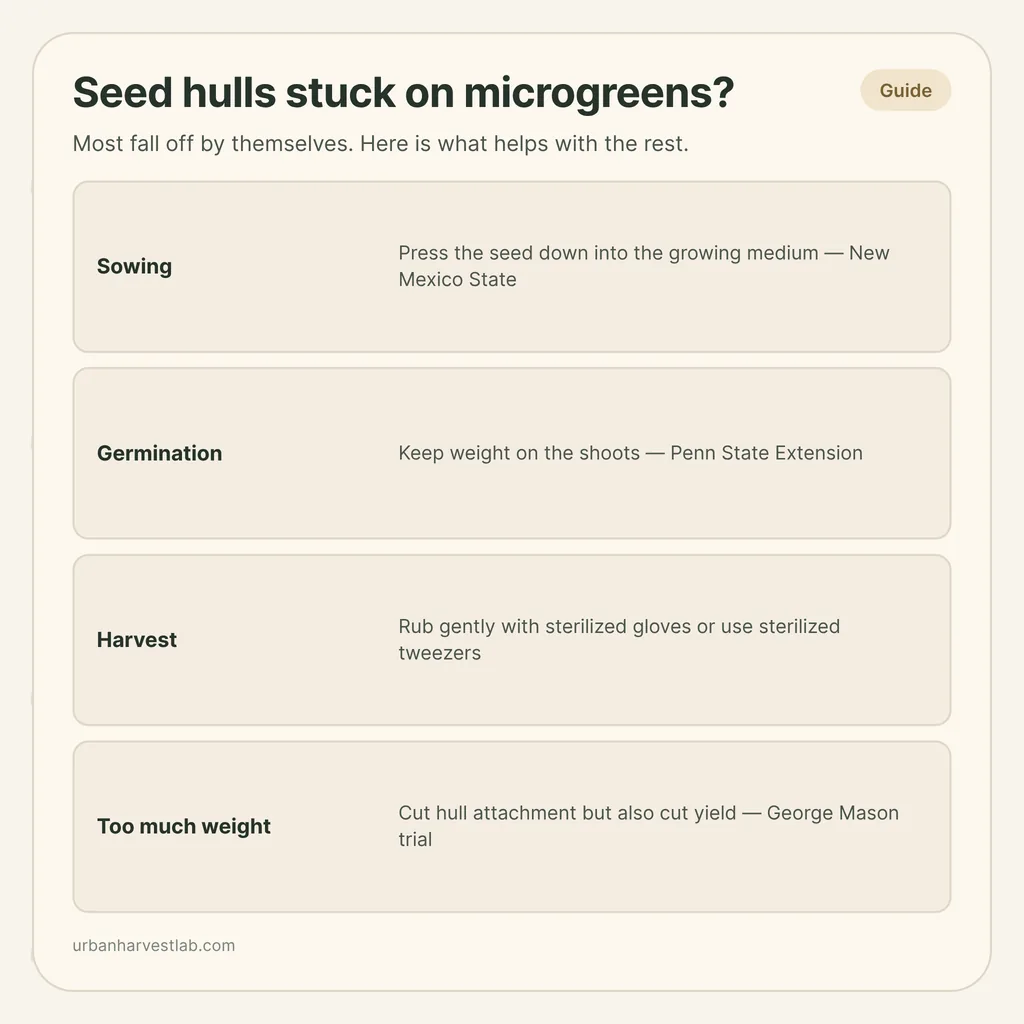
Most seed hulls fall off by themselves as microgreens grow; for the ones that do not, pick them off with sterilized tweezers, rub them gently with sterilized gloves, or prevent them next time by pressing the seed into the medium and keeping weight on the tray through germination. New Mexico State University lists those three methods and says removal is good practice before the greens are served.
The crop that shows this most is sunflower, where the hull often clamps onto the tips of the seed leaves. The day-by-day tray schedule is in the sunflower microgreens grow log; the shells already on the tray are the subject here.
Why the hulls are worth removing
New Mexico State University’s extension guide states that seed hulls can carry harmful pathogens and can be a physical hazard when eating microgreens. UConn Extension puts it on its food-safety list: remove seed hulls, with sunflower as the example, once the microgreens grow.
New Mexico State is also reassuring: most hulls will usually fall off as the microgreens grow. A few stragglers are normal. A tray where most tips still carry a shell points to a sowing or weighting problem, covered below.
If what you see is white fuzz on the shells rather than the shells themselves, that is a separate question: mold or root hairs shows how to tell them apart.
What helps, in order of effort
| Stage | What to do | Source |
|---|---|---|
| Sowing | Press the seed down into the growing medium | New Mexico State University |
| Germination | Keep weight on the seeds, then on the shoots | Penn State Extension |
| Harvest | Rub hulls off gently with sterilized gloves | New Mexico State University |
| Harvest | Pick off remaining hulls with sterilized tweezers | New Mexico State University |
| Hydroponic trays | Researchers shook the substrate before cutting (some shoots fall) | George Mason University trial |
Weight during germination
Penn State Extension recommends putting weight on seeds such as pea and sunflower during germination to keep them in contact with the soil. It goes on to say that, for sunflower and other species, keeping the weight on top of the shoots during germination also helps the hulls detach from the cotyledons.
A George Mason University trial put a number on it. Working with sunflower grown hydroponically on burlap, the researchers tested covers at 25 and 50 kilograms per square metre. The dark control with no weight averaged 12% more hulls attached than the weighted covers. More weight reduced attachment further, but it also reduced yield. So extra weight is a trade, not a free fix. A cover that holds the seed firmly is useful; a pile of bricks may cost you shoots.
The trial is a student research abstract on a hydroponic system, run on desktop hydroponic units rather than soil trays, so use it for the direction of the effect rather than as a recipe. The same group found Black Oil sunflower seed left fewer hulls attached than Gray Striped at any weight tested.
Covering for longer is not a substitute. An earlier George Mason abstract, on Grey Striped sunflower in hydroponic channels, covered the seed for three days and concluded that covering for several days did not help with consistent lengths or removal of the hulls. For how long to keep a tray dark for each crop, see the blackout time by crop table.
Pressing the seed in at sowing
New Mexico State’s third method happens before anything has germinated: when planting, press the seed down into the growing medium. It costs nothing and is the easiest change to make on the next tray. The seed soaking guide covers the other thing large seed needs before sowing.
Taking them off at harvest
Once the cover is off and the shoots are standing, New Mexico State’s two hand methods apply. Sterilized gloves rubbed gently across the tray lift hulls that are only loosely held. Sterilized tweezers take them one at a time, which is slow. Sterilized matters: these hands and tools are touching the crop you will eat.
The harvest and storage guide covers the cut, washing and fridge life.
Hydroponic trays
The George Mason abstracts describe hydroponic sunflower as a harder case. One notes that the sunflower hull typically falls off when grown in soil, whereas in hydroponics growers must remove hulls manually, often damaging the plant. In their trial, the substrate was shaken vigorously by hand to remove hulls and unsprouted seeds before the shoots were cut. The researchers also collected and weighed the microgreens that fell off during shaking, so shaking costs some shoots. If you grow without soil, plan for this step rather than expecting the tray to shed its shells.
Other crops
The sources above are about sunflower, and nothing in them extends the same numbers to other crops. For beet, the thing to know about the seed is its structure, which is covered in the beet microgreens guide. Buckwheat is sold with the hull on or removed, and the buckwheat microgreens guide explains what to check on the packet. New Mexico State’s removal methods are written for microgreens in general.
A quick check before the next sowing
- Press the seed into the medium rather than leaving it loose on top.
- Keep weight on the tray through germination, and leave it on the shoots as they emerge.
- Stop adding weight when yield starts to drop; the George Mason trial found a higher weight cost yield.
- Sterilize tweezers and gloves before touching the crop.
- Remove what is left before serving.
Sources
- New Mexico State University: All About Microgreens, for growers (removing seed hulls)
- Penn State Extension: A step-by-step guide for growing microgreens at home
- UConn Extension: The amazing power of microgreens
- George Mason University, Journal of Student-Scientists’ Research: Removing inedible seed hulls using weighted covers on two varieties of sunflower microgreens
- George Mason University, Journal of Student-Scientists’ Research: Yield of Helianthus annuus microgreens treated with sodium hypochlorite and other factors
More on sunflower and large-seed trays
Timing, soaking and handling for the crops where hulls cause the most trouble.
Common questions
How do you remove seed hulls from microgreens?
New Mexico State University lists three methods: pick them off one by one with sterilized tweezers, rub them off gently with sterilized gloves, or press the seed down into the growing medium when planting so fewer cling. Penn State Extension adds keeping weight on the shoots during germination, which helps sunflower hulls detach from the cotyledons.
Do I have to remove the hulls?
New Mexico State University says most hulls usually fall off as the microgreens grow, but calls removal good practice for the consumer because hulls can carry harmful pathogens and are a physical hazard. UConn Extension also lists removing sunflower hulls once the microgreens grow.
Does a heavier weight during blackout fix stuck hulls?
It helps but trades off. In a George Mason University hydroponic trial on sunflower, a dark control with no weight had on average 12% more hulls attached than the weighted covers, and more weight reduced attachment further but also reduced yield.
Do hulls fall off more easily in soil?
A George Mason University study describes the sunflower hull as typically falling off when grown in soil, and as something growers must remove manually in hydroponics. It is a statement in a student research abstract rather than a measured comparison, so treat it as a tendency.
Related guides
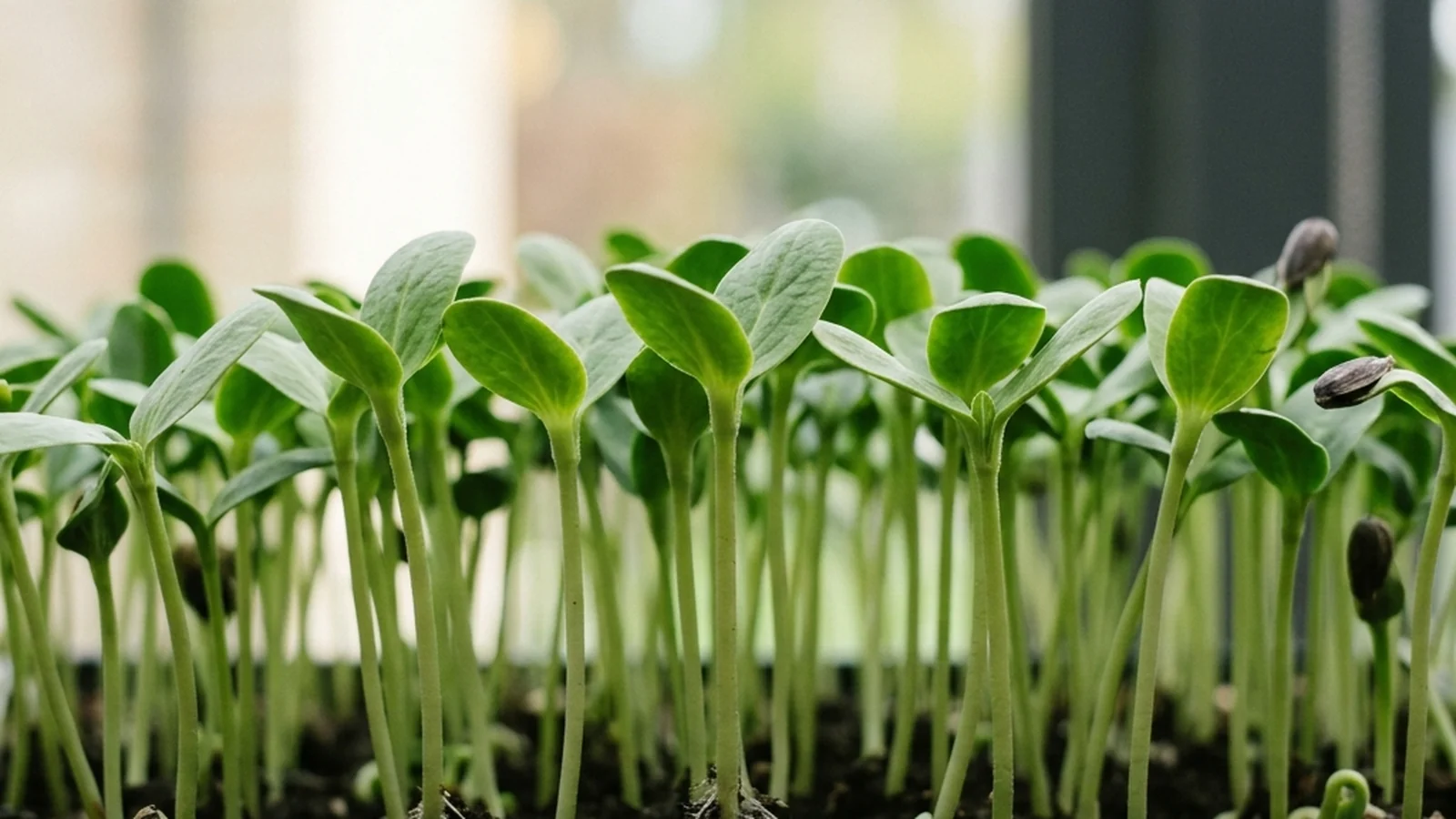
Sunflower microgreens grow log: a day-by-day timeline
Sunflower microgreens follow the same basic method as other crops, but the seed changes the process — a real presoak, a heavier blackout weight, and hulls that often do not let go of the cotyledons on their own.

Beet microgreens: a slow crop with a hard seed to match
Beet is one of the slower crops in the tray, and its seed is not really one seed at all. That single fact explains most of what looks unusual about it.
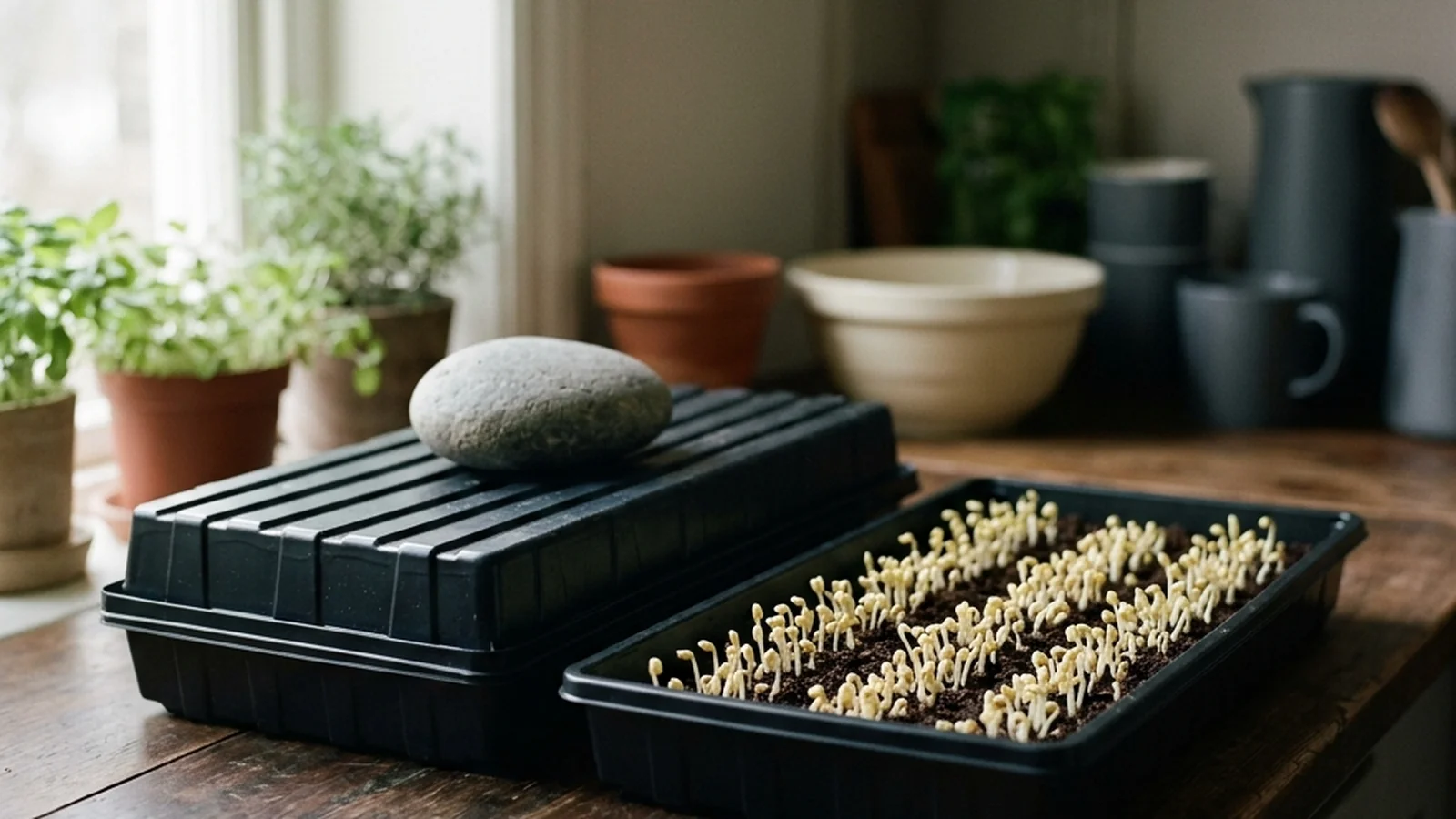
Microgreens blackout time by crop: what varies and why
Blackout time varies by crop — Utah State's table runs from 1-2 days for arugula to 7-14 for cilantro. Here is how that compares to the documented blackout methods, and how to judge readiness by the tray instead of the calendar.