Troubleshoot the system before you change the inputs.
Symptoms
- Leaves or shoot tips that looked water-soaked and dark green the morning after a freeze, then turned black.
- Soft stems that have collapsed on a tender perennial or summer vegetable.
- Evergreen leaves scorched brown at the tips and edges, but stems that still look intact.
- A woody herb or shrub that looks fine now but has not pushed any new growth.
Possible causes
- Ice crystals formed inside the plant tissue and damaged the cells, which is the damage frost does to leaves and tender new growth first.
- A tender summer crop, such as a tomato or pepper, met a frost it could not tolerate, so the whole plant is affected.
- A rapid thaw in early morning sun added injury to tissue that was already frozen.
- Cold wind dried evergreen foliage faster than the roots could replace the water.
Quick fixes
- Leave blackened growth on the plant for now and do not prune yet.
- Scratch a little bark on a woody stem with your thumbnail to see whether the tissue underneath is green.
- Water less than usual and hold back fertiliser until you see new growth.
- Once frost has passed and new buds show, cut back to green tissue or an undamaged bud.
- Decide in mid-summer: the RHS says recovery may not show until early summer, so if a plant has put out nothing by mid-summer, replace it.
A plant that looks dead after a frost often is not: wait, check the stems for green tissue, and prune only once the frost danger has passed and new growth shows you where the living wood ends. The damage is done by ice crystals forming inside the tissue, according to the University of California Master Gardeners of Butte County. The leaves and tender new growth go first. They wilt, then turn brown or black, then turn crisp. That sequence is the plant’s tissue dying, but it says little about the roots and lower stems.
If the frost is still ahead of you, emergency cold snap protection for balcony plants is the page for tonight. What follows is for the morning after.
What frost damage looks like
The RHS describes the early signs as foliage that looks water-soaked and dark green, turning black in time. What you see afterwards depends on the plant:
- Tender perennials and summer vegetables. The RHS says tender perennials such as dahlia and canna may be blackened by the first autumn frost, and their stems usually collapse. Late frosts can cause leaf scorch, browning and even total plant death in summer bedding and tender vegetables such as tomatoes.
- Hardy evergreens, including woody herbs. A hard winter frost can scorch the leaves of hardy evergreens brown. The RHS gives bay as an example and says it may eventually lead to the death of the plant.
- Woody plants in general. Damage can be slow. The RHS says that with woody plants it may take several months to appear. NC State Extension puts the usual wait for visible cold damage at a few weeks.
Two things make it worse. The RHS says repeated freezing and thawing, or very rapid thawing, is particularly damaging, and that plants in early morning sun may thaw too fast after a frost.
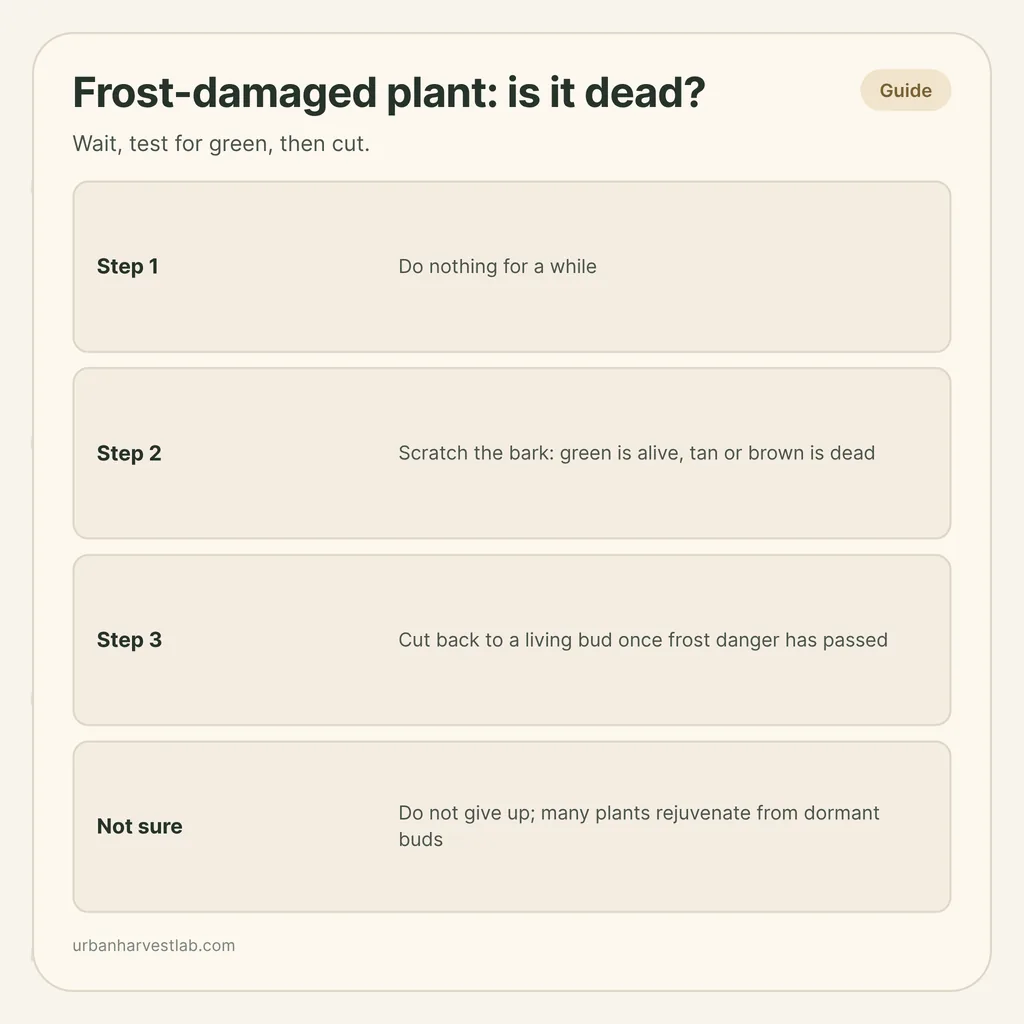
Step 1: do nothing for a while
The pull is to cut everything black off straight away. Hold back. The University of California Master Gardeners of Butte County give two reasons. Waiting means the extent of the damage becomes clear and you are less likely to remove living tissue by accident. And dead material can have an insulating effect, so taking it off early may expose more tissue to the next freeze, and a plant pruned before another freeze is more likely to lose a greater portion of itself.
NC State Extension is blunt about it: even if you see damage early, do not prune for a few weeks, and pruning is optional because it does not help the plant deal with the damage.
For a potted plant, the practical moves in the meantime are small. Keep it somewhere sheltered. The RHS suggests wrapping the pot in bubble wrap in cold weather, and keeping the previous season’s growth on more tender plants until spring because it provides valuable frost protection over winter. If more cold is forecast, bring the pot in using the steps in the cold snap page.
Step 2: test for life
On a woody stem, use the scratch test from NC State Extension. Scratch the bark with your thumbnail. If the tissue underneath is green, it is still alive. If it is tan or brown, the tissue is dead. When you do prune, NC State advises starting at the top and working down to see how far back the plant was killed.
For a woody herb such as rosemary or bay, a green scratch on lower stems is good news even when every leaf is brown. For the care that follows, see overwintering rosemary and thyme in pots. If the leaves are going brown but there was no frost, rosemary dying covers the other causes.
Soft-stemmed plants are different, because there is no bark to scratch. The RHS notes that even when the foliage of dahlias and cannas has been blackened, the roots are alive and can still be protected or lifted and stored. The RHS is describing plants in garden soil, and a pot’s roots are less protected, as the cold snap page explains in its section on why a pot loses heat faster. If the stems have collapsed, leave the pot where it is, go easy on the water as the Butte County advice below suggests, and look for new shoots from the base.
Step 3: cut when the danger is over
The RHS says that if no more frost is expected, you prune out damaged growth, cutting to an undamaged side shoot or bud. NC State Extension’s version: after a few weeks, damaged or dead growth can come off, and hard pruning is best left until new growth begins so you can see which parts survived.
In practice, that means:
- Wait until frost risk has passed where you live. For planning, first and last frost dates for a balcony explains how to find yours.
- Look for new buds or shoots on the lower stems.
- Cut back to a living bud or side shoot, starting at the top and working down.
- Stop cutting at green tissue.
Water and feeding afterward
Here the two sources differ, so choose with that in mind. The RHS suggests that after pruning out damaged growth you apply a top dressing of a general-purpose fertiliser to encourage strong regrowth. The University of California Master Gardeners of Butte County say little or no fertiliser should be applied at first, and that the plant should be watered less than usual until it returns to a normal appearance. Their reasoning is that a frost-damaged plant has lost leaves but still has the same root system, which can cause extensive new growth, and too much nitrogen can encourage sucker and water sprout growth, while too much water can damage roots.
Both are describing garden plants and shrubs, not a pot. Neither source is writing about pots; until new growth shows, the lower-input route is the cautious default. The RHS also advises avoiding nitrogen-rich fertiliser late in the season because it stimulates soft, sappy growth that is especially vulnerable to frost. For the next cold spell, the RHS recommends a thick layer of organic mulch over the root area of tender shrubs and perennials to stop it freezing; mulching container plants covers how to do that in a pot.
When to replace it
The RHS says not to give up on a frost-damaged plant: many are surprisingly resilient and may rejuvenate from dormant buds at or below soil level, and that takes time, so recovery may not show until early summer. If it is a favourite and its appearance does not spoil your display, the RHS suggests leaving it in place until mid-summer. If no regrowth has appeared by then, replace it.
The exception is tender summer crops that were out unprotected. NC State Extension says that plants such as tomatoes and peppers that were not protected from a cold snap will need to be removed and replanted. A pepper that you intend to keep through winter is a different case; overwintering peppers explains how to bring one through the cold. For a plant that is coming indoors for the season, see bringing plants indoors for winter.
One more case: if a grafted citrus tree was killed nearly to the ground and new growth comes only from the rootstock, the University of California Master Gardeners of Butte County say the tree will no longer be true to the type you planted and will usually be unproductive, so it should be replaced. Citrus also gives a signal: if frost-killed leaves stay on the plant instead of dropping, that suggests twigs or branches have been seriously damaged.
Sources
Cold-weather plant care
Protect plants before the next frost, work out when it is safe to plant out, and decide what comes indoors for the season.
Common questions
How do I know if a frost-damaged plant is dead?
Black or brown leaves do not mean the plant is dead. NC State Extension says to scratch the bark of a woody stem with your thumbnail: green tissue underneath means it is alive, tan or brown means it is dead. The RHS adds that many plants regrow from dormant buds at or below soil level, so wait before deciding.
Should I cut off frost-damaged leaves right away?
No. The University of California Master Gardeners of Butte County recommend leaving dead material on until the full extent of the damage is apparent in spring, because it can insulate living tissue and removing it early may expose that tissue to the next freeze. NC State Extension says pruning is optional and does not help the plant deal with the damage.
How long should I wait before giving up on a frost-damaged plant?
The RHS says recovery may not be seen until early summer, and suggests leaving a plant you care about in place until mid-summer. If it has produced no regrowth by then, replace it. Woody plants can take several months to show their full damage.
Should I fertilise a plant after frost damage?
The advice differs. The RHS suggests a top dressing of general-purpose fertiliser after you have pruned out damaged growth, once no more frost is expected. The University of California Master Gardeners of Butte County recommend little or no fertiliser at first and less water than usual until the plant looks normal again. Holding off until you see new growth is the more cautious route.
Related guides
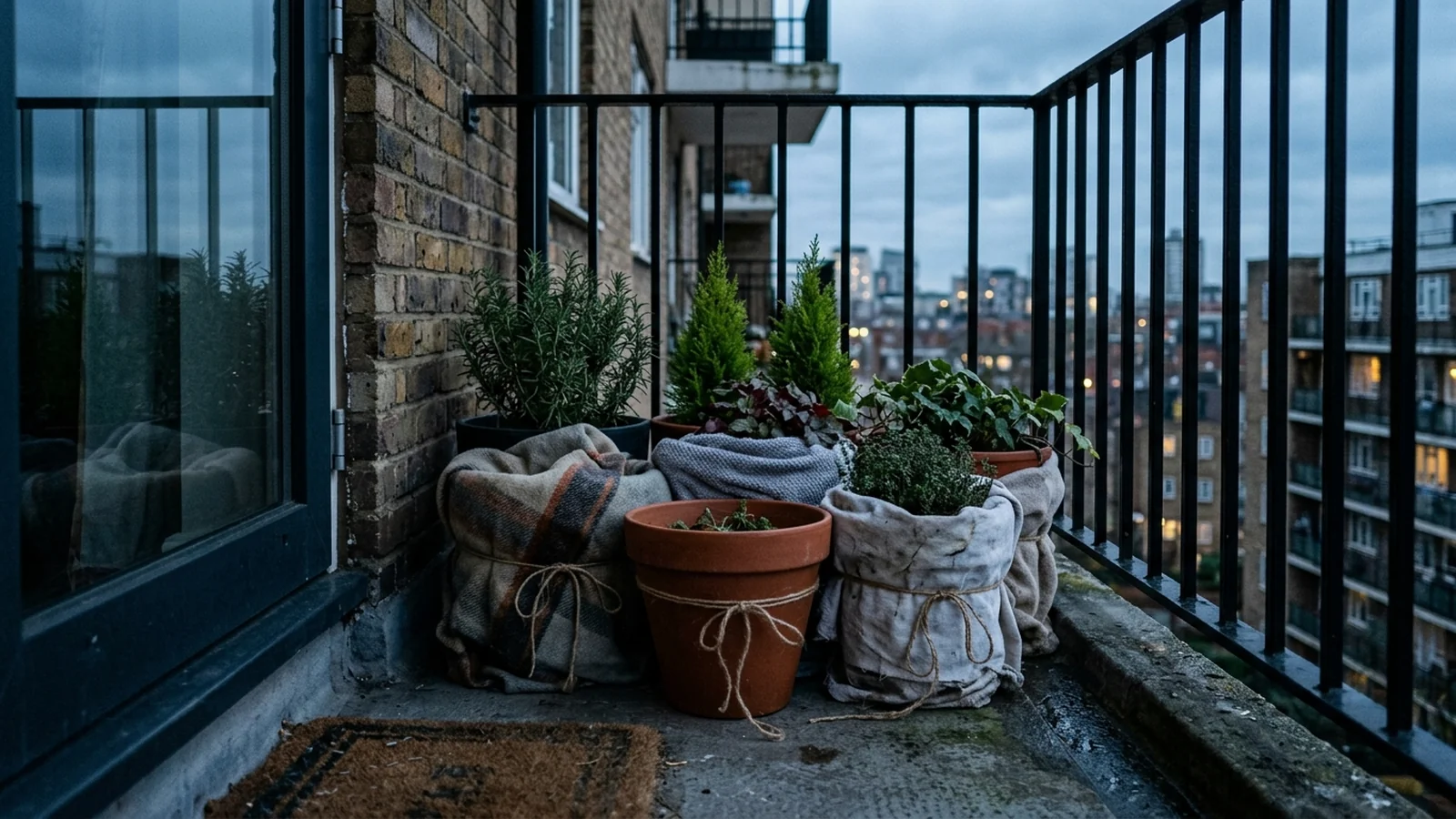
Emergency cold snap protection for balcony container plants
A frost or freeze warning lands differently when the only space you have is a balcony, a windowsill, and a flat with no garage to wheel anything into. Here is the version of this response that assumes that.

Bringing potted plants indoors for winter: what to move and what to leave
Not every pot deserves a spot on the windowsill. Here is how to decide what comes in, clear the pests, and get the plants through the light drop.
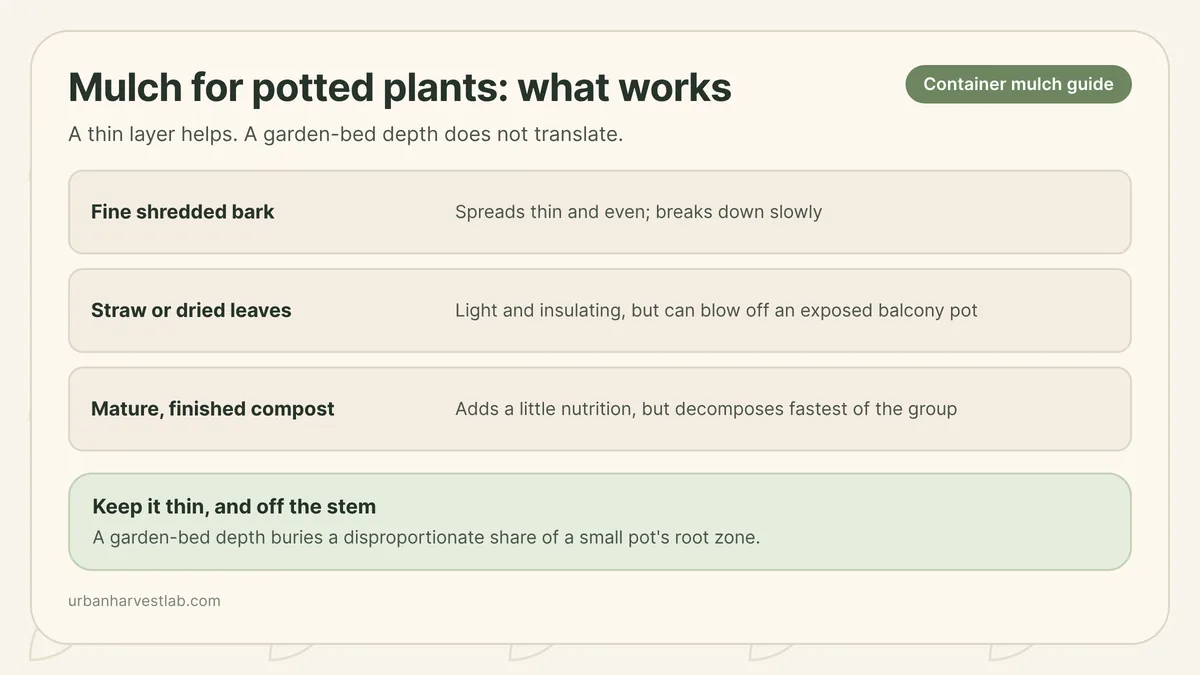
Mulch for potted plants: what actually helps in a container
A thin surface layer slows evaporation and softens heat swings in a container, but it does not fix a small pot, a compacted mix, or salt buildup on its own.