Troubleshoot the system before you change the inputs.
Symptoms
- Leaves and stems droop in the hottest part of the day, then firm up by evening
- The same plant looks normal first thing in the morning
- Soil a finger-length down is damp, or the pot dries out fast and wilting repeats daily
Possible causes
- Normal heat response: leaves lose water faster than roots can replace it on hot, sunny days
- Mix drying out in a small, dark or sun-baked pot
- Roots crowded in the pot (root-bound) or damaged by waterlogging, so uptake is poor
- Recently transplanted or young plants with small root systems
Quick fixes
- Do not water until you have checked the mix with a finger; water only if it is dry
- Look again at dusk and the next morning before deciding anything is wrong
- Shade the pot and the root zone in the afternoon and move it off hot pavement
- If the mix is dry, water thoroughly; if the plant is wilted in wet mix, look at the roots
Heat wilt versus a root or watering problem
| What you see | Likely heat response | Likely root or watering problem |
|---|---|---|
| When it droops | Hottest part of the day | All day, including the next morning |
| By evening or morning | Plant looks better | Wilting persists |
| Mix 1 to 2 inches down | Moist | Dry, or soggy |
| After you water | Not needed | Dry mix: recovers. Rotting roots: no recovery |
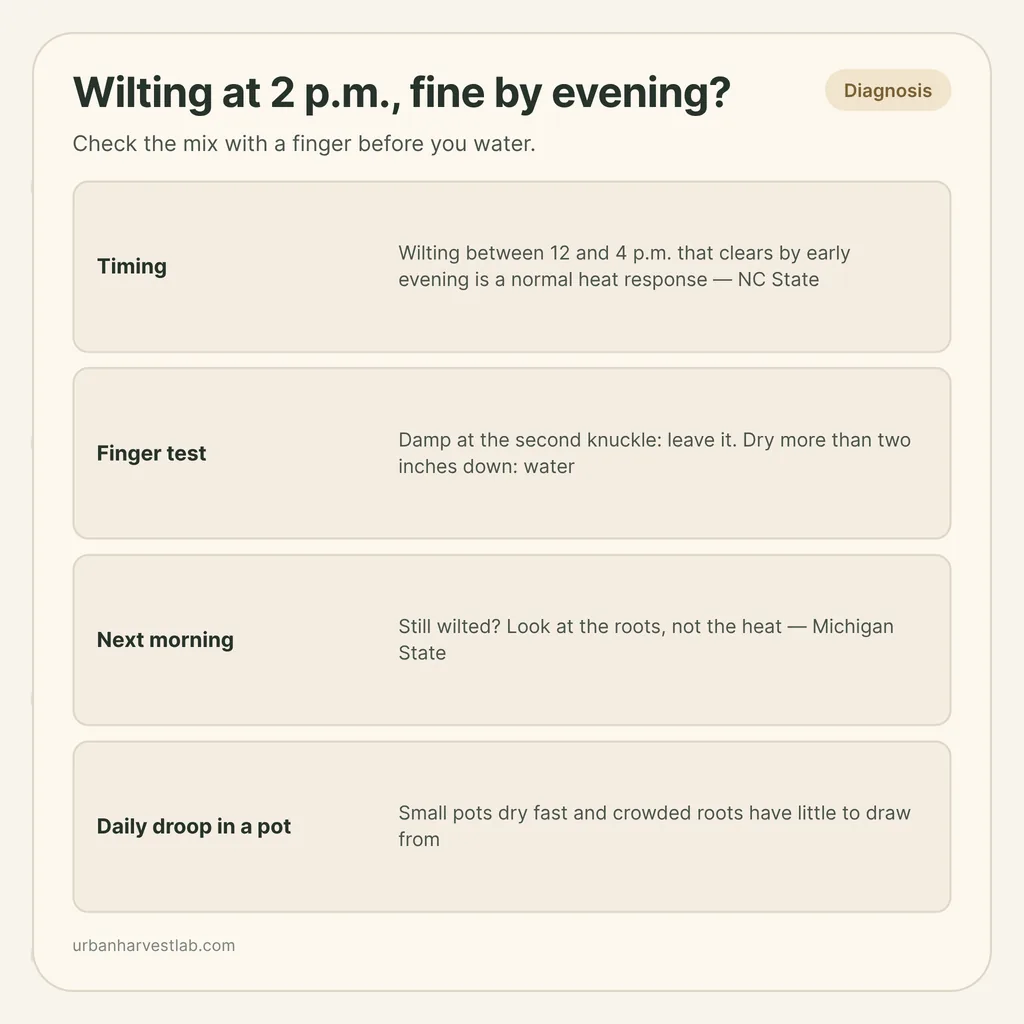
If your plant droops in the afternoon and looks normal again by evening, it is most likely handling the heat, not dying of thirst. Check the mix with a finger before you pick up the watering can, and judge the plant again next morning.
It is a familiar sight on a hot balcony: squash leaves hanging like wet cloth at 2 p.m., the same plant standing tall at 8. The urge is to water at once. Often that is the wrong move. If the problem is a heatwave rather than a daily pattern, start with protecting container plants in a heatwave.
What is happening in the leaf
NC State Extension explains that wilting happens when cells lose turgor pressure, the internal water pressure that keeps stems and leaves firm, and that as temperatures rise plants lose water through their leaves faster than they can absorb it from the soil. The soil does not have to be dry. The same page says many well-hydrated plants wilt in the heat of the day as a protective response, because drooping reduces the surface area exposed to sunlight and limits water loss.
Michigan State University Extension describes the same thing for large-leaved crops: on sunny, hot days, cucurbits lose water faster than roots can take it up, so they often wilt in the afternoon. It calls this expected. NC State names basil, squash and peppers as tender annuals where this is especially common.
The three-step check
1. Note the timing. NC State Extension puts the typical pattern at wilting between 12 and 4 p.m., with the plant perking up again by early evening. That pattern is a normal, temporary heat response.
2. Feel the mix. NC State’s test is to push a finger into the soil to your second knuckle. If it feels damp, the wilting is probably temporary. If it is dry, especially more than two inches down, it is time to water. Clemson uses a shallower test for potted plants, to the first joint, and says the plant needs water if the mix is dry at your fingertip. Either way, you are reading the root zone, not the leaves.
3. Look again the next morning. Michigan State says that wilt still showing the next morning is a concern to investigate. It adds that morning wilt generally means the roots or vascular system are compromised, through disease or insect damage.
The table sets the two outcomes side by side.
Why reflex watering backfires
Clemson Extension states that wilting is often an indication of the need to water, but not always. Roots need oxygen as well as water, and when they are surrounded by water they cannot take up oxygen. Any injury to the root system, including root rot caused by too much water, reduces the plant’s ability to take up water. That inability causes wilting, and Clemson says watering may then make the problem worse.
NC State makes the same point for the midday case: if the soil is already moist, watering again can create poor oxygen conditions for roots, which over time leads to root rot, fungal infections and more pest and disease trouble. The page recommends early morning for irrigation when a plant does need it.
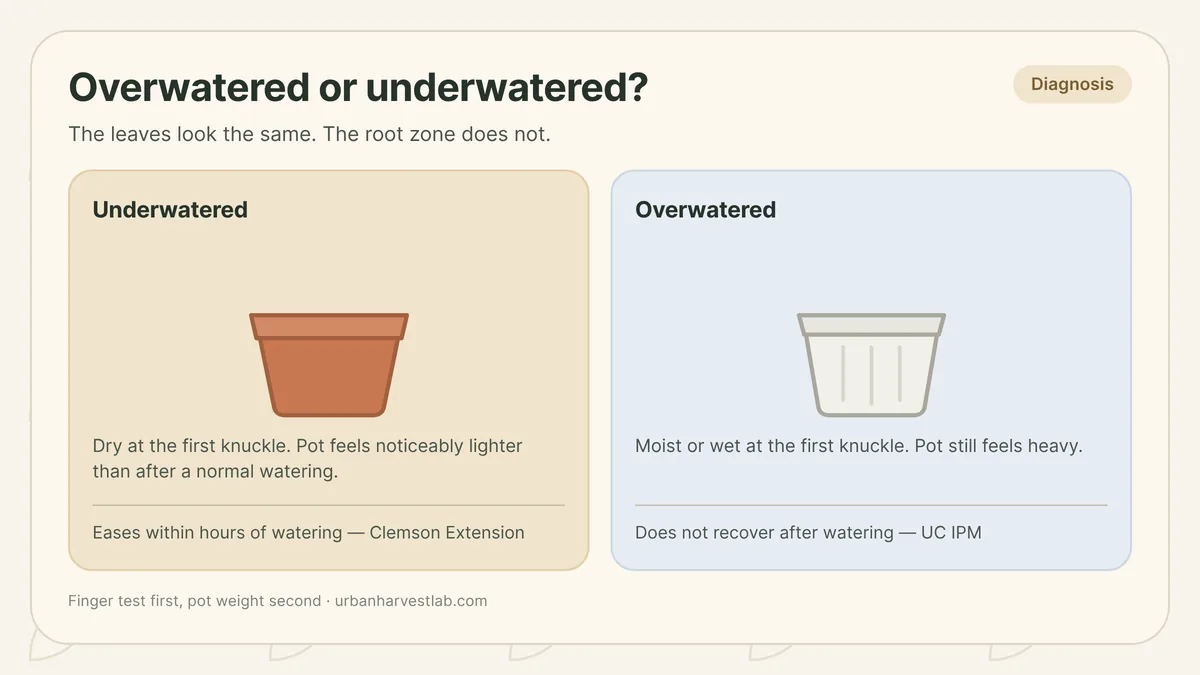
The full method for telling a dry pot from a drowned one, including pot weight, is in overwatered vs underwatered.
When the pot is the problem
Midday droop is normal. Daily droop in a container deserves a closer look, because a pot gives roots a small, fast-drying supply.
- Small or fast-drying pots. Virginia Cooperative Extension says container soil can dry out very quickly, especially on a concrete patio in full sun, and that watering daily or even twice daily may be necessary once plants are established. It lists plants wilting every day as one sign the soil is getting excessively dry, and notes small pots dry out more quickly than larger ones.
- Dark or metal containers. University of Illinois Extension says dark-coloured and metal containers absorb more heat, which heats the soil and can damage plants.
- Hot surfaces. Virginia Cooperative Extension advises protecting plants from heat reflected off pavement, moving them to a cool spot or shading them during the hottest part of the day.
- Crowded roots. Clemson lists a solid mass of roots around the rootball, roots growing out of the drainage hole, and a plant that needs frequent watering or wilts shortly after watering as signs to repot. Its general advice is a pot 1 or 2 inches larger in diameter, done during active growth rather than on a plant that is already ailing. Clemson also notes that a large plant in a small pot needs water more often than a small plant in a large pot. For pot volumes by crop, see the tomato pot size guide.
- Young or newly planted. NC State says younger plants and recently transplanted ones need more careful monitoring than established plants. If the wilting began right after planting out, transplant shock is the better match.
When it is not heat
Three signs say stop waiting:
- Still wilted the next morning. Michigan State and NC State both treat persistence into the next morning as the sign that something besides heat is going on. NC State lists dry, curled or brittle leaves, yellowing or dropping lower leaves and soil that is dry well below the surface as the drought version.
- Wilting in wet, poorly drained mix that does not clear when you water. UC IPM, writing about Phytophthora root and crown rot, says that unlike plants suffering from water stress, affected plants do not recover when irrigated. A dry plant that perks up within hours of a soak was thirsty. One that does not was not.
- One crop, one pattern. If it is a tomato that wilts while the mix is damp, the tomato wilting guide covers waterlogging, Fusarium, Verticillium and bacterial wilt.
What to do on a hot afternoon
- Do the finger check first. Damp: leave it alone and look again at dusk. Dry: water slowly until it runs out of the drainage holes.
- Shade the pot, not just the plant. Group containers so the foliage shades the soil, as Virginia Cooperative Extension suggests, and keep pots off hot paving.
- Mulch. NC State suggests 2 to 3 inches of mulch around plants to retain soil moisture and buffer soil temperature; the container mulch guide covers pots.
- Water in the morning. NC State says early morning gets water to the roots before the day’s heat and lets leaves dry.
- Plan for a heatwave. The heatwave protection guide has the full response, and how often to water container vegetables covers frequency.
Sources
- NC State Extension, Beaufort County: What “wilting” really means, heat stress vs. water needs
- Michigan State University Extension: Southwest Michigan vegetable update, July 10, 2019
- Clemson HGIC: Indoor plants, watering
- Clemson HGIC: Indoor plants, transplanting and repotting
- UC IPM: Phytophthora root and crown rot in the garden
- Virginia Cooperative Extension: Vegetable gardening in containers
- University of Illinois Extension: How to grow fruits, vegetables and herbs in containers
Wilting, watering and summer heat
Related pages for telling thirst from root trouble and protecting pots in hot weather.
Common questions
Why do my plants wilt in the afternoon when the soil is wet?
On hot days leaves lose water faster than roots can supply it. NC State Extension notes that many well-hydrated plants wilt in the heat of the day as a protective response, and that drooping reduces the leaf surface exposed to the sun.
Should I water a plant that wilts at midday?
Check first. NC State Extension suggests pushing a finger to your second knuckle: if the soil feels damp, the wilting is probably temporary, and watering again can leave roots short of oxygen. If it is dry, water.
How do I know if midday wilting is a sign of root damage?
Look the next morning. Michigan State University Extension says wilt that is still showing the next morning is a concern to investigate, and that morning wilt generally means the roots or vascular system are compromised.
Why does my potted plant wilt every single day?
Small containers dry out quickly. Virginia Cooperative Extension lists daily wilting as one sign the soil is getting excessively dry, and Clemson lists wilting soon after watering as a sign a plant needs repotting.
Related guides

Tomato plant wilting even though you water it: heat, roots, or disease
Midday droop that clears by evening is usually heat. Wilt that stays after watering points to rotting roots or a vascular disease, and a cut stem tells you which.
Overwatered vs underwatered: how to tell which one you have
Reading the root zone directly, with a finger test, pot weight, and how the plant responds to being watered, settles what the leaves alone cannot.
How often to water container vegetables: volume and crop stage set the interval
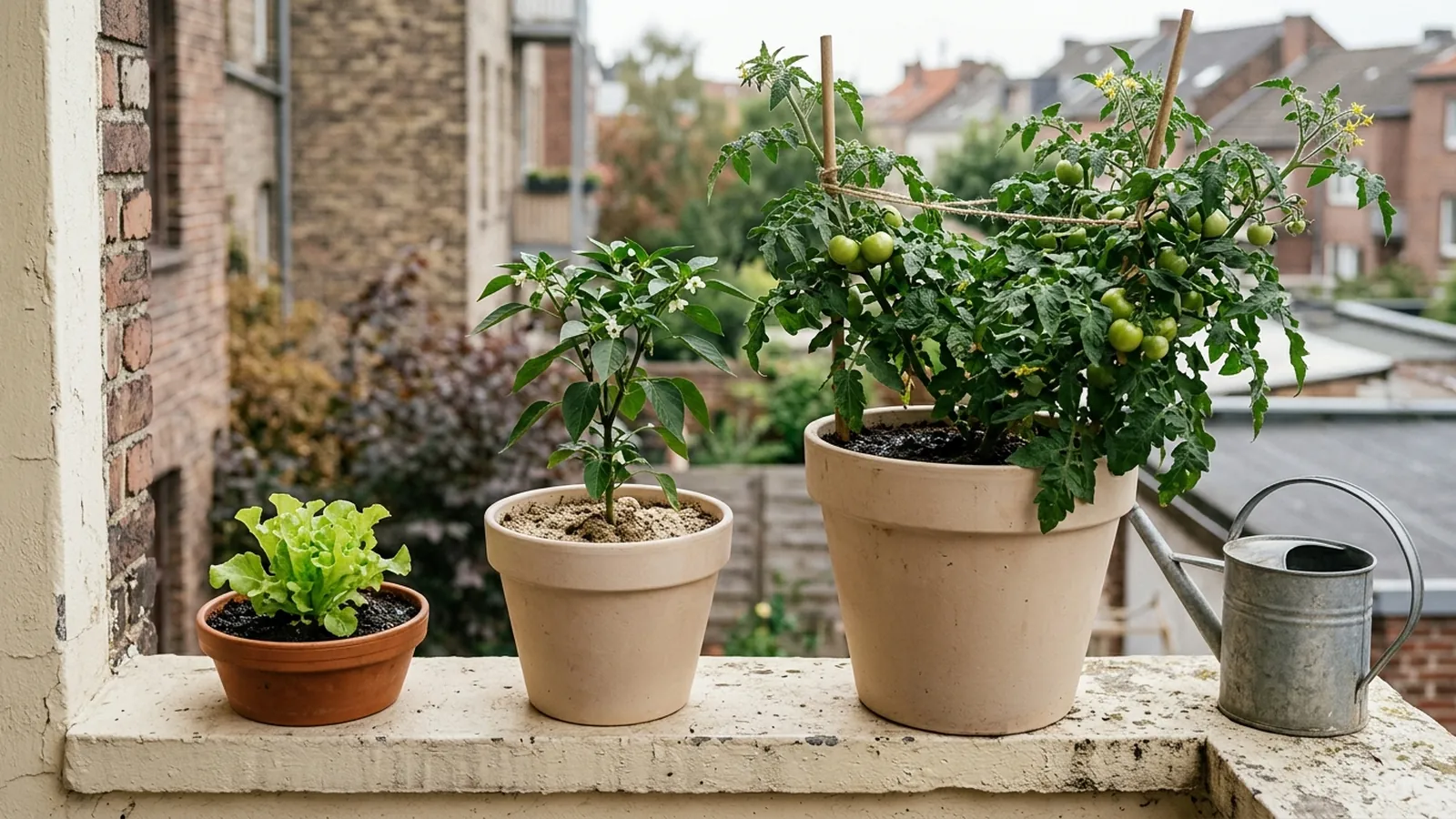
A pepper in a 2-gallon pot in May and the same pepper in the same pot in August are two different watering problems. Once you can see why, the question stops being how often and becomes how much mix you gave the plant, and what it is carrying right now.