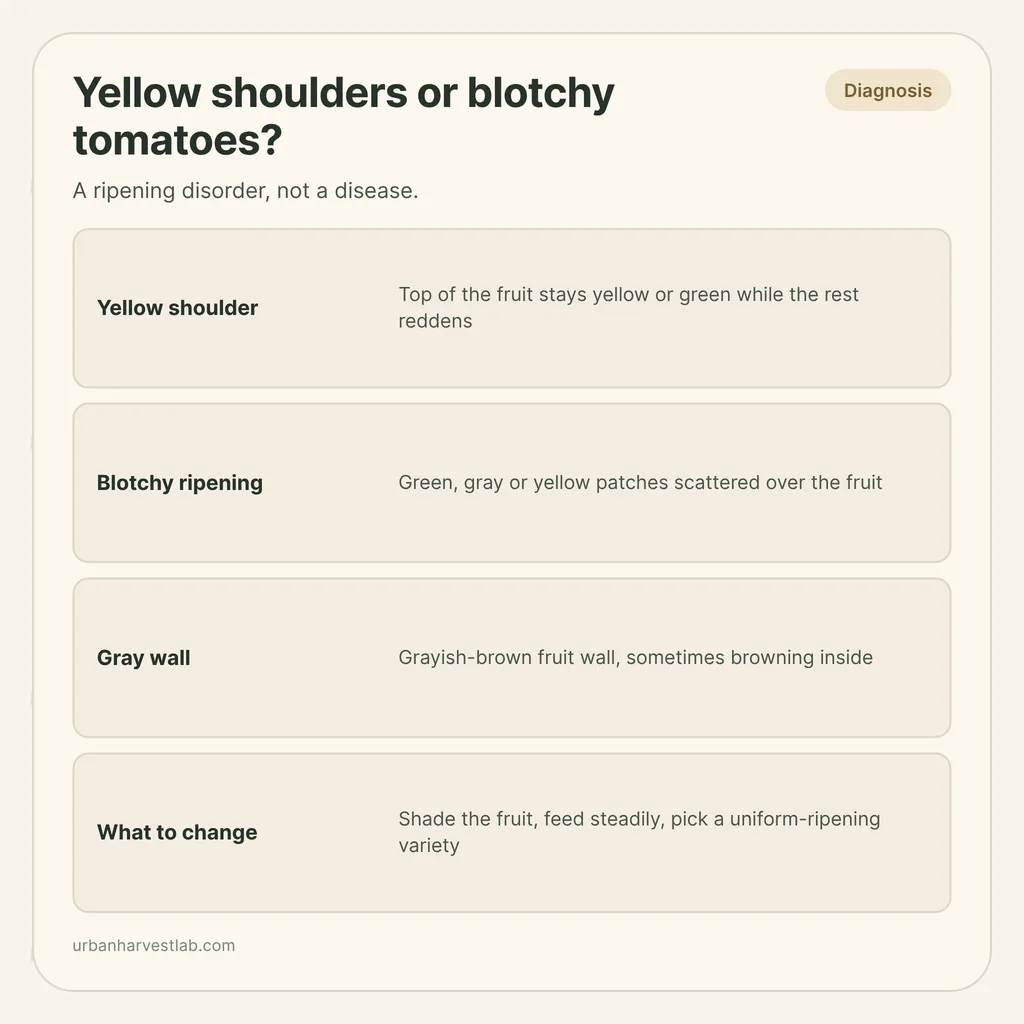
Troubleshoot the system before you change the inputs.
Symptoms
- The top of the fruit stays yellow, green or hard while the rest turns red.
- Irregular green, yellow or gray patches scattered over the fruit, sometimes with a gray-brown wall or tough white tissue inside.
- Fruit is the right size and age, and other fruit on the plant colors normally.
Possible causes
- High temperatures, with the shoulder taking the most direct sun.
- Potassium in the plant too low for the fruit load, often after cloudy, wet weather or a hot root zone.
- A green-shouldered variety.
- A dense canopy, compacted mix or heavy nitrogen feeding (blotchy ripening).
- Whitefly feeding on the fruit (irregular ripening).
Quick fixes
- Pick marked fruit when the rest of it is ripe and cut out the hard, pale tissue; it will not color further.
- Keep leaves over the fruit and shade the pot in heat waves.
- Feed on a steady schedule without overdoing nitrogen, and keep the mix loose.
- Switch to a uniform-ripening variety next season.
Tomatoes with yellow or green shoulders, or gray and yellow blotches, have a ripening disorder, not a disease. The marked tissue is damaged, so it will not turn red however long it hangs. What you can change is the fruit still to come: its shade, its feeding, and next year’s variety.
Fruit that colors badly in patches is the subject here. If whole fruit stays green and will not blush at all, see green tomatoes not ripening. If the damage is a pale, papery patch on the side facing the sun, that is sunscald.
Which pattern is it?
Extension sources use several names for what is closely the same problem, and the pattern on the fruit tells you which one you are looking at.
| What you see | Name | Where it sits |
|---|---|---|
| Top of the fruit stays yellow or green and hard while the rest reddens | Yellow shoulder | Around the stem end |
| Green, gray or yellow patches scattered over the surface | Blotchy ripening | Anywhere on the fruit |
| Grayish-brown fruit wall, sometimes browning inside | Gray wall | Outer wall, often visible on green fruit |
| Hard white corky tissue through the wall and core | Internal whitening | Cut the fruit open to see it |
The University of Missouri describes yellow shoulder as areas at the top of the fruit remaining yellow as the rest ripens and turns red, and blotchy ripening as the similar disorder scattered irregularly over the whole fruit. eOrganic, hosted by Oregon State, adds that gray wall typically appears on green fruit before ripening. The University of Connecticut lists yellow shoulder, yellow eye, green shoulder, yellow tag, gray wall and internal white tissue as names for one primary disorder.
It is damaged tissue, not slow tissue
The University of Connecticut is direct about this: yellow shoulder is not a delayed ripening but an actual disorder of the affected tissue. The green chlorophyll in those regions fails to develop red pigment, and it happens very early in fruit development. Two consequences follow.
Leaving fruit to color up does not work. The same university says that letting fruit hang longer has no payoff and can raise the risk of fruit rots. Pick marked fruit when the rest of it is ripe.
And the fruit that is already hanging will not improve. The University of Connecticut says that once fruit is damaged it will not improve, which is why the fixes below are about the next flush.
The University of Missouri says the tissue under the yellow area is tough and poorly flavored. Treat it as a quality problem and cut the hard patch out.
What causes it
No single cause explains every case. The University of Connecticut says many scientists believe several factors interact: high temperature above 90 F, nutrition, the variety, and virus. Four of them are worth checking on a balcony.
Heat on the shoulder
The University of Missouri explains why the shoulder goes first: it is the part of the fruit most often exposed to direct, warming sun, and high temperatures retard or prevent the red pigment lycopene, so the shortfall shows there. The Pacific Northwest Plant Disease Handbook gives the cause as possibly high temperature or exposure to sun, and its advice is to shade the fruit from sun. The heatwave guide for container plants covers shading the pot and the plant in hot spells.
Potassium the plant cannot take up
University of Maryland Extension traces yellow shoulder, blotchy ripening, gray wall and internal whitening to one root cause: lower levels of potassium in the plant than the fruit needs to ripen properly. The University of Missouri puts numbers on it: when plant tissue potassium drops from adequate (4-6%) to low (2-3%), yellow shoulder often follows, especially if temperatures are high.
Maryland’s researcher found that the soil itself was not necessarily the problem: in high tunnels during a wet, cloudy summer, soil potassium tested adequate or high while leaf tissue was low to very low. That work was in high-tunnel ground, not potting mix, so treat any application to pots as our inference, not Maryland’s finding. Anything that interferes with uptake can cause it, especially under a heavy fruit load. The same author notes that a hot root zone reduces water and potassium uptake, and that growers using white plastic mulch to lower soil temperature had fewer problems with yellow shoulder in late summer. In a small high-tunnel trial, University of Maryland Extension removed half of the green fruit from some plants; a month later almost 0% of their fruit had ripening problems, against about 20% on plants left fully loaded.
For a pot, that points to steady feeding and not letting the root ball cook, rather than a one-off dose of anything. A feeding rhythm for tomatoes is in the container vegetable fertilizer schedule. Maryland also says that making sure the soil holds enough potassium no longer looks like the best solution on its own.
Variety
The University of Missouri says tomato varieties that are green-shouldered when immature are more likely to show yellow shoulder than varieties with uniformly green immature fruit. Its advice is to choose varieties with the uniform-ripening trait. The University of Connecticut agrees that cultivars differ, though it adds that little research has identified which fresh-market varieties are more or less susceptible. If one variety is the only one marked, that is your answer.
Canopy, nitrogen and compaction
For blotchy ripening the University of Missouri lists compacted soil, above-optimal nitrogen, excessive application of potassium-competing nutrients, and excessively large or dense foliage canopies. It adds that high temperature with high humidity and low light seems to provide the ideal environment. Yellow shoulder is the opposite on canopy: the same source recommends good foliage cover over the fruit. A plant stripped of leaves, or one that has lost them to disease, exposes the shoulder. Prune with that in mind, as in pruning container vegetables.
Look-alike: whitefly feeding
eOrganic notes that silverleaf whitefly larvae inject toxins into tomato fruit when feeding, causing irregular ripening, and that affected fruit will not ripen. If you also see clouds of tiny white insects when you shake the plant, see whiteflies on balcony vegetables.
What to do now and next time
- Harvest marked fruit when the rest is ripe. Waiting longer does not help, per the University of Connecticut.
- Keep leaves on the fruit side. Do not strip foliage in summer; shade the fruit and the pot in a heat spell.
- Keep the root zone cool. Maryland says a hot root zone cuts water and potassium uptake, and describes white plastic mulch lowering soil temperature in field beds. Shading the pot in a heat wave serves the same purpose.
- Feed steadily and skip the nitrogen surge. Heavy nitrogen feeding is a listed factor in blotchy ripening, and the University of Missouri’s management advice stresses supplying “ample amounts of potassium”. Maryland’s caveat still applies: soil potassium alone is not enough.
- Keep the mix loose. Compaction is a listed factor.
- Ease the load if the plant is heavily laden. Maryland’s trial supports it, though it was a high-tunnel study.
- Change the variety. A uniform-ripening type is the most reliable change for next season.
Sources
- University of Connecticut IPM: Yellow shoulder on tomato
- University of Missouri Extension: Tomato fruit disorders
- University of Maryland Extension: Tomato ripening problems and the role of potassium
- eOrganic: Management of non-pathogenic fruit disorders of tomato in organic production systems
- Pacific Northwest Plant Disease Management Handbook: Tomato yellow shoulder
Tomato fruit problems
Other reasons tomato fruit ripens badly, splits or marks, and how to tell them apart.
Common questions
Why do my tomatoes have yellow shoulders?
Yellow shoulder is a physiological disorder where the top of the fruit stays yellow while the rest ripens red, per the University of Missouri. The University of Connecticut cites heat above 90 F, and low potassium in the plant and a green-shouldered variety are the other usual drivers. The University of Connecticut also says several factors interact and the cause is not settled.
Will yellow-shouldered tomatoes ripen if I leave them on the plant?
No. The University of Connecticut says the practice of letting fruit hang longer to color up does not work, because the affected tissue has a disorder rather than a delay. The University of Missouri adds that the tissue under the yellow area is tough and poorly flavored.
Is gray wall the same as yellow shoulder?
They are closely related. The University of Connecticut lists gray wall among the names for one disorder, and University of Maryland Extension gives the same root cause for both: not enough potassium in the plant for the fruit to ripen properly. Gray wall shows as grayish-brown fruit wall, sometimes with browning inside.
Does adding potassium fix blotchy tomatoes?
Not by itself. University of Maryland Extension found soil potassium adequate or high on plants whose tissue was low, and says that having enough in the soil no longer looks like the best solution. Weather, heavy fruit load and a hot root zone all limit uptake.
Related guides
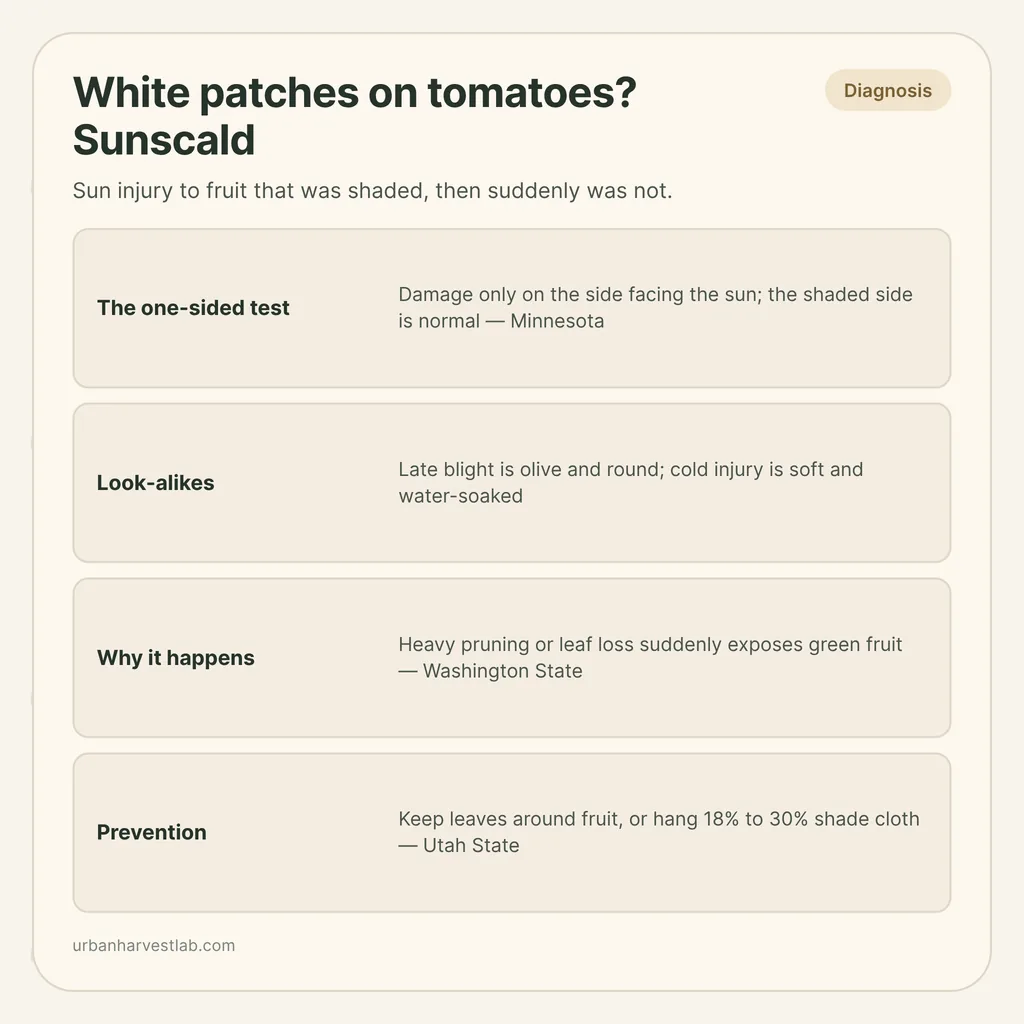
White patches on tomatoes? How to spot sunscald and stop it
A tomato or pepper that was shaded by leaves and then suddenly was not can bleach on the exposed side. The damage stays on that fruit, but the next ones are avoidable.

Green tomatoes not ripening: heat, cold, and what to do
A full-size green tomato that refuses to blush is usually waiting on the weather. Heat above the mid-80s and nights below the mid-50s both stall color, and fruit picked at the right stage will finish indoors.
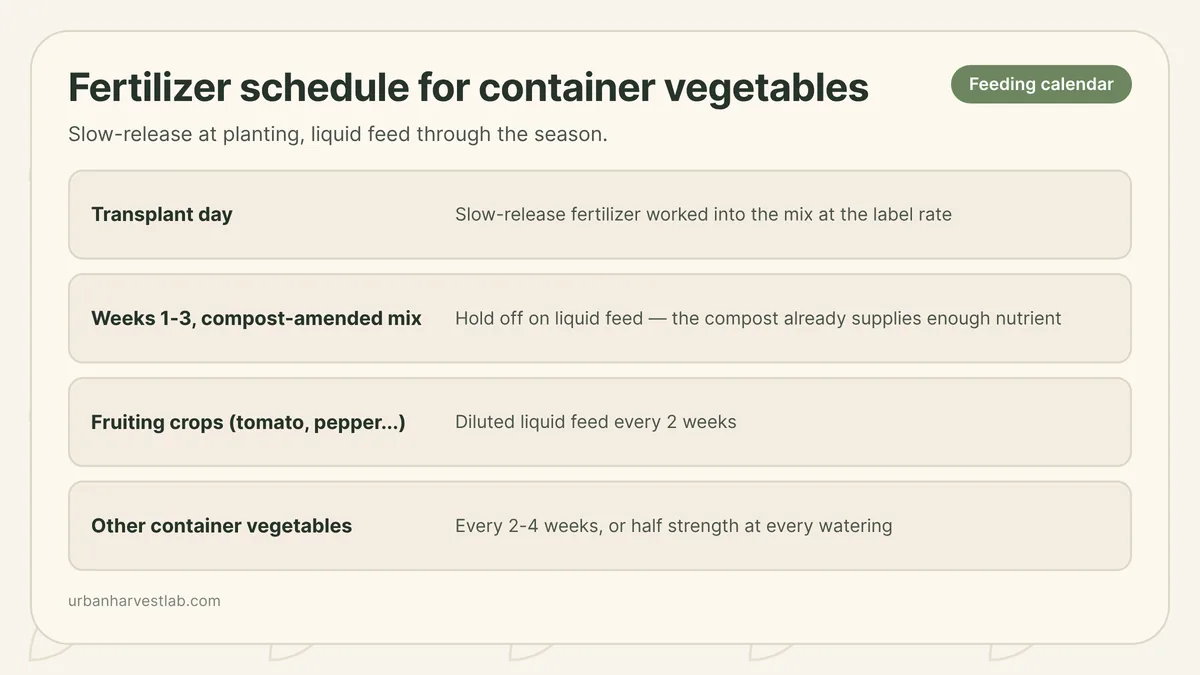
Fertilizer schedule for container vegetables: what to feed and when
A stage-by-stage feeding calendar for container vegetables, built from extension guidance on slow-release charges, liquid top-ups, and the intervals that keep fruiting crops producing.