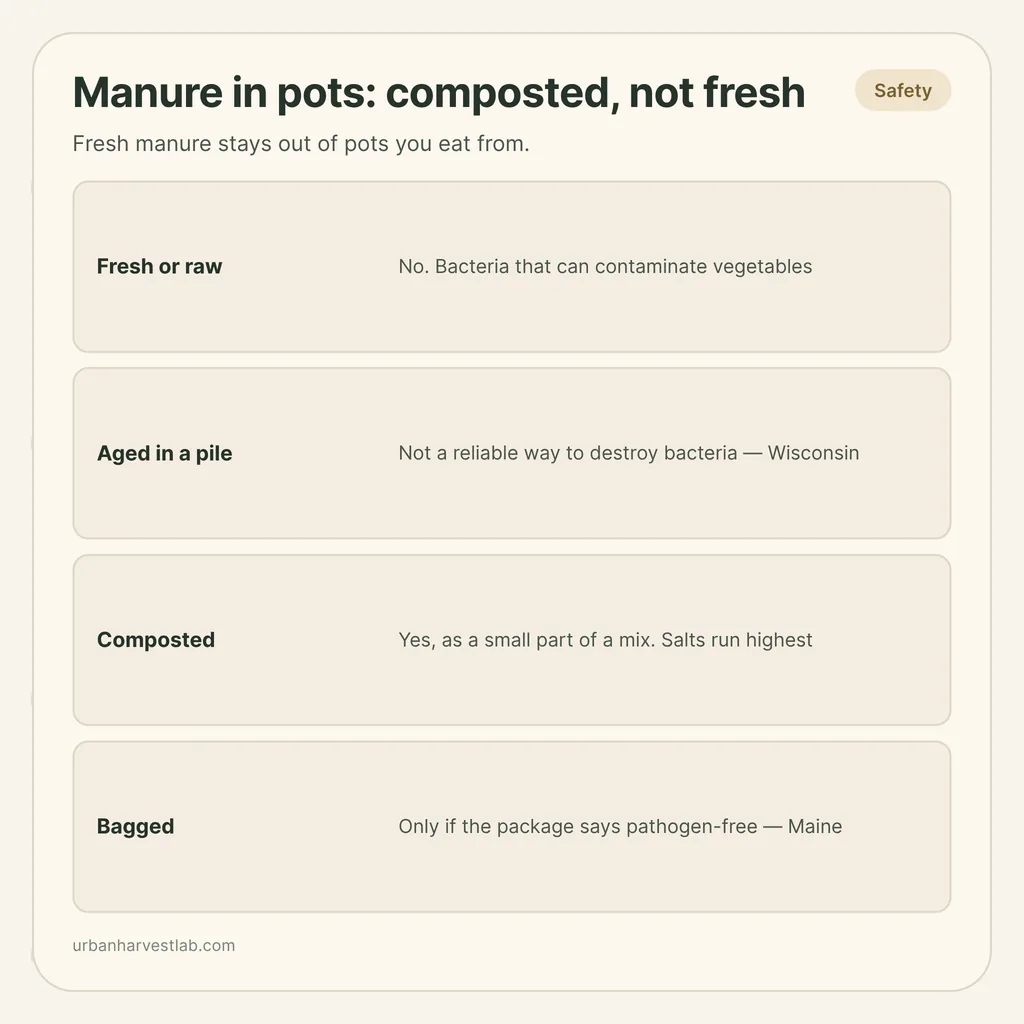
Which manure form suits a pot
| Form | In a pot with edibles? | Main concern |
|---|---|---|
| Fresh or raw manure | No | Pathogens that can contaminate vegetables |
| Raw manure aged in a pile | Not reliable | Wisconsin says pile storage is not regarded as a reliable way to destroy bacteria |
| Properly composted manure | Yes, as a small part of a mix | Salts run highest in manure-derived composts; herbicide carryover from the feed |
| Bagged, commercially processed manure | Yes, if the package says pathogen-free | Same salt and carryover questions; read the label |
| Cat, dog, pig, pet or human waste | No | Parasites and pathogens that extension sources keep off vegetable soil |
Composted or commercially processed manure can go into a pot as a modest part of the mix. Fresh manure should stay out of containers you plan to eat from. Fresh manure can carry bacteria that contaminate vegetables. Even the composted kind brings dissolved salts that a pot cannot dilute the way open ground does.
If you are still deciding what to feed a planter at all, start with a label-first guide to fertilizer for herbs in pots.
Why fresh manure is the problem
The University of Wisconsin Division of Extension puts it directly: fresh manure “can also contain bacteria that can contaminate vegetables and cause human disease.” The University of Maine Cooperative Extension names Listeria, Salmonella and E. coli O157:H7, along with roundworms and tapeworms, as pathogens that animal manure can carry.
Contact matters. Maine says the risk is greatest for crops such as radishes, carrots and leafy vegetables like lettuce, where the edible parts touch the soil. A pot of lettuce or herbs sits close to that situation, since the leaves are low and close to the soil surface.
Maine also flags that some people should skip uncooked vegetables from manured gardens altogether, including pregnant women, the elderly and very young children.
Washing and cooking help but do not settle it. Wisconsin says washing produce reduces the risk of contamination “but will not ensure safety,” while thorough cooking usually destroys disease-causing bacteria.
What USDA’s 90 and 120 day rule actually says
The numbers people quote come from USDA’s National Organic Program. Under 7 CFR 205.203, raw animal manure must be composted unless it is applied to a crop not intended for human consumption, or incorporated into the soil at least 120 days before harvest of a product whose edible portion touches the soil, or at least 90 days before harvest of one whose edible portion does not.
Two things follow for a gardener with pots.
First, the wording is about manure incorporated into soil, which describes a bed or field. Nothing in it turns a freshly filled planter into a safe one after a few weeks. Both the Wisconsin and Maine pages give the same 120 and 90 day figures as the standard for raw manure on garden vegetables.
Second, the intervals are a floor, not a guarantee. The University of Wisconsin’s Steven Ingham reports that applying fresh cow manure 90, 100 or 110 days before harvest “may significantly increase the likelihood” that E. coli from the manure ends up on vegetables. His research also found that the interval between application and planting matters even more than the interval to harvest, because vegetables are most sensitive to contamination just after sprouting.
Wisconsin’s three safer options are properly composted or otherwise sterilized manure, raw manure applied in fall before the next spring’s crops, or raw manure applied early in spring with only fall-season crops planted in that soil. In a pot you refill each season, the first option is the practical one.
Why “aged in a pile” is not the same as composted
Wisconsin is specific that storing manure in a pile “will cause some death of disease-causing bacteria, but is not regarded as a reliable way to destroy them.” Composting kills bacteria only when the manure gets hot enough for long enough. For certified organic producers, USDA’s rule requires 131 to 170 °F for 3 days in an in-vessel or static aerated system, or for 15 days in a windrow turned at least five times. Maine suggests a pile that reaches 140 °F to reduce risk further.
A sack from a farm gate labelled “well-rotted” does not tell you any of that. For compost safety in general, including how to judge maturity, see choosing compost that is safe for edible containers.
Bagged manure: read the package
Maine’s guidance is that commercially processed manure sold at garden centers “should indicate on the package if it is pathogen-free.” Treat that as the test. A bag that says nothing about processing or pathogens is an ornamental-bed product until proven otherwise.
Salts: the second problem, and the one that follows composted manure into the pot
A BioCycle Q&A reprinted by Washington State University Extension calls high salinity “the most frequent cause of compost problems,” says salt levels vary greatly with feedstock and “tend to be highest in manure-derived composts,” and gives rapid wilting and yellowing leaves as the symptoms. It reports that a conductivity above 3-4 mmhos/cm in compost-amended soil or potting media leads to plant damage unless the substrate is leached first, and notes that leaching before planting is typically not possible with potting mixes. That figure is for the finished mix; for the compost itself, Utah State University Extension says not to use it straight in a potting mix above 2.5 mmhos/cm, which choosing compost that is safe for edible containers covers.
The same source warns that nitrogen-rich composts can release ammonia, which burns the margins of young leaves. That is one reason manure compost is better treated as a small ingredient than as the base of a mix. How much compost of any kind a mix can take is covered in how much compost to add to potting mix. If leaf tips are already browning or a white crust is forming, salt buildup in herb pots explains when to flush and when to repot.
Herbicide carryover rides in manure too
The National Pesticide Information Center explains that certain broadleaf herbicides used on pasture “can pass through their digestive tract unchanged,” so the residues end up in the animals’ manure. Peas, beans, tomatoes and lettuce are among the crops it names as sensitive. Ask where the manure came from and what the animals ate; the compost page above covers the bioassay test.
What stays out of the pot
Pet waste and human waste do not belong on vegetable soil. Wisconsin says so plainly, and Maine says not to use cat, dog or pig manure in vegetable gardens or compost piles. That covers a planter on a balcony just as it covers a garden bed.
If you want the nutrients without the risk
Manure is a nitrogen-rich organic input, and whether organic inputs beat synthetic ones in a pot is a separate argument, taken up in organic versus synthetic fertilizer. For a gentler, more predictable organic option, worm castings in a container mix is a better starting point.
Sources
- University of Wisconsin Division of Extension, “Safely Using Manure in the Garden”
- University of Maine Cooperative Extension, “Bulletin #2510, Guidelines for Using Manure on Vegetable Gardens”
- USDA National Organic Program, 7 CFR 205.203 (eCFR)
- Washington State University Extension (Whatcom County), “Can Compost Damage Plants?” (BioCycle Q&A)
- National Pesticide Information Center, “Can I use compost contaminated with clopyralid or other herbicides?”
Feeding and filling pots safely
Manure is one compost-family input; these pages cover the safety checks, salt problems and alternatives.
Common questions
Can you use manure in potted plants?
Composted or commercially processed manure, yes, with a salt check. Fresh manure, no: extension sources from Wisconsin and Maine describe it as a source of bacteria that can contaminate vegetables.
How long should manure sit before I plant in it?
For a pot, use composted or commercially processed manure, which needs no waiting period under the USDA organic rule. University of Wisconsin lists two safer raw-manure options: apply it in fall before the next spring planting, or apply it early in spring and plant only fall crops. The 120-day (edible part touches soil) and 90-day (it does not) USDA intervals are intervals to harvest for manure incorporated into soil, and Wisconsin research found the gap between application and planting matters even more.
Is bagged manure safe for container vegetables?
The University of Maine says commercially processed manure should state on the package whether it is pathogen-free. A bag that does not say so is a reason to choose another product. Salts and herbicide carryover are separate questions the label may not answer.
Can I use cat, dog or human waste as fertilizer?
No. The University of Wisconsin says pet and human waste should not be used to fertilize soil in which vegetables are grown, and the University of Maine says not to use cat, dog or pig manure in vegetable gardens or compost piles.
Related guides
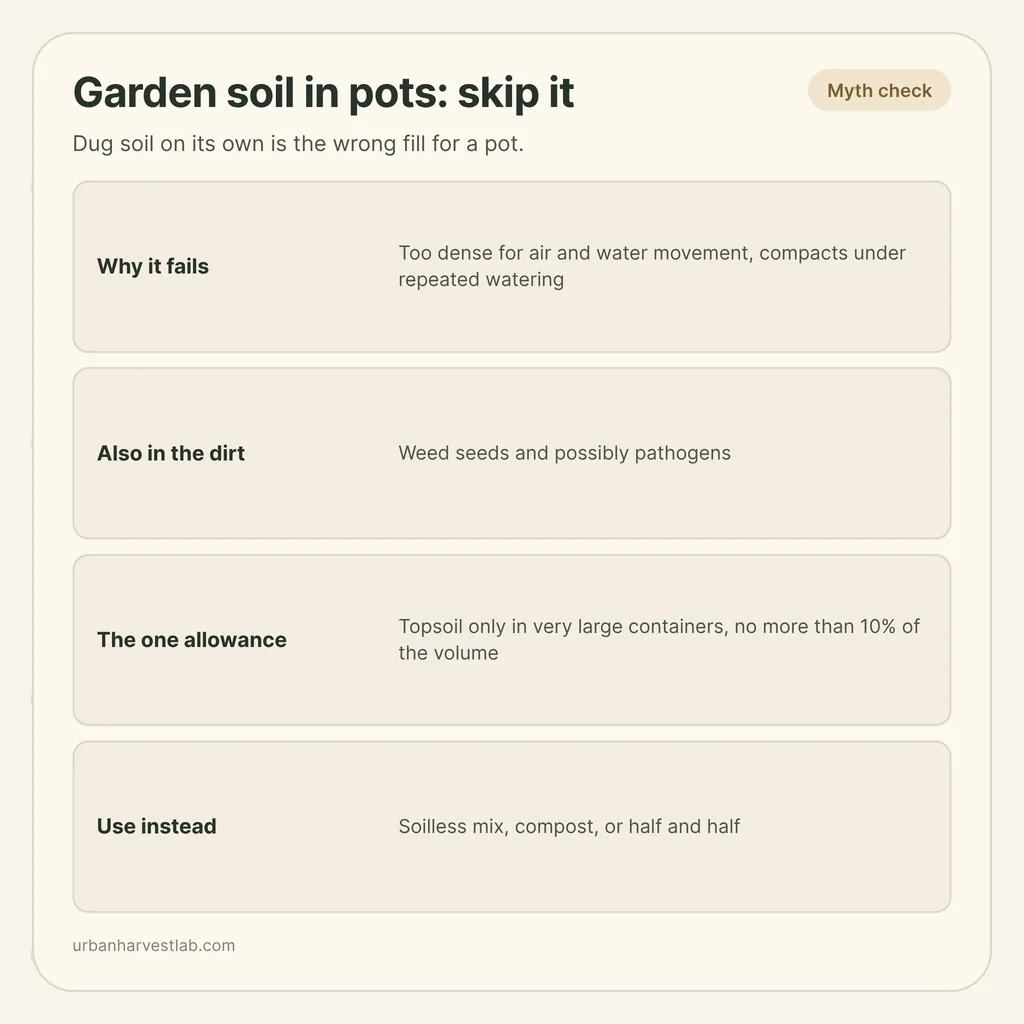
Can you use garden soil in pots? When it works and when it fails
Soil that grows a fine bed can smother roots once it is walled into a pot. Here is why it compacts, how much (if any) to mix in, and the better ways to use that free dirt.
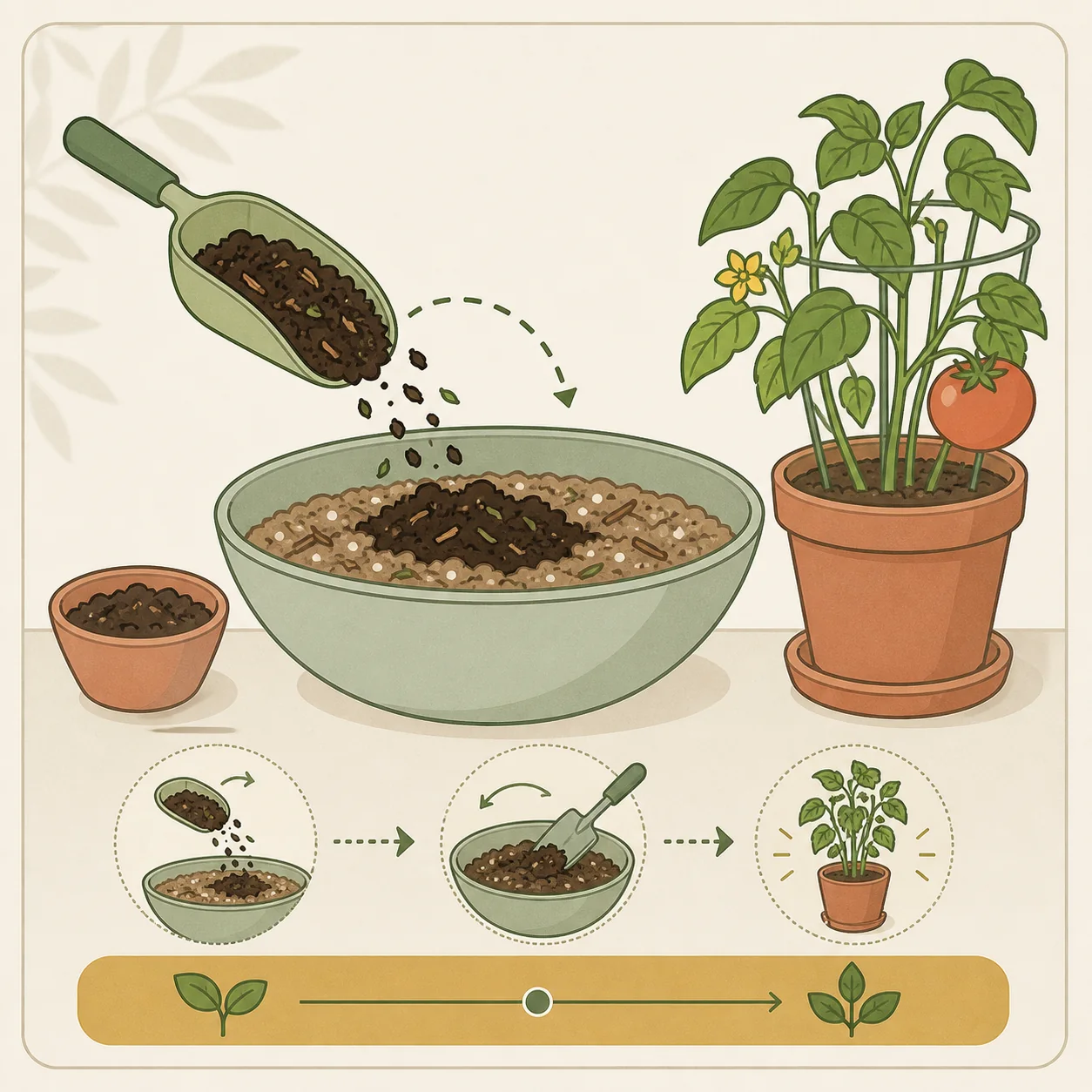
How much compost should you add to potting mix?
More compost is not automatically better. In a container, compost must share limited space with the coarse particles that preserve air around roots.
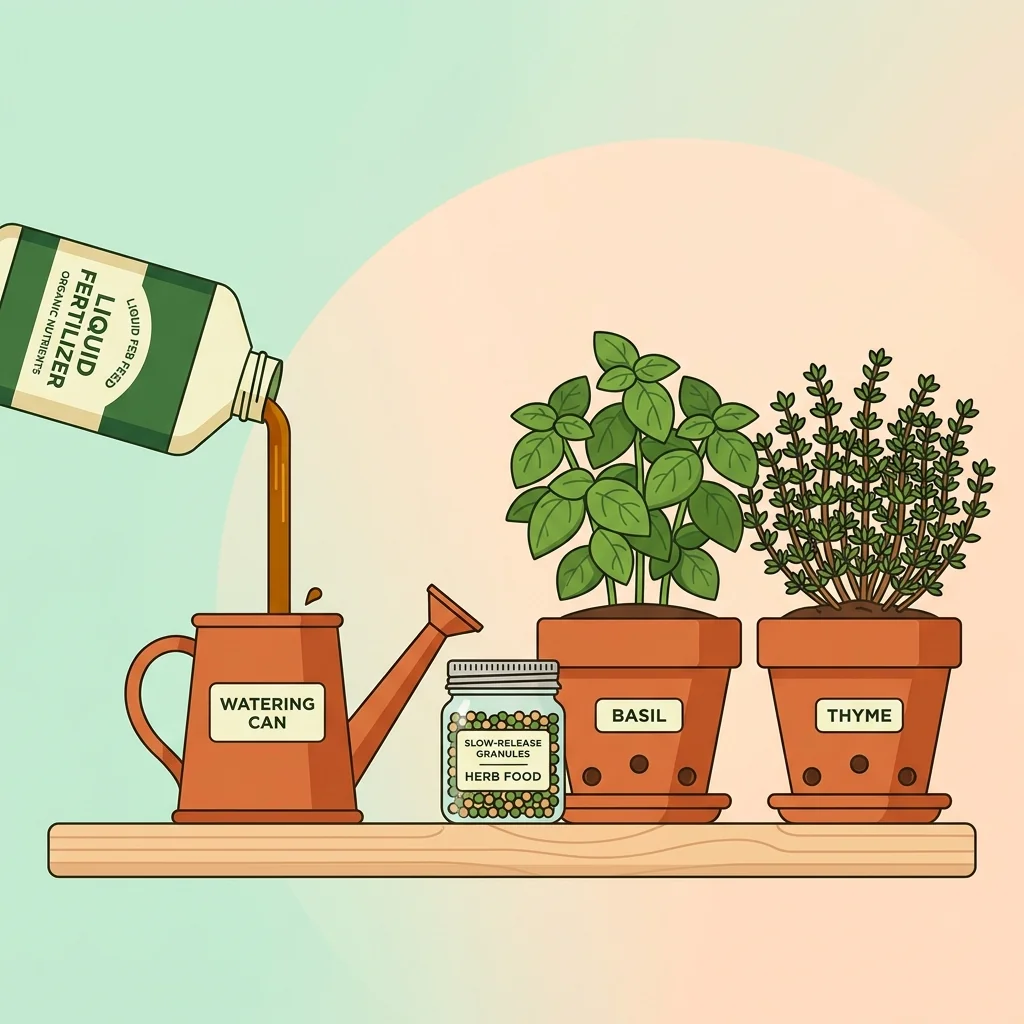
Best fertilizer for herbs in pots: a label-first guide
A practical, label-first guide to complete liquid and controlled-release fertilizers for potted herbs, with a decision table and a safer first application.