Olive in a pot: what each source says
| Question | Figure | Source |
|---|---|---|
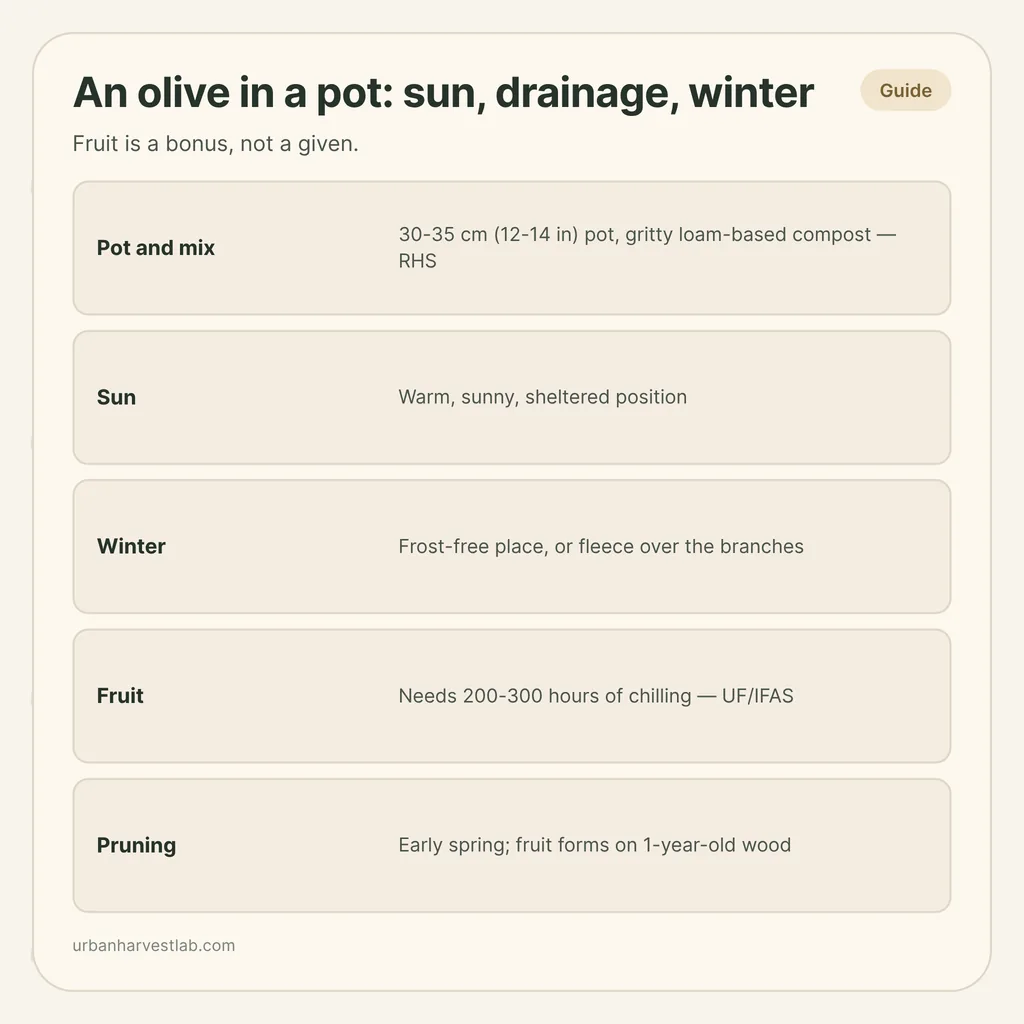
| Pot | 30-35 cm (12-14 in), gritty loam-based compost, on pot feet | RHS |
| Light | Warm, sunny, sheltered; shoots in full shade will not flower or fruit | RHS, Texas A&M |
| Feeding | Balanced liquid feed monthly (RHS); too much nitrogen cuts fruiting (Texas A&M) | RHS, Texas A&M |
| Pruning | Early spring | RHS, Texas A&M |
| Chilling | 200-300 hours, usually below 45°F | UF/IFAS |
| Cold damage | Young trees may die below 25°F; mature leaves damaged at 17°F | Texas A&M (field trees) |
| Winter spot | Frost-free (RHS); unheated spaces can swing in temperature, so check with a thermometer (Iowa State) | RHS, Iowa State Extension |
Yes, an olive grows well in a pot: give it full sun, a gritty fast-draining mix and a winter spot that stays cold but above freezing. The RHS calls olives drought-tolerant trees that love a warm, sunny, sheltered position, and says that in cool climates a large container you can carry indoors is a better bet than the ground. Fruit is a bonus, not a given: the leaves and the silver look are the reliable reward, and olives need a particular kind of winter before they flower, and a heated living room does not provide it.
Pot, mix and drainage
The RHS plants an olive in a pot 30-35 cm (12-14 in) wide, or large enough to hold the roots comfortably. It fills the pot with gritty, loam-based compost mixed with controlled-release fertiliser granules, and raises the pot on feet so excess water can drain away. Texas A&M Extension, writing about orchards, says the soil must be well drained. The same logic applies in a pot: standing water is the problem, and dry spells are not.
So the checklist is short. A pot with real drainage holes, a mix with grit in it, and a gap under the pot. The drainage hole guide covers hole size and what to do with a decorative outer pot. Do not let the saucer fill and stay full.
A tree in a pot gets heavy once the mix is wet. If the pot will live on a balcony, check the balcony weight limit guide before you move up a size.
Sun and placement
Put it where it gets the most direct light you can offer, out of the worst wind. The RHS wants a warm, sunny, sheltered position. Texas A&M adds a fruiting reason: the tree bears fruit only on 1-year-old wood, and shoots in full shade will not flower or produce fruit. A tree packed against a wall with its inner branches in shadow will carry leaves and little else.
A windy corner is hard on a tall tree in a light pot, so see the windproof balcony guide for anchoring.
Water and feeding
The RHS says to keep the compost moist during the growing season and to feed with a balanced liquid fertiliser every month. Moist is not soggy, and the same source stresses drainage, so check the top of the mix with a finger and water when it has begun to dry rather than on a calendar.
Go lightly on nitrogen if you want fruit. Texas A&M says excessive nitrogen stimulates growth at the expense of fruiting, and UF/IFAS says too much nitrogen delays fruiting. UF/IFAS also notes that excessive moisture may cause flowers to drop and reduce fruit set, which is one more reason to let the mix breathe in spring.
Winter: cold enough to flower, not cold enough to freeze
The RHS says to store pot-grown olives in a frost-free place, or to cover the branches with horticultural fleece, and not to move them out in spring until all danger of frost has passed. Cold in a pot is more serious than cold in the ground. Iowa State Extension says potted plants should not be left outdoors above ground over winter, because roots are far less cold-hardy than the parts above ground, and the potting mix may drop into the single digits Fahrenheit.
Above-ground cold limits come from Texas A&M, whose figures are for field trees: young trees may be killed when the temperature drops below 25°F, and leaves and small stems on mature trees can be damaged at 17°F. Treat a young potted tree as the vulnerable case.
Where to put it? The RHS target is frost-free, which means holding the spot above freezing. Iowa State Extension notes that unheated structures can swing in temperature, so check with a thermometer rather than guessing. An unheated porch or a cool garage with a window can work. A warm room keeps the tree out of the cold it needs, which matters for the next section.
The routine is close to the one in how to overwinter rosemary and thyme, which also wants cool, bright and dry-ish rather than warm. The general plan for carrying a tree through the cold months is in overwintering perennial edibles in containers. To pick your dates, start with the first and last frost dates for a balcony.
Will it give olives?
Maybe, and three things decide it.
Cold. UF/IFAS says olives need 200-300 hours of chilling, counted usually below 45°F, and that where chilling falls short blooming is delayed and fruit set and quality will be poor. Texas A&M puts it as buds: the tree sets flower buds during the winter only after cool nights of 35 to 50°F and mildly warm days under 80°F. A cold, bright winter spot supplies both. A heated room does not.
Pollination. The two extension sources disagree. Texas A&M says most olive varieties are self-fertile, though some are self-incompatible and need cross-pollination, and that high air temperatures can cause incompatibility. UF/IFAS says most are self-incompatible or self-sterile and that two distinctly different cultivars can cross. Wind moves most of the pollen according to Texas A&M, with insects playing a minor role. If your tree flowers and sets nothing, a second tree of a different cultivar nearby is worth trying, since UF/IFAS describes cross-pollination between two distinctly different cultivars as the route to fruit. Check whether the nursery lists your cultivar as self-fertile.
Age and climate. UF/IFAS says trees start fruiting after about four years. The RHS says fruit may come in hot summers and southern gardens, so a cool northern balcony is a long shot.
Pruning to keep it pot-sized
The RHS prunes in early spring to keep a good shape and remove dead, diseased or dying branches. Texas A&M also says to delay pruning until early spring to reduce freeze risk. To restrict the size of a pot-grown tree, the RHS says to tip prune the main branches, cutting back to a good replacement shoot each year.
Since fruit forms on 1-year-old wood (Texas A&M), cut for shape and light, not hard. Removing a lot of last year’s growth removes the flowers. Slow, small cuts each spring beat a rescue chop.
About the olives themselves
Olives straight from the tree are not edible. Texas A&M says fresh fruit is not palatable because it contains phenolic compounds and oleuropein, and the RHS says the fruit needs special preparation to make it edible. Curing is a food-safety job with its own steps, so follow a tested procedure from a state extension service or the National Center for Home Food Preservation, not a recipe from a forum.
If you like the idea of a Mediterranean tree but doubt your winter space, compare it with the fig tree in a container, which accepts a darker, colder rest and fruits without pollination.
Sources
- Royal Horticultural Society: How to grow olives
- Texas A&M AgriLife Extension: Olives (Texas fruit and nut production)
- UF/IFAS Extension St. Lucie County: Growing olive tree in Florida
- Iowa State Extension and Outreach: Overwintering unplanted trees, shrubs and perennials
- National Center for Home Food Preservation
Fruit trees and winter in pots
Another Mediterranean fruit tree, overwintering, drainage and the weight of a big pot.
Common questions
How big a pot does an olive tree need?
The RHS plants an olive in a pot 30-35 cm (12-14 in) wide, or large enough to hold the roots comfortably, filled with gritty, loam-based compost and raised on pot feet so excess water drains away. It does not give a larger final size, so step up gradually as roots fill the pot.
Can an olive tree stay outside in winter in a pot?
Only in a mild climate. The RHS says to store pot-grown olives in a frost-free place, and Iowa State Extension says potted plants left above ground can have potting mix fall into the single digits Fahrenheit, which can damage or destroy roots. Texas A&M, writing about orchard trees in the ground, says young trees may be killed below 25°F, and a pot's roots are more exposed than that.
Will a potted olive tree give olives?
It may. The RHS says a crop is possible in hot summers and southern gardens. UF/IFAS says olives need 200-300 chill hours below about 45°F, and that trees usually start fruiting after about four years. Texas A&M says most varieties are self-fertile while UF/IFAS says most are self-incompatible, so a second, different tree may help.
When should I prune a potted olive?
In early spring, according to both the RHS and Texas A&M, which says to delay pruning until early spring to reduce freeze risk. To restrict size, the RHS says to tip prune the main branches, cutting back to a good replacement shoot each year.
Related guides

How to grow a fig tree in a pot: size, pruning and winter
A fig in a container needs a big pot, strong sun, regular water and a dormant winter in an unheated, frost-free spot. Here is how to size, prune and overwinter it.
How to overwinter rosemary and thyme in pots
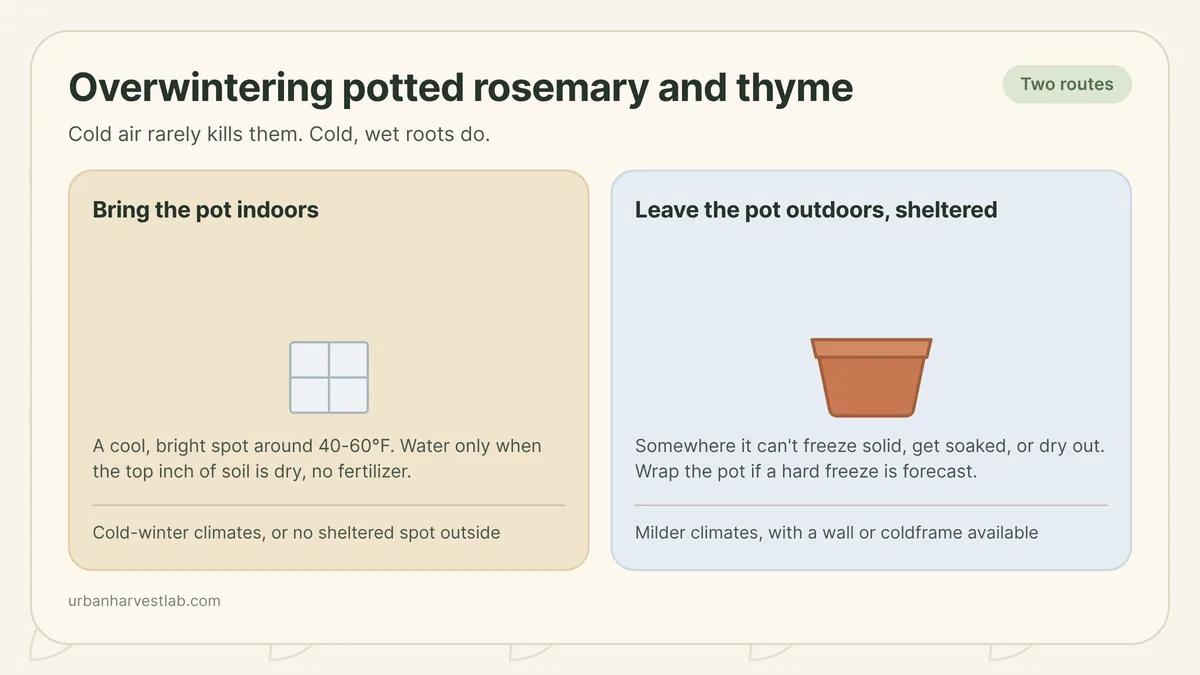
Winter kills more potted rosemary and thyme through mistimed watering and cold-wet roots than through cold air alone. Here is what to do indoors and out.
First and last frost dates for a balcony: start with your zone
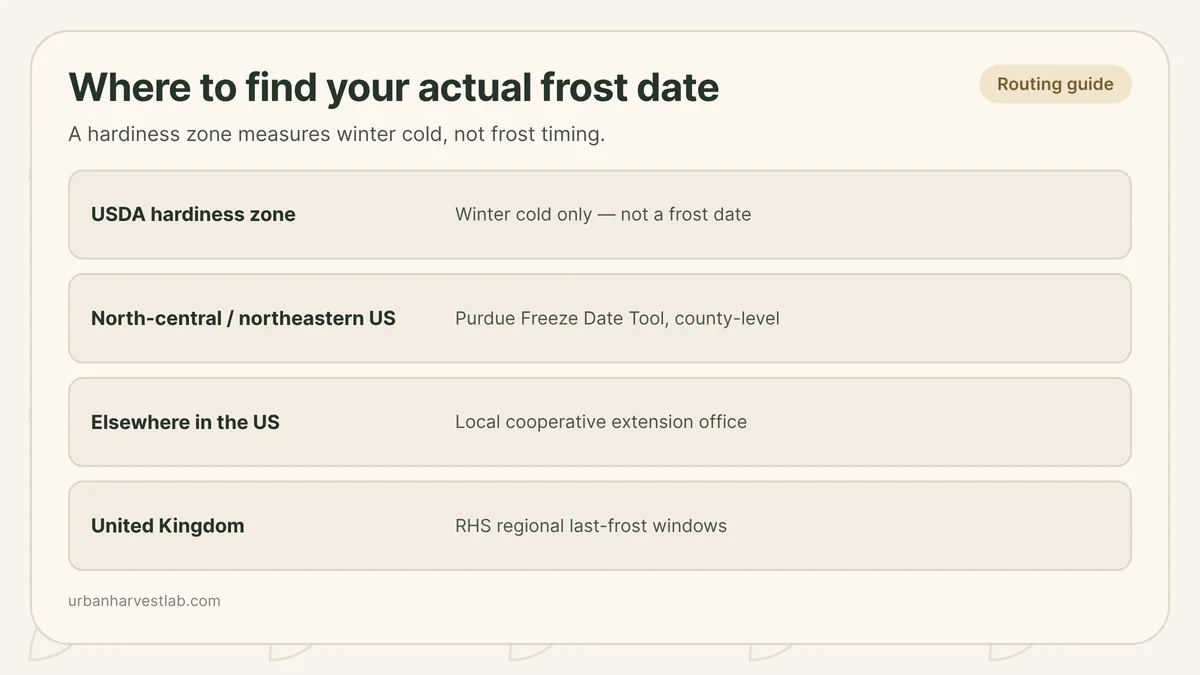
Your hardiness zone tells you how cold winter gets, not when frost starts or ends. Look up the zone's temperature band, then use the tools built to answer the date question directly.