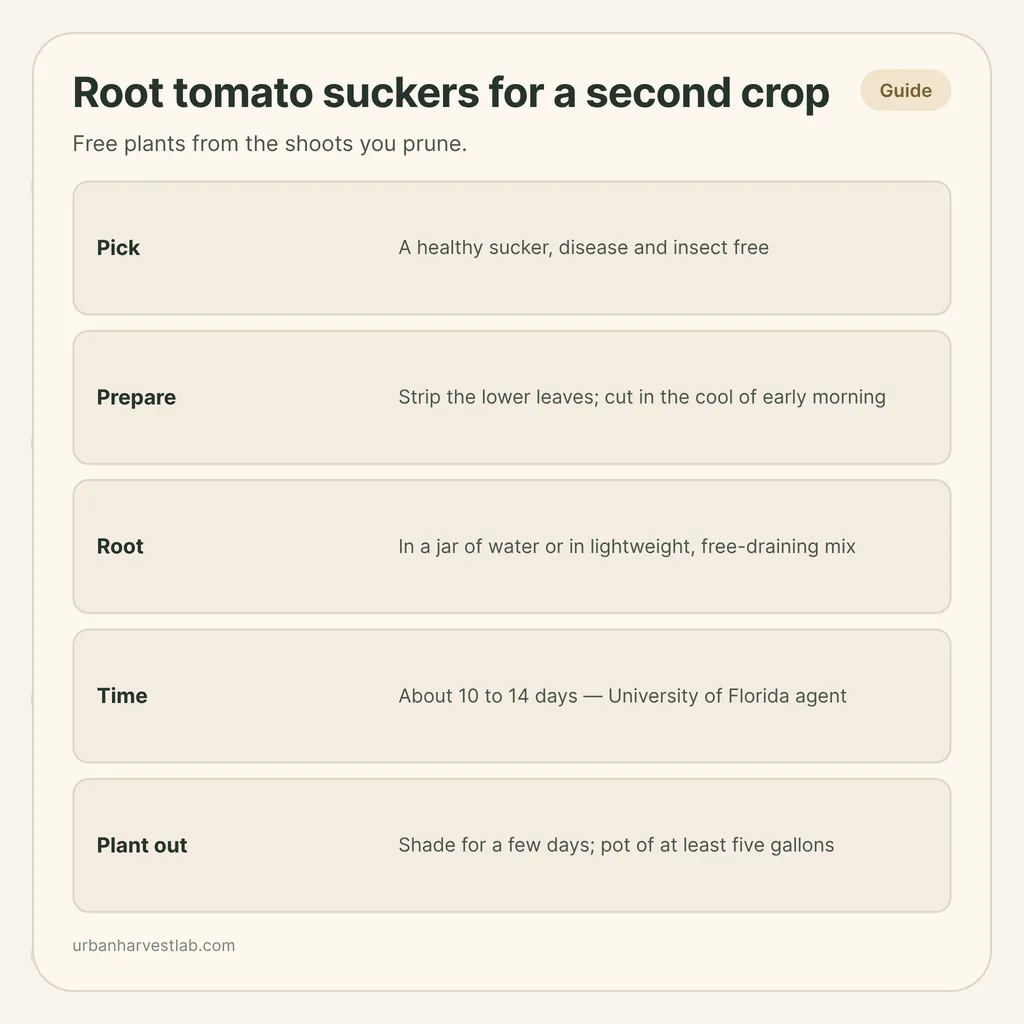
Tomato suckers three to eight inches long, cut from a healthy plant, root in a jar of water or in lightweight potting mix; a University of Florida extension agent puts it at about 10 to 14 days. Plant it out with a few days of shade and you have a replacement plant for a late crop. The shoots you remove when pruning container vegetables are the raw material, so this is free.
Pick the sucker
A sucker grows in the axil, the joint between the main stem and a leaf branch. Iowa State Extension notes that suckers are primarily vegetative and do not produce much, if any, fruit.
Choose carefully. A University of Florida extension agent in Okaloosa County says any cutting should be disease and insect free, and to avoid suckers that are off-color or show fungal or bacterial leaf spot, or insects such as aphids, whiteflies or small caterpillars. Check the tops and undersides of the leaves. If the parent plant is struggling with something like brown spots on the leaves, take cuttings from a clean plant or skip it.
Length differs by source:
- University of Georgia extension picks suckers three to four inches long.
- The Florida agent wants four to eight inches long, with a growing point and several leaves.
Cut in the early morning, the Florida agent adds, during the coolest part of the day, and get the cuttings into shade so they do not wilt. Iowa State recommends cleaning your hands or tools between plants, or every few plants, to avoid spreading disease.
Remove the lower leaves. Clemson Extension’s Paul Thompson explains why: the foliage is what causes moisture to be lost from the cutting. He also takes off any flower cluster on the sucker. The stem roots along its length when buried, he says, so strip leaves from the part that will go under.
Water, pot or ground
| Method | What the source says | Source |
|---|---|---|
| Jar of water | Several suckers in a jar, water covering the ends one to two inches; cool, well-lit spot until roots develop | University of Georgia |
| Pot of lightweight mix | Short soak in water first, then a four-inch pot with drainage holes; mix that drains freely | University of Florida (Okaloosa County) |
| Ground beside the parent | Deep hole made with a stick or finger, cutting buried, watered along with the parent plant | Clemson |
In water. Georgia extension stands the cuttings in a jar so the bottom one to two inches is covered, in a cool, well-lit place. It says rooting hormone is not necessary but would probably hasten the process. When roots have formed, set the plants out and, Georgia adds, shade each one immediately for a few days until the suckers start to grow. The extension piece suggests a few small leafy shrub branches for shade.
In pots. The Florida agent first stands the cuttings in a jar of water for an hour or two to start rooting and reduce plant shock, then plants them in pots, firms the mix and waters it until thoroughly moist. The mix should be relatively lightweight and let excess water drain freely. He uses a four-inch pot with drainage holes and roots indoors under good light, or outdoors in shade protected from wind and heavy rain.
Watch the moisture. In the Florida agent’s words, if the mix stays too wet the stem may rot before roots form, and if it gets too dry the stem may dry out. If your cuttings sit and sulk, cuttings not rooting goes through the causes.
In the ground. Clemson’s Thompson roots suckers in a deep hole right beside the parent tomato, where regular watering of the parent also reaches them. New growth tells you they have rooted, and then you can lift and space them properly. This suits an in-ground bed more than a balcony.
None of these sources compares the methods head to head, so pick the one that suits your space. In a jar of water you can see the roots form.
How long it takes
The University of Florida agent says tomato cuttings usually root in about 10 to 14 days. He may leave them in the four-inch pot a little longer for a stronger root system before moving them to the garden, a raised bed or a larger pot of at least five gallons. Georgia gives no day count; its test is that roots have formed before the plants go out.
Timing a second crop
Timing depends on your region, and the two extension sources give different calendar dates because they write for different climates. Georgia extension, writing in June, suggested setting a late crop between then and the end of July so it would begin producing as the spring-planted plants become unproductive. The Florida agent says plants rooted and planted by mid-August should have a chance of producing fall tomatoes before cold weather arrives.
Neither date transfers to a cold-winter city. Count back from your own first frost using first and last frost dates for a balcony or the fall planting calculator, and remember a rooting period of about two weeks comes before planting.
The Florida agent also says to pick a variety that has performed well for you. Cuttings are clones of the plant they came from, so a plant that struggled will give you more of the same.
Planting out
Give them a larger home: the Florida agent’s minimum is a five-gallon container (browse 5-gallon grow pots on Amazon). Support them as you would any tomato; staking tomatoes in pots covers it. Herbs follow a similar logic, and regrowing herbs from cuttings shows the same water-or-mix choice for basil and mint.
Georgia extension adds a note on feeding: late in the season fertility matters more than ever, and a soil test from your local extension office will tell you what the soil needs. Water-soluble fertilizers help transplants start fast but do not replace soil test recommendations.
Sources
- University of Georgia CAES: Rooting tomato suckers can provide great mid-season replacement plants, extend harvest
- University of Florida/IFAS Extension Okaloosa County (Larry Williams): Here’s how to root tomato plants for a fall crop
- Clemson Cooperative Extension HGIC: Desuckering and Rooting Tomatoes
- Iowa State University Extension: Pruning Tomatoes in the Home Garden
Pruning and propagating
What to cut, how cuttings root, and what to do when they will not.
Common questions
How long do tomato suckers take to root?
A University of Florida extension agent says tomato cuttings usually root in about 10 to 14 days. University of Georgia extension gives no day count and says to keep the cuttings in a cool, well-lit spot until new roots develop.
Should I root tomato suckers in water or soil?
Both are in extension advice. Georgia roots them in a jar of water with one to two inches of stem covered. The Florida agent roots them in a lightweight, free-draining potting mix after a short soak in water. Clemson roots them straight into the ground beside the parent plant.
Do I need rooting hormone for tomato cuttings?
No. University of Georgia extension says rooting hormone is not necessary but would probably hasten the process.
How big should a tomato sucker be for rooting?
University of Georgia extension picks suckers three to four inches long. A University of Florida extension agent wants four to eight inches long with a growing point and several leaves.
Related guides
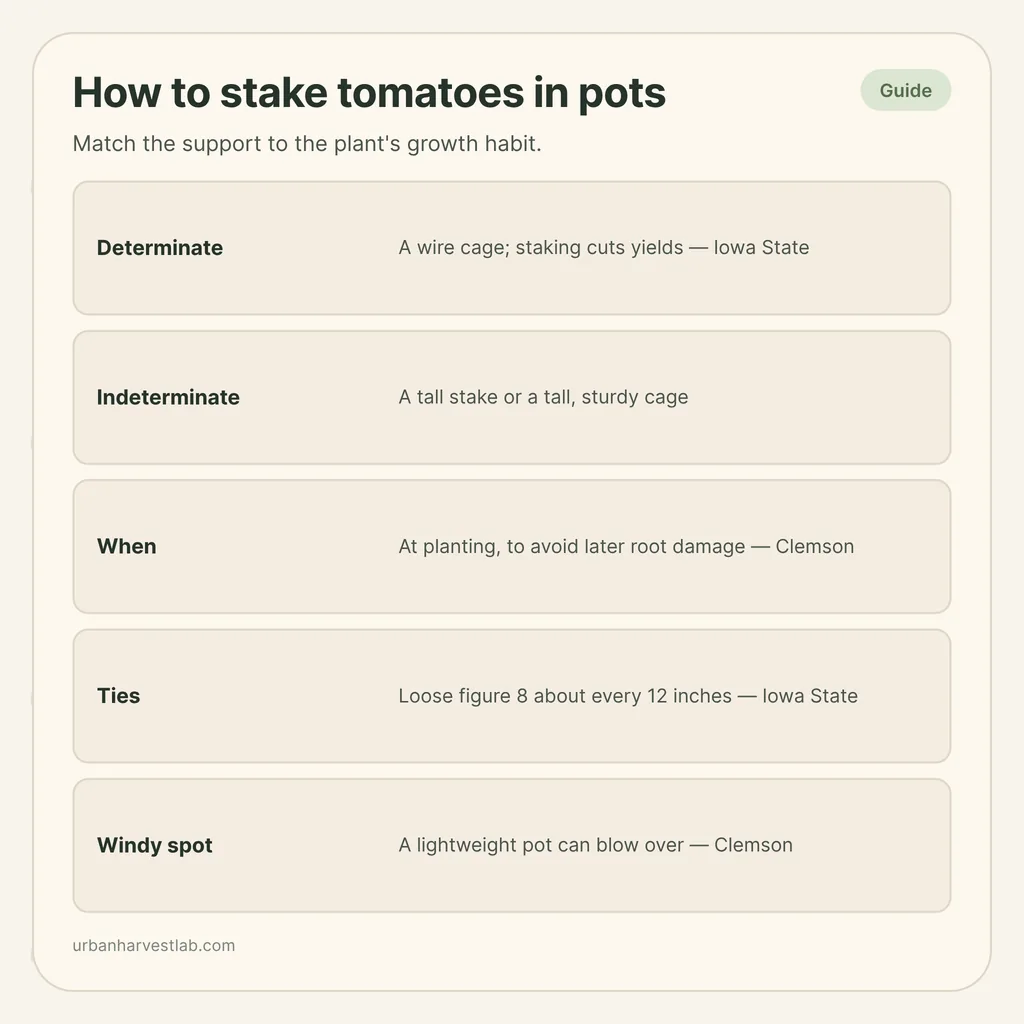
How to stake tomatoes in pots: cage, stake or string by plant type
A determinate tomato in a pot wants a cage; an indeterminate one wants a tall stake or a tall, sturdy cage. Either goes in while the plant is small.
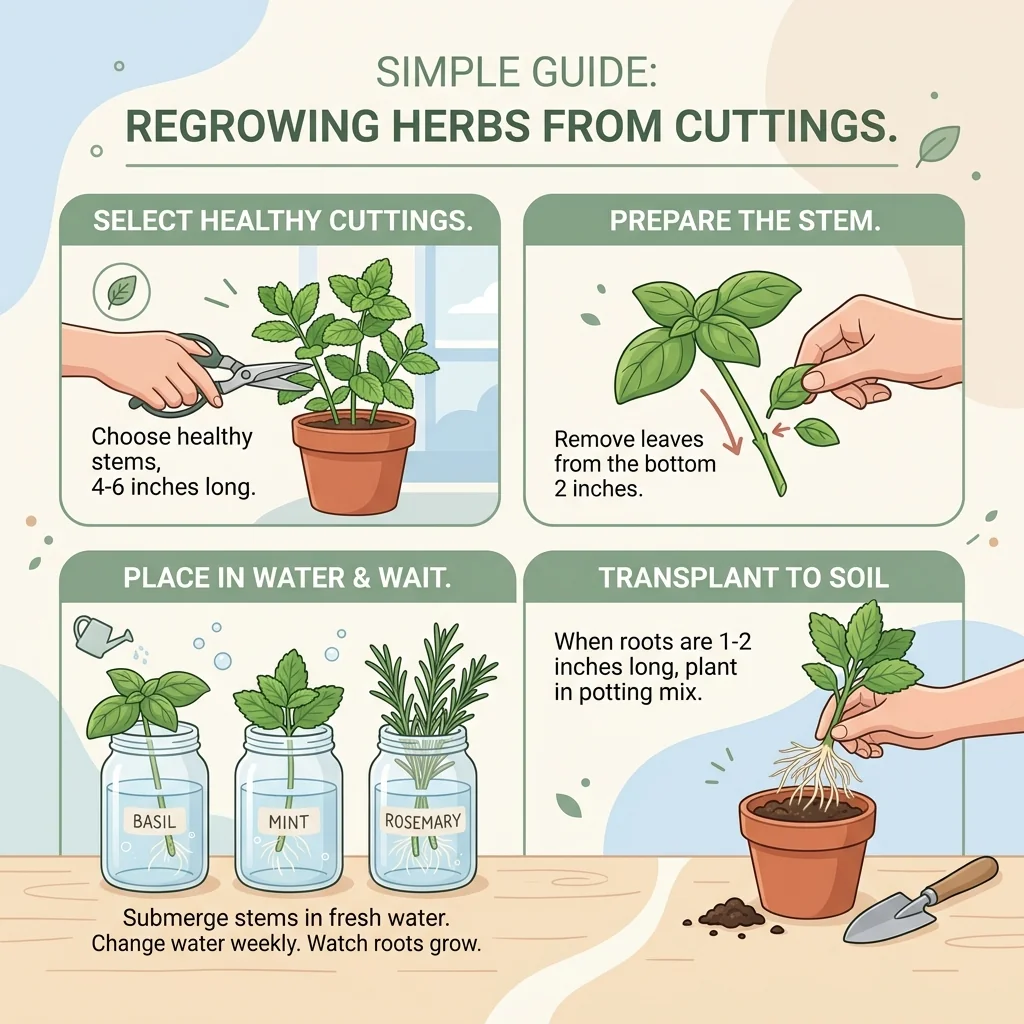
How to regrow herbs from cuttings (basil, mint, rosemary)
Many herbs root from a simple stem cutting in a glass of water. It is the cheapest way to turn one plant, or a supermarket bunch, into many.
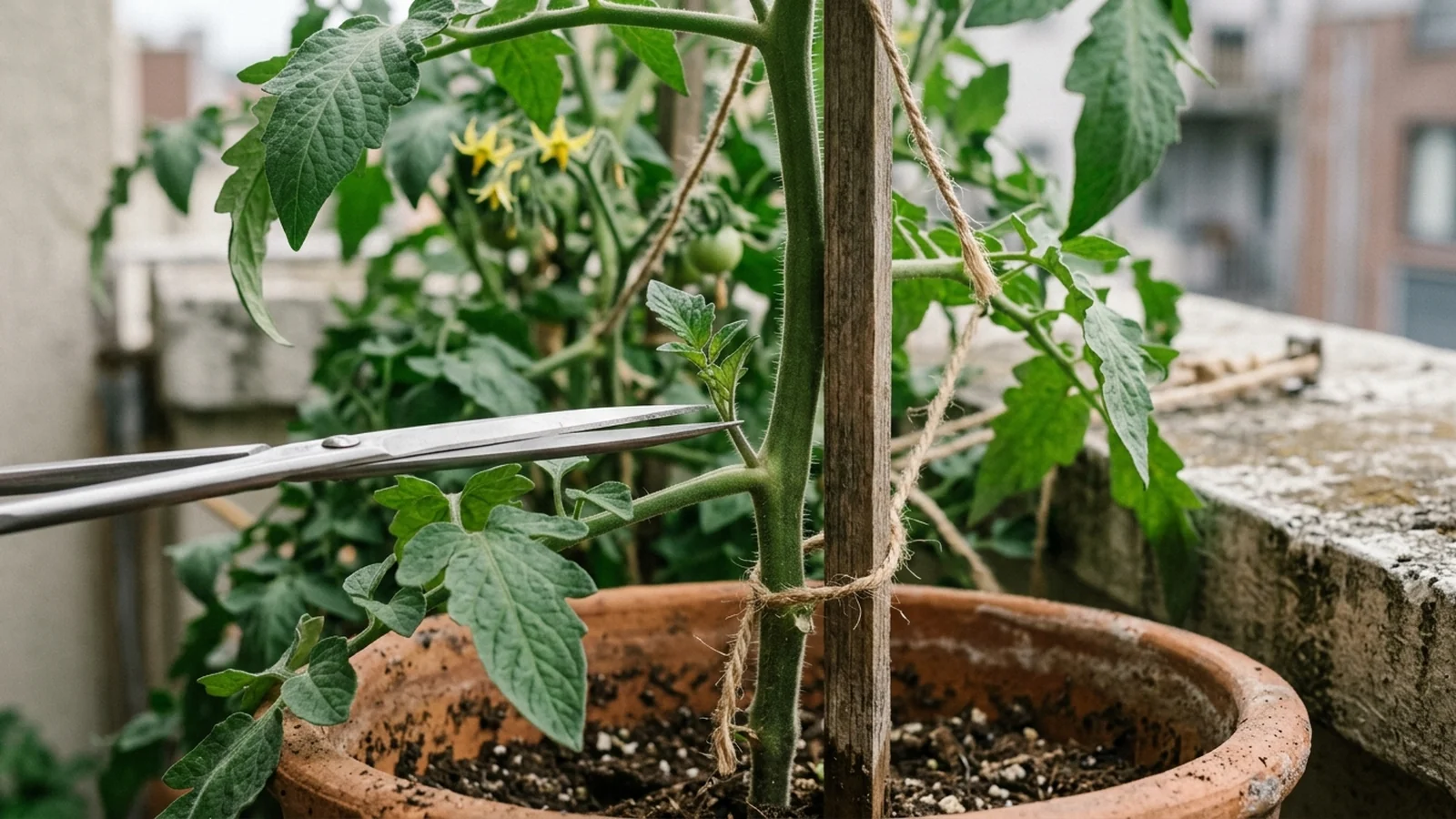
Pruning container vegetables: what to cut, what to leave alone
Cut a leafy herb and it branches back thicker. Cut a container tomato the same way and you are managing how much plant a bucket of potting mix can actually support. Same scissors, opposite goal.