
What each extension source says about harvest timing
| Source | When to cut | Reason given |
|---|---|---|
| NC State Extension | Just as the plant begins to flower, cutting stems about 6 inches above the ground | Leaves are harvested about 90 days after planting; pruning flower buds improves flavor |
| Purdue Extension | Snip foliage as needed, with flavor at its peak just before blooming | Stevia may not bloom much when grown only indoors |
| UF/IFAS | Fall is the best time; pinch off flower buds as soon as they appear | Leaves are sweetest before flowering |
| WSU Master Gardeners | As late as possible in the season, after taking cuttings | Cool autumn temperatures and shorter days intensify sweetness |
To grow stevia in a pot, buy a young plant, give it full sun and a pot that drains, keep the soil evenly moist, and cut the stems before the plant flowers. Dry the leaves for the sweetest result, and root a few cuttings early, before the plant starts to bud, so you have plants for next year. Stevia is a tender perennial, so a pot is the practical way to keep it: you can carry it indoors when the weather turns.
If you are still deciding what else belongs on your ledge, the small-space herb gardening hub puts it next to the herbs that cope better with cold.
Start from a plant, not seed
Seed is the weak point. Purdue Extension says stevia grown from seed varies in sweetness and flavor quality and has a low germination rate. WSU Clark County Master Gardeners say the same in practical terms: because of poor germination, it is best to start with new seedlings.
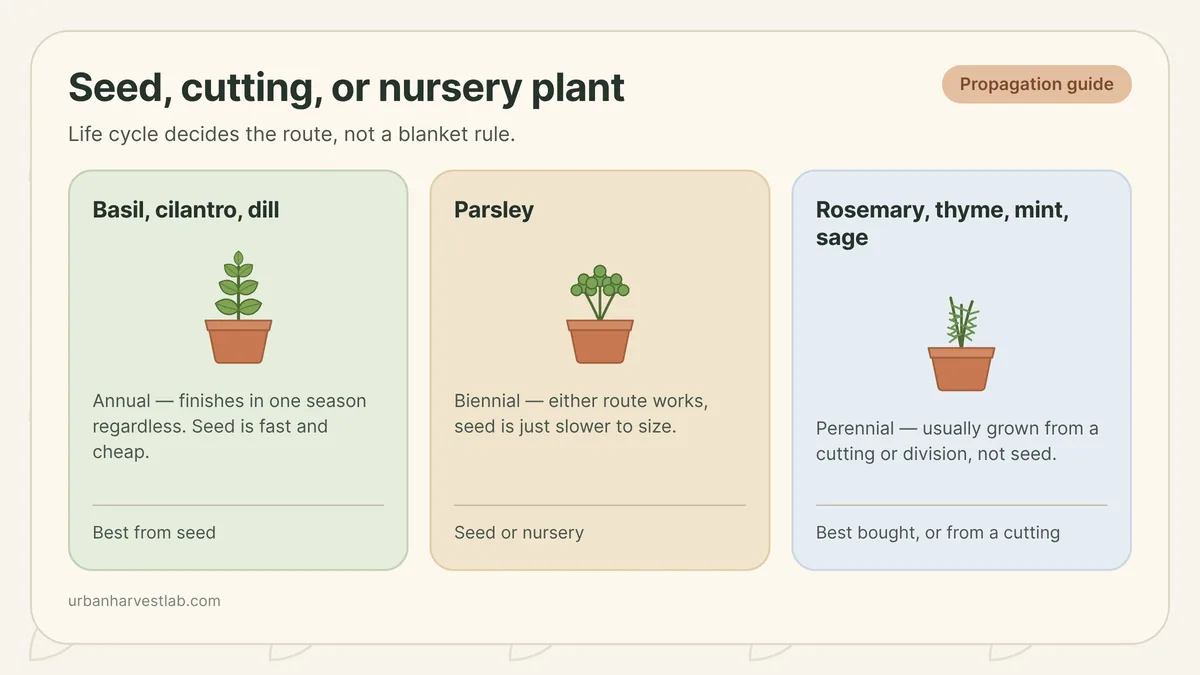
Purdue’s advice is to propagate plants of known quality by cuttings. It names three improved cultivars sold either as seed or as rooted cuttings: Honey Dip, Sweetie Sixteen and Crazy Sweet. Purdue notes that plants may be difficult to find in local garden centers, and WSU Master Gardeners say most nurseries do not carry it, so a rooted cutting from a herb nursery or a friend’s plant is a reasonable route. The general trade-offs between seed and nursery plants are covered in growing herbs from seed versus buying plants.
Pot, light and water
UF/IFAS Extension describes stevia as a small shrub reaching 1 to 2 feet tall and 1 to 2 feet wide, and says it does well in a container as a houseplant or on the patio. Washington State University Extension gives a larger figure, 24 to 36 inches tall and 12 to 24 inches wide, so leave room for the plant to bush out rather than choosing the smallest pot that holds the rootball.
- Light: full sun, with partial shade tolerated (UF/IFAS, NC State). Indoors, Purdue says to give it as bright a spot as you can and notes that supplemental lighting would help.
- Mix: UF/IFAS says stevia needs sandy, well-drained soil. NC State describes moist, well-drained, slightly acidic, organically rich soil.
- Water: moist but not waterlogged. UF/IFAS and NC State both say overwatering can cause root rot. WSU adds the reason to avoid letting it dry out: the feeder roots sit close to the surface, so consistent moisture matters. A pot dries faster than a bed, so check it often. The finger and pot-weight tests in how often to water potted herbs work here.
- Feeding: NC State recommends fertilizing about every 4 to 6 weeks during the growing season.
- Pests: NC State says to monitor for aphids and spider mites.
Mulch helps in heat. WSU suggests mulching to protect the plant in summer.
Pinch for a bushy plant
Left alone, stevia grows weak, floppy stems (UF/IFAS Extension). Washington State University Extension recommends pinching the tips every 2 to 3 weeks to encourage side branching and a bushier plant. Each pinched tip is also a cutting you can root, which is the cheapest way to build up stock.
When to harvest: before it flowers
The sources agree on the principle and differ a little on the calendar, so the table above lays them side by side. In short, the leaves taste sweetest before the plant flowers. UF/IFAS says to pinch off flower buds as soon as they appear, and NC State says pruning the buds improves flavor.
Flowering is driven by day length. Oregon State describes stevia as a short-day plant that will flower when nights are longer than 11 hours, with varieties differing in sensitivity. WSU Master Gardeners report white flowers produced mid-summer, so check the tips for buds from mid-summer onward. Oregon State adds that plants are induced to flower before any buds or flowers are visible, so by the time you see buds, the switch has already happened.
How you cut depends on what you want:
- A few leaves at a time: snip stems as you need them (Purdue). Pick from the tips, which also encourages branching.
- One big harvest: NC State says to cut stems about 6 inches above the ground. WSU says to harvest as late as possible, since cool autumn temperatures and shorter days intensify sweetness, and to take cuttings first.
Indoors, Purdue notes that stevia may not bloom much when grown exclusively indoors, which gives you more time to pick.
Dry the leaves
Fresh leaves work in tea or straight off the plant, but UF/IFAS, NC State and WSU all say dried leaves are sweeter. WSU’s method is simple: cut and bundle the stems, hang them upside down in a dry, warm place, and after a few days rake the leaves off with your fingers. Crushing the dried leaves, by hand or in a coffee grinder or blender, releases the sweetness, and WSU stores the result in airtight containers. For rack, dehydrator and oven methods, see how to dry herbs at home.
A little goes a long way. UF/IFAS says stevia leaves contain glucoside compounds 200 to 300 times sweeter by weight than cane sugar, and Purdue gives a range of 30 to 300 times for the stevioside. Start with a pinch of crushed leaf in a cup of tea and adjust.
Take cuttings before it starts to bud
This is the step that keeps the plant going. Washington State University Extension suggests taking cuttings before the main harvest, dipping them in rooting hormone, planting them in a rooting medium for two to three weeks, then repotting and keeping them in the sunniest, least drafty part of the house until spring.
Oregon State’s cutting guide adds the detail that matters most for timing:
- Take tips from vegetative growth. Cuttings should come from plants that have not been triggered into flowering by short days. Oregon State says cuttings that are already induced to flower produce very poor plants, because they root weakly and grow slowly.
- Size: pinch or clip growing tips with two or three well-formed nodes, each with a couple of expanded leaves.
- Rooting compound: Oregon State recommends one containing indole butyric acid (IBA), and says cuttings should have roots after a couple of weeks.
- Commercial growers manage day length. Oregon State extends the day with artificial light, or interrupts the night with white or red light, to keep cuttings from flowering. On a windowsill the practical lesson is to take cuttings early, not after the plant has started to bud.
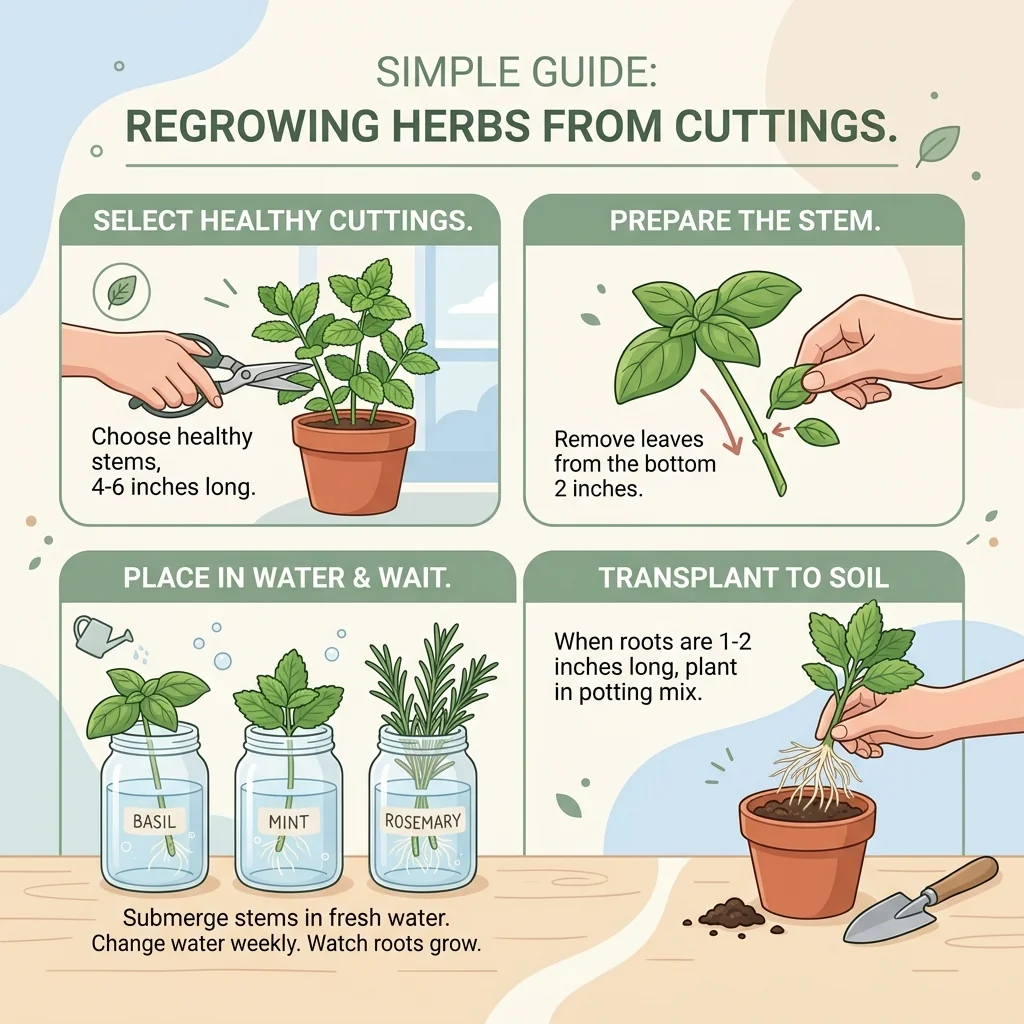
The general method for rooting stems, with and without hormone, is in regrowing herbs from cuttings.
Winter: bring it indoors
UF/IFAS and NC State give stevia as hardy in USDA zones 10 to 11 only. Purdue says it will not overwinter in Indiana’s outdoor gardens. UF/IFAS and NC State both say to bring the plant indoors before the first frost.
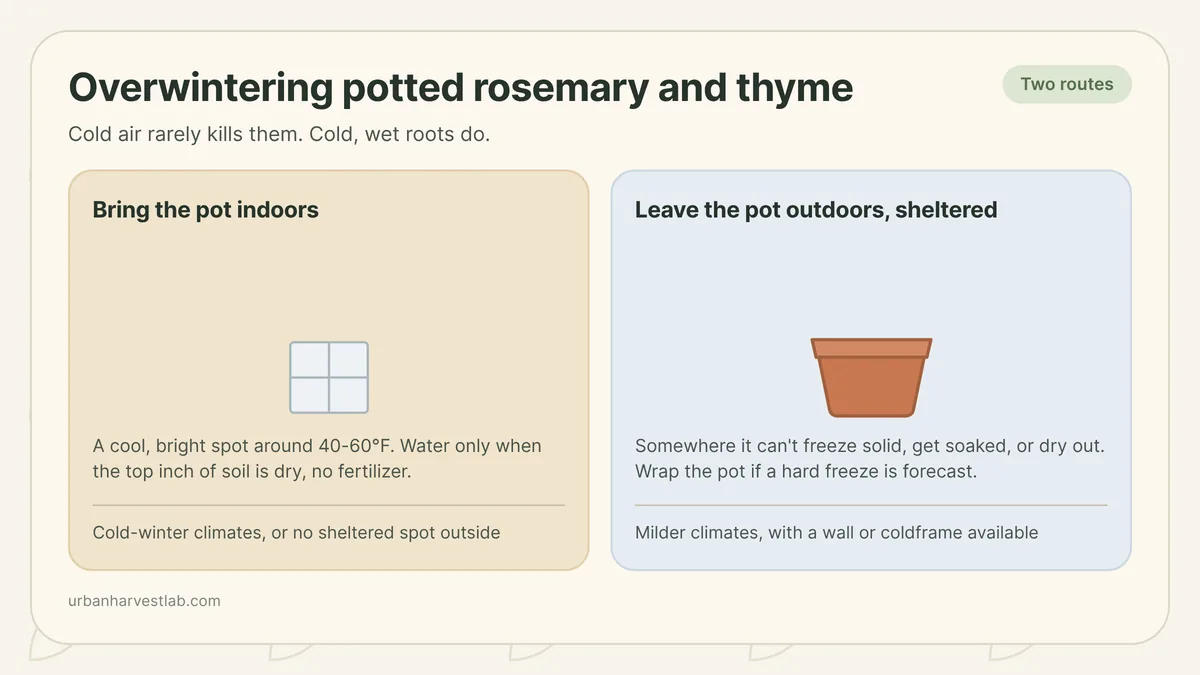
Indoors, Purdue says to keep it away from hot and cold drafts and in as bright a location as you can. The dormant-season handling of other tender potted herbs is in overwintering rosemary and thyme in pots, and the light side of keeping herbs going indoors is in growing herbs indoors in winter.
Sources
- UF/IFAS Gardening Solutions, “Stevia”
- NC State Extension Gardener Plant Toolbox, “Stevia rebaudiana”
- WSU Clark County Extension Master Gardeners, “Garden Mastery Tips: Stevia”
- Purdue Extension, “Stevia in the Windowsill Garden”
- Oregon State University, “Propagation of Stevia rebaudiana by Rooted Cuttings”
Herbs through the year
Cuttings, drying and winter care for herbs grown in containers.
Common questions
How do you grow stevia in a pot?
Buy a plant rather than sowing seed, put it in a pot with drainage holes and a well-drained mix, and give it full sun (UF/IFAS, NC State). Keep the soil moist but not soaked, pinch the tips every 2 to 3 weeks to make it bushy (WSU Master Gardeners), and bring it indoors before the first frost.
When should you harvest stevia leaves?
Before the plant flowers. Purdue Extension says flavor peaks just before blooming, and NC State says the best time is just as it begins to flower. WSU Master Gardeners suggest harvesting as late as possible, because cool autumn temperatures and shorter days intensify sweetness, so start watching for buds from mid-summer (WSU reports flowering then). Treat "as late as possible" as a trade-off against buds forming.
Can you grow stevia from cuttings?
Yes. Purdue Extension says cuttings give the best results for plants of known quality. WSU Master Gardeners dip cuttings in rooting hormone and give them two to three weeks to form roots. Oregon State says to take them from growth that has not been triggered to flower.
Are dried stevia leaves sweeter than fresh ones?
Yes. UF/IFAS, NC State and WSU Master Gardeners all say dried leaves are sweeter than fresh. WSU hangs cut stems upside down in a dry, warm place for a few days, then rakes the leaves off and stores them in an airtight container.
Related guides
Herbs from seed or buying plants: how to decide
Some herbs finish a whole life cycle from seed in a matter of weeks; others are slow, woody, or simply propagated a different way. The life cycle of the herb, not a blanket rule, is what actually decides which route makes sense.
How to overwinter rosemary and thyme in pots
Winter kills more potted rosemary and thyme through mistimed watering and cold-wet roots than through cold air alone. Here is what to do indoors and out.
How to regrow herbs from cuttings (basil, mint, rosemary)
Many herbs root from a simple stem cutting in a glass of water. It is the cheapest way to turn one plant, or a supermarket bunch, into many.