Cleaning a reused pot by material
| Pot material | Scrub step | Disinfect | Before planting |
|---|---|---|---|
| Plastic or glazed ceramic | Scouring pad for rim deposits; scrape tough ones with a knife | Soapy wash, then 1 part bleach to 9 parts water for 10+ minutes | Rinse; ready to use |
| Terracotta or clay | Steel wool or wire-bristle brush for deposits all over the wall | Same bleach soak, then rinse thoroughly | Soak in clean water until planting |
| Any pot, single container | Brush and wash as above | Wipe all surfaces with undiluted 70% isopropyl alcohol | Let it dry before filling |
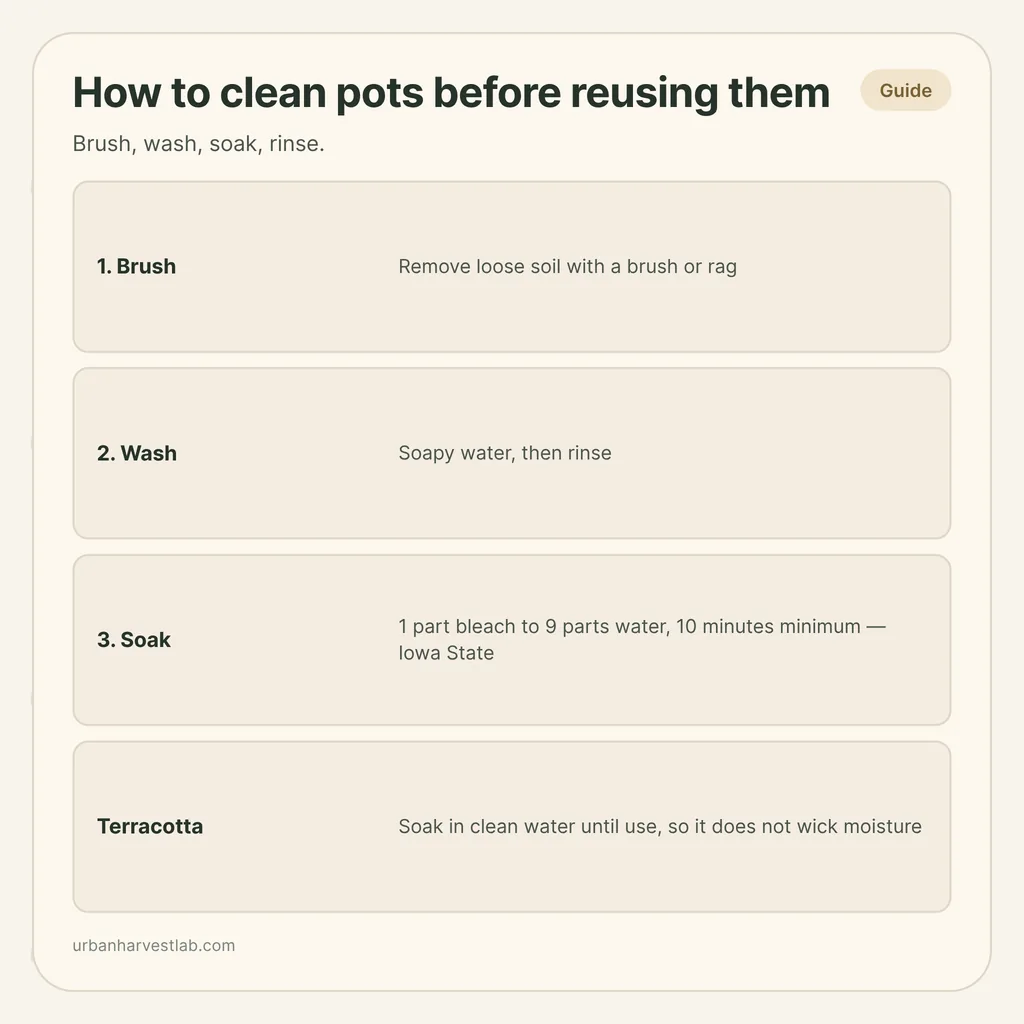
Brush off the old soil, wash the pot in soapy water, then soak it for at least 10 minutes in one part household bleach to nine parts water and rinse. That is Iowa State Extension’s method, and it works for plastic, glazed and terracotta pots. Do it each time a pot changes plants.
The reason is what clings to the pot. Iowa State says disease-causing fungi and other organisms, including insects, can remain in old containers and in the debris that builds up in them, and infect whatever you pot next. The mix is a separate question; whether it can go back in is covered in reusing potting soil. A scrubbed pot filled with a mix that carried the disease has only solved half of it.
The routine, step by step
- Remove loose soil. Iowa State says to use a brush or rag. Get into the drainage holes and around the rim, where debris collects.
- Wash in soapy water and rinse. Iowa State notes dish detergent works well. This step matters because a bleach bath is meant for a pot that is already clean of soil.
- Soak in the bleach solution. One part household bleach to nine parts water, for a minimum of 10 minutes. Iowa State says to add the bleach to the water, not the water to the bleach, to avoid splashing, and to protect skin and clothing.
- Rinse. Then let the pot dry or go straight to planting.
Mix a fresh batch when you need it: Iowa State says to use the solution within two hours of preparing it. Penn State Extension gives the same one part bleach to nine parts water for a previously used container, after a thorough wash. The same Iowa State figures are the ones used for seed-starting cups and trays, so one routine covers both.
Removing mineral crust
White deposits near the soil line are mineral salts. Iowa State warns that salt on a container rim can dehydrate plant stems resting against it, so the crust is worth removing rather than just disinfecting around.
On plastic or glazed ceramic, a scouring pad handles the rim deposit, and a knife scrapes off the stubborn bits. Iowa State adds steel wool to smooth any rough edges afterwards. Where the crust comes from, and how to stop it forming again, is in salt buildup in herb pots.
Terracotta and clay
Clay is porous, but Iowa State says it can still be cleaned. The differences are the scrubbing tool and the finish.
Deposits tend to cover the whole wall, not just the rim, so Iowa State suggests steel wool or a wire-bristle brush, with a knife for what remains. Disinfect as above, rinse thoroughly, then soak the pot in a bucket of clean water until you are ready to use it. Iowa State’s reason: a dry clay pot can wick moisture away from the potting medium and dehydrate a newly potted plant. Penn State makes the same point for new unglazed pots, which it says need an overnight soak in water so the container does not draw moisture from the mix.
How porous and glazed walls change watering is covered in plastic vs. terracotta and glazed vs. terracotta.
When a bleach soak is not practical
For one pot, a full bath is a lot of effort. Iowa State’s alternative is to clean the pot as above, then wipe all surfaces, inside and out, with a cloth soaked in undiluted 70% isopropyl alcohol. It also allows spraying with rubbing alcohol if the spray reaches every surface.
Two things Iowa State does not recommend as substitutes. TSP cleaners, often sold as deck or siding cleaners, are not recommended for containers. Household disinfectant wipes and sprays are described as a possible alternative that is easier and safer to use than bleach, but their effectiveness against plant pathogens on containers has not been well evaluated, so Iowa State prefers the 10% bleach solution.
Which pots are worth the effort
Cleaning costs a few minutes and some bleach, so it pays for a pot you will use again for a food crop or seedlings. Pots that have held a plant lost to root rot are the strongest case for the full bleach soak; root rot in potted plants explains what to look for. A pot that is cracked or crumbling is harder to scrub clean along its damaged surface, and a cheap replacement may be less trouble. That is a judgement call rather than an extension rule.
Hydroponic reservoirs, net pots and totes follow a different protocol with different concentrations; see sanitizing a hydroponic system between crops rather than borrowing the figures above. For picking containers in the first place, start with the best containers for herbs.
Sources
Pots, mix and what goes back in them
Clean the pot, then decide what to do about the mix and the next plant.
Common questions
How do you clean pots before reusing them?
Iowa State Extension says to brush or rag off all loose soil, wash the pot in soapy water and rinse, then soak it in one part household bleach to nine parts water for a minimum of 10 minutes and rinse. Penn State Extension gives the same 1 to 9 ratio for a used container.
Can I clean terracotta pots with bleach?
Yes. Iowa State Extension says terracotta and clay are porous but still possible to clean. Remove deposits with steel wool or a wire-bristle brush, disinfect, rinse thoroughly, then soak the pot in clean water until you are ready to plant, because a dry clay pot can wick moisture out of fresh potting mix.
Can I use rubbing alcohol instead of bleach on a pot?
Iowa State Extension says yes when a bleach soak is impractical, such as for one container. Wipe all surfaces, inside and out, with a cloth soaked in undiluted 70% isopropyl alcohol, or spray the pot if the spray covers every surface.
How long does a bleach solution for pots last?
Iowa State Extension says to use it within two hours of mixing. It also says to add the bleach to the water rather than water to bleach, to avoid splashing, and to protect your skin and clothing.
Related guides
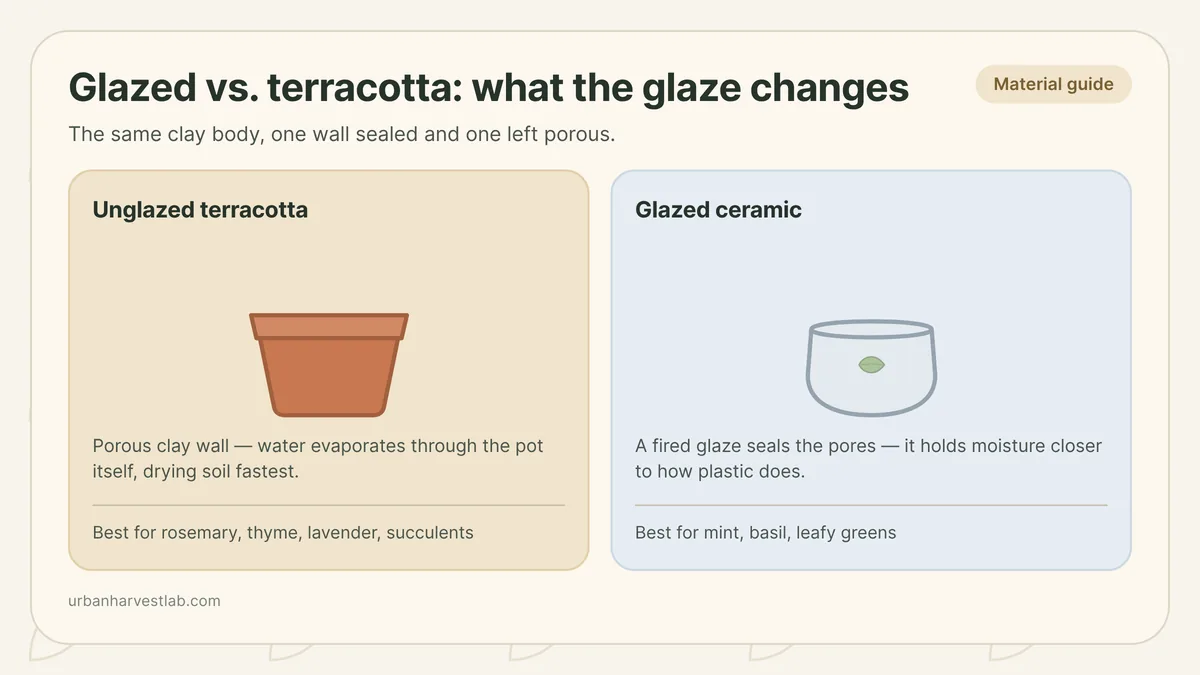
Glazed vs. terracotta pots: what the glaze actually changes
Two pots can look nearly identical and behave completely differently once you fill them with soil. The glaze on one of them is the whole difference, and it changes drying speed, weight, and winter risk all at once.
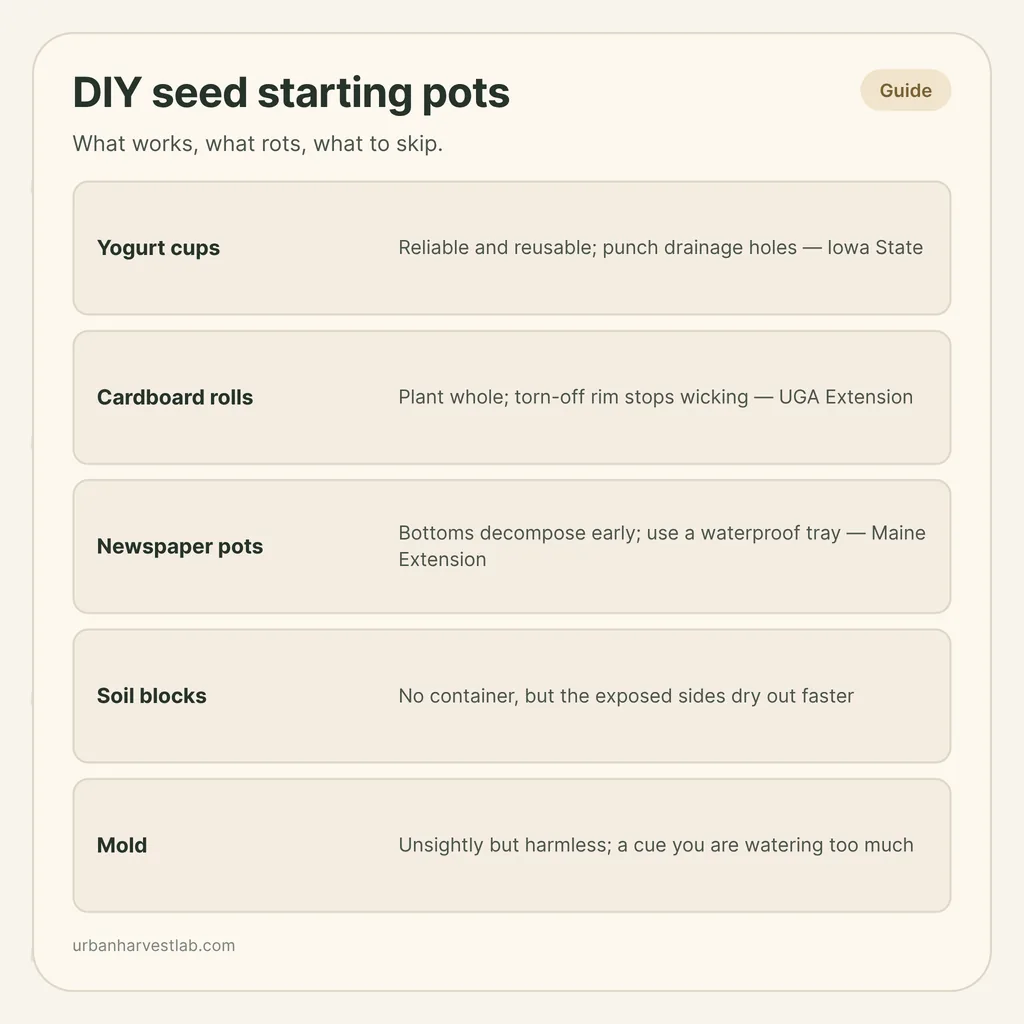
DIY seed starting pots: what works, what rots, what to skip
Almost any clean container with drainage can start seeds. The difference between the free options is how long they hold together, how they dry out, and whether they can go into the ground.
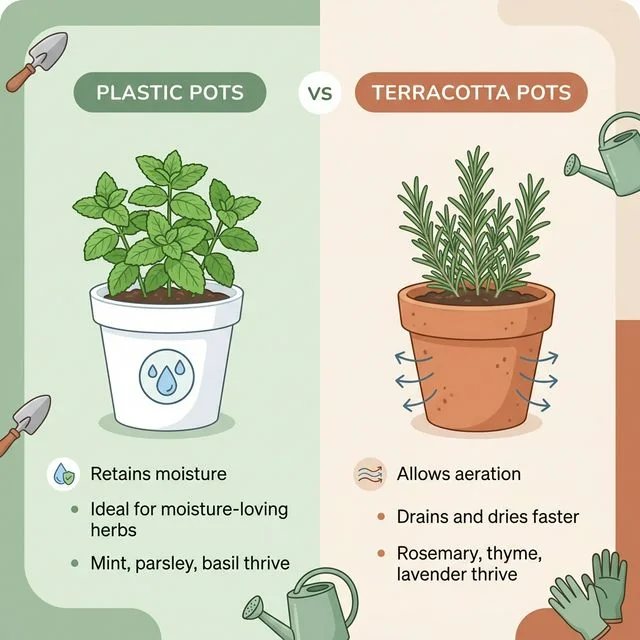
Plastic vs. terracotta pots for herbs: which makes care easier?
The material of your pot dictates how fast your soil dries out. If you put a thirsty mint plant in unglazed terracotta, you will be watering every single day. If you put rot-prone rosemary in a plastic pot, you must be extremely careful.