
The claim you'll see repeated, and what the 2012 study actually measured
| What gets repeated | What Xiao and colleagues actually measured |
|---|---|
| "Microgreens have up to 40 times the nutrients of mature vegetables" | Vitamin E in red cabbage microgreens at 24.1 mg/100 g versus 0.06 mg/100 g in mature red cabbage — one vitamin, one crop |
| Implied: true of nutrients generally, across crops | Vitamins and carotenoids overall ran about five times higher in microgreens than in their mature counterparts |
| A single fixed multiple | Carotenoids specifically are reported at four to 40 times higher, depending on the compound and the crop |
| A claim about health benefits | A claim about measured nutrient concentration only — no human trial data attached |
The “microgreens have up to 40 times the nutrients of mature vegetables” claim is real, but it describes one vitamin in one crop, not nutrients in general. The number traces back to a 2012 study that measured vitamin E in red cabbage microgreens at 24.1 mg per 100 g against 0.06 mg per 100 g in mature red cabbage. Across vitamins and carotenoids more broadly, the same research puts the pattern closer to about five times — still a real, measured difference, just a much smaller one than the headline number implies. That nutrient density is measured and real, but the research on health benefits so far comes from diabetic-rat and cell-culture studies, with no human clinical trials.
If you have not grown a tray yet, the beginner method covers the setup.
What the “40 times” claim actually measured
The figure traces to a single comparison inside a broader 2012 study, published in the Journal of Agricultural and Food Chemistry, in which Xiao and colleagues analyzed vitamin and carotenoid concentrations across 25 commercially available microgreens species and compared them against mature versions of the same plants. Buried in that dataset is the comparison that gets quoted everywhere: red cabbage microgreens carried 24.1 mg of vitamin E per 100 g fresh weight, against 0.06 mg per 100 g in the mature vegetable.
That is a genuine, peer-reviewed measurement, and USDA’s Agricultural Research Service picked it up in a plain-language summary of the same work. But it is a single vitamin measured in a single crop. Nothing about it says that microgreens generally carry 40 times the nutrients of vegetables generally, and the study’s own broader findings do not support that leap — which is exactly why the qualifier “vitamin E, red cabbage” tends to disappear on the way from the journal to a seed packet or a gardening blog.
The broader pattern: about five times, not forty
Look at the full dataset instead of the one headline comparison, and the picture changes. Xiao and colleagues reported that microgreens in their study generally carried about five times the vitamin and carotenoid levels of their mature counterparts — a real and still meaningful difference, just an order of magnitude smaller than the number that circulates.
Across the 25 species in that study, the ranges for individual compounds looked like this, in milligrams per 100 g fresh weight unless noted:
| Compound | Range across 25 microgreens species |
|---|---|
| Ascorbic acid (vitamin C) | 20.4 – 147.0 mg/100 g |
| Beta-carotene | 0.6 – 12.1 mg/100 g |
| Lutein and zeaxanthin | 1.3 – 10.1 mg/100 g |
| Violaxanthin | 0.9 – 7.7 mg/100 g |
| Phylloquinone (vitamin K1) | 0.6 – 4.1 µg/g fresh weight |
The spread within that table is the more useful fact than any single average: a beta-carotene reading of 0.6 and one of 12.1 are both real results from the same study, so which microgreen you are growing changes the number by 20-fold before you even get to a comparison against a mature vegetable.
Carotenoids get a wider range attached to them specifically. A 2025 review in the journal PeerJ, by Kaya and Yardımcı, cites separate work reporting carotenoids at four to 40 times higher in microgreens than in mature plants. That is likely where some of the confusion with the vitamin E figure comes from — a genuinely wide range, for a genuinely different set of compounds, landing on a number that also happens to be 40.
That crop-to-crop and compound-to-compound spread is also a practical argument for growing more than one microgreen rather than settling on a single variety as a shortcut. A tray of broccoli covers a different part of the nutrient picture than a tray of radish or beet, and the ranges are wide enough that which crop you sow moves the numbers more than the microgreen-versus-mature comparison does. Rotating crops through your setup, rather than picking whichever one currently carries the biggest number online, is a more defensible way to use this data than chasing a single “best” microgreen.
Minerals: what changes between a seedling and a mature plant
Vitamins and carotenoids are not the only place a seedling and its mature version differ. The same PeerJ review, citing earlier work on lettuce, gives a per-day content comparison between lettuce microgreens and mature lettuce: calcium at 34.8 mg versus 17.2 mg, magnesium at 6.5 mg versus 4.5 mg, iron at 0.32 mg versus 0.17 mg, manganese at 0.28 mg versus 0.03 mg, zinc at 0.13 mg versus 0.08 mg, selenium at 1.49 µg versus 0.28 µg, and molybdenum at 2.58 µg versus 1.04 µg. Every one of those minerals ran higher in the microgreen stage, though by different amounts — manganese moved the most, roughly ninefold, while magnesium and zinc moved the least, under twofold. Selenium actually posted the second-largest change, at roughly 5.3 times.
Broccoli follows the same direction, and here the record goes further than a direction. The PeerJ review reports that broccoli microgreens contained more magnesium, manganese, copper and zinc than mature broccoli plants, without attaching a number to how much more — that part is still just a direction. But a 2020 greenhouse trial in the journal Foods, by Renna and colleagues, measured micro broccoli directly: grown hydroponically on fibre pads at 4 seeds per cm², subirrigated with a half-strength Hoagland-type nutrient solution at three different ammonium-to-nitrate ratios, under a mean daily light integral of 15 mol·m⁻²·d⁻¹ (ranging 5-19), 21.2°C air temperature and 55% relative humidity, 100 g of fresh tissue carried 2.19-2.41 g protein, 0.44-0.61 g fibre, 4.61-6.51 mg beta-carotene and 6.30-6.43 mg alpha-tocopherol — the ranges are the spread across the three nutrient solutions the trial compared, not measurement error — alongside measured calcium, potassium, magnesium, sodium, zinc, iron, copper and manganese. An 85 g serving supplies 43.5-61.5% of the daily reference value for vitamin A and 41.2-42.1% for vitamin E — enough, by the FDA thresholds the study applies, to call micro broccoli an excellent source of both, though that is a greenhouse hydroponic result on a nutrient solution, not a figure a windowsill tray on plain water reproduces. What that study does not give broccoli is a fold-multiple against the mature vegetable: the roughly sixfold score increase it reports belongs to micro cauliflower, not micro broccoli. If you are growing broccoli specifically, the broccoli microgreens timeline covers the growing method and the glucosinolate compound class broccoli is known for.
What microgreens are made of, by weight
Stepping back from any single nutrient, the same review gives composition averages across microgreens generally: 90-95% moisture, 8-25% total protein, and 0.5-2% total lipid. That is mostly water, as you would expect from tender, freshly cut tissue, with a protein and lipid profile that varies a fair amount by crop.
That moisture figure is worth sitting with, because it is what separates a concentration from a delivery. Every nutrient range above is expressed per 100 g of fresh weight, and 100 g of something that is 90-95% water is a substantial volume of leaf — far more than the pinch that actually goes on a plate. A crop can genuinely carry several times the vitamin C of its mature form per 100 g and still contribute a small absolute amount to a meal, simply because nobody eats microgreens by the bowlful. Neither figure is broken down by crop in the review either, so the composition percentages describe the category rather than a number you can look up for beet. Broccoli is the exception: its protein and mineral content is measured directly in the Renna study above, rather than folded into a category-wide percentage.
None of those figures tell you how much of a microgreen you would need to eat to hit a particular nutrient target. They are concentrations measured per 100 g of fresh tissue, and neither the Xiao study nor the 2025 review turns them into a serving size. Treat the percentages as a description of what the tissue is made of, not as a basis for a dosage or a daily-intake claim.
Crops that are not suitable to grow as microgreens
One safety fact belongs in any nutrition discussion of this category: tomato, pepper, eggplant and potato are not suitable as microgreens. All four contain alkaloids that reach toxic levels at the seedling stage, according to Penn State Extension — well before the plant would normally be harvested and eaten as a mature vegetable. This has nothing to do with the nutrition figures above; it is a separate, crop-specific reason to leave these four off your tray list regardless of how nutrient-dense any other microgreen turns out to be.
If you are choosing what to grow instead, the beginner-friendly crop list sticks to crops without this issue, and the sunflower, pea shoot and radish grow logs cover three of the more commonly grown options in detail.
What the health evidence actually shows, and where it stops
Nutrient concentration and health outcome are two different claims, and the gap between them is where most of the overreach in this topic happens. The PeerJ review by Kaya and Yardımcı describes benefits observed in diabetic-rat models and in cell-culture studies — laboratory and animal research, not studies of people eating microgreens as part of their diet. The same review states plainly that very few animal and cell studies exist on this topic at all, and it does not cite a single human clinical trial.
Diabetic-rat and cell-culture models are a common starting point in nutrition research generally, since they are faster and less expensive to run than a trial in people, and they help researchers decide whether a compound is worth pursuing further. That is a normal, early stage for a research topic to be at. It just means microgreens are currently there for health claims specifically, rather than at the stage where a benefit for a person has been confirmed.
That matters for what you can conclude. A compound showing an effect in a rat model or a petri dish tells you the compound is biologically active and worth studying further. It does not tell you what happens in a person eating a normal serving of the crop it was measured in, at what amount an effect might appear, or whether the effect translates to humans at all. The review does report one reassuring point alongside that limitation: no toxic effects have been reported in the literature to date. So the current evidence supports “worth studying, and nothing harmful found so far” — not a specific health claim for a person deciding what to put on a sandwich.
Growing a specific crop for its nutrition angle is a reasonable decision to make on the numbers above. Expecting a documented human health benefit from doing so is getting ahead of what has actually been studied.
Common mistakes when this claim gets repeated
- Quoting “40 times the nutrients” as a general statement about microgreens, when the source measurement is one vitamin in one crop.
- Treating a rat or cell-culture result as evidence of a benefit for a person who eats the crop.
- Applying a nutrient range measured for one microgreen species to a different crop, when the Xiao dataset shows those ranges vary by roughly 7- to 20-fold across species, depending on the compound.
- Growing tomato, pepper, eggplant or potato as a microgreen on the assumption that a nutrition boost applies to every crop equally, without checking whether the seedling stage is even safe to eat.
- Treating “no toxic effects reported” as equivalent to “proven safe at any amount,” when it means only that the existing, limited research has not turned up harm.
If contamination and handling risk, rather than nutrition, is what brought you here, that is a separate question covered in full on the food safety and sanitation guide — nutrient content and pathogen risk are independent of each other, and a nutrient-dense tray grown or handled poorly is still a food-safety problem.
Sources
- Xiao, Lester et al. (2012), “Assessment of Vitamin and Carotenoid Concentrations of Emerging Food Products: Edible Microgreens,” Journal of Agricultural and Food Chemistry
- USDA Agricultural Research Service, “Specialty Greens Pack a Nutritional Punch”
- Kaya & Yardımcı (2025), review, PeerJ
- Renna, Stellacci, Corbo & Santamaria (2020), “The Use of a Nutrient Quality Score Is Effective to Assess the Overall Nutritional Value of Three Brassica Microgreens,” Foods 9(9):1226
- Penn State Extension, “The ABCs of Microgreens”
Nutrition claims by crop
See how the nutrition story plays out for the crops people ask about most, and where food safety fits alongside it.
Common questions
Is it true that microgreens have 40 times more nutrients than regular vegetables?
Not as a general rule. That figure traces to one 2012 study that measured vitamin E in red cabbage microgreens at 24.1 mg per 100 g against 0.06 mg per 100 g in mature red cabbage — one nutrient, one crop. Across vitamins and carotenoids more broadly, the same study puts the pattern closer to about five times, with carotenoids specifically reported at four to 40 times higher depending on the compound and crop.
Are microgreens actually good for you, or is that just marketing?
The measured nutrient concentrations are real and come from peer-reviewed lab analysis, not marketing copy. What is not established is a health outcome for a person who eats them. The research on benefits so far comes from diabetic-rat models and cell-culture studies, not human clinical trials. Microgreens are nutrient-dense by measurement, with health effects in people still unstudied.
Which microgreens should I avoid growing for nutrition or safety reasons?
Tomato, pepper, eggplant and potato are not suitable as microgreens. All four contain alkaloids that reach toxic levels at the seedling stage, well before the plant would normally be eaten as a mature vegetable. This is a genuine safety issue with the seedling stage of these specific crops, not a general warning about microgreens.
Has anyone tested microgreens on people in a clinical trial?
Not according to the review that synthesizes this research. It reports diabetic-rat and cell-culture studies, describes very few animal and cell studies existing at all, and does not cite any human clinical trials. It also reports no toxic effects in the literature to date. Until human trials exist, treat the nutrient measurements as real and the health benefits as unproven in people.
Related guides

Microgreens food safety: sanitizing trays, seed, and water
Sprout recalls do not automatically make microgreens risky. The harvest method is what separates them, and one hydroponic setup can erase that gap.
Broccoli microgreens grow log: a day-by-day timeline
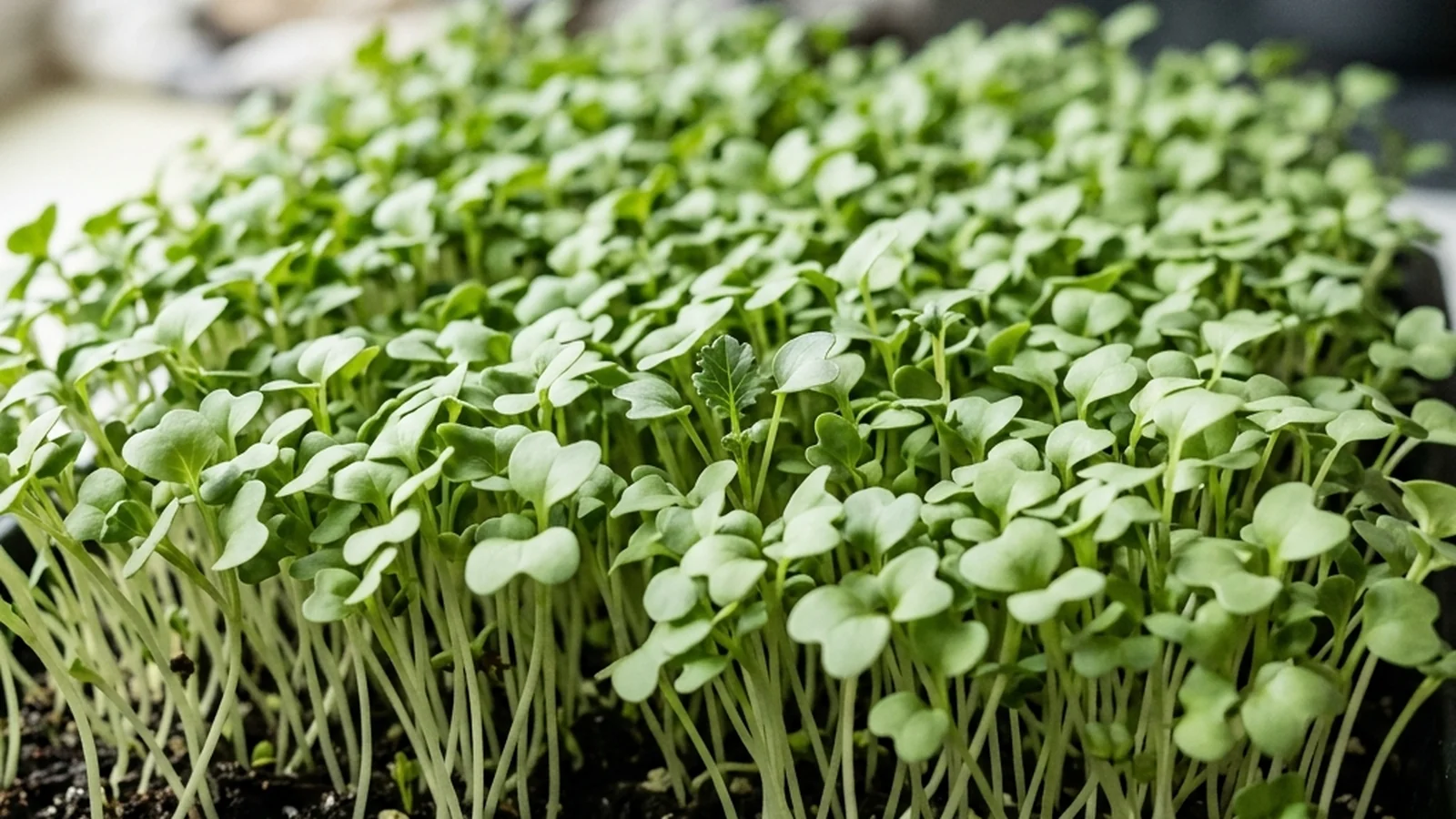
Broccoli microgreens follow the same fast brassica schedule as radish, but the reason people search for them is different. Here is the typical timeline, and what the nutrition claims actually support.
Do microgreens regrow once you cut them?
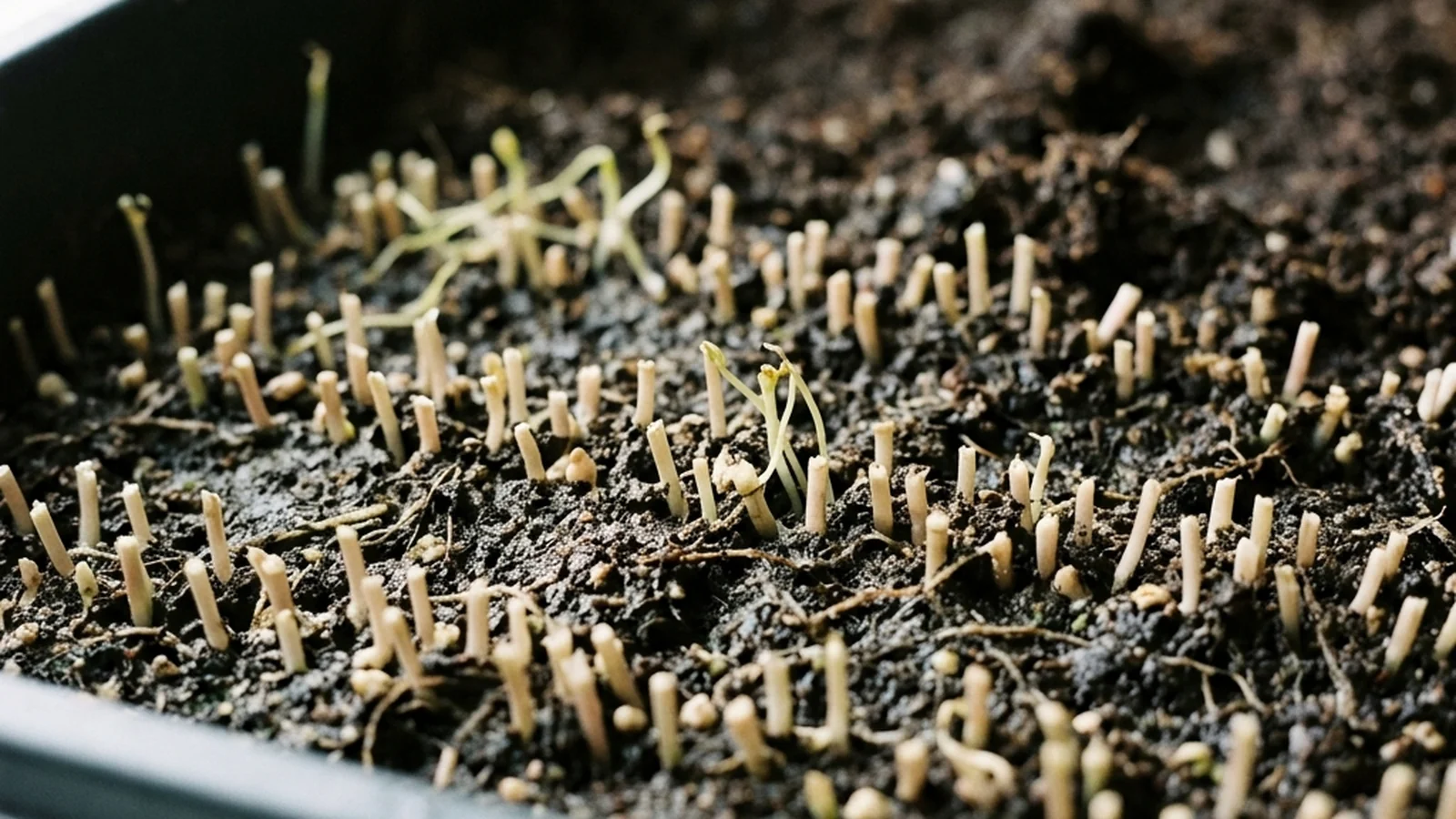
The cut you make decides everything. For almost every crop it removes the one part of the plant that could grow back.